
























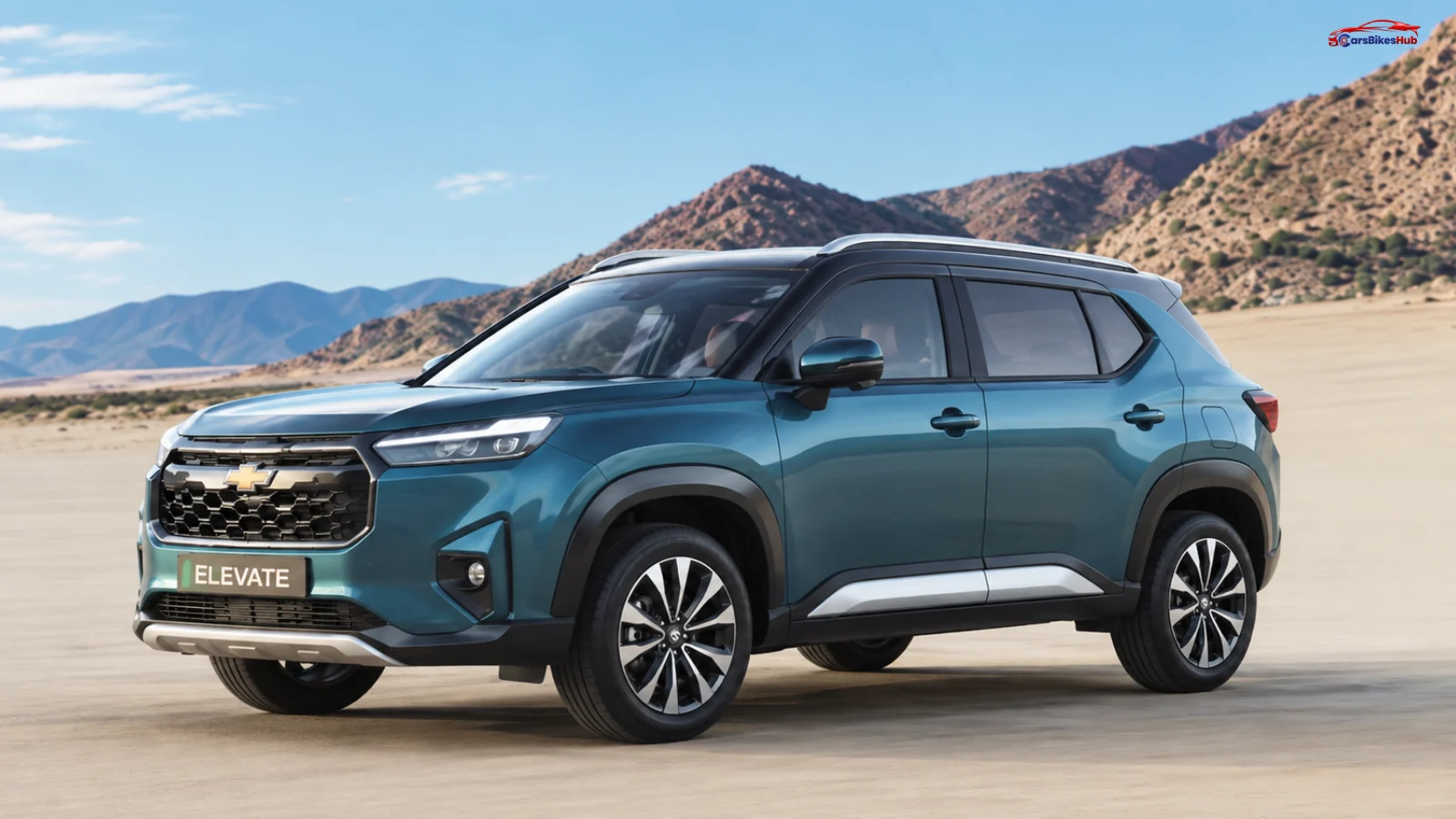
Honda Cars India has launched the 2026 Honda Elevate facelift at an introductory ex-showroom price of ₹11.80 lakh. This is the first major update to the midsize SUV since its 2023 debut. It is a mid-life update, not a new generation.
The changes sit on the outside and inside. The grille and lighting are revised, a new top ZX+ variant has been added, and the equipment list now includes ventilated rear seats, power-adjustable front seats, a 360-degree camera and front parking sensors. The 1.5-litre petrol engine and the 6-speed manual and CVT gearboxes carry over. This article looks at which of these changes affect how the Elevate works for Indian buyers.
2026 Honda Elevate Facelift Price in India
Prices below are introductory ex-showroom (Delhi). Honda charges extra for pearl and dual-tone colours.
| Variant | Manual | CVT |
| SV | ₹11.80 lakh | Not offered |
| V | ₹12.29 lakh | ₹13.79 lakh |
| VX | ₹13.93 lakh | ₹15.39 lakh |
| ZX | ₹15.39 lakh | ₹16.89 lakh |
| ZX+ | ₹16.80 lakh | ₹18.30 lakh |
| ZX+ Black | ₹16.90 lakh | ₹18.40 lakh |
The entry price is unchanged from the outgoing Elevate. The range now tops out at ₹18.40 lakh with the ZX+ Black CVT, and the new ZX+ trims sit above the old ZX. Pre-bookings opened on 1 October for ₹21,000.
What Has Changed on the Honda Elevate Facelift
The changes cover styling, cabin equipment, parking aids and braking hardware.
- Styling: a new grille with a gloss-black finish, a segmented LED light signature above it, a relocated Honda badge and connected LED tail-lamps.
- Cabin equipment: a revised interior theme, ventilated front and rear seats and power-adjustable front seats.
- Parking aids: a 360-degree camera and front parking sensors.
- Braking hardware: rear disc brakes, along with an electronic parking brake with auto hold on CVT variants.
Honda has also added a Low Speed Follow function to Honda Sensing on CVT variants, and says it has added sound-deadening material to the cabin. The sound insulation is a manufacturer claim, and its effect will only be clear after road testing.
What remains unchanged: the engine, the 6-speed manual and CVT gearboxes, the dimensions (4,312 mm long, 1,790 mm wide, 1,650 mm tall, 2,650 mm wheelbase), the 220 mm ground clearance, the six airbags and the 10.25-inch touchscreen on the higher trims.
Engine, Gearbox and Performance
The Elevate continues with the 1.5-litre i-VTEC naturally aspirated petrol engine. It makes 121 PS at 6,600 rpm and 145 Nm at 4,300 rpm. It is paired with a 6-speed manual or a CVT, with paddle shifters available on the CVT. There is still no turbo-petrol, diesel, or hybrid version.
Honda claims 15.31 km/l for the manual and 16.61 km/l for the CVT. These are test-cycle figures and not real-world numbers. The manual figure is unchanged from the outgoing model, while the claimed CVT figure is lower than the earlier 16.92 km/l. Honda has not explained the difference.
Because the powertrain is unchanged, the Elevate’s driving character should stay the same. For city use, a naturally aspirated engine with a CVT gives smooth, linear power delivery. On the highway, peak torque arrives at 4,300 rpm, so overtaking usually means letting the revs build or using the paddle shifters. With a full load of passengers and luggage, a non-turbo 1.5-litre engine depends on revs for its output.
Exterior Design
The facelift brings changes to the front and rear, while the side profile remains largely unchanged. The body shape and dimensions are the same as before.
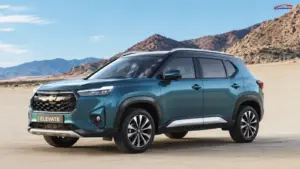
At the front, the new gloss-black mesh grille is bridged by a segmented LED strip that links to the unchanged LED headlamps. Honda has moved its badge to the leading edge of the bonnet, and the body cladding is now gloss black. At the rear, a full-width LED light bar connects the tail-lamps.
A new colour, Nordic Forest Pearl, is offered in single-tone and dual-tone. The ZX+ Black comes in Crystal Black Pearl with a black interior and gloss-black 17-inch alloys.
Interior, Features and Technology
The biggest practical additions inside are rear-seat ventilation, which Honda calls a segment-first feature, and power-adjustable front seats (8-way for the driver, 4-way for the passenger). Both matter more in hot Indian conditions than most feature-list items. The 360-degree camera and front parking sensors help in tight city parking.
Honda has also added:
- Display and sound: a 10.25-inch infotainment screen with wireless Apple CarPlay and Android Auto, and an 8-speaker audio system.
- Charging and cabin air: a dual smartphone deck with wireless charging, USB Type-C ports at the front and rear, and a PM2.5 air-quality display with auto-clean function.
- Finish and lighting: factory-fitted ambient lighting and capacitive-touch rear reading lamps. White leatherette padding with stitching replaces the faux-wood trim.
- Parking brake: an electronic parking brake with auto brake hold on CVT variants.
Rear ventilation, power seats and the 360-degree camera are linked to the new ZX+. A complete variant-by-variant feature breakdown for the lower trims is not clearly published in the launch material available at the time of writing. Buyers of the lower trims should check Honda’s variant list before assuming a feature carries down.
Safety
The Elevate retains six airbags, ABS with EBD and Brake Assist, Vehicle Stability Assist, Hill Start Assist and ISOFIX mounts on the rear outer seats. The facelift adds rear disc brakes, which relate to braking hardware, and front parking sensors, which are a manoeuvring aid and not a crash-safety feature.
Honda Sensing continues with collision mitigation braking, adaptive cruise control, road departure mitigation, lane keeping assist, lead car departure notification and auto high-beam. The change is Low Speed Follow on CVT variants, which allows the adaptive cruise control system to operate at lower speeds in traffic.
No new crash-test rating has been announced for the facelift. A rating given to the outgoing car should not be assumed to carry over.
Practicality and Everyday Use
Nothing has changed in the Elevate’s packaging. The 2,650 mm wheelbase, the 458-litre boot and the 220 mm ground clearance are the same as before. The 220 mm ground clearance remains useful on broken roads and over speed breakers. The upright body gives a good view out.
The practical difference is for rear passengers. Ventilated rear seats and the cabin insulation work address rear-seat comfort without changing the space. The 360-degree camera and parking sensors help in tight parking and narrow lanes.
2026 Elevate Facelift vs Old Elevate
| Area | Old Elevate | 2026 Facelift |
| Starting price | ₹11.80 lakh | ₹11.80 lakh |
| Range | SV to ZX | SV to ZX+ and ZX+ Black (up to ₹18.40 lakh) |
| Engine | 1.5-litre petrol, 121 PS | Unchanged |
| Gearbox | 6MT / CVT | Unchanged |
| Exterior | Earlier grille and lighting | New grille, DRL strip, tail-lamp bar |
| Rear ventilation | Not offered | Offered (ZX+) |
| Power front seats | Not offered | 8-way driver, 4-way passenger (ZX+) |
| 360° camera | Not offered | Offered (ZX+) |
| Front parking sensors | Not offered | Offered |
| Rear brakes | Drum | Disc |
| ADAS | Honda Sensing on ZX | Honda Sensing, with Low Speed Follow on CVT |
| Claimed mileage (CVT) | 16.92 km/l | 16.61 km/l |
| Boot space | 458 litres | Unchanged |
| Ground clearance | 220 mm | Unchanged |
This is mainly a styling and equipment update. The additions are useful, but the mechanical side is untouched.
Honda Elevate vs Rivals
Prices in this segment vary by engine and variant, so the more useful comparison is the powertrain and equipment structure.
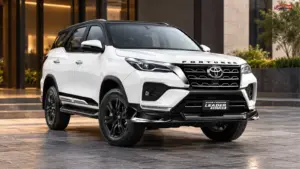
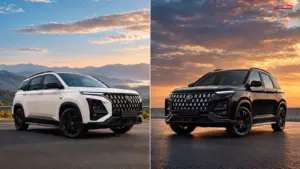
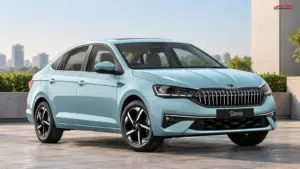
The Elevate’s biggest difference is its single petrol powertrain, while rivals offer a wider mix of turbo-petrol, diesel, or hybrid options. The Creta and Seltos offer turbo-petrol and diesel alongside naturally aspirated petrol. The Grand Vitara has a strong-hybrid option. The Kushaq offers turbo-petrol engines.
The facelift narrows the feature gap on comfort and convenience with ventilated seats, a 360-degree camera and power seats. Its 220 mm ground clearance and straightforward powertrain remain part of its appeal. Buyers who want diesel, a turbo-petrol or a strong hybrid will need to look elsewhere.
What the Facelift Changes for Buyers
- Most useful new features: the 360-degree camera, parking sensors and rear ventilation address everyday use, from parking to rear-seat comfort in summer.
- Styling: the changes are confined to the front and rear lighting and grille, and the overall shape is as before.
- Powertrain: unchanged, so buyers get the same engine and gearbox choices as before.
- Previous criticisms: the equipment list and cabin noise have been addressed, although the sound insulation needs road testing to confirm.
- Price positioning: the entry price holds at ₹11.80 lakh, while the top end now extends to the new ZX+ trims.
Choosing the Right Elevate for Your Use
- City user: the CVT variants add the electric parking brake with auto hold, which helps in stop-and-go traffic.
- Highway and frequent-travel buyer: the Low Speed Follow function on CVT variants extends adaptive cruise control to lower speeds, and Honda Sensing covers the other adaptive features.
- Family buyer: the ZX+ is where Honda has placed rear-seat ventilation.
- Buyer prioritising safety: the six airbags and stability control are available across the range. Honda Sensing sits on the higher trims.
- Buyer wanting maximum features: the ZX+ and ZX+ Black are the most equipped.
- Buyer considering an automatic: the CVT is offered from the V trim upward. The SV is manual only.
The lower trims’ exact equipment is not clearly published, so no specific lower-trim recommendation is made here.
Final Verdict
The 2026 Honda Elevate facelift is mainly a styling and equipment update. It gives the SUV a revised front and rear, a better-equipped cabin and a new top variant, but it leaves the engine, gearboxes, dimensions and ground clearance as they were.
The most important change is the equipment package: rear-seat ventilation, power front seats, the 360-degree camera and parking sensors. Honda has improved the Elevate’s feature list and said it has worked on cabin noise. It retains the single-engine, petrol-only approach.
The update benefits buyers who liked the Elevate’s space and ground clearance but wanted a longer feature list, especially families who spend time in the rear seat.


FAQs
What is the price of the 2026 Honda Elevate facelift?
Introductory ex-showroom prices start at ₹11.80 lakh for the SV manual and go up to ₹18.40 lakh for the ZX+ Black CVT.
What has changed on the Honda Elevate facelift?
It gets a new grille, DRL signature and tail-lamp bar, a revised interior, ventilated front and rear seats, power-adjustable front seats, a 360-degree camera, front parking sensors and rear disc brakes. A new ZX+ variant sits at the top of the range.
What engine and gearbox does the new Honda Elevate use?
The 1.5-litre naturally aspirated i-VTEC petrol engine (121 PS, 145 Nm) continues, with a 6-speed manual or a CVT with paddle shifters.
What is the Honda Elevate facelift mileage?
Honda claims 15.31 km/l for the manual and 16.61 km/l for the CVT. These are test-cycle figures, and real-world numbers will differ.
What are the key new features?
Rear-seat ventilation, power front seats, a 360-degree camera, front parking sensors, factory ambient lighting, and Low Speed Follow on CVT variants.