

























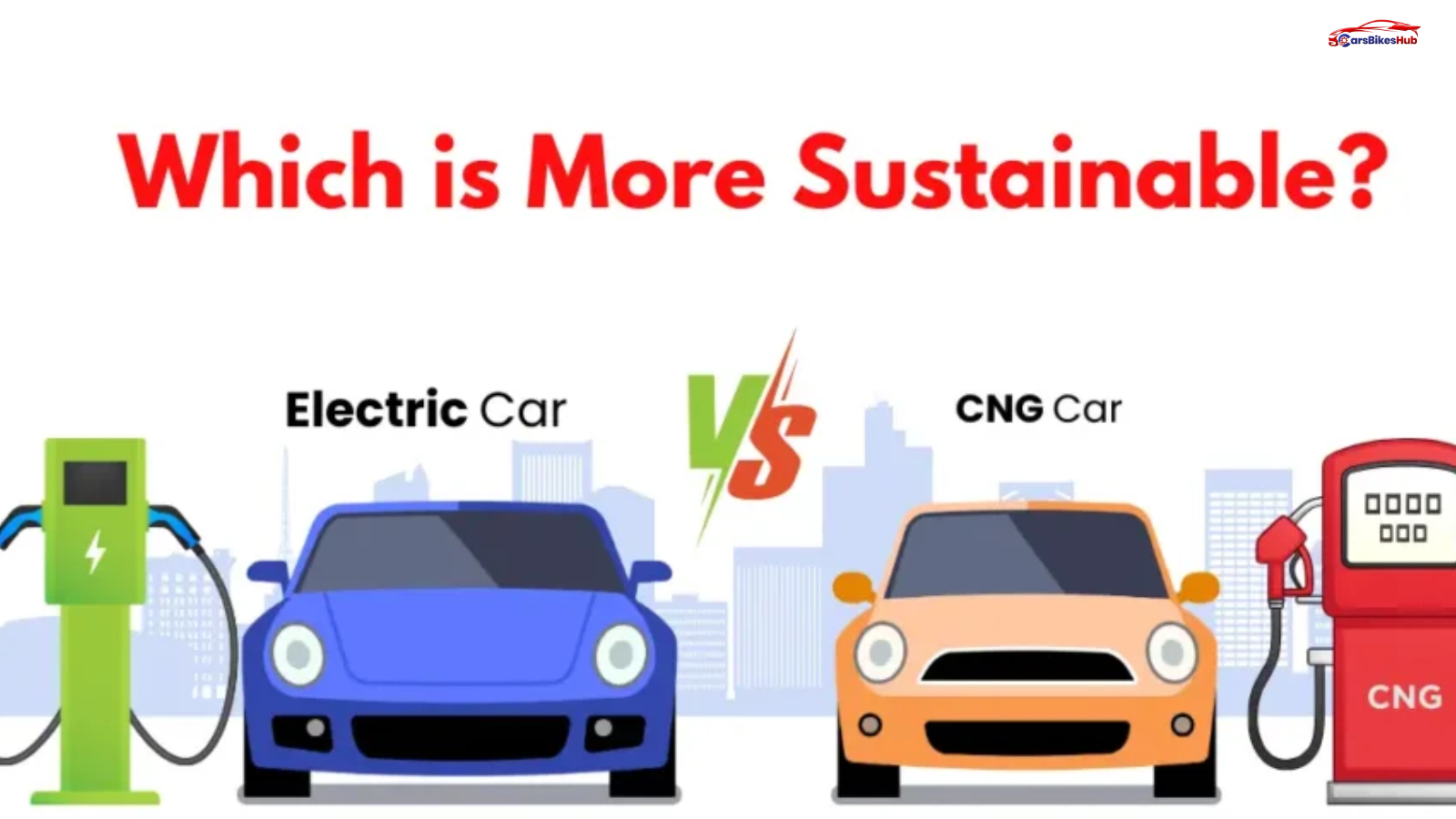
Every second person buying a car in India right now is stuck on the same question: CNG or electric car in 2026? Both promise lower running costs. Both claim to be the smarter choice. And somehow, every article you come across either pushes EVs like they are the obvious future or dismisses them like the charging infrastructure simply does not exist.
After going through enough data, owner experiences, and real-world cost breakdowns, one thing becomes clear: the truth sits somewhere in the middle. It depends far more on where you live and how you drive than any spec sheet will ever tell you.
Before picking a side, it is worth actually looking at what ownership of both fuel types costs in 2026, what the daily experience feels like on Indian roads, and where each one genuinely lets you down. Because both of them do, just in very different situations.
Let me walk you through everything: fuel costs, maintenance, range anxiety, resale value, and the real day-to-day ownership experience in Indian conditions.
What Does It Actually Cost Per Kilometre in 2026?
This is where most people start, and rightly so. Running cost is the single biggest reason Indians consider moving away from petrol or diesel in the first place.
A CNG car in India currently costs around ₹1.8 to ₹2.2 per kilometre to run, based on current CNG rates in major cities. That is already a significant drop from petrol at ₹7-8 per km and diesel at ₹5-6 per km. In cities like Delhi, Mumbai, and Ahmedabad, where the CNG network is well established, this makes daily commuting genuinely affordable.
An electric car charged at home, however, brings that cost down further, to somewhere between ₹0.8 and ₹1.4 per kilometre. On paper, EV wins this round comfortably.
The catch? If home charging is not an option and public fast chargers become the daily routine, the cost jumps to ₹2.5–₹3.5 per km, which is actually more expensive than CNG. This one factor alone changes the entire equation for a large number of Indian buyers.
Buying Price and What the Showroom Does Not Tell You
A factory-fitted CNG car, something like the Maruti Ertiga CNG or the Hyundai Creta, starts at around ₹8-11 lakh ex-showroom, depending on the variant. The technology is proven, the service network is vast, and there are no additional setup costs involved.
Entry-level EVs in 2026, after applicable subsidies, sit in a similar price bracket on paper. But the total first-year cost tells a different story. A home charging unit installation adds ₹15,000-₹25,000 before you even drive the car. In apartments and housing societies, where most urban Indians live, getting permission and wiring for a dedicated charging point remains a genuine bureaucratic challenge in many cities.
CNG has no such overhead. Fill up at a station, drive home. That simplicity still counts for a lot in day-to-day Indian life.
Maintenance Costs Over 5 Years, Where EVs Quietly Pull Ahead
This is the section that tends to surprise people. Electric cars have significantly fewer moving parts than any combustion engine, CNG included. No engine oil changes, no timing chains, no fuel injector cleaning, and no mandatory cylinder pressure tests that CNG vehicles must undergo every three years as per Indian regulations.
Annual maintenance on a CNG car in India typically runs between ₹8,000 and ₹15,000, depending on usage and brand. The equivalent for an EV is roughly ₹3,000-₹6,000. Over five years, that gap adds up to somewhere between ₹30,000 and ₹60,000 in savings, which is not insignificant.
The one maintenance wildcard for EVs remains battery replacement. Most manufacturers currently offer 8-year warranties on battery packs, but replacement costs beyond warranty can range from ₹2 lakh to ₹4 lakh, depending on the model. It is a risk factor that is hard to ignore for cost-conscious buyers.
Range and the Real-World Driving Picture
A CNG car like the Honda City CNG or the Maruti Brezza CNG gives you a combined petrol-plus-CNG range that comfortably crosses 600 km. Even if a CNG pump is not nearby, the petrol fallback means you are never truly stranded. For intercity travel, a Delhi to Agra trip, a Pune to Nashik weekend drive, or a long haul to a hometown in UP or Bihar, CNG cars remain stress-free.
An EV in the ₹10-15 lakh segment delivers a real-world range of 200-280 km in 2026. For daily city commutes of 40-60 km, this is more than adequate. For longer trips, it requires planning around charging stops in a way that petrol and CNG drivers simply do not have to think about.
Public charging infrastructure has improved considerably, but is still concentrated in metro cities and major highways. Tier 2 and Tier 3 city coverage remains patchy. If regular intercity driving is part of the picture, this genuinely matters.
Resale Value: The Factor Most Buyers Overlook Until It Is Too Late
Indians change cars every 4-6 years on average, which makes resale value a critical part of the total ownership calculation. CNG cars from established brands hold their value reasonably well, typically retaining 55-65% of ex-showroom price after four years, according to used car market data.
EV resale in India is still finding its footing. Battery degradation concerns, rapidly evolving technology, and uncertainty around long-term battery costs make used EV buyers cautious. Most EVs in the sub-₹15 lakh segment currently fetch 40-55% after four years. As the market matures and battery replacement costs drop, this gap is expected to close, but in 2026, it has not closed yet.
For anyone planning to sell within five years, this difference in depreciation can wipe out a significant portion of the running cost savings that made the EV attractive in the first place.
So, Which One Actually Makes Sense in 2026?
The honest answer comes down to two things: parking and daily distance.
Go with an electric car if you have dedicated home parking with charging access, live in a metro or large Tier 1 city, and your daily driving stays under 80 km. The combination of low running costs and minimal maintenance genuinely pays off over three to four years of ownership.
Go with CNG if you live in a Tier 2 or Tier 3 city, park on the street or in a shared society with no charging access, drive intercity regularly, or plan to sell within four years. CNG remains one of the most practical and financially sound fuel choices for the way most Indian families actually use a car day to day.
The EV transition in India is real and accelerating, but smart buying in 2026 still means matching the technology to your actual lifestyle rather than going with what sounds better on paper. Browse our full cars section to compare models available across both fuel types before making a decision.
Frequently Asked Questions
1. Is CNG cheaper than an electric car in India in 2026?
At home charging rates, EVs cost less per km (₹0.8–1.4) compared to CNG (₹1.8–2.2). But relying on public fast chargers makes EVs more expensive than CNG in many cases.
2. Which has better resale value, a CNG or electric car in 2026?
CNG cars currently hold better resale value. EVs are improving, but battery concerns still make used EV buyers cautious, especially in the sub-₹15 lakh segment.
3. Can an electric car handle long highway drives in India in 2026?
It can, but intercity trips require planning around charging stops. CNG cars are still more practical for frequent highway or hometown travel across India.
4. Which is better for a daily city commute, CNG or EV?
EV is better for city commutes under 80 km per day with home charging. Without home charging, CNG is the more practical and cost-effective daily option.
5. Are electric cars expensive to maintain in India?
No, annual EV maintenance (₹3,000-6,000) is significantly lower than CNG (₹8,000-15,000). The only major risk is battery replacement cost beyond the warranty period.