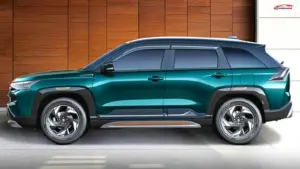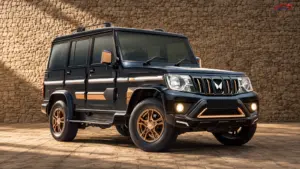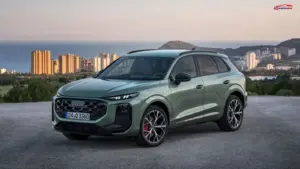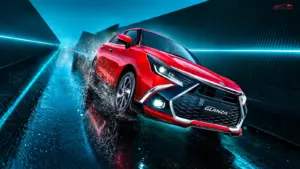























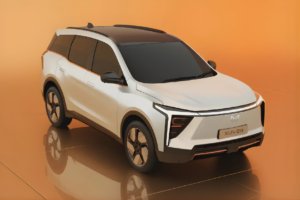

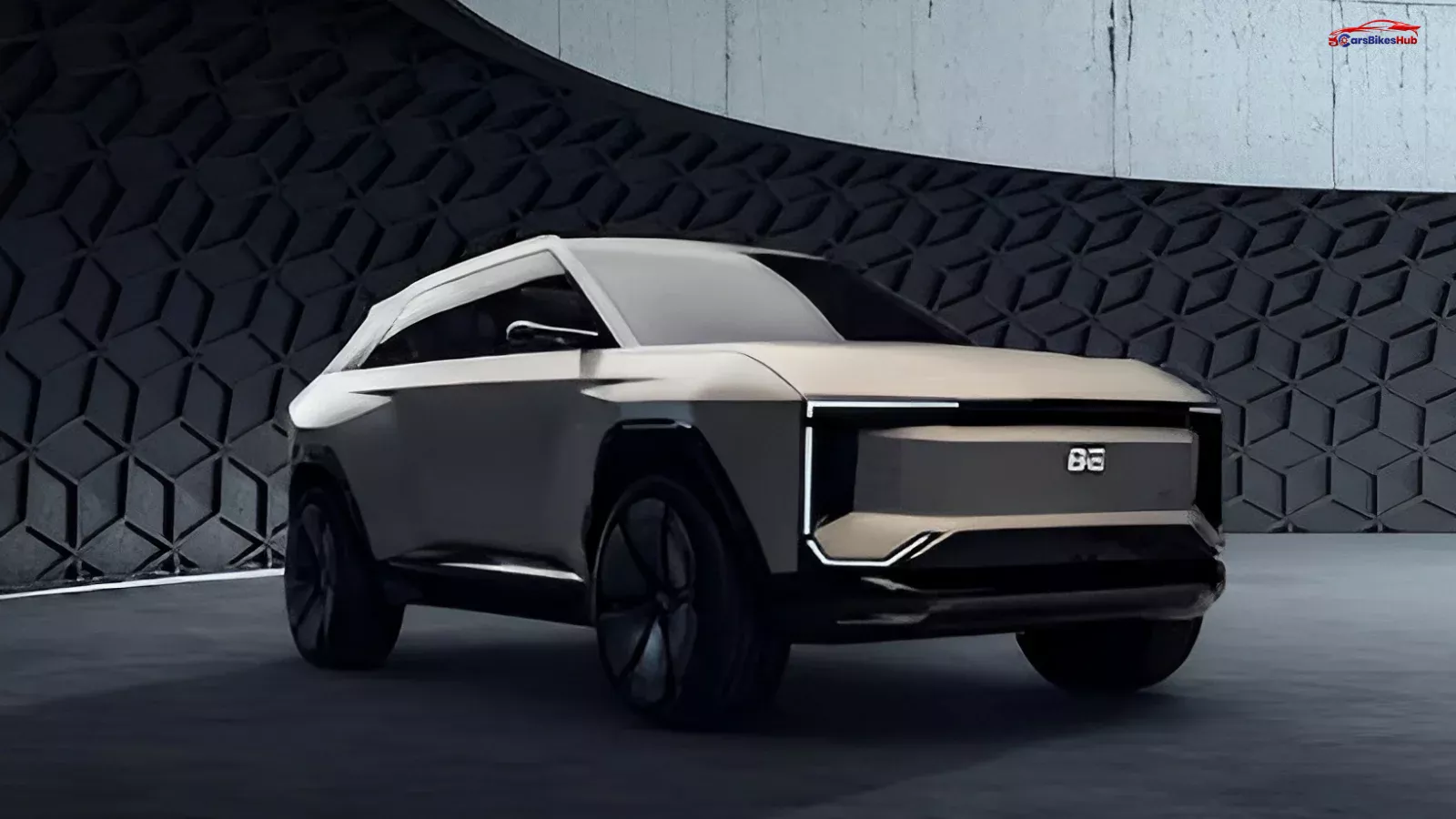
For anyone considering an electric SUV in India right now, range and charging are the two questions that matter most. The Mahindra BE07 is one of the more anticipated upcoming EVs in this space. It is larger than most current options, sits on a brand-new dedicated platform, and promises charging speeds that rank among the fastest in its class. This article covers the expected battery options, range, charging time, and everything else a potential buyer would want to know before making a decision.
Mahindra BE07 Range at a Glance
- Expected battery options: 59-60 kWh and 79-80 kWh
- Expected WLTP range: Up to 450 km
- Expected real-world range: 360-420 km
- DC fast charging: Up to 175 kW
- Expected charging time: Around 30 minutes (0-80%)
- Expected launch: October 2026
Mahindra BE07 Overview
The BE07 will be launched in October 2026 based on the INGLO platform. According to platform data and information shared by Mahindra so far, the BE07 is projected to feature battery packs with capacities of 59-60 kWh and 79-80 kWh, with the higher-capacity pack designed to deliver a WLTP range of around 450 km.
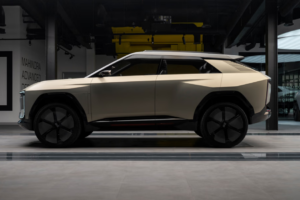
The BE07 has a length of 4,565mm, a width of 1,900mm, a height of 1,660mm, and a wheelbase of 2,775mm. The BE07 comes after the BE6 in the Mahindra electric model hierarchy. It is intended for customers who would prefer a more elevated and practical SUV body as opposed to the coupe body offered by the BE6 and XEV 9e.
Unlike the XUV400, the BE07 platform does not originate from any petrol-powered model platform; therefore, the vehicle can have a flat floor, extended wheelbase, and better distribution of weight.
What Is the Mahindra INGLO Platform?
The INGLO is a purpose-built EV platform, not a modified petrol car architecture. Designing based on the battery allows for a lower floor placement, more interior space, and more effective packaging.
The INGLO platform supports battery capacities from approximately 60 to 80 kWh and is engineered for up to 175 kW DC fast charging. In 2024, Volkswagen Group and Mahindra signed an official supply agreement under which VW will supply MEB electric components and unified cells for the INGLO platform. Deliveries of VW components are expected from 2026-27 onwards, which means the BE07 could be among the first INGLO models to benefit from them. The existing BE 6 and XEV 9e launched with BYD battery cells and Valeo motors while this supply chain was being established.
The platform supports both rear-wheel drive and all-wheel drive configurations, with platform-level power outputs of up to 285PS for RWD variants and up to 394PS for AWD. Final power figures for the BE07 have not been officially confirmed.
Mahindra BE07 Battery Options
Mahindra has not officially confirmed the final battery specifications for the BE07. Based on what the INGLO platform supports and the packs already in production on the BE 6 and XEV 9e, the BE07 is expected to offer approximately 59-60 kWh and 79-80 kWh battery options.
The existing INGLO models use BYD-sourced LFP Blade battery chemistry, and Mahindra offers a lifetime battery warranty for the first owner on those vehicles. The BE07 is likely to carry the same chemistry and similar warranty terms, though this has not been officially confirmed for the BE07 specifically.
LFP chemistry handles India’s heat better than NMC cells, degrades more slowly under frequent charging, and can be safely charged to 100% daily without meaningful long-term capacity loss, a practical advantage for Indian owners who charge at home every night.
Mahindra BE07 Battery Capacity and Power Output
The smaller battery variant will likely power a single rear-wheel drive motor producing around 228-231 PS, consistent with how Mahindra has configured the smaller pack across the BE 6 and XEV 9e. The larger battery variant is expected to unlock higher power outputs, with AWD available on top-spec trims.
At the platform level, Mahindra has indicated power outputs of up to 285PS in RWD configuration and up to 394PS with the dual-motor AWD setup. BE07-specific power figures have not been confirmed.
Mahindra BE07 Range: What Buyers Can Expect
Based on INGLO platform data, the 79-80 kWh battery is expected to deliver a WLTP-certified range of up to 450 km. The smaller 59-60 kWh pack is likely to return somewhere in the 370–410 km range, based on how the platform performs in the BE 6 and XEV 9e.
It is important to note that Mahindra has not officially revealed BE07-specific range figures, and current estimates are based on INGLO platform capabilities and existing Mahindra electric vehicles.
City Range vs Highway Range
In city driving with stop-start traffic, EVs tend to recover a useful amount of energy through regenerative braking, which partially offsets the drain from air conditioning. City range usually comes in at around 80-85% of the claimed figure.
On highways at 100-120 km/h, aerodynamic drag increases and regenerative recovery drops. Highway range typically falls to around 70-75% of the claimed figure.
Real-World Driving Range
For a practical reference, the 79 kWh BE 6 claims 682 km under ARAI testing, and Mahindra also quotes a 500 km range for that variant with AC running, giving a reasonable estimate of real-world highway performance with the larger pack on the INGLO platform.
Applying similar efficiency assumptions to the BE07’s expected 79-80 kWh battery, buyers can reasonably expect around 360-420 km of usable range in mixed driving. That comfortably covers Delhi to Agra, Mumbai to Pune, or Bengaluru to Mysuru without a charging stop.
Mahindra BE07 Charging Time and Technology
DC Fast Charging
At the platform level, the INGLO architecture supports up to 175 kW DC fast charging and is expected to charge the battery from zero to 80% in approximately 30 minutes. This is a platform-level figure; the BE07’s confirmed charging speed has not been officially announced.
For highway use, a 30-minute charge stop during a meal break would add over 300 km of range, making long-distance travel practical.
The Tata Harrier EV supports up to 120 kW DC fast charging, and the Hyundai Creta Electric now supports 100 kW DC fast charging after an OTA update, with a 10-80% time of 39 minutes. The INGLO platform’s 175 kW figure is higher than both, though it is worth noting that the Mahindra XEV 9e, also on the INGLO platform, already supports up to 180 kW DC fast charging in production.
The BE07 is expected to use the CCS2 connector standard, which is supported by most public fast chargers in India, including Tata Power, BPCL, and Ather Grid installations.
AC Home Charging
INGLO-based models already support 7.2 kW and 11.2 kW AC charging, and the BE07 is expected to follow the same. For most owners, a 7.2 kW home wallbox is the practical choice. It works on a standard single-phase connection and charges the 79-80 kWh battery overnight in around 11-12 hours.
Running cost is one of the strongest arguments for switching to an EV. At an average home electricity rate of ₹8-10 per unit in India, fully charging a 79-80 kWh battery costs roughly ₹640-800. That gives you an estimated 360-420 km of real-world range, working out to approximately ₹1.5-2.2 per km. A comparable petrol SUV covering the same distance at 12 km/l and ₹105 per litre would cost around ₹8.75 per km. For buyers who drive 40-60 km daily, the savings add up quickly over a full year of ownership.
Estimated Charging Times
| Charging Type | Speed | 0-80% Estimate |
| Basic AC (3.3 kW) | Home socket | ~18-20 hours |
| Standard Wallbox (7.2 kW) | Home/office | ~8-9 hours |
| Fast AC (11 kW) | Home/commercial | ~6-7 hours |
| DC Fast Charger (50 kW) | Public station | ~90 minutes |
| DC Fast Charger (100 kW) | Highway station | ~50 minutes |
| DC Fast Charger (175 kW) | Premium station | ~30 minutes |
Estimates based on an expected 79-80 kWh battery. Actual times will vary with temperature, state of charge, and charger availability. Final BE07 charging specs are not yet officially confirmed.
Factors That Affect Mahindra BE07 Range
Air conditioning: Switching on the air-conditioner during an Indian summer reduces range by roughly 10-15%. High trims will come with a heat pump that uses energy more efficiently than a resistive system.
Speed: The impact on range increases dramatically at 120 km/h compared to a speed of 80-100 km/h. Maintaining lower speeds while on the highway can increase range by 30-50 km for a long journey.
Passengers and luggage: A packed car will use more power and, consequently, reduce range. A five-seater at maximum capacity will reduce range by about 5-8%.
Tyre pressure: Low tyre pressure results in more rolling resistance. Regular checking of tyre pressure helps ensure the range remains relatively stable.
Regenerative braking: The BE07 will offer multiple regen levels. Using stronger regen in city traffic helps recover meaningful energy across longer commutes.
How Mahindra BE07 Compares With Rivals
| Vehicle | Battery | Claimed Range | Fast Charging | Expected/Launch Price |
| Mahindra BE07 (expected) | ~59-60 / 79-80 kWh | ~370-410 km / up to 450 km (WLTP est.) | Up to 175 kW DC (platform) | ₹25-30 lakh (est.) |
| Tata Harrier EV | 65 / 75 kWh | 538 / 627 km (MIDC) | Up to 120 kW DC | ₹21.49-27.49 lakh |
| Mahindra XEV 9e | 59 / 79 kWh | 542-656 km (MIDC) | Up to 180 kW DC | ₹18.90-26.90 lakh |
| Hyundai Creta Electric | 42 / 51.4 kWh | 390-473 km (MIDC) | Up to 100 kW DC | ₹18.02-23.66 lakh |
BE07 figures are estimates based on INGLO platform data. Mahindra has not officially confirmed final BE07 specifications. MIDC and WLTP are different testing cycles; MIDC figures are generally more optimistic than WLTP.
One important note on range comparisons: the Harrier EV’s 627 km MIDC figure and the BE07’s expected 450 km WLTP figure are not directly comparable. WLTP testing is more conservative. In real-world driving, the gap between these two vehicles is likely much smaller than the headline numbers suggest.
On charging speed, the INGLO platform’s 175 kW figure places the BE07 well ahead of the Harrier EV and Creta Electric. The XEV 9e, also on INGLO, already supports 180 kW in production, which suggests the BE07 may match or exceed that figure when final specifications are announced.
Should Buyers Wait for the Mahindra BE07?
If you need an electric SUV now, the Tata Harrier EV and Mahindra XEV 9e are well-sorted, available options with confirmed specifications and established service support.
If you specifically want a taller, flat-roofline SUV body style rather than the coupe silhouette of the BE 6 and XEV 9e, and you are comfortable waiting until late 2026, the BE07 is worth holding out for. Bookings are expected to open a few months before the October 2026 launch, with deliveries beginning by the end of 2026.
Final Verdict
The Mahindra BE07 range and charging package, as expected based on INGLO platform data, places it among the stronger options in the premium electric SUV segment. The platform’s support for approximately 79-80 kWh batteries, up to 175 kW fast charging, and a 30-minute 0-80% charge estimate gives it a solid technical foundation. The large battery options address daily range concerns, and if the lifetime battery warranty carries over from the BE 6 and XEV 9e, long-term ownership confidence should be solid.
Final specifications are still to be confirmed. But the platform the BE07 is built on has already proven itself in production. When it arrives in October 2026, it should be a strong option for buyers looking for a practical, family-sized electric SUV.
FAQs
What is the expected range of the Mahindra BE07?
Based on the INGLO platform, the bigger one will give a range of about 450 km, while the smaller battery pack will deliver about 370 km to 410 km WLTP range. The smaller 59-60 kWh variant is likely to return around 370-410 km. Mahindra has not yet officially confirmed BE07-specific range figures.
What battery options could the Mahindra BE07 offer?
The BE07 is expected to come with approximately 59-60 kWh and 79-80 kWh battery options, likely using LFP Blade cell chemistry sourced from BYD, the same setup currently used in the BE 6 and XEV 9e.
Does the Mahindra BE07 support fast charging?
The INGLO platform supports up to 175 kW DC fast charging with an expected 0-80% time of around 30 minutes. Home charging via 7.2 kW and 11 kW AC is also expected. Final BE07 charging specifications are not yet officially confirmed.
What platform is used in the Mahindra BE07?
The BE07 uses Mahindra's INGLO platform, a purpose-built EV architecture that supports multiple battery sizes, RWD and AWD drivetrains, and high-speed DC fast charging. Volkswagen and Mahindra have signed an official supply agreement for MEB electric components and unified cells, with deliveries expected from 2026-27 onwards.
When is the Mahindra BE07 expected to launch in India?
October 2026 is the widely reported expected launch date for the BE07, following the BE05. Bookings are expected to open a few months before launch, with deliveries beginning by late 2026.