



























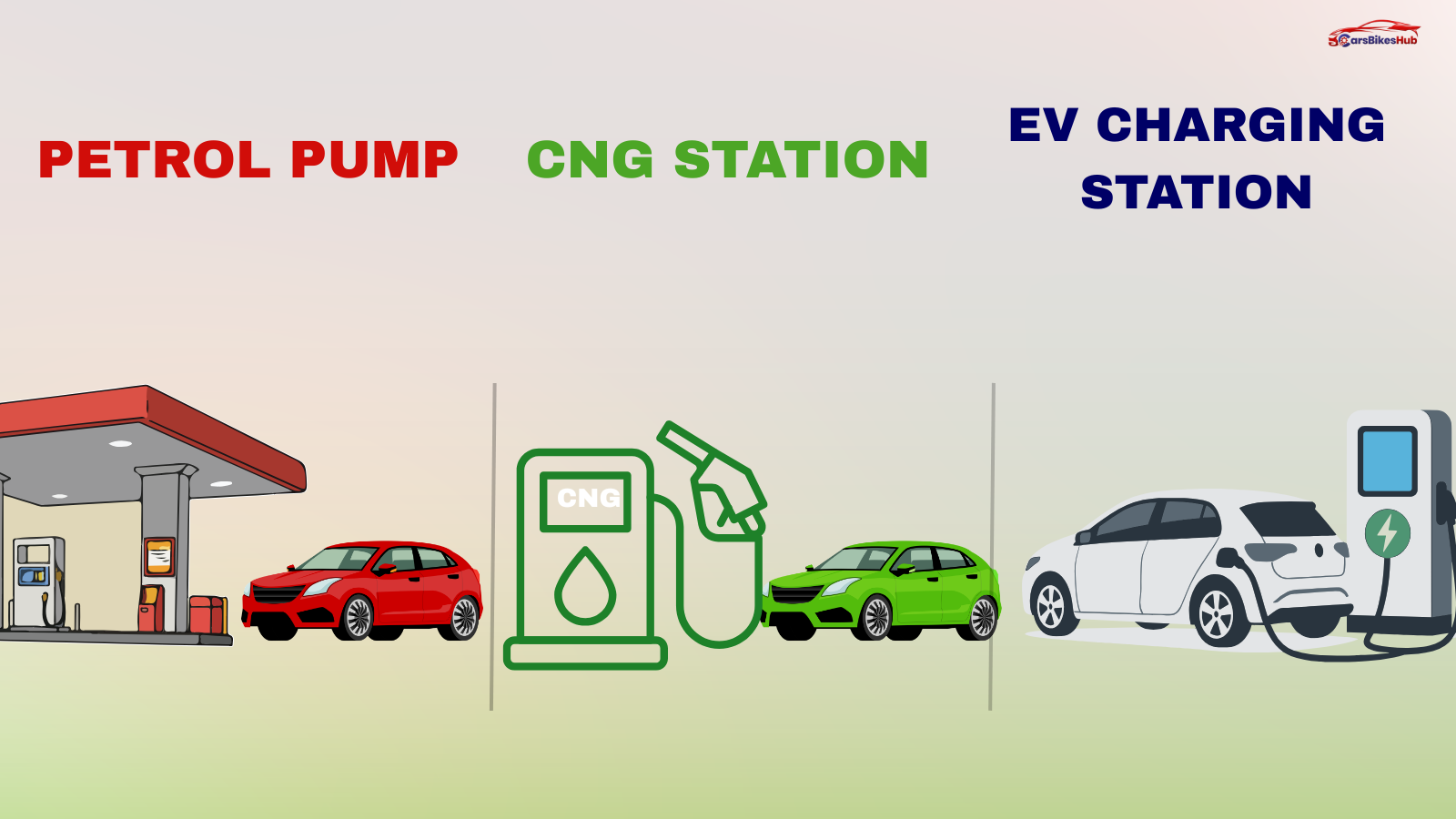
Every morning, millions of Indians inch through the same traffic, burning fuel and thinking the same thought: ” Am I spending too much on this commute? In 2026, the petrol vs CNG vs electric question in India has a far more definitive answer than it did even two years ago. The gap between these three options in terms of money, convenience, and long-term sense is wider than it has ever been. If you are still running on petrol out of habit, this breakdown will almost certainly make you reconsider.
What Does Your Daily Commute Actually Cost You?
Before picking a fuel type, you need an honest number. Most Indian commuters cover between 30 and 60 km a day in cities such as Delhi, Mumbai, Bengaluru, Pune, and Hyderabad. Traffic, stop-start driving, and idling kill efficiency across all three fuel types, but they kill them differently.
Here is a real-world cost comparison for a 40 km daily commute, based on average 2026 fuel prices and typical vehicle efficiency in Indian urban conditions:
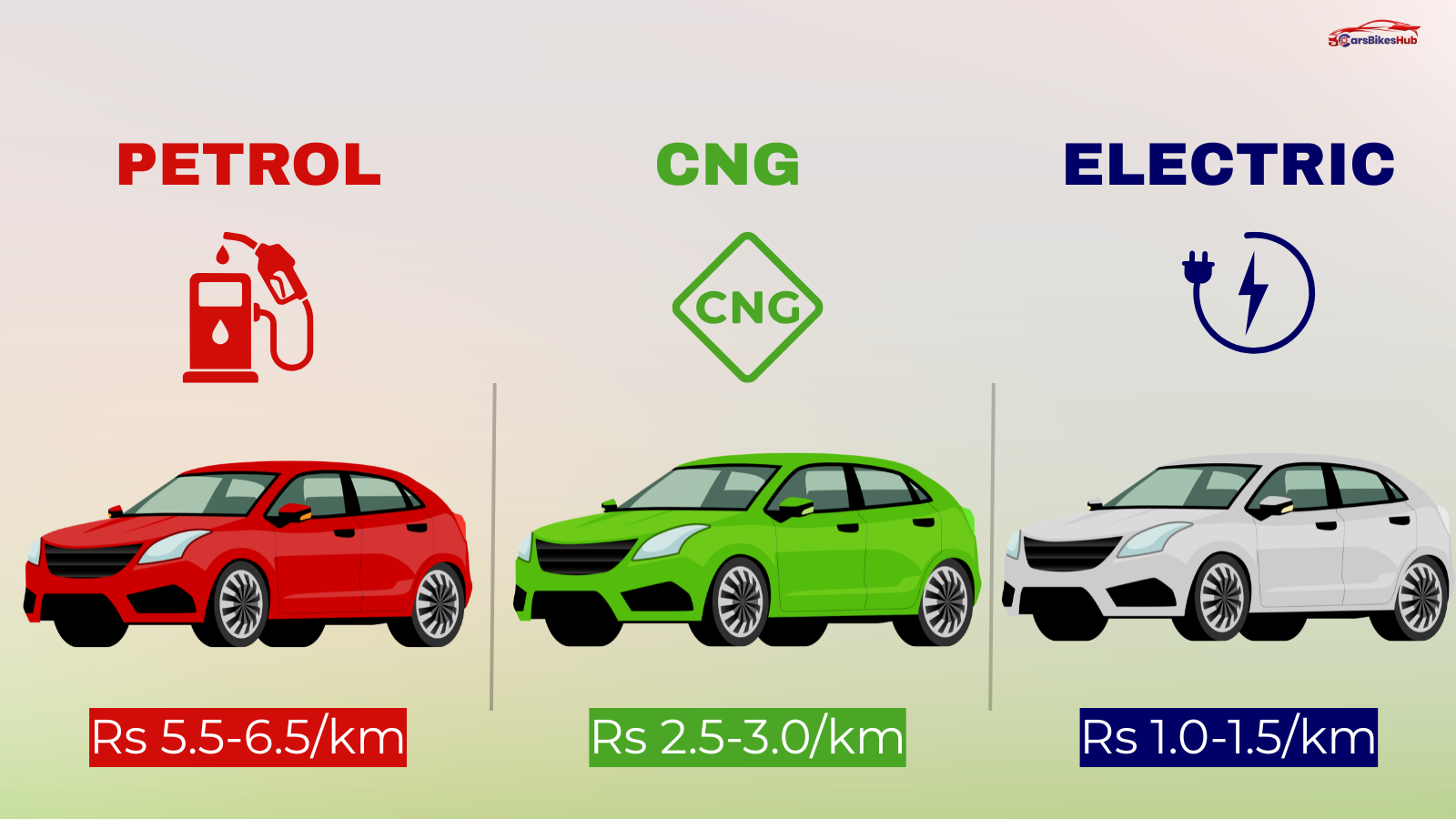
| Fuel Type | Running Cost per km | Monthly Cost (40 km/day, 26 days) | Annual Cost |
| Petrol (hatchback) | ₹5.0 – ₹6.5 | ₹5,200 – ₹6,760 | ₹62,400 – ₹81,120 |
| CNG (sedan/hatchback) | ₹1.8 – ₹2.5 | ₹1,872 – ₹2,600 | ₹22,464 – ₹31,200 |
| Electric (EV hatchback) | ₹0.8 – ₹1.5 | ₹832 – ₹1,560 | ₹9,984 – ₹18,720 |
The numbers do not lie. On a daily commute, petrol is the most expensive habit you can have in 2026. CNG cuts that cost by more than half. Electric slashes it by nearly 85%.
Petrol: Still the Most Convenient, But Increasingly Hard to Justify
Petrol cars remain the default choice for most Indian buyers, and there are genuine reasons for that. In the petrol vs CNG vs electric India conversation, petrol still wins on convenience and fuelling network reach, from highway dhabas to the narrowest city lane, a petrol pump is never far. Petrol engines have also become more refined, and modern BS6 Phase 2 cars are cleaner than ever before.
But the running cost problem is brutal. With petrol hovering around ₹94-₹103 per litre across major Indian cities in 2026, and real-world mileage for urban hatchbacks sitting at 14-17 km/l in stop-go traffic, you are spending between ₹5.5 and ₹7 every single kilometre. Over a year, that is a figure that would comfortably fund a decent holiday.
Petrol makes sense if you drive fewer than 800 km a month, live somewhere where CNG stations are absent, or need a car that doubles as a long-distance machine. For a pure daily commuter, it is the worst value of the three options in 2026.
CNG: The Practical Middle Ground That Makes Serious Sense
CNG is not what it used to be. A few years ago, it meant getting a kit crammed into your old Maruti at a local workshop, cramped boot, sluggish engine, questionable quality. Today, brands like Maruti Suzuki, Hyundai, Tata, and Honda sell CNG cars straight from the showroom, built properly from day one. The build quality, boot space management, and performance penalty have all improved dramatically.
At roughly ₹85–₹95 per kg in major cities, and with real-world efficiency of around 25-32 km/kg in urban conditions, CNG brings your per-km cost down to under ₹3. For someone driving 1,200 km a month, the savings over petrol are between ₹3,000 and ₹4,500 every single month, which is a real, tangible difference in your bank account.
The practical catches are worth knowing. CNG stations, while growing, are still concentrated in select corridors and cities. Delhi-NCR, Mumbai, Pune, Ahmedabad, and parts of Gujarat have excellent infrastructure. Smaller towns and highways are a different story. The smaller boot space due to the CNG cylinder is a compromise most commuters are willing to accept, but it does limit utility.
For someone whose commute is largely within a well-served metro area, CNG is arguably the sharpest financial decision available in 2026, especially if the upfront cost of an EV feels steep. In the petrol vs CNG vs electric India comparison, CNG occupies the sweet spot of cost savings without the infrastructure dependency of electric.
Electric: The Most Economical to Run, But It Is Not for Everyone
The case for electric vehicles in India has never been stronger. In the petrol vs CNG vs electric India debate for 2026, EVs win the running cost argument emphatically. Charging at home, which most urban owners do overnight, costs between ₹8 and ₹12 per unit of electricity in most Indian states. A typical urban EV covers 7-10 km per unit. That works out to roughly ₹1-₹1.5 per km.
Government subsidies under PM E-DRIVE, state-level incentives, and the maturing lineup of affordable EVs from Tata, MG, Ola Electric, and Ather have made the upfront cost gap much smaller than it was two years ago. The entry point for a practical city EV now sits between ₹8 and ₹12 lakh, comparable to a well-specced CNG sedan.
The honest limitations: real-world range anxiety in Indian conditions (due to heat, AC use, and slow traffic) means a quoted 300 km range often delivers 180-220 km. For most city commuters, this is completely sufficient. But if you live in an apartment without guaranteed charging access, or if power cuts are frequent in your area, EV ownership requires planning that a petrol or CNG car does not.
Long-distance trips also require charging stop planning, and fast charger availability on Indian highways, while improving, is not yet seamless. EVs are outstanding city cars in 2026; they just ask you to think a little differently.
So Which One Should You Actually Buy?
The right answer to the petrol vs CNG vs electric India question depends entirely on your situation, not on what is trending.
Choose CNG if you drive 800-1,500 km per month, live in a city with good CNG infrastructure, and want the lowest total cost of ownership without changing your habits around fuelling or range.
Choose electric if you drive mostly within the city, can charge at home or at your workplace, and want the absolute lowest running cost over 3-5 years. The economics are exceptional for this use case.
Choose petrol if you drive fewer than 700 km a month, need to travel long intercity distances regularly, or your area lacks both CNG stations and home charging infrastructure. Petrol remains the most flexible option, just the most expensive one.
FAQs
Is CNG bad for the engine in the long run?
Factory-fitted CNG kits from manufacturers like Maruti and Hyundai are engineered for the engine and do not cause measurable long-term damage when maintained properly. Aftermarket retrofit kits carry more risk.
How much do I actually save switching from petrol to CNG per month?
For a 40 km daily commute (roughly 1,040 km a month), you typically save ₹3,000-₹4,500 per month compared to petrol, depending on your city's CNG price.
Can I use an electric car for long drives from Delhi to Jaipur or Mumbai to Pune?
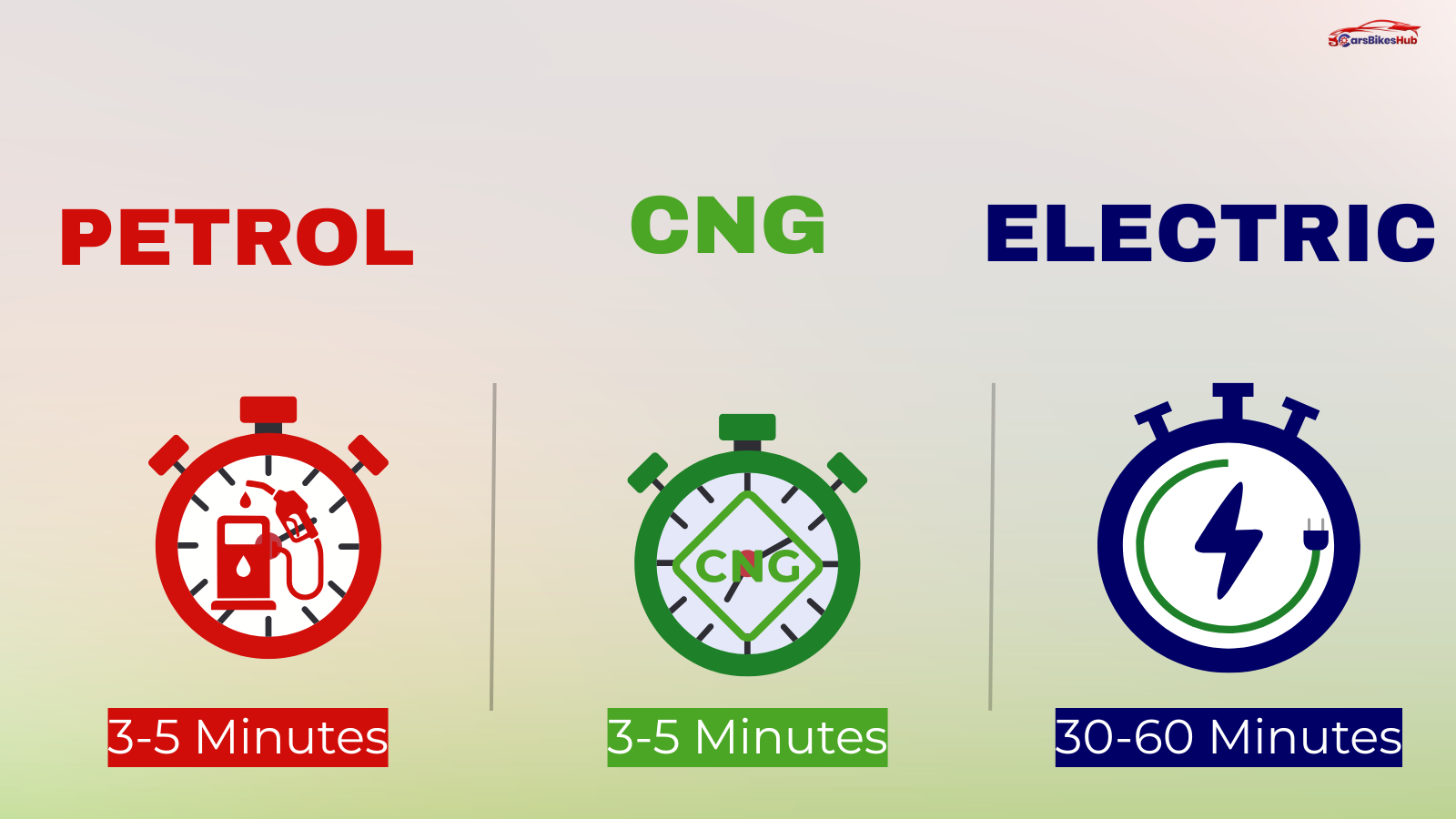
Yes, but with planning. Fast chargers exist on these corridors, but charging stops of 30-45 minutes are required. For frequent highway travel, CNG or petrol remains more convenient today.
Does the Indian government still give subsidies on electric vehicles in 2026?
Yes. PM E-DRIVE and various state schemes continue to offer purchase incentives on electric two-wheelers and four-wheelers. Check your state transport department's website for the latest slab, as amounts vary by state and vehicle category.