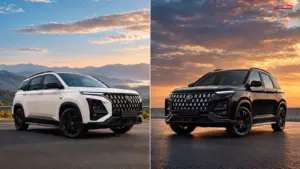























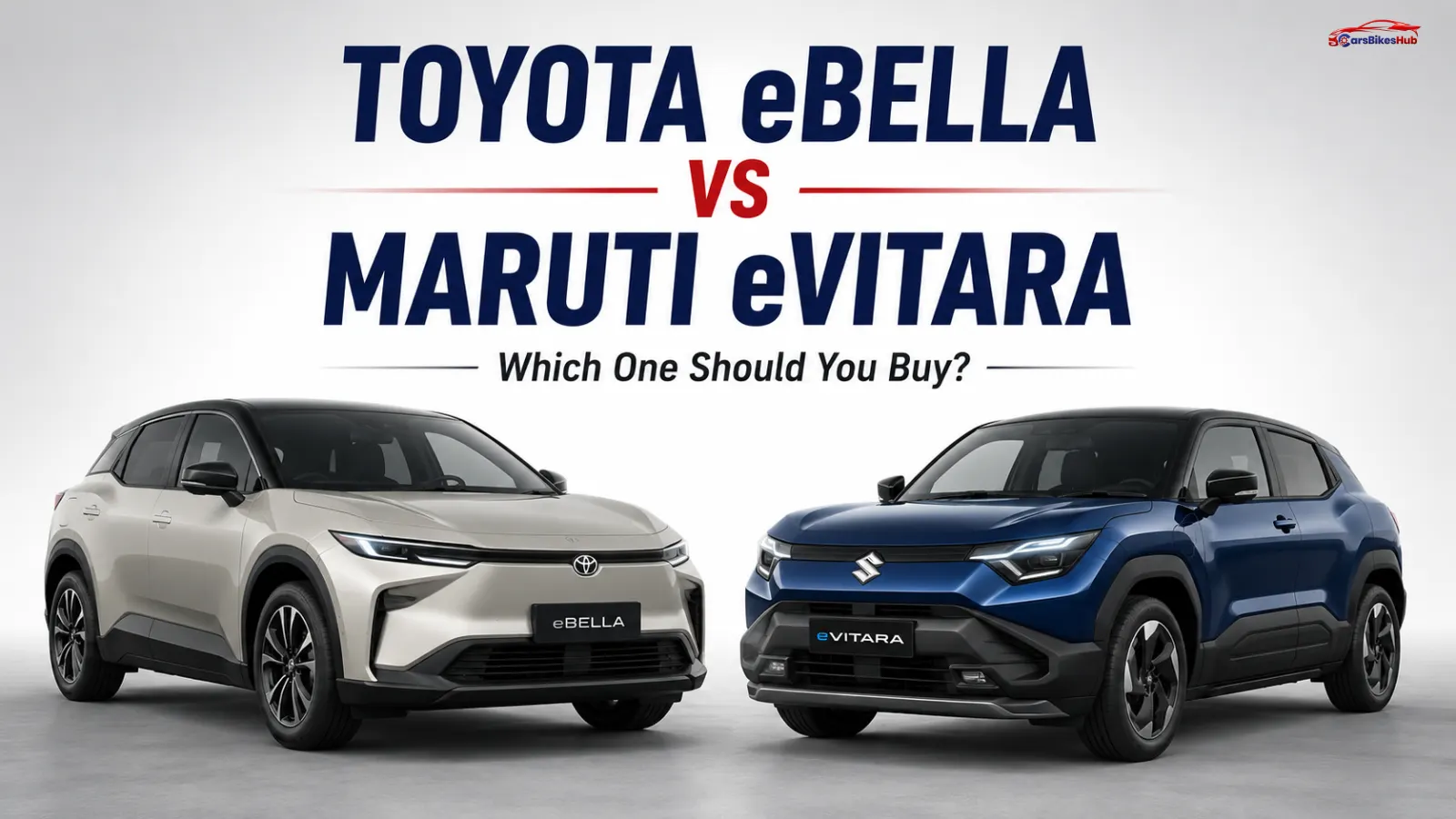
If you’ve been following India’s EV scene lately, the Toyota Ebella vs Maruti eVitara debate is probably the one question you haven’t been able to shake. And honestly, it’s a fair one to obsess over, because at first glance, this looks like the same electric SUV wearing two different badges with a jaw-dropping price gap between them. So, before you put down that booking amount, let’s look at what’s actually different between the two, what’s identical, and which one makes more sense for you.
Are the Toyota Ebella and Maruti eVitara Actually the Same Car?
Almost, yes, and that’s exactly where this comparison gets interesting.
The Toyota Ebella vs Maruti eVitara situation arises from the long-standing manufacturing partnership between Toyota and Maruti Suzuki in India. Both EVs are built on the same Heartect-e platform, assembled at Maruti’s Gujarat facility, and share identical battery packs, motors, range figures, and largely the same interior. The Toyota Ebella is, in simple terms, a badge-engineered version of the Maruti eVitara. That’s not a knock; it’s just the reality of how the two brands collaborate.
The Maruti eVitara price starts at ₹15.99 lakh (ex-showroom) for the base Delta 49 kWh variant and goes up to ₹20.01 lakh for the top-spec Alpha 61 kWh dual-tone. The Toyota Ebella price in India, on the other hand, currently starts at ₹ 23.60 lakh (ex-showroom) and ends at ₹23.60 lakh (ex-showroom) for the single E3 variant announced so far. That’s a ₹3.59 lakh premium over the equivalent Maruti top-spec trim. Prices for Toyota Ebella’s lower E1 and E2 variants are yet to be revealed.
So the big question in the Toyota Ebella vs Maruti eVitara comparison isn’t really about performance or range. It’s about whether that premium is justified.
Price Comparison: Where Your Money Goes
Here’s a clear look at how the Toyota Ebella vs the Maruti eVitara pricing stacks up:
| Variant | Battery | Standard Price | BaaS Price |
| Maruti eVitara Delta | 49 kWh | ₹15.99 lakh | ₹10.99 lakh + ₹3.99/km |
| Maruti eVitara Zeta | 61 kWh | ₹17.49 lakh | ₹11.99 lakh + ₹4.39/km |
| Maruti eVitara Alpha | 61 kWh | ₹19.79 lakh | ₹14.29 lakh + ₹4.39/km |
| Toyota Ebella E3 | 61 kWh | ₹23.60 lakh | ₹15.25 lakh + ₹4.99/km |
(All prices ex-showroom India)
That BaaS comparison is particularly interesting. The Toyota Ebella BaaS option costs ₹15.25 lakh plus ₹4.99 per km, versus the eVitara Alpha’s ₹14.29 lakh plus ₹4.39 per km. So even under the battery rental model, the Toyota Ebella vs Maruti eVitara cost difference doesn’t disappear. You’re paying more upfront and more per kilometre with the Ebella.
Design: The One Place They Genuinely Differ
This is where the Toyota Ebella vs Maruti eVitara comparison gets interesting, because the two do have a real visual identity split.
The Maruti eVitara goes for a muscular, rugged look, boxy proportions, Y-shaped LED DRLs, heavy plastic cladding on the bumper, and fog lamps that the Ebella doesn’t get. It looks purposeful and bold in a way that suits buyers who want their EV to look like an SUV.
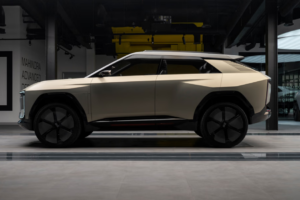
The Toyota Ebella takes a cleaner, more modern route, with segmented DRLs, smoother bumpers, a pixel-style rear lamp cluster, and overall sleeker lines that align with Toyota’s global EV design language. If understated and premium is your preference, the Ebella genuinely wins on looks.
From the side and rear, though, the Toyota Ebella vs Maruti eVitara distinction almost disappears. Same silhouette, same proportions, same hidden rear door handles.
Performance and Range: Identical. Truly.
There is zero separation here. The Toyota Ebella vs Maruti eVitara performance comparison is a draw, by design.
Both use the same 61 kWh battery pack in the top variants, the same single electric motor producing 174 bhp and 193 Nm of torque, and the same ARAI-claimed range of 543 km. The Toyota Ebella gets 150 kW DC fast charging, allowing a 10-80% top-up in roughly 30 minutes. Both sit on FWD layouts and share identical 0-100 kph times. If you’re buying the Toyota Ebella vs Maruti eVitara for the drive itself, you will not feel a rupee of difference.
Interior: Almost Identical, With One Subtle Upgrade on the Ebella
Step inside either car, and the Toyota Ebella vs Maruti eVitara debate almost evaporates. Both get a 10.25-inch digital driver’s display, 10.1-inch touchscreen with wireless Apple CarPlay and Android Auto, ventilated front seats, panoramic sunroof, Level 2 ADAS, 360-degree camera, ambient lighting, sliding and reclining rear seats, and a two-spoke squarish steering wheel.
The Toyota Ebella does add a JBL audio system and a slightly more refined finish to the cabin, which the Maruti eVitara Alpha doesn’t include as standard. That’s a real, tangible differentiator, but whether a JBL system and Toyota badge justify a ₹3.6 lakh premium is something only your bank account can answer.
After-Sales, Warranty and Brand Confidence
Both offer an 8-year battery warranty, which is solid and reassuring for long-term EV ownership. Toyota is additionally offering an Assured Buyback option, guaranteeing 60% of the purchase price after three years, which is a meaningful ownership benefit that the Maruti eVitara doesn’t match.
Maruti, however, counters with free charging at Maruti dealerships up to 1,000 units or one year, and India’s widest service network. If you live anywhere outside a major metro, Maruti’s service reach is genuinely superior.
The Toyota Ebella vs Maruti eVitara after-sales picture, then, comes down to what you value: Toyota’s assured buyback and brand prestige, or Maruti’s wider service network and lower running cost.
So Which One Should You Actually Buy?
The honest answer in the Toyota Ebella vs Maruti eVitara debate is this: if you’re buying rationally, the Maruti eVitara Alpha gives you the same range, the same performance, the same safety tech, and a near-identical cabin for ₹3.59 lakh less. For most Indian buyers, that gap simply cannot be justified on paper.
But the Toyota Ebella is not a bad car, far from it. It’s cleaner to look at, comes with the JBL audio edge, offers a buyback assurance, and carries Toyota’s reputation for long-term reliability. If those things matter to you and the premium fits your budget, the Ebella is a genuinely sensible choice.
Buy the Maruti eVitara if you want maximum value, more variant flexibility, and a lower entry price via BaaS.
Buy the Toyota Ebella if brand value, the assured buyback, and slightly superior styling are worth the extra spend.
Either way, you’re getting a capable, feature-rich electric SUV with 543 km of claimed range and honestly, in today’s Indian EV market, that alone puts both ahead of most of the competition.
FAQs
Is the Toyota Ebella the same as the Maruti eVitara?
Yes, largely. Both share the same platform, battery, motor, and most interior features. The main differences are in exterior styling, the Toyota Ebella's JBL audio, an assured buyback scheme, and a higher price.
Why is the Toyota Ebella so much more expensive than the Maruti eVitara?
The Toyota Ebella is priced ₹3.59 lakh higher at the top spec primarily due to Toyota's brand premium, the JBL audio system, a cleaner design, and the added assured buyback guarantee.
Which has better range, the Toyota Ebella or the Maruti eVitara?
Both are equal at the top spec, 543 km ARAI-claimed range with the 61 kWh battery. There is no difference in real-world performance between the two.
Does the Toyota Ebella have BaaS (Battery-as-a-Service)?
Yes. The Toyota Ebella BaaS price starts at ₹15.25 lakh plus ₹4.99 per km, compared to the Maruti eVitara Alpha's ₹14.29 lakh plus ₹4.39 per km.
Which is better for resale value, the Toyota Ebella or Maruti eVitara?
The Toyota Ebella has an edge here because Toyota offers an Assured Buyback at 60% of the purchase price after three years. Toyota's brand also historically holds stronger resale value than Maruti in the premium segment.