






















If you’re considering the Hyundai Creta N Line, chances are you’ve already asked yourself one important question: is it genuinely different from the standard Creta, or are the changes mostly cosmetic? While Hyundai has given the N Line a sportier identity, the real value lies in understanding what changes in everyday driving, ownership, and long-term value.
From pricing and features to real-world performance and ownership costs, this guide explains everything you need to know before deciding whether the Creta N Line is a better choice for you.
Hyundai Creta N Line at a Glance
| Price (ex-showroom) | ₹19.03 lakh – ₹20.64 lakh |
| Variants | Single N10 trim (MT / DCT / Dual Tone) |
| Engine | 1.5L Turbo GDi Petrol, 4-cylinder |
| Power / Torque | 160 PS / 253 Nm |
| Transmission | 6-speed manual or 7-speed DCT |
| Mileage (ARAI) | 18.0-18.2 kmpl |
| Fuel Type | Petrol only |
| Safety Rating | Not yet crash-tested by Bharat NCAP (see Safety section) |
| Best For | Buyers who want a sportier-looking, sportier-feeling Creta without stepping up to a full performance SUV |
Hyundai Creta N Line Price in India
The Hyundai Creta N Line is now offered in a much simpler lineup. Instead of multiple trim levels, Hyundai has streamlined the range into a single, fully loaded N10 variant. That means your main decision comes down to choosing between the 6-speed manual or 7-speed DCT, along with your preferred paint finish.
| Variant | Ex-showroom Price (approx.) |
| N10 MT | ₹19.03 lakh |
| N10 MT Dual Tone | ₹19.17 lakh |
| N10 DCT | ₹19.95 lakh |
| N10 DCT Dual Tone | ₹20.09–20.64 lakh |
On-road prices, factoring in RTO tax and insurance, typically land between ₹22 lakh and ₹24 lakh depending on your city.
Because there’s no stripped-down trim anymore, you’re not overpaying for missing features the way you might elsewhere in this segment; every N Line comes with the full feature set. The bigger decision isn’t the variant; it’s whether the convenience of the 7-speed DCT is worth the additional ₹92,000 over the manual.
Hyundai Creta N Line Variant and Transmission
With only one trim available, the buying decision comes down to choosing the transmission that best suits your driving needs.
- N10 MT (6-speed manual): Slightly cheaper, and if you enjoy rowing your own gears in traffic, the clutch is manageable once you’re used to its longer-than-usual travel.
- N10 DCT (7-speed dual-clutch): Smooth once you’re moving, comes with paddle shifters and adaptive cruise control, but can feel jerky in genuine stop-start traffic, something worth test-driving specifically in your daily commute conditions before you commit.
- Dual Tone paint: Priced at a modest premium. Skip it if resale in a smaller city matters to you; monotone colours tend to be easier to sell on.
Best value pick: N10 MT, monotone; you lose nothing functional and save roughly ₹1 lakh over the loaded DCT dual-tone.
Consider skipping: DCT if your daily drive is mostly heavy city traffic and gearbox smoothness at crawl speeds matters more to you than paddle shifters.
Engine & Performance: What It Actually Feels Like to Drive
Engine at a glance
- 1.5L Turbo GDi Petrol
- 160 PS @ 5,500 rpm
- 253 Nm @ 1,500–3,500 rpm
- 6-speed MT / 7-speed DCT
In the city
Below roughly 1,500-2,000 rpm, the 1.5-litre turbo is noticeably softer; some reviewers describe it as almost naturally-aspirated at low revs, meaning you won’t feel much urgency pulling away from a signal unless you rev it out a bit or downshift. This isn’t a flaw unique to the N Line; it’s how this engine has always behaved, and the N Line doesn’t add power over the standard Creta turbo; it’s the same 160 PS unit.
On the highway
This is where it comes alive. Once past 2,000 rpm, there’s a strong, confident surge of acceleration all the way to around 5,000 rpm, which makes overtaking effortless and highway cruising genuinely enjoyable. Multiple road tests describe the car feeling more planted and stable at speed than its badge would suggest.
Refinement
The engine stays quiet at idle and in the cabin generally, only turning vocal as revs climb, which, if anything, adds to the sporty character rather than detracting from comfort.
Gearbox behaviour
The manual has long clutch travel and long throws, not the sharpest shift action in the segment, but smooth once familiar. The DCT is composed and quick at speed with paddle shifters for manual control, but several testers flag genuine low-speed jerks in bumper-to-bumper traffic, which is a legitimate consideration if that’s most of your driving.
Mileage & Running Costs
- ARAI mileage: 18.0-18.2 kmpl (MT slightly better than DCT)
- Real-world mileage: Owner reports cluster around 10-14 kmpl in city traffic and 15–18 kmpl on highways, a realistic gap of 3-4 kmpl below the ARAI number, which is normal for a turbo-petrol driven with any enthusiasm.
- Fuel costs: At current petrol prices, expect roughly ₹6–7 per km in the city, dropping meaningfully on highway runs.
- Service costs: In line with the standard Creta, Hyundai’s service network is extensive, and turbo-petrol servicing (oil, filters) costs a bit more than the naturally-aspirated Creta but isn’t dramatically higher.
- Insurance: Because of the higher on-road price and turbo-petrol classification, expect premiums somewhat above the base Creta. Get quotes before finalising your budget, especially for comprehensive + zero-dep cover in year one.
- Tyres & parts: One genuine ownership complaint worth flagging: some owners outside major metros report N Line-specific parts (bumpers, specific trim pieces) needing to be sourced from regional hubs, causing longer wait times for body repairs than the standard Creta. Worth checking with your local dealer if you’re not in a Tier-1 city.
Exterior Design: More Than Just Red Accents
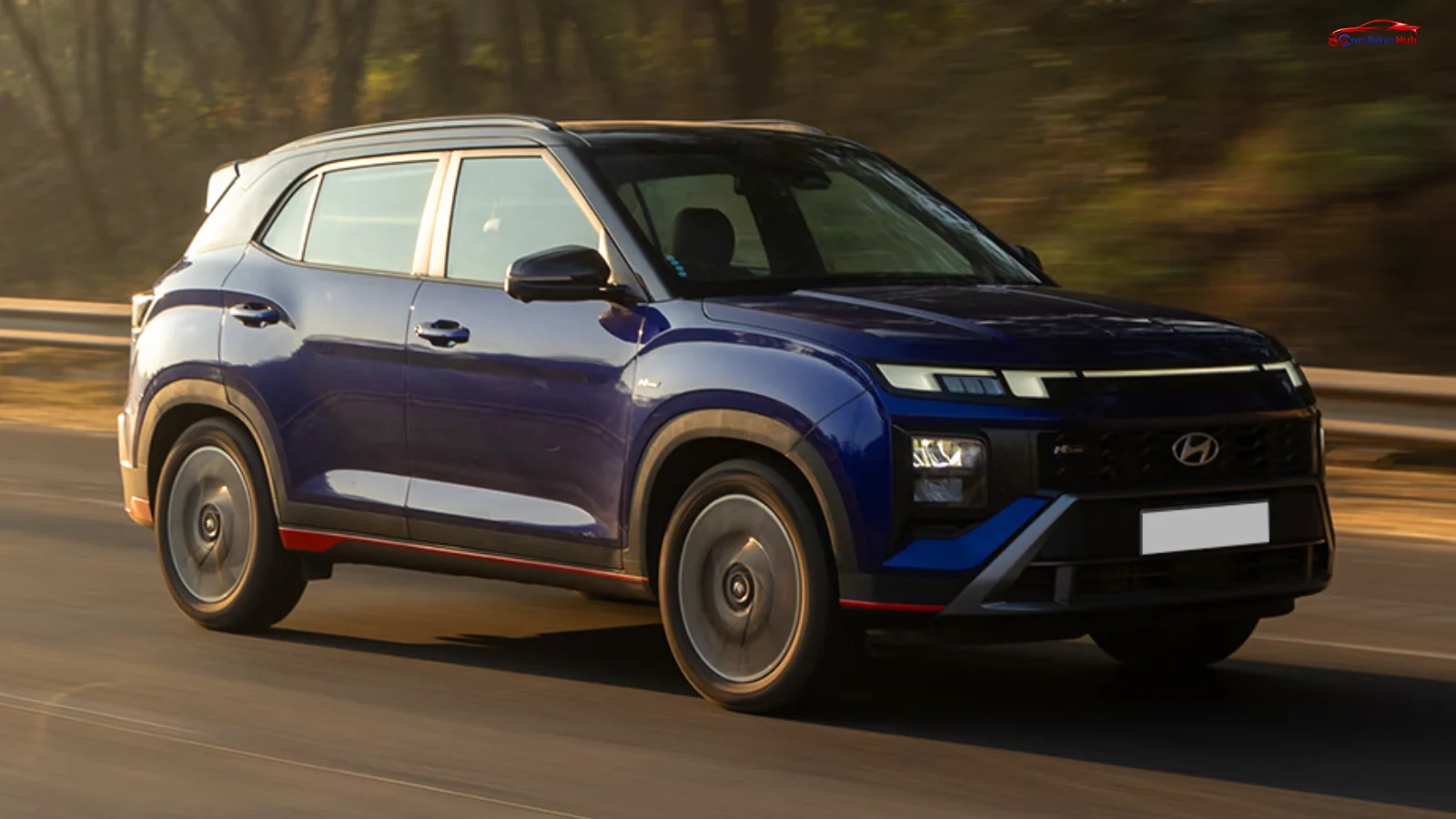
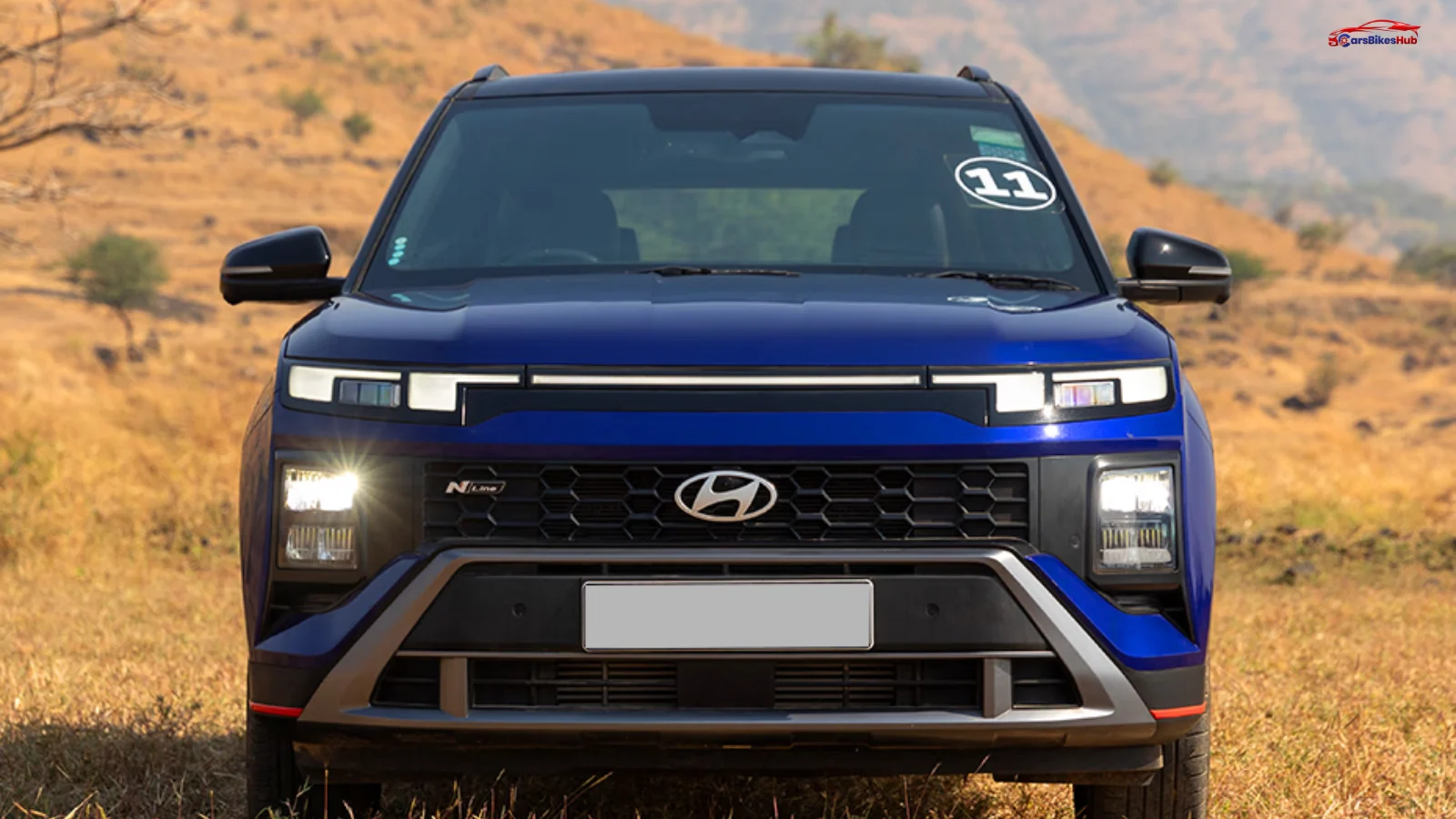
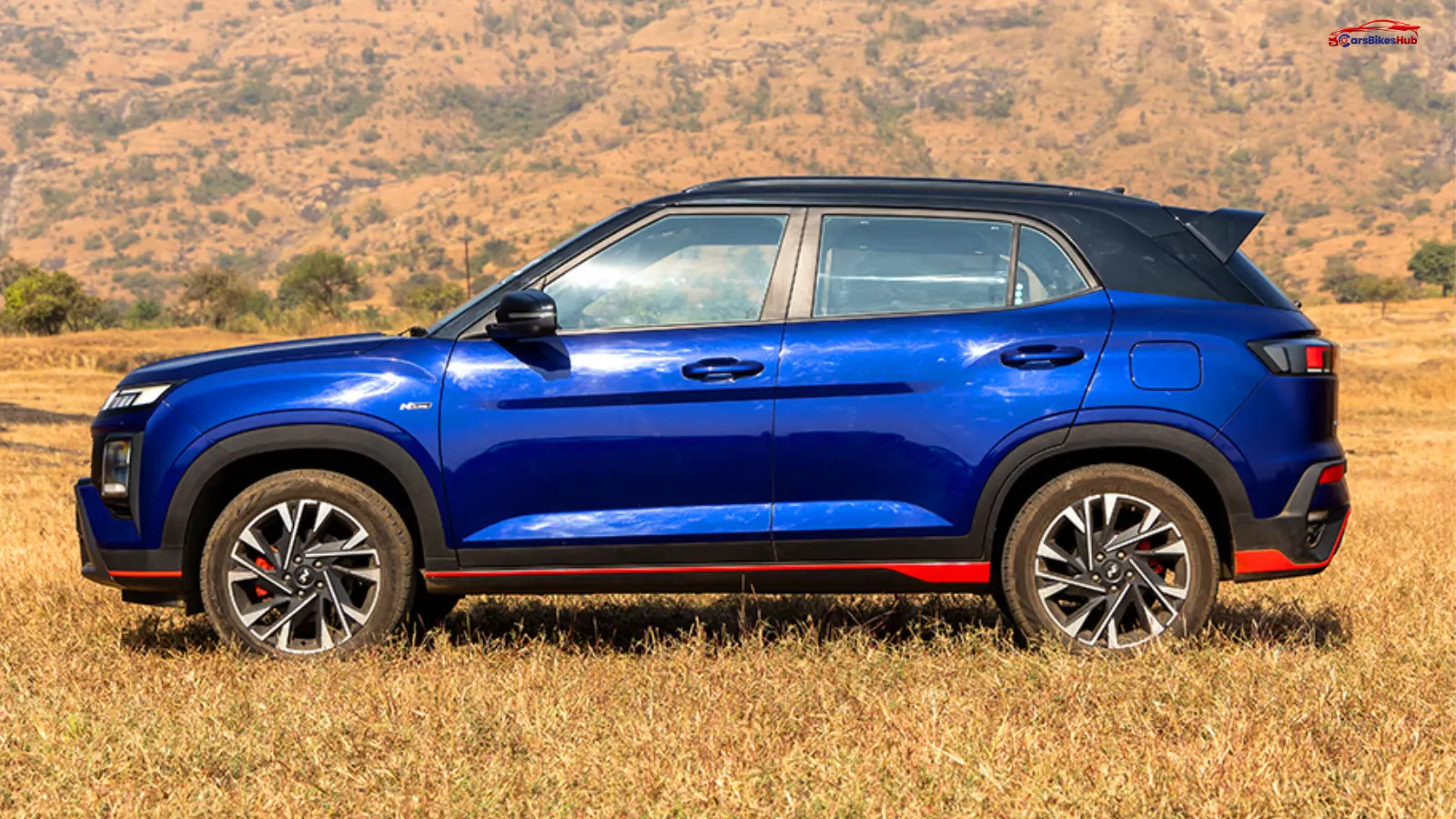
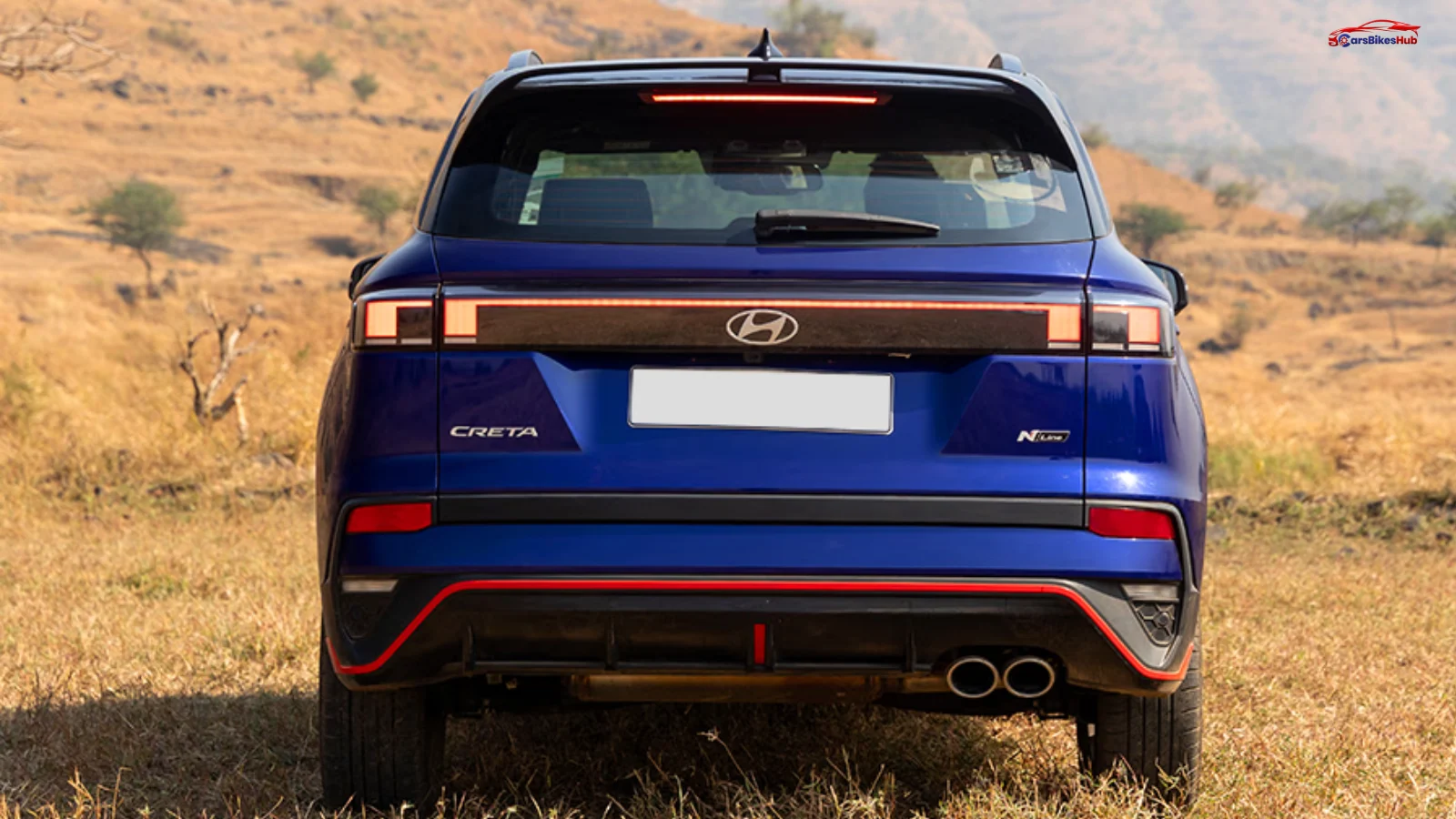
While the Creta N Line shares its overall shape with the standard Creta, Hyundai has given it enough visual changes to create a distinct identity. A revised front grille, unique bumpers, red accents, twin exhaust tips, a roof spoiler, and exclusive alloy wheels help it stand out, while the unchanged dimensions ensure the same spacious cabin and practicality.
Ground clearance stays at a practical 190mm, enough for Indian speed breakers and moderately broken roads without you needing to think about it every time you approach a bump.
One of the biggest advantages is that the sportier styling doesn’t come at the expense of practicality. You still get the same cabin space, boot capacity, and ground clearance as the standard Creta, making the N Line just as usable for everyday driving.
Available colours: Six options in total, three monotone (Atlas White, Abyss Black, Titan Grey Matte) and three dual-tone with a contrast Abyss Black roof (Atlas White, Shadow Grey, and Thunder Blue). The matte finish looks distinctive but needs more careful maintenance than the glossy shades, so factor that into your choice if low-fuss ownership matters to you.
Interior & Comfort
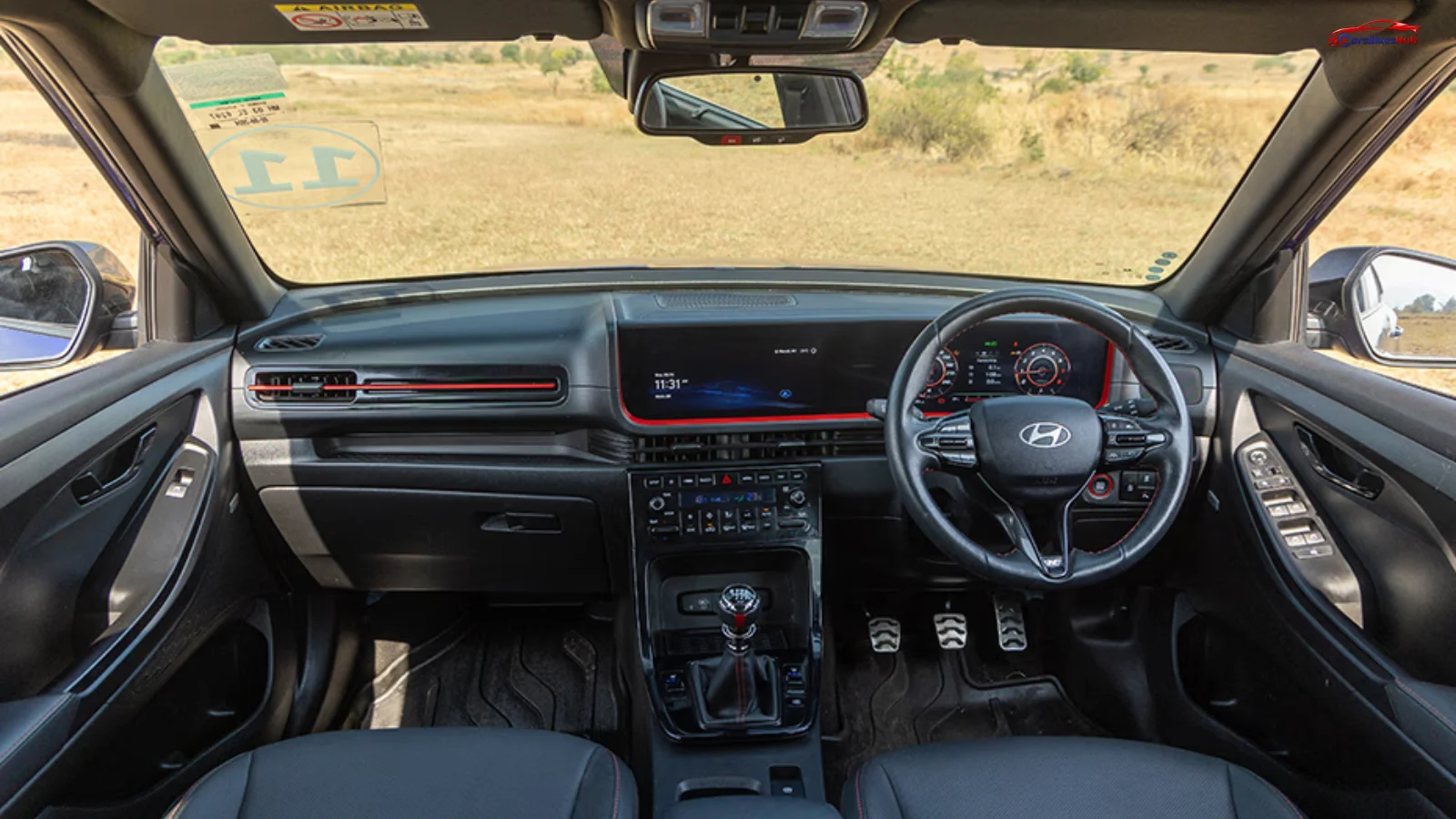
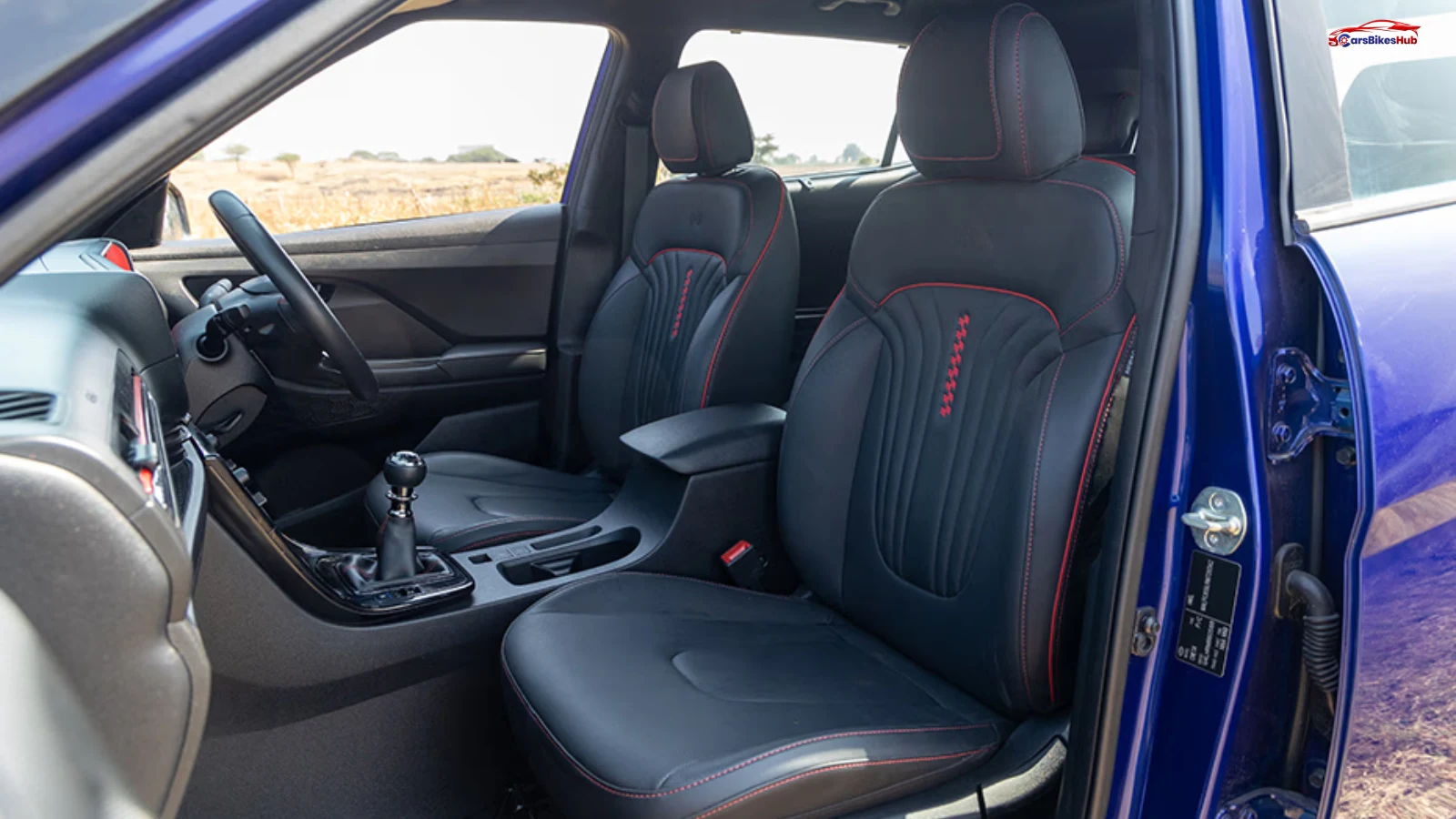
Step inside, and it’s an all-black cabin with red stitching, N Line badging on the steering wheel, gear knob and seats, and aluminium-finish pedals, distinct from the regular Creta’s cabin, but built on the same fundamentally spacious, well-laid-out architecture.
- Space: Same as the standard Creta, comfortable for four adults, adequate for a fifth on shorter trips. Some owner reviews note rear-seat width could be better for three-abreast seating on longer journeys.
- Boot space: 433 litres, genuinely useful, easily swallowing a couple of large suitcases plus soft bags.
- Storage & daily usability: Wireless chargers front and rear, decent cubby space, and the dual 10.25-inch screens (infotainment + driver display) make daily use intuitive.
- Visibility: Good all-round visibility for the segment, further helped by the 360-degree camera on this trim.
The N Line’s suspension and steering are tuned slightly firmer for sharper handling, and more than one long-term reviewer describes the ride as noticeably less plush than the standard Creta over bad roads, something worth feeling for yourself on a test drive over your actual daily route, not just a smooth showroom loop.
Features & Technology: What Do You Actually Get?
The Hyundai Creta N Line comes equipped with a comprehensive safety package as standard. Every variant includes:
- Six airbags, ABS with EBD
- Electronic Stability Control (ESC)
- Vehicle Stability Management (VSM)
- Hill-Start Assist Control, an electronic parking brake with auto hold
- 360-degree camera
- Tyre Pressure Monitoring System (TPMS).
These features help improve everyday safety and driver confidence in a variety of road conditions.
ADAS Features
The Creta N Line also offers Level 2 Advanced Driver Assistance Systems (ADAS), bringing features such as Forward Collision-Avoidance Assist, Lane Keeping Assist, Lane Following Assist, Blind-Spot Collision-Avoidance Assist, Rear Cross-Traffic Collision-Avoidance Assist, and Adaptive Cruise Control (available with the DCT variant).
In everyday driving, these systems work smoothly on highways and well-marked roads. However, in heavy city traffic, some drivers may find alerts like lane-keeping or forward-collision warnings a little intrusive, especially on narrow Indian roads. Fortunately, most of these features can be adjusted or switched off depending on your preference.
Crash Safety
One important point buyers should be aware of is the crash-test rating. The previous-generation Hyundai Creta received a 3-star rating from Global NCAP in 2022, with concerns raised about bodyshell stability and overall structural protection.
The current facelifted Creta, on which the Creta N Line is based, uses an updated and reinforced platform. However, it has not yet been independently tested by Bharat NCAP. Until those results are available, it’s difficult to make a definitive judgement about its crash performance.
If crash safety is your highest priority, it’s worth checking for the latest Bharat NCAP results before making your purchase. While the Creta N Line offers an extensive list of active safety features and driver-assistance technologies, a long feature list isn’t a substitute for an independently verified crash-test rating.
What Makes This Car Genuinely Different?
N Line gives you a Creta that looks and handles a notch sportier without touching cabin space, boot capacity, or ground clearance, a rare combination in this segment, where sportier trims often cost you practicality. The tighter suspension tune and quicker steering response are things you can actually feel on a winding road, not just read about on a spec sheet.
The N Line badge may suggest a more performance-focused SUV, but the mechanical package remains largely unchanged. Power and torque figures are identical to the standard turbo-petrol Creta, with Hyundai instead focusing on sharper handling, revised steering, and a sportier overall character.
Should You Buy It?
Buy this car if:
- You already like the standard Creta’s practicality and just want it to look and feel sportier
- You do a meaningful amount of highway driving where the turbo’s mid-range punch is actually usable
- You value styling distinction and don’t mind a firmer ride as the trade-off
- You want a fully-loaded feature set without variant-picking complexity (there’s only one trim now)
Skip this car if:
- Ride comfort over bad roads is your top priority; the standard Creta’s tuning is more forgiving
- Your driving is almost entirely dense city traffic, where the DCT’s low-speed jerkiness and the turbo’s soft low-end will be more noticeable than its highway strengths
- A confirmed 5-star crash-test rating (rather than feature list alone) is non-negotiable for you right now
- You’re budget-conscious and don’t need the extra styling — a well-specced standard Creta turbo saves you money for essentially the same mechanical experience
Final Verdict
The Hyundai Creta N Line is best understood as the Creta for someone who was almost going to buy the standard version anyway, but wanted it to look and feel a little more special without giving up any of the practicality that made the Creta appealing in the first place. It’s not a performance car, and treating it as one will leave you wanting more power.
But as a styling and handling upgrade bolted onto one of India’s most dependable family SUVs, it delivers exactly what it promises: a sportier, sharper version of the Creta without sacrificing the practicality that made the standard SUV so popular, with a firmer ride and a jerky-in-traffic DCT as the two trade-offs worth test-driving for yourself before you commit.


FAQs
Is the Hyundai Creta N Line more powerful than the standard Creta turbo?
No. Both use the same 1.5-litre turbo-petrol engine producing 160 PS and 253 Nm. The N Line's difference is styling, suspension tuning, and steering feel, not outright power.
Is the Hyundai Creta N Line N8 variant still available?
No. Hyundai discontinued the N8 trim in 2026. The N Line is now sold only as a single, fully-loaded N10 trim, with your choice limited to manual vs DCT and monotone vs dual-tone paint.
Does the Hyundai Creta N Line have a sunroof?
Yes, a panoramic sunroof is standard on the current N10 trim.
What is the real-world mileage of the Creta N Line?
Expect roughly 10–14 kmpl in city driving and 15–18 kmpl on highways, somewhat below the ARAI-rated 18–18.2 kmpl, which is typical for a turbo-petrol driven with any enthusiasm.
Does the Creta N Line have a 5-star safety rating?
The current facelifted Creta has not yet been independently crash-tested by Bharat NCAP. The previous-generation model scored 3 stars in a 2022 Global NCAP test. Check Bharat NCAP's official results for the latest status before assuming a rating based on feature list alone.