




















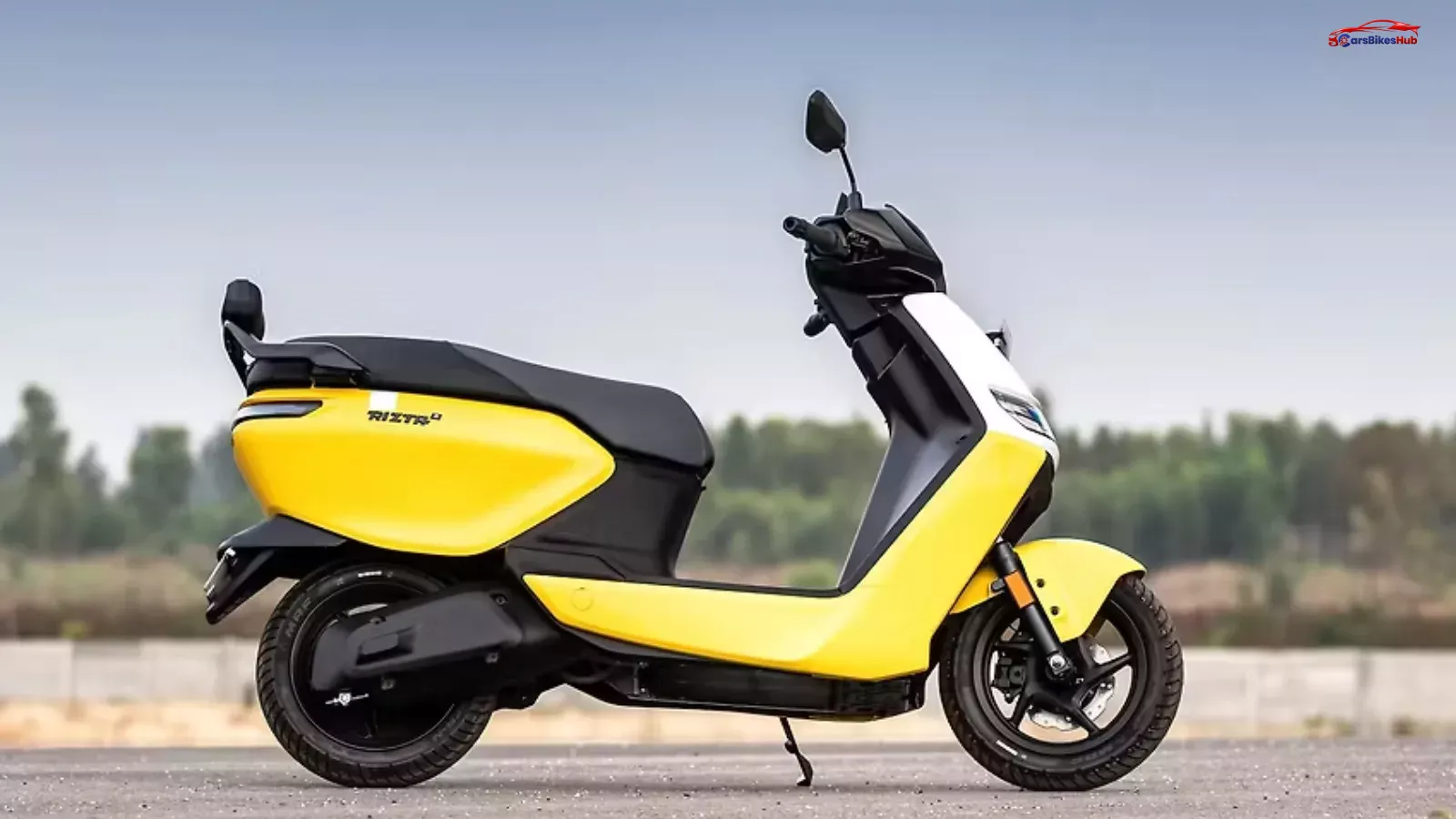
If you’re looking for an electric scooter that can comfortably handle daily commutes, family errands and weekend rides without feeling overly sporty, chances are the Ather Rizta is already on your shortlist.
Unlike the Ather 450X, the Rizta focuses on comfort, practicality and everyday usability. It has become Ather’s best-selling product by far, and with over three lakh units on Indian roads, there’s now enough real ownership data to answer the one question that actually matters: is it worth your money in 2026? Here’s everything you need to know before deciding.
Quick Overview
| Aspect | Details |
| Price (ex-showroom) | ₹1.21 lakh-₹1.59 lakh, depending on variant and pack |
| Variants | S and Z, each with 2.9 kWh and 3.7 kWh battery options (20 variant/colour combinations) |
| Battery | 2.9 kWh or 3.7 kWh, liquid-cooled PMSM motor pack |
| Claimed Range (IDC) | 123 km (2.9 kWh) / 159-160 km (3.7 kWh) |
| Real-World / True Range | ~90–105 km (2.9 kWh) / ~110-125 km (3.7 kWh), riding-style dependent |
| Charging Time (0–80%) | ~5 hr 45 min (2.9 kWh, 350W charger) / ~4 hr 30 min (3.7 kWh, Ather Duo 700W charger) |
| Top Speed | 80 km/h |
| Boot Space | 56 litres total (34L underseat + 22L front frunk on select variants) |
| Warranty | 3 years / 30,000 km standard battery warranty (confirm latest official terms and extended options with your dealer) |
| Best For | Families, daily commuters, first-time EV buyers |
| Main Rivals | TVS iQube, Bajaj Chetak, Ola S1X |
Ather Rizta Price in India
The Rizta’s ex-showroom price starts at around ₹1.21 lakh for the base Rizta S (2.9 kWh) and goes up to roughly ₹1.59 lakh for the top-spec Rizta Z (3.7 kWh) with the Pro Pack and dual-tone paint.
On-road prices in Delhi run from about ₹1.28 lakh at the base end to ₹1.92 lakh for the fully-loaded top variant, once RTO and insurance are added. Expect these figures to shift by a few thousand rupees depending on your city and any recent price revisions, since Ather has adjusted pricing more than once through 2026.
Here’s roughly how the ex-showroom pricing breaks down by configuration:
| Variant | Battery | Approx. Ex-Showroom Price |
| Rizta S | 2.9 kWh | ₹1.21 lakh |
| Rizta S | 3.7 kWh | ₹1.40 lakh |
| Rizta Z | 2.9 kWh | ₹1.32 lakh – ₹1.36 lakh |
| Rizta Z | 3.7 kWh | ₹1.44 lakh – ₹1.59 lakh |
(Add roughly ₹7,000–₹12,000 on top for on-road costs including RTO and insurance, and factor in the Pro Pack separately if you want SkidControl. Always confirm current prices with your local Ather showroom, since EV pricing in India has been revised several times this year.)
Ather Rizta Variants: Which one should you buy?
The pricing structure looks confusing at first glance because Ather sells the Rizta in so many combinations: S and Z trims, 2.9 kWh and 3.7 kWh batteries, mono and dual-tone colours, and an optional Pro Pack. In practice, it boils down to three decisions.
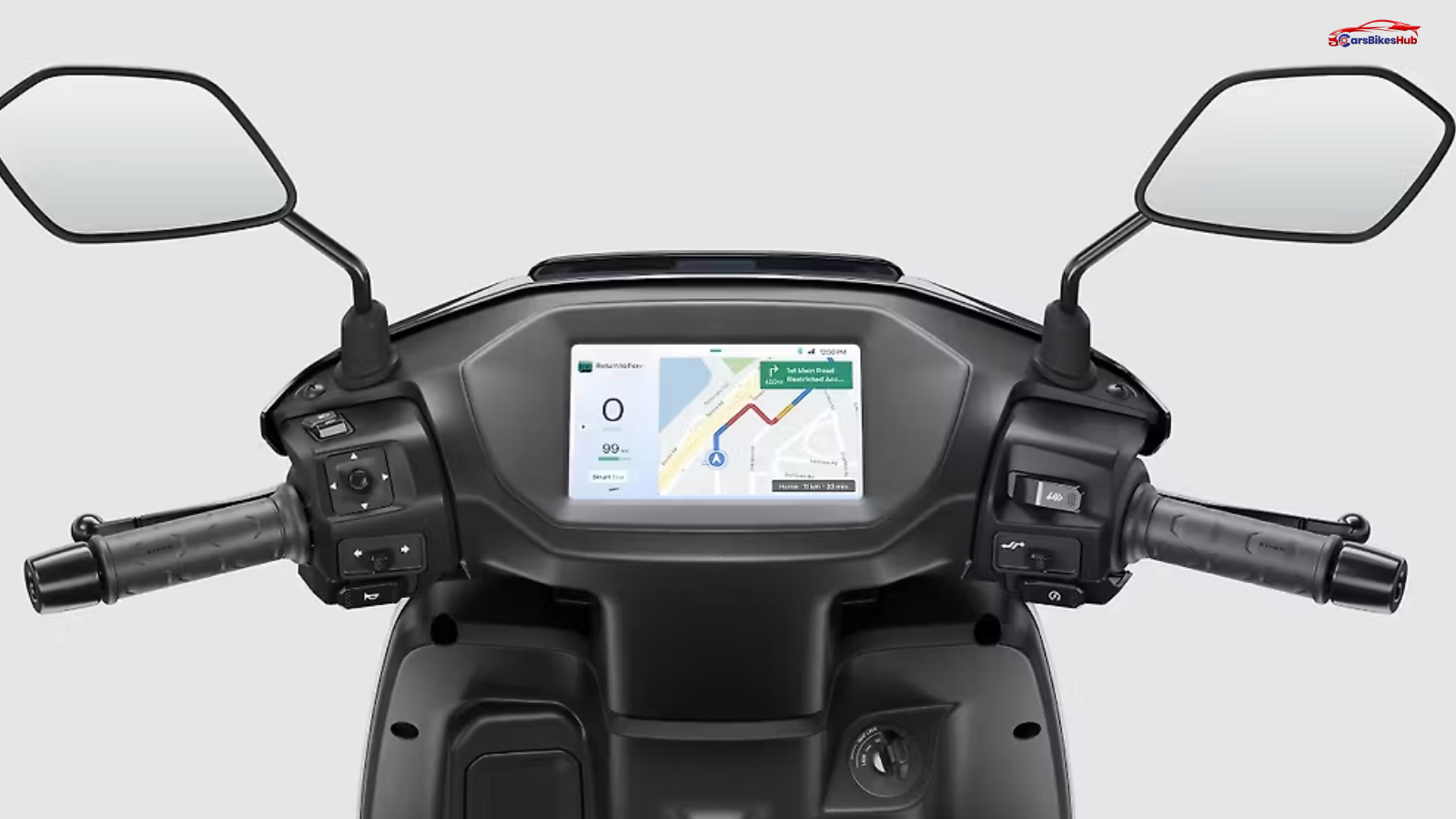
S vs Z: The Rizta S gets Ather’s simpler “Deepview” LCD console, while the Z steps up to a 7-inch colour TFT display that now works as a touchscreen following an OTA update, along with navigation, Bluetooth-based call and WhatsApp alerts, and voice commands. If you actually use a scooter’s connected features, most owners eventually do, the Z is the one to pick.
2.9 kWh vs 3.7 kWh: This is a range decision, not a performance one. Both batteries use the same motor. The bigger pack roughly doubles your real-world cushion between charges, which matters a lot if your daily commute is above 25–30 km round trip, or if you don’t have easy access to charging at home.
The Pro Pack: Features like SkidControl (traction control) are locked behind this optional pack on the Z variant, at an extra cost. For riders in cities that see monsoon flooding or frequently ride on wet, slippery roads, this is worth budgeting for; it’s not just a marketing add-on.
For most buyers, the sweet spot is the Rizta Z 2.9 kWh. It gives you the better display and connected features without paying for range you may not need. Families that regularly do longer errands or don’t want to think about charging every other day should stretch to the 3.7 kWh pack instead.
Design
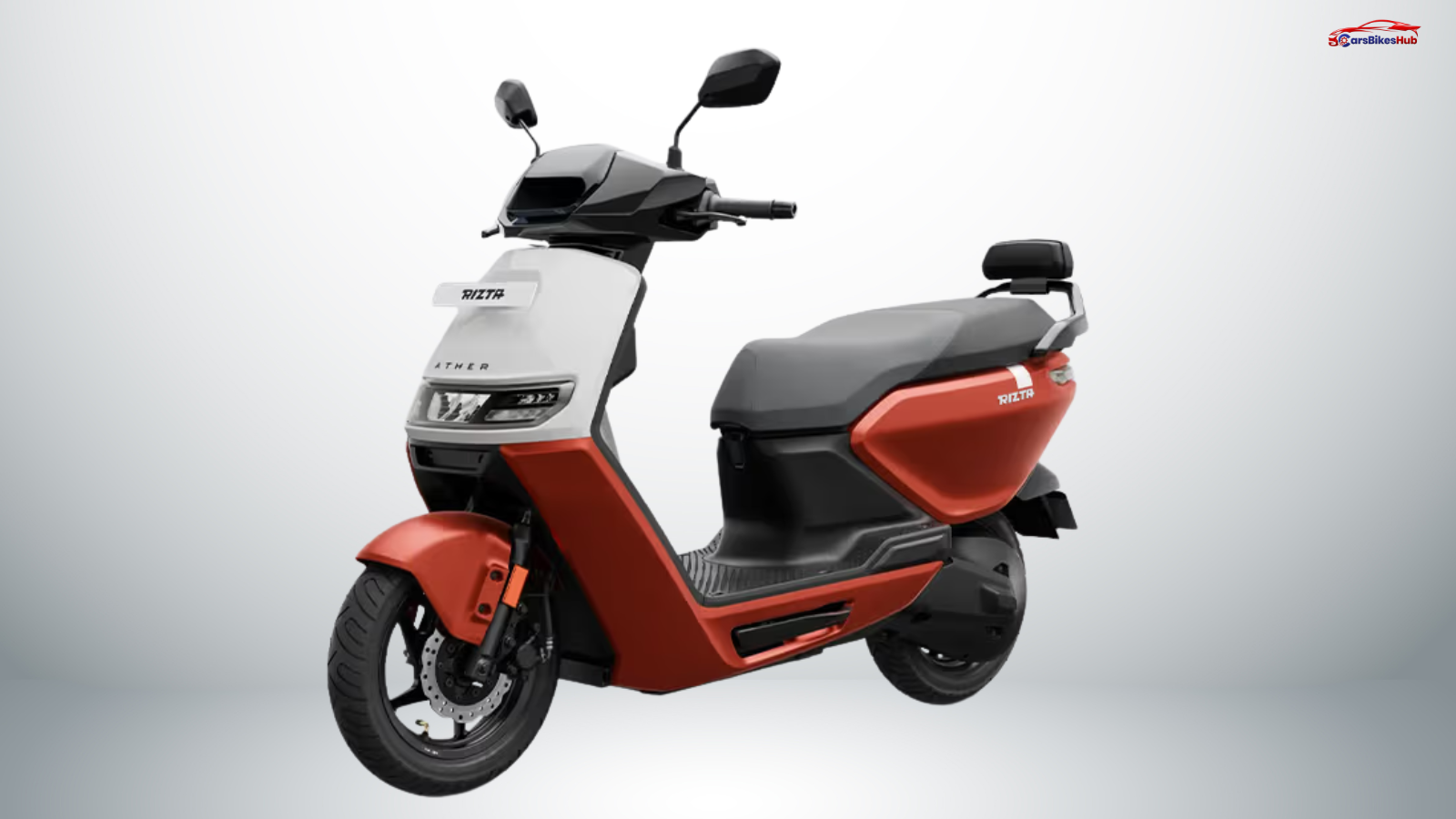
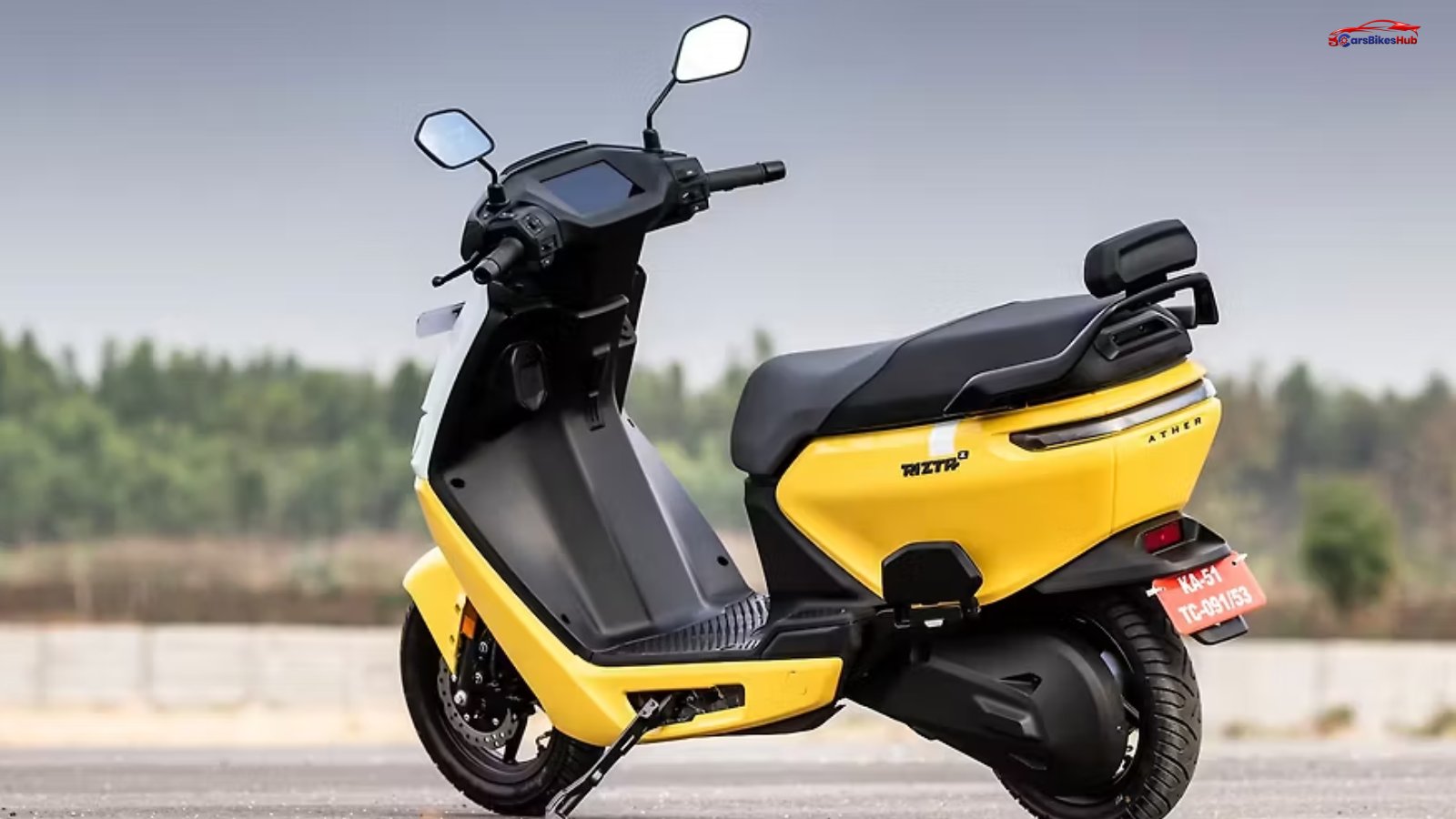
The Rizta deliberately avoids the sharper, sportier look of the 450 series. It has a rounded, friendly silhouette with a rectangular LED headlight and a small flyscreen, styling that’s meant to appeal to a 45-year-old parent as much as a 22-year-old college student, and largely succeeds at that. Build quality feels a step above what Ola offers at a similar price, with even panel gaps and decent paint finish, though it doesn’t quite match the metal-bodied solidity of the Bajaj Chetak.
It’s not a scooter that turns heads, and that’s the point; the design is intentionally inoffensive rather than expressive. Nine colour options are available, with dual-tone shades reserved for the higher variants.
Beyond styling, the riding ergonomics matter more to family buyers, and this is an area the Rizta gets right. At 780mm, the seat height is low enough for shorter riders to get both feet flat on the ground at a stop, a genuine confidence booster for anyone new to two-wheelers, or for a parent who needs to manage a child while stationary. Getting on and off is easy thanks to the flat, wide floorboard and the absence of a tall centre tunnel.
Forward visibility is good, with an upright seating posture and a windscreen-height flyscreen that deflects wind without blocking the view ahead. None of this shows up on a spec sheet, but it’s exactly what makes a scooter feel easy to live with every single day.
Comfort & Practicality
This is where the Rizta earns its “family scooter” label, and it’s the section that matters most if you’re deciding between this and a rival.
Seat: At 900mm, Ather claims this is the longest seat on any scooter sold in India, and it genuinely feels that way. Two adults over six feet tall can sit with room to spare, which is unusual for this segment. The cushioning is on the firmer side, which helps on longer rides but can feel less plush at low speed over broken roads.
Pillion experience: Wide floorboard space, generous legroom, and sturdy grab rails make the Rizta noticeably more accommodating for a second rider than most 110–125cc petrol scooters, let alone most EVs in this price bracket.
Suspension and ride: The setup, telescopic fork up front, monoshock at the rear, absorbs small bumps well without feeling floaty, and the low-mounted battery keeps the centre of gravity planted through corners. It leans firm rather than plush, so sharp potholes and speed breakers do come through more than on a softer petrol scooter.
Storage: 34 litres under the seat is enough for a full-face helmet plus a small bag, and the optional 22-litre front frunk (accessory-fitted on some variants) adds genuine everyday utility, think a bag of vegetables or a school bag. Total usable space of 56 litres beats the TVS iQube by a clear margin.
Floorboard caveat: Multiple long-term owners have reported the floorboard flexing, bulging or “puffing” over time, apparently because it lacks the central support screws found on the 450 series. Ather service centres have offered workarounds rather than a permanent fix so far. It’s not a safety issue, but it’s a build quality miss worth knowing about before you buy, and worth asking your dealer about at delivery.
Battery, Range & Charging
Ather quotes two figures for range: the IDC (Indian Driving Cycle) claim, and a more conservative “True Range” figure that Ather itself displays on the scooter’s dashboard.
Buying Tip: Treat the IDC figure as a laboratory estimate. For everyday planning, use Ather’s True Range or real-world owner experiences instead; it’s the number that will actually match your commute.
- 2.9 kWh pack: 123 km IDC-claimed, ~105 km True Range shown on the app/console.
- 3.7 kWh pack: 159–160 km IDC-claimed, ~125 km True Range.
Real owners riding mostly in Zip mode, in city traffic, with some aggressive throttle use, report figures noticeably below even the True Range number; several long-term owners on ownership forums have logged closer to 60–90 km per full charge depending on load, terrain and how much of the ride is in Zip versus SmartEco mode.
If your daily requirement is under 40–50 km round trip, either battery size will comfortably cover you with margin for a few days between charges. If you’re closer to 60–70 km a day, the 3.7 kWh pack removes a lot of range anxiety.
Charging: The 2.9 kWh variant ships with a 350W portable charger (0–80% in around 5 hours 45 minutes). The 3.7 kWh variant gets the faster Ather Duo 700W charger (0–80% in around 4 hours 30 minutes). Neither is “fast charging” in the EV-car sense; this is realistically an overnight or workday-at-office charging pattern. Ather’s public charging network, Ather Grid, now covers 6,000+ points across 370+ cities, which helps if you don’t have dedicated parking at home.
Running cost: At typical residential electricity rates, most owners estimate running costs at roughly a fourth of what an equivalent petrol scooter would cost per kilometre; this is one of the Rizta’s strongest, least disputed advantages.
One quirk worth knowing: like other Ather scooters, the Rizta draws a small standby battery drain (2–3% per day) even when parked and unused. It’s not unique to this model, but it means a full shutdown is recommended if the scooter will sit for more than a few days.
Performance
The Rizta uses a 4.3 kW PMSM motor producing 22 Nm of torque, capped at 80 km/h. In Zip mode, it pulls away from a standstill smoothly and confidently, enough to comfortably beat autorickshaws and most petrol scooters off the line in city traffic, without feeling jerky for a nervous pillion. SmartEco mode caps speed around 50 km/h and softens throttle response considerably, trading performance for maximum range.
There are only two ride modes, which is fewer than some rivals offer, but in practice most owners settle into one or the other and rarely miss a third option. Overtaking on city roads is confident up to around 60 km/h; beyond that, the acceleration tapers off as you’d expect from a scooter tuned for daily use rather than outright speed. This isn’t a scooter built for long highway stretches; 80 km/h is a hard cap, and sustained high-speed riding eats into range quickly.
Is It Comfortable With a Pillion?
Given the Rizta is built and marketed as a family scooter, this is the question most buyers actually want answered, and it’s a genuine strength. The 900mm seat gives a second rider real space rather than a cramped perch at the back, and the wide floorboard means two adults aren’t fighting for legroom. The monoshock rear suspension is tuned firm enough to stay composed with two-up loads, without the sag or wallowing some rivals show under similar weight. Acceleration in Zip mode remains smooth rather than jerky with a pillion aboard, which matters if you’re riding with a child or an elderly parent. The one adjustment to make: braking distances lengthen noticeably with two riders, so leaving extra following distance in traffic is worth the habit.
Features & Technology
Ather has loaded the Rizta with more tech than most rivals, but not all of it earns its place in daily use. Here’s what’s genuinely worth caring about versus what’s a nice-to-have:
- Magic Twist reverse throttle rotation controls regenerative braking, letting you slow down or even stop without touching the brake lever. Owners who get used to it tend to rely on it constantly.
- AutoHold holds the scooter in place on inclines without the rider having to balance on the brake. Particularly useful for parents managing a child while stopped at a signal on a slope.
- Reverse mode genuinely helpful for backing out of tight parking spots, especially for a scooter this size.
- OTA updates: Ather has a strong track record of pushing real feature improvements (like the touchscreen upgrade) after purchase, rather than leaving the product static.
- 7-inch TFT with navigation and Bluetooth is useful if you’re used to a connected dashboard, but most riders will still glance at their phone for turn-by-turn directions on unfamiliar routes.
- WhatsApp previews, call decline with text replies handy in theory, though many owners simply keep their phone accessible instead.
- Cricket Dash, live scores on console, is a fun gimmick, not a purchase-deciding feature.
- Multiple regional-language dashboard options useful for some households, irrelevant for others.
Safety
The Rizta comes with Combined Braking System (CBS), which links the front and rear brakes, but notably does not offer ABS as standard, something to weigh against rivals as ABS becomes more common industry-wide. Other safety features include FallSafe (cuts motor power if the scooter detects a fall), an Emergency Stop Signal that flashes hazard lights under hard braking, pothole and crash alerts, and hill hold to prevent roll-back on inclines.
SkidControl, Ather’s traction control system, is a genuinely useful feature for monsoon riding or wet roads, but it’s gated behind the optional Pro Pack on the Z variant rather than included as standard, which is worth factoring into your final price.
Ride stability at city speeds is confident thanks to the low centre of gravity from the underfloor battery pack, and multiple owners report feeling planted even with a pillion and luggage aboard.
Ownership Experience
This is the section that separates a good test ride from a good long-term purchase, and it’s where verified owner feedback (rather than brochure claims) becomes most valuable.
Service and delivery: Mos owners report smooth booking-to-delivery experiences, generally within a couple of weeks of booking. Ather’s showroom staff are frequently praised as more responsive than some EV rivals.
Reliability: The overall pattern from long-term owner threads is that the Rizta is largely dependable for daily riding, with routine servicing rather than frequent breakdowns. That said, isolated but documented failures do exist; an owner reported a Power Distribution Unit (PDU) failure at roughly 6,000 km, which required a tow; the owner noted this component has been flagged as a known failure point in other owner forums as well, and that spare-part availability at service centres could be better. This isn’t evidence of a widespread reliability crisis, but it’s a real data point worth being aware of rather than dismissing.
Software and app: Owners generally rate the Ather app and OTA update cadence positively; the console genuinely gets better over time through free updates, which isn’t true of every EV brand.
Warranty: Ather offers a standard battery warranty of 3 years or 30,000 km on the Rizta, with extended coverage options available at purchase. Always confirm the exact terms and any extended-warranty add-ons directly with your dealer, since these have changed across the product’s lifecycle.
Resale: As one of the highest-selling electric scooters in India with over three lakh units sold, the Rizta has a large enough owner base that resale and second-hand parts availability should be more manageable than niche EV rivals, though the EV resale market overall is still less mature than for petrol scooters, and battery health should always be verified independently rather than taken on trust when buying used.
What Should You Check During a Test Ride?
Brochure numbers and review articles (this one included) can only take you so far; the Rizta is a scooter where a proper test ride genuinely changes buying decisions. Before you sign anything, check:
- Seat comfort for your height: sit for a few minutes, not just a few seconds, and check how the cushioning feels once your weight settles.
- Floorboard fit for your riding posture:e given the reported flex issue on some units, ask to see an early-production one versus a recent one if the dealer has both.
- Display readability: try the TFT screen in direct sunlight, not just under showroom lighting.
- Magic Twist in real traffic: try the regen-braking throttle rotation at a live signal, not just in an empty parking lot; it feels different once you’re managing actual traffic.
- Under-seat storage with your helmet: brochure litre figures don’t always translate to “does my specific helmet actually fit and close properly.”
- A ride with a pillion: if possible, ask a friend or family member to join you; braking feel and suspension behaviour change meaningfully with two-up weight.
None of this takes more than 15–20 extra minutes at the showroom, and it’s the difference between buying based on a spec sheet and buying based on how the scooter actually fits your life.
Who Should Buy the Ather Rizta?
- Families who need a scooter that comfortably seats two adults plus occasional cargo; the seat and storage genuinely deliver here.
- Daily office commuters with a round trip under roughly 50–60 km, who value smooth, predictable performance over outright speed.
- First-time EV buyers who want a well-supported charging network and an app/software experience that keeps improving after purchase.
- Riders prioritising comfort over performance, who’d rather have a calm, planted ride than sharp handling or blistering acceleration.
Who Should Skip It?
- Riders who want a sportier, more engaging ride should look at the Ather 450X instead; it’s quicker, sharper to steer, and built around performance rather than comfort.
- Anyone doing frequent long highway stretches will find the 80 km/h cap and range-versus-speed trade-off limiting; this is fundamentally a city and suburban scooter.
- Buyers who want ABS as standard rather than CBS, or who want traction control included without paying extra, may want to cross-shop the TVS iQube or Bajaj Chetak before deciding.
Final Verdict: Is the Ather Rizta Still One of the Best Family Electric Scooters to Buy in 2026?
For the audience it’s built for- families, daily commuters, and first-time EV buyers who value comfort and storage over speed the Ather Rizta remains one of the strongest options in its price bracket in 2026. The seat, storage, and software experience are hard to match at this price, and the running-cost advantage over petrol scooters is real and significant.
It isn’t flawless: the absence of standard ABS, traction control locked behind a paid pack, some documented build-quality niggles like floorboard flex, and real-world range that falls short of IDC claims are all legitimate reasons for caution. None of these is the dealbreaker on their own, but together they mean the Rizta rewards buyers who go in with realistic expectations rather than showroom-brochure ones.
If your daily riding is mostly city-bound, your household needs the extra seat and storage space, and you’re comfortable with an overnight charging routine, the Rizta is easy to recommend. If you want sharper performance, standard ABS, or genuine highway capability, it’s worth cross-shopping the 450X, TVS iQube or Bajaj Chetak before signing the cheque.
For most families and daily commuters, the Ather Rizta earns a clear recommendation because it gets the basics right: comfort, practicality, low running costs and a mature software experience. Just make sure you’re buying it for what it is: a refined family scooter, not a performance-focused EV.


FAQs
Is the Ather Rizta worth buying in 2026?
For families and daily commuters who ride mostly within city limits and can charge overnight, yes, its comfort, storage and software experience are genuinely class-leading. If you need long-range or highway performance, it's not the right fit.
What is the real-world range of the Ather Rizta?
Expect roughly 90–105 km on the 2.9 kWh pack and 110–125 km on the 3.7 kWh pack under mixed riding, with figures dropping further if you ride mostly in Zip mode.
How long does the Ather Rizta take to charge?
Around 5 hours 45 minutes (0–80%) on the 2.9 kWh charger, or about 4 hours 30 minutes (0–80%) on the faster Ather Duo charger that comes with the 3.7 kWh variant.
Is the Ather Rizta good for families?
Yes, it has the longest seat in its segment, generous storage, and pillion-friendly ergonomics, making it one of the most practical electric scooters for two adults plus occasional cargo.
Which Rizta variant is best for most buyers?
The Rizta Z 2.9 kWh strikes the best balance of features and price for most riders; upgrade to the 3.7 kWh pack if your daily distance is higher or charging access is limited.