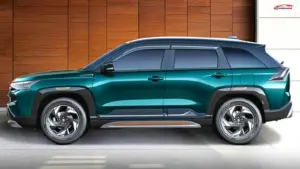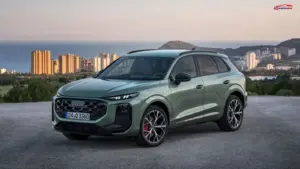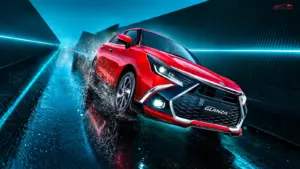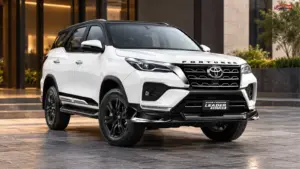




























If you’re shopping for a midsize SUV in India right now, chances are your shortlist already has these three names on it: the Kia Seltos, the Hyundai Creta and the Maruti Suzuki Grand Vitara. All three sit in roughly the same price band, all three are loaded with features, and all three have loyal fan bases. On paper, they look like they’re fighting for the same buyer, but they aren’t.
The Seltos is the enthusiast’s pick: a turbo-petrol engine, a proper dual-clutch gearbox and the most road presence of the three. The Creta is the safe, sorted all-rounder that’s outsold almost everything else in the segment for years. The Grand Vitara is the efficiency specialist, built around a Toyota-sourced strong-hybrid system that no rival in this trio can match.
So the real question isn’t “which SUV is best.” It’s “which SUV is best for you, your budget, your commute, your family, and how you plan to use the car for the next five to seven years.” That’s what this article is built to answer.
Kia Seltos vs Hyundai Creta vs Maruti Grand Vitara: A Quick Comparison
| Kia Seltos | Hyundai Creta | Maruti Grand Vitara | |
| Starting price (ex-showroom) | ₹10.99 lakh | ₹10.91 lakh | ₹10.77 lakh |
| Top variant price | ~₹20 lakh | ~₹20.1 lakh | ~₹19.7 lakh |
| Engines | 1.5L NA petrol, 1.5L turbo-petrol, 1.5L diesel | 1.5L NA petrol, 1.5L turbo-petrol, 1.5L diesel | 1.5L mild-hybrid petrol, 1.5L strong hybrid, 1.5L CNG |
| Transmissions | 6MT/IVT (NA petrol), 6iMT/7DCT (turbo), 6MT/6AT (diesel) | 6MT/CVT (NA petrol), 7DCT (turbo), 6MT/6AT (diesel) | MT/AT (petrol), e-CVT only (hybrid) |
| Claimed mileage | Around 17 kmpl (NA petrol); diesel more efficient | 17.4–21.8 kmpl depending on powertrain | 20.16–21.11 kmpl (petrol); 27.97 kmpl (strong hybrid) |
| Boot space | Competitive, no hybrid penalty | Competitive, no hybrid penalty | 398 litres petrol; smaller in hybrid (battery pack) |
| ADAS | Level 2+, 21 features, standard from mid-spec up | Level 2, standard from upper-mid trims | Not offered |
| Diesel option | Yes | Yes | No |
| AWD option | No | No | Yes (ALLGRIP, petrol-AT only) |
| Best for | Driving enjoyment, highway punch | All-round balance, widest choice of variants | Long-term running costs, fuel efficiency |
In short: Choose the Seltos for performance and technology, the Creta for comfort and all-round usability, and the Grand Vitara for low running costs and hybrid efficiency.
Pricing & Value
All three SUVs start within a few thousand rupees of each other; the Grand Vitara is the cheapest to get into at roughly ₹10.77 lakh, followed by the Creta at around ₹10.91 lakh and the Seltos at roughly ₹10.99 lakh (all ex-showroom).
But the sticker price at the bottom of the range tells you very little, because none of these are one-engine, one-gearbox cars. Where the real differences show up is what you have to spend to get the powertrain and features you actually want.
With the Seltos, the turbo-petrol DCT, arguably the most desirable combination in the range, sits meaningfully above the base price, and the diesel automatic climbs even higher. The Creta follows a similar pattern: the turbo-petrol DCT and diesel-automatic combinations are reserved for the upper trims, so budget-conscious buyers who want an automatic gearbox often end up on the CVT-equipped naturally aspirated petrol instead.
The Grand Vitara plays a different game entirely. Its strong-hybrid variants cost more than the equivalent petrol trim, but that premium is the one most likely to pay for itself, because you’re not just buying comfort features; you’re buying a fundamentally more efficient drivetrain that saves money every single month.
Bottom line: if you’re comparing “loaded top variant to loaded top variant,” the Creta (topping out around ₹20.1 lakh) tends to undercut the Seltos (around ₹20 lakh) slightly, while the Grand Vitara’s hybrid flagship (around ₹19.7 lakh) costs about the same as the other two but delivers running costs neither can match.
Design & Road Presence
While styling comes down to personal taste, each of these SUVs has a distinct personality on the road.
The Seltos looks bold and sporty, the largest and most visually aggressive of the three, with a big “tiger-nose” grille and a stance that means business in a parking lot. The Creta looks mature and premium, a more restrained, squared-off design that ages well rather than chasing drama. The Grand Vitara looks understated and elegant, the most tasteful of the three, built for buyers who’d rather not have their car shouting for attention.
Winner: Seltos for outright road presence. Creta for looking premium without trying too hard. Grand Vitara for buyers who actively prefer understatement.
Interior Quality & Comfort
This is where owning the car day-to-day really diverges from browsing a brochure.
The Seltos has moved to a genuinely tech-heavy cabin with strong build quality, though rear seat space is merely competitive, not class-leading.
The Creta is the segment benchmark here; its rear seat is consistently rated the roomiest and most comfortable of the three, which matters if you regularly carry passengers rather than just occasionally.
The Grand Vitara trades outright plushness for practicality: legroom is generous front and rear, but the cabin materials and finish feel a step behind the other two, and the strong-hybrid variant’s boot shrinks slightly to make room for the battery pack.
Winner: Creta for interior richness and rear-seat comfort. If you sit in all three back-to-back, the Creta feels the most premium, the Seltos feels the most modern and tech-forward, while the Grand Vitara prioritises practicality over visual drama.
Features & Technology
All three SUVs are loaded by segment standards, with wireless Android Auto/Apple CarPlay, ventilated seats and a 360-degree camera available across the range- genuinely useful, day-to-day features rather than gimmicks.
The feature that actually separates these three: ADAS. Both the Seltos and Creta offer Level 2 (or Level 2+, in the Seltos’s case) driver-assistance systems, adaptive cruise control, automatic emergency braking, lane-keep assist and blind-spot monitoring on their higher trims. The Grand Vitara does not offer ADAS at all. If active safety technology is a priority for highway driving, this single difference should weigh heavily in your decision, regardless of how strong the Grand Vitara is elsewhere.
Winner: Seltos, marginally, for having the most extensive ADAS feature count (21 features) alongside a head-up display and digital key. Creta is close behind. Grand Vitara falls behind specifically on this front.
Engine Options & Driving Experience
This is the section where the three cars genuinely stop competing for the same buyer; each one leans into a different strength.
Seltos is equal to Performance. Three engines, including a 158bhp turbo-petrol paired with a 7-speed DCT that’s the most engaging drivetrain of the three.
Creta is equal to Refinement. Similar engine range to the Seltos, but the diesel-automatic is regarded as one of the smoothest in the segment for sustained highway cruising.
Grand Vitara is equal to Efficiency. No diesel or turbo-petrol; instead, a Toyota-sourced strong-hybrid that’s the smoothest and quietest at low speed, though it trails both rivals on outright pace. It’s also the only one of the three offered with AWD (ALLGRIP Select), useful for occasional light off-roading.
Recommendation by driving style:
- Want a genuinely quick, engaging drive: Seltos turbo-petrol DCT
- Want the smoothest, most refined long-highway cruiser: Creta diesel-automatic
- Want low running costs and don’t care about outright pace: Grand Vitara strong hybrid
- Want occasional light off-road capability: Grand Vitara AWD
Real-World Mileage
This is one of the most decisive factors for most Indian buyers, and it’s also where the Grand Vitara has a genuine, uncontested advantage.
Claimed (ARAI) figures:
- Seltos: NA petrol around 17 kmpl; diesel and turbo-petrol vary by transmission
- Creta: ranges from 17.4 kmpl (petrol) up to 21.8 kmpl (diesel-manual)
- Grand Vitara: 20.16–21.11 kmpl on petrol, and a class-leading 27.97 kmpl on the strong hybrid
Real-world expectations (based on owner and reviewer testing) tend to run lower than claimed figures across the board, as always. The Creta’s diesel-manual has been independently tested, returning around 16.5 kmpl in heavy city traffic and over 20 kmpl on the highway, genuinely strong for a diesel of this size.
The Grand Vitara’s strong hybrid, meanwhile, has been reported by owners and reviewers delivering somewhere in the 18–23 kmpl range in real-world city driving, well down from the ARAI figure, as is typical for hybrids, but still comfortably ahead of anything the Seltos or Creta petrol engines can achieve, and competitive with or better than their diesels in city use.
Winner, clearly: Grand Vitara strong hybrid. If mileage is your single biggest priority, especially for a car that spends most of its life in city traffic, nothing else in this comparison gets close, though its advantage narrows on long highway runs, where a good diesel closes the gap.
Ownership Costs
Purchase price is only the beginning. Over five years, fuel, servicing and resale drive the real cost of ownership.
Fuel costs favor the Grand Vitara hybrid decisively for city-heavy usage; for highway-heavy running, the Creta or Seltos diesel narrows that gap considerably.
Servicing tends to favor Maruti Suzuki on pure network reach, which matters if you live outside a major metro, though Hyundai and Kia both run strong, well-regarded service networks of their own.
Reliability is generally solid across all three brands, though the Grand Vitara’s hybrid system is mechanically more complex and can carry a theoretically higher repair cost outside warranty.
Resale value has traditionally favored Maruti Suzuki, with strong-hybrid variants likely to hold value even better as demand for fuel-efficient SUVs grows; the Creta and Seltos both hold value reasonably well too, given their consistent sales volumes.
Bottom line: the Grand Vitara hybrid is likely the cheapest of the three to actually own over five years for a city-heavy driver. The Creta and Seltos are closely matched, with the edge depending on whether you choose petrol or diesel.
Safety
All three SUVs come with six airbags as standard, along with core active safety features like ABS with EBD, electronic stability control and hill-start assist. Where they diverge is in the depth of driver-assistance technology.
The Seltos offers the most extensive ADAS suite of the three, Level 2+ with 21 autonomous safety features including adaptive cruise control, automatic emergency braking, lane assist, blind-spot monitoring and auto high beam, available from its mid-to-upper trims.
The Creta offers a comparable Level 2 ADAS suite, forward collision avoidance, lane-keep assist and smart cruise control, also gated to its higher trims.
The Grand Vitara does not offer ADAS. It compensates with a solid base safety package (6 airbags, ESP, hill-hold, 360-degree camera, TPMS) built on Maruti’s TECT platform, but buyers who specifically want active driver-assistance technology for highway driving will not find it here at any price point.
Safety ratings can change over time, so it’s worth checking the latest Bharat NCAP results for your chosen variant before making a final decision.
Winner: Seltos and Creta are closely matched and both clearly ahead of the Grand Vitara on this front, specifically because of ADAS availability.
Which SUV Suits Different Buyers?
| Buyer Type | Best SUV | Why |
| First-time SUV buyer | Hyundai Creta | Widest variant spread, easiest to configure to your budget |
| Family with kids | Hyundai Creta | Best rear-seat space and comfort of the three |
| Highway traveller | Kia Seltos (turbo-petrol/diesel) or Creta diesel | Strongest highway drivetrains and refinement |
| City commuter | Maruti Grand Vitara (hybrid) | Best low-speed efficiency, smoothest in traffic |
| Mileage-focused buyer | Maruti Grand Vitara (hybrid) | Nothing else in this comparison comes close |
| Feature lover / tech-focused | Kia Seltos | Most extensive ADAS, HUD, digital key |
| Long-term, low-hassle owner | Maruti Grand Vitara | Widest service network, strong resale |
| Driving enthusiast | Kia Seltos (turbo-petrol DCT) | Most engaging drivetrain of the three |
| Occasionaloff-road/roughh terrain | Maruti Grand Vitara AWD | Only one of the three with AWD |
Pros & Cons
| Pros | Cons | |
| Kia Seltos | Bold styling, most extensive ADAS, engaging turbo-petrol DCT, strong safety score | Turbo-DCT and diesel variants push the price up quickly |
| Hyundai Creta | Best all-round balance, roomiest rear seat, widest variant choice, strong diesel refinement | Petrol mileage isn’t segment-leading; automatic options limited on lower trims. |
| Maruti Grand Vitara | Best-in-class hybrid mileage, largest service network, AWD option, strong resale | No ADAS, no diesel, smaller boot on hybrid variants, less premium-feeling cabin |
Verdict
Each of these SUVs excels in a different area, which is why there isn’t a single winner. The right choice depends entirely on what matters most to you.
Buy the Kia Seltos if
You want the most road presence, the most complete ADAS package, and you actually enjoy driving, particularly if the turbo-petrol DCT is within budget. It’s the pick for buyers who see their SUV as more than just a practical box on wheels.
Buy the Hyundai Creta if
You want the safest, most well-rounded choice, the car that does almost everything well, offers the widest range of variants to match any budget, and gives your family the most comfortable rear seat of the three. It remains the segment’s default choice for good reason.
Buy the Maruti Grand Vitara if
Your priority is minimizing what you spend on fuel and servicing over the next five to seven years, especially if most of your driving is inside city limits. The strong-hybrid variant is, quite simply, in a different league on running costs; you just have to be willing to trade away ADAS and a diesel option to get there.




FAQs
Which SUV offers the best mileage, Seltos, Creta or Grand Vitara?
The Maruti Grand Vitara's strong-hybrid variant offers the best mileage by a clear margin, with an ARAI-claimed 27.97 kmpl and real-world city figures typically in the high-teens to low-twenties.
Which SUV has the lowest maintenance cost?
The Grand Vitara generally has an edge here due to Maruti's extensive and often more affordable service network, though buyers should confirm hybrid-specific service costs, which can be marginally higher than for the naturally aspirated petrol.
Which SUV is the best family SUV?
The Hyundai Creta, thanks to its roomier rear seat and the widest range of variants to match different family budgets.
Which SUV is best for highway driving?
The Kia Seltos turbo-petrol DCT and the Hyundai Creta diesel-automatic are both strong highway performers, with the Creta diesel edging ahead on refinement for sustained long-distance cruising.
Which SUV is best for city driving?
The Maruti Grand Vitara strong hybrid, thanks to its ability to run on electric power at low speeds and its smooth, low-stress driving character in traffic.