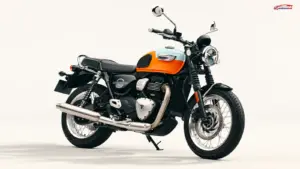























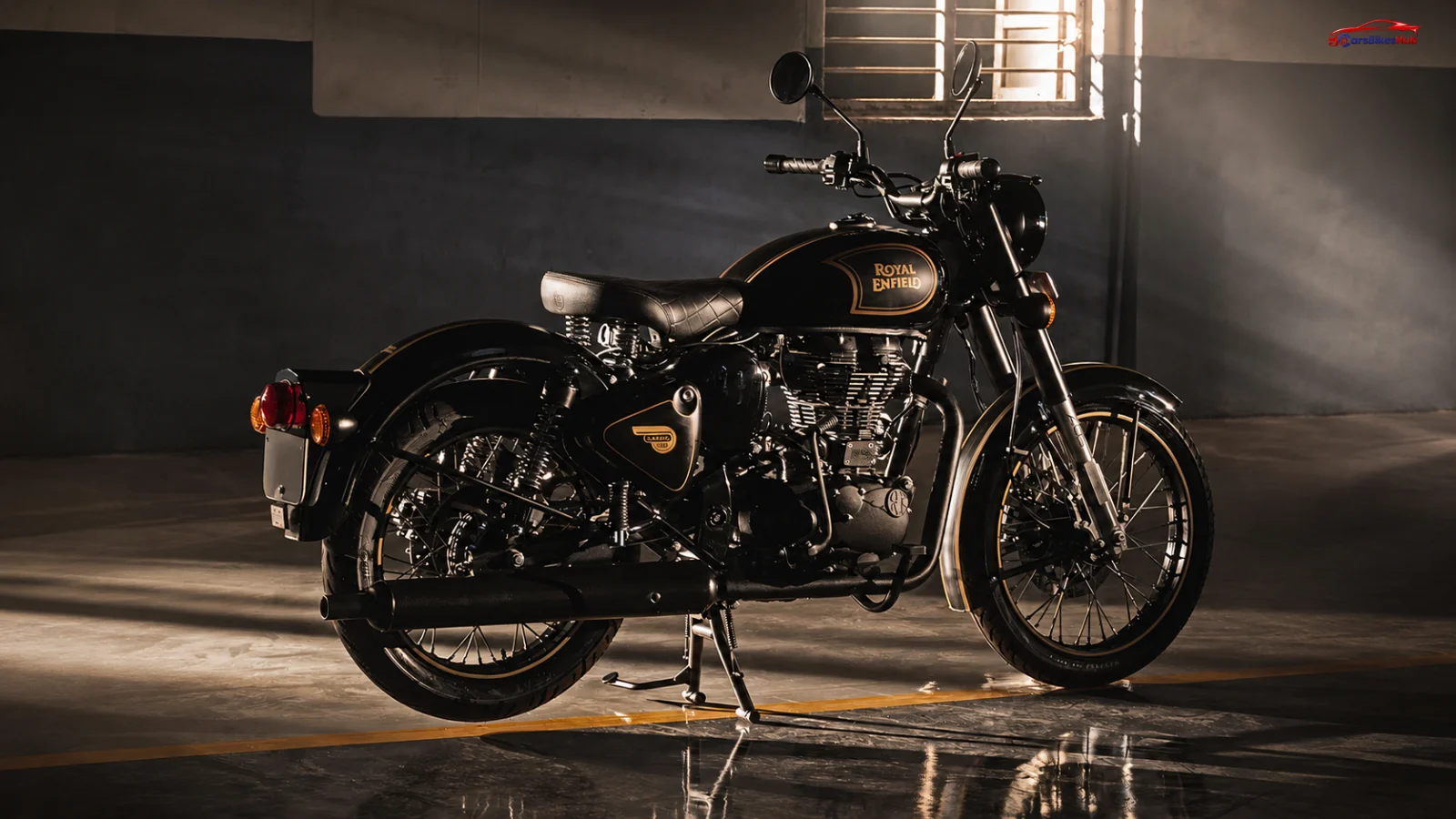
The Royal Enfield Classic 350 has long been one of India’s most popular motorcycles, and it remains the brand’s best-selling model, with average monthly sales running past 30,000 units. The 2026 update doesn’t reinvent the bike, but it does bring two changes that genuinely affect day-to-day riding and, more importantly, which variant you should actually put your money on.
Beyond the latest updates, buyers also want to know how the Classic 350 performs in everyday riding, what it costs to own, and whether it’s still the best retro motorcycle in its segment; this article answers those questions before you make a purchase. If you’re planning to buy one, here’s everything worth knowing before you sign the paperwork.
Quick Overview
| Item | Details |
| Starting Price | ₹1.87 lakh (Redditch Red, single-channel ABS, ex-showroom) |
| Top Variant Price | ₹2.24 lakh (Emerald Green, dual-channel ABS, ex-showroom) |
| Engine | 349cc, single-cylinder, air-cooled, J-series |
| Power | 20.2 bhp @ 6,100 rpm |
| Torque | 27 Nm @ 4,000 rpm |
| Mileage (ARAI) | ~41.5 kmpl (real-world: 33–38 kmpl depending on use) |
| Fuel Tank | 13 litres |
| Kerb Weight | 195 kg |
| Seat Height | 805 mm |
| Variants | Redditch, Halcyon, Signals, Dark, Chrome series (single- and dual-channel ABS) |
| Colours | 7 schemes, after two were discontinued for 2026 |
| Best For | Commuting, weekend rides, and buyers who want a comfortable, low-drama first big bike |
Ex-showroom prices are Delhi figures and will vary by state due to RTO and local taxes.
What’s New in Royal Enfield Classic 350 2026?
Royal Enfield’s 2026 update to the Classic 350 is deliberately narrow. There’s no new engine, no styling overhaul, no change to the frame or suspension. Two things have changed, and one thing has been quietly removed.
Assist and slipper clutch. This is the headline update, and it’s mechanical rather than cosmetic. An assist-and-slipper clutch does two jobs. First, it reduces the effort required on the clutch lever, which matters far more than it might sound if you spend an hour a day in stop-go traffic. Second, it manages aggressive downshifts by preventing the rear wheel from hopping or locking up when you drop gears quickly, which adds a small but real margin of control on a descent or when you’re slowing down faster than planned.
USB Type-C fast charging. The Classic 350 already had a USB port in recent years; this update swaps it for a Type-C connector capable of faster charging. If you run a phone mounted for navigation on longer rides, this is a genuine quality-of-life improvement rather than a marketing checkbox; a phone burning battery on GPS all day actually gets topped up meaningfully faster now.
Colour rationalisation. Halcyon Black and Jodhpur Blue have been discontinued, trimming the lineup to seven colour schemes across the Redditch, Halcyon, Signals, Dark, and Chrome series.
Updated pricing. Alongside these changes, Royal Enfield has also pushed through a marginal price increase across the range in the region of ₹1,500–1,800 depending on variant, which the company has attributed to rising input costs rather than to the new features themselves.
Do these updates actually improve ownership?
Yes, but selectively. The assist and slipper clutch and the USB-C port are only available on the dual-channel ABS variants, which start at ₹1.95 lakh. The base single-channel Redditch Red variant, at ₹1.87 lakh, carries on completely unchanged: same clutch, same USB port, same everything.
That means the improvement isn’t really “the 2026 Classic 350 got better.” It’s “the more expensive half of the Classic 350 range got better, and the cheapest variant now looks comparatively more dated than it did a year ago.” For a buyer, this changes the calculation around which variant makes sense far more than it changes anything about whether to buy a Classic 350 at all.
Price & Variants
The Classic 350 lineup spans five series, Redditch, Halcyon, Signals, Dark, and Chrome, priced from ₹1.87 lakh to ₹2.24 lakh (ex-showroom). Only the base Redditch Red is single-channel ABS with a rear drum brake and no slipper clutch; everything from Halcyon upward is dual-channel ABS with the new assist-and-slipper clutch and USB-C charging.
Most buyers should choose a Halcyon-series dual-channel ABS variant in whichever colour they like. It’s difficult to justify the base single-channel variant unless you’re buying on the tightest possible budget, because the brake and clutch differences are the sort of thing you notice every single day, not once. The top-end Chrome and Emerald Green options are the hardest to justify on value; you’re paying a premium of roughly ₹25,000–29,000 over the entry dual-channel variant for paint and trim alone.
On-Road Price: What You’ll Actually Pay
Ex-showroom prices only tell part of the story. On-road prices generally range between ₹2.2 lakh and ₹2.7 lakh, depending on the city, insurance, and accessories added at purchase. Ask your dealer for the exact on-road quotation for your city and variant before booking.
Engine & Performance
The Classic 350 runs the same 349cc, air-cooled, single-cylinder J-series engine, making 20.2 bhp and 27 Nm of torque through a 5-speed gearbox. Here’s what that translates to on the road.
City. The engine’s low-end torque does the work; you rarely need to drop below third gear even at low speeds, and it pulls cleanly from idle. This forgives lazy gear selection in traffic in a way peakier 350s don’t, which is the biggest reason it works so well as a daily commuter.
Highway. The engine is happiest cruising between 65–80 kmph. Push it toward its 115 kmph top speed and vibrations through the footpegs and handlebar become noticeable. Overtaking requires planning rather than an instant burst, dropping a gear and using the torque, rather than expecting sudden acceleration.
Performance verdict. The thump and vibration are part of the character for many buyers, but riders expecting the smoothness of RE’s own 650 twins or a liquid-cooled rival will notice the difference immediately. This isn’t a bike built for outright pace; it’s built for easy, unhurried riding.
Real-World Mileage
Royal Enfield’s ARAI-certified figure for the Classic 350 sits around 41.5 kmpl, but that number is generated under standardised test conditions that rarely match how the bike is actually ridden.
City riding: expect somewhere in the 33–38 kmpl range. Stop-go traffic, frequent gear changes, and idling at signals all pull the real number down from the ARAI figure. Riders who commute daily in heavy traffic should budget toward the lower end of this range.
Highway riding: mileage improves to roughly 40–43 kmpl when cruising at steady, moderate speeds (60–80 kmph). Push the bike consistently toward its top speed, and this figure drops noticeably, since the single-cylinder engine works harder and less efficiently at the top of its range.
The riders who’ll see numbers closest to the ARAI figure are those doing a mix of steady highway stretches with light traffic and disciplined, unhurried gear usage, not the daily city commuter constantly stopping and starting, and not the rider who treats every straight as an excuse to hold the throttle wide open.
Ride & Comfort
This is where the Classic 350 has consistently earned its reputation, and the 2026 model carries that forward unchanged.
Ride quality. Telescopic forks up front and twin gas-charged shocks at the rear soak up broken city roads and moderate potholes well, tuned toward comfort over sharpness.
Comfort. The rider’s seat is wide and well-padded, with an upright posture that doesn’t strain the wrists or back. Pillion comfort is a step down; the perch is narrower, and a backrest is an aftermarket add-on on most variants worth budgeting for if you regularly ride two-up.
City use. The low 805 mm seat height and predictable low-speed handling make the bike easy to manage in traffic, though the 195 kg kerb weight is noticeable the moment you’re pushing it, doing a U-turn on an incline, or parking in a tight spot.
Touring. Riders regularly cover 200–300 km days on it without excessive fatigue, provided the pace stays realistic. Handling is stable and neutral rather than agile; it’s tuned for confidence at a relaxed pace, not quick direction changes.
Design
The Classic 350’s styling is the reason a meaningful share of its buyers choose it over more modern or more powerful alternatives, and Royal Enfield has wisely left it untouched for 2026. The timeless silhouette, round headlamp, teardrop fuel tank, and sprung-look seat have barely changed in over a decade.
Build quality has improved meaningfully over successive generations, particularly switchgear feel and panel fit, though it still trails rivals like the Honda H’ness CB350 in outright fit-and-finish precision. Chrome variants get striking chrome fuel tank panels and mudguards, while the Dark series goes blacked-out;d both execute well, and the choice is purely down to taste.
Features & Technology
Royal Enfield has resisted the urge to load the Classic 350 with features it doesn’t need. The useful ones:
Tripper navigation pod, available on most variants, shows turn-by-turn directions pulled from your phone via Bluetooth genuinely useful on unfamiliar routes.
Semi-digital instrument cluster mixes an analogue speedometer with a small digital display for trip data, fuel level, and service reminders functional rather than flashy, and legible in daylight.
USB Type-C charging, new for 2026 on dual-channel variants, matters in practice if you run navigation for hours at a time.
Safety
Safety equipment on the Classic 350 is adequate for its class rather than class-leading.
ABS comes as single-channel (front only, base variant) or dual-channel (front and rear, all other variants); dual-channel is meaningfully safer in wet or loose-surface braking and worth prioritising over the base variant for this reason alone.
The assist and slipper clutch also has a safety dimension: preventing rear-wheel hop during hard, fast downshifts reduces the chance of a skid when a rider slows down quickly and drops gears in a hurry.
Lighting is full-LED across the range, including the headlamp, a genuine improvement in nighttime visibility over older halogen units.
Ownership Experience
This is arguably the section that matters most to a buyer, because the Classic 350 is bought as much for what it’s like to live with over three or five years as for what it’s like to ride on day one.
Service cost is one of the Classic 350’s real strengths. Routine services are inexpensive for the segment, with owners commonly reporting basic service bills of ₹900–1,500, excluding parts. First service is due at 500 km, with subsequent services every 5,000–6,000 km or six months; the first three are typically free under Royal Enfield’s standard ownership package.
Reliability has genuinely improved with the J-series platform over older UCE-generation Classic 350s. Quality control isn’t perfectly consistent; some owners report minor delivery niggles, so a thorough pre-delivery inspection is worth doing rather than assuming a flawless unit.
Spare parts and service network are Royal Enfield’s biggest practical advantage over competitors. The brand has by far the widest dealer and service network for retro-style 350s in India, including in smaller towns.
Resale value has historically held up well relative to most Indian two-wheelers, thanks to sustained demand and the brand’s cult following, though heavily modified bikes see this advantage erode quickly.
Who Should Buy It?
- First-time big-bike buyers who want a forgiving, low-stress introduction to a 350cc motorcycle without a steep learning curve.
- Daily commuters who value low-end torque and an upright, comfortable riding position over outright speed.
- Weekend riders looking for a relaxed, stylish motorcycle for short trips rather than aggressive weekend track days.
- Touring riders who plan realistic day distances (200–300 km) at a moderate pace rather than fast highway blasts.
- Royal Enfield enthusiasts who value the brand’s community, heritage, and the widest service network in the category.
Who Should Skip It?
Buyers chasing outright performance, sustained high-speed highway cruising, or class-leading refinement should look elsewhere. The Honda H’ness CB350 offers a smoother, more refined engine with a slipper clutch as standard across its range. The Triumph Speed 400 offers noticeably more performance and refinement for a modest premium, if outright riding dynamics matter more than badge and heritage. Riders wanting more power within the Royal Enfield family should consider the Royal Enfield Shotgun 650 instead.
How Does the 2026 Classic 350 Compare With Its Rivals?
The Classic 350 doesn’t operate in isolation, and buyers cross-shopping the retro-350 segment are usually weighing it against a handful of familiar names.
| Bike | Best For |
| Honda H’ness CB350 | Refinement and a standard slipper clutch across the range |
| Jawa 350 | Retro styling with a different, more understated character |
| Triumph Speed 400 | Outright performance and modern riding dynamics |
| Royal Enfield Hunter 350 | Nimble city riding on a lighter, more compact platform |
| Royal Enfield Meteor 350 | Relaxed cruiser-style touring with a windscreen and comfort-focused ergonomics |
The Honda H’ness CB350 suits buyers prioritising refinement; the Triumph Speed 400 offers stronger performance; the Hunter 350 is better in the city; while the Meteor 350 is geared towards relaxed touring. The Classic 350 remains the better choice for buyers who value timeless styling, strong resale, and Royal Enfield’s extensive service network.
If you’re exploring other Royal Enfield motorcycles before deciding, you may also want to compare the Hunter 350, Bullet 350 and Meteor 350 to see which suits your riding style best.
Final Verdict
The 2026 Classic 350 is best suited to buyers who want a comfortable, torquey, easy-to-live-with 350cc motorcycle backed by the widest service network in its class, and who value its styling and heritage as much as its performance. It’s not the right choice for riders chasing refinement, outright speed, or effortless highway cruising; the Honda H’ness CB350 or Triumph Speed 400 suit those priorities better.
If you do decide the Classic 350 is right for you, skip the base single-channel variant unless budget is the absolute deciding factor, and put your money toward a dual-channel ABS variant instead; that’s where the 2026 update’s real value lives.

FAQs
What is the price of the 2026 Royal Enfield Classic 350?
It starts at ₹1.87 lakh (ex-showroom) for the single-channel Redditch Red variant and goes up to ₹2.24 lakh for the top-spec Emerald Green dual-channel ABS variant.
What's actually new in the 2026 Classic 350?
An assist-and-slipper clutch and a faster USB Type-C charging port, both exclusive to dual-channel ABS variants, plus the discontinuation of the Halcyon Black and Jodhpur Blue colours.
Does the base variant get the new features?
No. The single-channel Redditch Red variant is mechanically unchanged for 2026 and does not get the slipper clutch or USB-C port.
What is the mileage of the Classic 350?
ARAI-rated at around 41.5 kmpl; real-world mileage typically ranges from 33–38 kmpl in the city and 40–43 kmpl on the highway.
Is the Classic 350 good for long-distance touring?
Yes, within realistic expectations, it's comfortable over 200–300 km days at a moderate cruising pace of 65–80 kmph.