





















Electric passenger vehicles in India stayed above the 30,000-unit mark for the third month in a row in August 2026, according to Vahan registration data. On its own, that headline sounds like proof that EVs are finally going mainstream. But look a little closer, and the picture is more layered than that.
Electric passenger-vehicle registrations grew by roughly 50 percent year-on-year in August. And three consecutive months above 30,000 units is the strongest sustained run the segment has seen so far. But electric cars still make up less than 8 percent of the passenger vehicles sold in the country every month.
So the real question isn’t whether EVs are growing; they clearly are. It’s whether that growth means Indian car buyers, as a whole, are actually shifting toward electric, or whether this is still rapid growth from a fairly small, concentrated base.
India Electric Car Sales in August 2026: The Numbers
Electric passenger vehicle (e-PV) registrations in India came in at around 30,000 units in August 2026. Different Vahan-based data snapshots put the exact figure at slightly different levels, but the gap comes down to timing differences in when each portal pulled the data, not a real disagreement about the trend.
Compared with roughly 19,600–20,200 units in August 2025, that works out to year-on-year growth of around 50–53 percent. EVs accounted for roughly 7.4–7.6 percent of total passenger vehicle registrations during the month, up from about 5.1–5.8 percent a year earlier.
To put August in context against the two months before it:
- June 2026: around 33,300 units (a record at the time)
- July 2026: around 32,600–32,900 units
- August 2026: around 30,000 units
So August was actually the softest of the three months, not the strongest. What makes it significant isn’t that it broke a record- it didn’t- but that it’s the third straight month the segment has held above 30,000 units, a level it had never touched before this year. A single strong month can be a blip. Three in a row starts to look like a new baseline.
The Bigger 2026 Trend: Is EV Growth Actually Consistent?
Widen the lens to the full year, and the consistency shows up more clearly than in any single month. The pace of e-PV registrations in 2026 is already significantly ahead of the corresponding period last year, with cumulative volumes for the year so far comfortably outrunning the same stretch of 2025, and with four months of the year, including the festive season, still to come.
This is the part worth sitting with: August’s month-on-month dip doesn’t undercut the trend, because the trend was never about beating the previous month every single time. It’s about the segment holding a materially higher run-rate than it did a year ago, month after month. June was a record; July eased off slightly; August eased off a bit more. That doesn’t necessarily point to a warning sign in a growing market, as long as the year-on-year comparison keeps holding, which it has, every month, for most of 2026.
Which Carmakers Are Driving India’s EV Growth?
Three companies are doing most of the heavy lifting.
Tata Motors remains comfortably the largest electric car seller in India, with around 13,000 units in August and a market share hovering between 42 and 44 percent, meaning roughly four out of every ten electric cars sold in the country last month wore a Tata badge. That share has actually crept up slightly compared to a year ago, even as the overall market has gotten more crowded, largely supported by its expanding EV lineup across hatchbacks and SUVs.
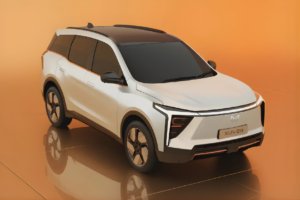
Mahindra held second place with around 6,400 units, up roughly 56 percent year-on-year, giving it a share of about 21 percent. Its XEV 9e and BE 6 SUVs, along with the newer six-seat XEV 9S, have given it a genuine second position rather than a distant one.
JSW MG Motor came in third with around 4,600 units. Unlike Tata and Mahindra, MG’s registrations actually declined year-on-year, down close to 18 percent, as the Windsor EV, its main volume driver, cools off after an earlier surge and competition from newer entrants eats into its share.
Below these three, VinFast and Maruti Suzuki are the names to watch. VinFast has also been climbing the rankings as it expands its presence in India and adds more dealerships, while Maruti’s e Vitara has now logged several consecutive months of four-digit sales, a meaningful shift for a brand that, until recently, had no EV presence at all in the mainstream segment. Together, Tata and Mahindra alone account for roughly two-thirds of all electric cars registered in India, which says as much about how concentrated this growth is as it does about how strong it is.
Why Are More Indians Buying Electric Cars?
A few things are genuinely moving the needle, based on what manufacturers and dealers have been reporting throughout the year:
- More models across more price points. A buyer looking at an EV in 2026 has real choices in the ₹10-20 lakh SUV bracket, which wasn’t true two years ago.
- New launches keeping the segment fresh. Tata’s Sierra EV, Mahindra’s XEV 9S, and Maruti’s expanding e Vitara production are widening the pool of buyers rather than just deepening interest among people who were already EV-curious.
- Improving range and everyday usability, particularly in the compact SUV segment where most of the volume sits.
- Rising fuel costs and running-cost comparisons, which continue to be a talking point for buyers doing significant city driving.
- Gradually improving charging access, especially in larger cities, even though this remains one of the segment’s bigger weak points (more on that below).
It’s worth being clear that some of these are industry observations and dealer-level commentary rather than officially quantified factors; there isn’t a single verified breakdown of exactly how much each one contributes to the growth. What is verified is the registration data itself.
EVs Are Growing Fast, But Are They Mainstream Yet?
This is the part of the story that often gets skipped in favour of a punchier headline.
In August 2026, the overall passenger vehicle fuel mix in India looked roughly like this: petrol vehicles made up about 41 percent of sales, CNG vehicles around 25 percent, diesel around 17 percent, strong hybrids about 9 percent, and electric vehicles around 7.6 percent.
Put together, CNG, hybrids and EVs, the three alternatives to plain petrol and diesel, now edge out petrol on its own for the first time. That’s a genuinely significant shift in how India fuels its cars. But within that shift, EVs are still the smallest single slice, well behind CNG and roughly on par with hybrids.
That’s really the honest way to read the data: rapid year-on-year growth and a still-modest overall share can both be true at the same time, and right now, they are. A segment can grow 50 percent and still only account for roughly one in thirteen cars sold. For EVs to become a genuinely mainstream choice, on par with, say, diesel or CNG today, sales would need to roughly double or triple from current levels while the rest of the market keeps growing too. Three consecutive months above 30,000 units is a meaningful step in that direction. It is not the destination.
What Could Slow India’s Electric-Car Growth?
None of this happens in a straight line. A few practical constraints still weigh on the segment:
- Public charging density outside major metros remains patchy, which limits how confidently a buyer in a smaller city can commit to an EV as their only car.
- Long-distance and highway travel still requires more planning with an EV than with a petrol or CNG car, particularly on routes without reliable fast-charging corridors.
- Upfront prices for most electric cars remain higher than equivalent petrol or CNG variants, even after incentives, which keeps the segment skewed toward buyers who can absorb that gap.
- Home charging isn’t available to everyone. Buyers in apartments without dedicated parking or charging infrastructure face real friction that a showroom test drive doesn’t reveal.
- Resale value for electric cars is still a relative unknown in India compared with the well-established resale markets for petrol and diesel vehicles.
- Adoption is regionally skewed, with metros and a handful of larger cities accounting for a disproportionate share of registrations.
None of these are new problems, and none of them are stopping growth. But they’re the reason growth is still concentrated rather than universal.
What This Means for Someone Buying a Car in 2026
If you’re mostly driving within a city and can charge at home or at work, the case for an EV has gotten meaningfully stronger this year; there are more models, better range, and manufacturers who are clearly committed to the segment rather than treating it as an experiment.
If you regularly drive long distances or between cities, the calculation is less settled. Charging infrastructure has improved, but it isn’t yet consistent enough on most highway routes to match the convenience of a petrol or diesel car, so this remains a genuine trade-off rather than a solved problem.
If you don’t have access to home or workplace charging, an EV is still a harder recommendation right now, regardless of how good the car itself is; this is more of an infrastructure gap than a product gap.
And if you’re comparing an EV against a CNG or hybrid model on running costs alone, it’s worth remembering that CNG and hybrids are still comfortably ahead of EVs in overall market share for a reason: for a lot of buyers, they currently offer a smaller compromise on range and refuelling convenience, even if the long-term running costs of an EV can work out lower.
Final Verdict
India’s electric car market in August 2026 did exactly what it’s been doing for most of the year: it grew fast, stayed well ahead of last year’s numbers, and did all of this while remaining a modest slice of the overall passenger vehicle market. That’s not a contradiction;n, it’s simply where the segment is right now.
EVs haven’t replaced conventional cars, and they aren’t about to in the next year or two. But the version of the Indian EV market that exists today, with real model choice, multiple credible manufacturers, and monthly registrations holding above 30,000 units, is a genuinely different one from what existed even twelve months ago.



FAQs
How many electric cars were sold in India in August 2026?
Around 30,000 electric passenger vehicles were registered in India in August 2026 (exact figures vary slightly by data snapshot), marking the third consecutive month above the 30,000-unit level.
What percentage of cars sold in India are electric?
Electric vehicles made up approximately 7.4–7.6 percent of India's passenger vehicle retail sales in August 2026, up from around 5.1–5.8 percent a year earlier.
Which company sold the most electric cars in August 2026?
Tata Motors led the electric car market in August 2026 with roughly 13,000 units and a market share of around 42–44 percent, followed by Mahindra and JSW MG Motor.
Are electric car sales growing in India in 2026?
Yes. Electric passenger vehicle registrations have grown by around 50–80 percent year-on-year through most of 2026, with cumulative volumes for the year already well ahead of the same period in 2025.
Are EVs becoming mainstream in India?
Not yet, though they're moving in that direction. EVs still account for less than 8 percent of monthly passenger vehicle sales, well behind petrol, CNG and diesel, even as their growth rate outpaces every other fuel type.