




















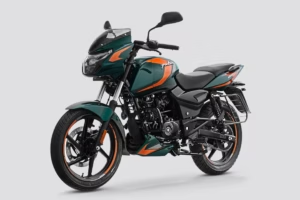





The 2026 Bajaj Pulsar 150 has been launched in India at ₹1.15 lakh (ex-showroom), but the biggest change isn’t the price. Bajaj has made substantial changes to the motorcycle, including a new 150cc engine, a revised chassis, monoshock rear suspension, and three riding modes. The higher Twin Disc version also gets a 5-inch TFT display with Google Maps navigation and an Integrated Starter Generator (ISG).
So, what has actually changed compared with the previous Pulsar 150, and is the new model worth the higher price? Here’s a closer look at its variants, specifications, features, performance, and the changes that matter if you’re considering buying one.
Bajaj Pulsar 150 2026 Price in India
The new Pulsar 150 starts at ₹1.15 lakh (ex-showroom) for the Single Disc version. The Twin Disc version is priced at ₹1.22 lakh for the single-seat model and ₹1.23 lakh for the split-seat version. Compared with the outgoing model, prices have increased by around ₹4,000 to ₹9,000 depending on the version.
| Variant | Ex-showroom Price |
| Pulsar 150 Single Disc | ₹1.15 lakh |
| Pulsar 150 Twin Disc Single Seat | ₹1.22 lakh |
| Pulsar 150 Twin Disc Split Seat | ₹1.23 lakh |
The price increase comes with more than cosmetic changes. The new Pulsar 150 gets a different engine, chassis, and rear suspension, along with additional technology and equipment.
Bajaj Pulsar 150 2026: Variants Explained
The new Pulsar 150 is available in Single Disc (SD) and Twin Disc (TD) versions. The two are not separated only by their braking hardware; there are also differences in the equipment and seating configuration.
The Single Disc is the more straightforward version. It gets a single-piece seat and a colour LCD instrument cluster.
The Twin Disc version adds a split-seat setup, a 5-inch TFT display with Google Maps navigation, LED turn indicators, and hazard lights. It also gets ISG technology, which is designed to make engine starts quieter and improve efficiency.
So, if you’re trying to decide between the two, the question isn’t simply whether you want a second disc brake. The Twin Disc version also brings more of the new technology and convenience features.
Bajaj Pulsar 150 2026: Specifications
Here are the key specifications confirmed for the new model:
| Specification | Bajaj Pulsar 150 2026 |
| Engine | New 150cc single-cylinder petrol |
| Maximum power | 14 PS @ 8,500 rpm |
| Maximum torque | 14.1 Nm |
| Transmission | Revised gearbox |
| Riding modes | Rain, Road, Sport |
| Rear suspension | Monoshock |
| Instrument cluster | Colour LCD / 5-inch TFT, depending on variant |
| Front lighting | LED |
Only the specifications confirmed for the 2026 model are listed here; additional figures can be added once officially disclosed.
Engine and Performance
The engine is one of the most important changes on the 2026 Pulsar 150. The new 150cc unit produces 14 PS at 8,500 rpm and 14.1 Nm of torque. The torque figure is higher than the outgoing model’s 13.25 Nm, while Bajaj has also revised the gearbox.
The focus here isn’t on turning the Pulsar 150 into a performance-focused motorcycle. Instead, the changes are aimed at making the powertrain more modern and usable.
The higher torque should be useful for everyday riding, particularly when accelerating from lower speeds. The updated gearbox should also make the engine easier to use in regular city traffic, while the 150cc engine gives it enough performance for occasional highway riding.
The new Pulsar 150 also gets Rain, Road,d and Sport riding modes. These allow the motorcycle’s response to be adjusted according to different riding conditions.
What’s New on the 2026 Bajaj Pulsar 150?
The 2026 model is more than a styling update. Bajaj has changed several parts that directly affect the motorcycle’s mechanical package and everyday use.
New Engine
The new 150cc engine produces 14 PS and 14.1 Nm, with torque increasing over the outgoing model. Bajaj has also revised the gearbox.
For buyers, the important point is that the engine itself has been reworked rather than simply carried over with the new bodywork.
New Chassis
Bajaj has introduced a new frame for the 2026 model.
The chassis plays an important role in how a motorcycle behaves when you turn, brake,ke or ride over uneven roads. Combined with the new suspension setup, the revised frame is intended to give the Pulsar 150 a more modern riding and handling character.
Monoshock Rear Suspension
The previous twin-shock arrangement has been replaced by a monoshock rear suspension.
The change is part of the wider mechanical update and is intended to improve the motorcycle’s ride and handling. For buyers, it also gives the new Pulsar 150 a more contemporary mechanical package compared with the outgoing model.
Three Riding Modes
The addition of Rain, Road and Sport modes gives the Pulsar 150 something the outgoing model didn’t have.
The modes allow the motorcycle’s response to be adjusted according to the riding situation, giving riders more flexibility than the previous model.
More Technology
The higher Twin Disc version gets a 5-inch TFT display with Google Maps navigation, along with LED turn indicators and hazard lights. It also gets an Integrated Starter Generator (ISG).
This makes the new Pulsar 150 considerably more technology-focused than the outgoing motorcycle.
Design and Styling
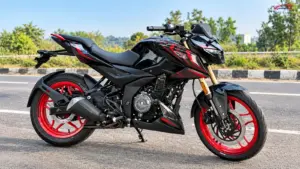
The 2026 Pulsar 150 gets a revised front end with a smoked-effect LED headlamp and integrated DRLs. The instrument cluster and other bodywork have also been redesigned.
Bajaj hasn’t completely moved away from the Pulsar’s familiar design identity. Instead, the motorcycle retains the recognisable Pulsar shape while giving the front end, lighting and instrumentation a more contemporary look.
For someone moving up from an older Pulsar, the new model should therefore feel familiar without looking exactly like the previous motorcycle.
Features
The features vary depending on the version.
Single Disc
- Colour LCD instrument cluster
- Single-piece seat
- LED lighting
- Three riding modes
Twin Disc
- 5-inch TFT display
- Google Maps navigation
- Split seat
- LED turn indicators
- Hazard lights
- Integrated Starter Generator (ISG)
- Three riding modes
The Twin Disc version offers a noticeably richer equipment package. If you mainly want the new engine and chassis, the Single Disc is the simpler option. If the TFT display, navigation, and additional technology matter to you, the Twin Disc versions have more to offer.
Safety
The braking setup differs between the versions, with the Twin Disc offering disc brakes at both ends while the Single Disc uses a single-disc setup. The new chassis and monoshock are also part of the motorcycle’s revised mechanical package, while the Twin Disc version gets hazard lights as an additional visibility feature.
Bajaj Pulsar 150 2026 Mileage and Practicality
Bajaj has not yet provided a confirmed mileage figure for the new Pulsar 150.
For everyday use, the 150cc engine should make it suitable for city commuting while providing enough performance for occasional highway riding. Its street-bike format keeps the focus on everyday usability rather than long-distance touring.
2026 Bajaj Pulsar 150 vs Previous Pulsar 150
The easiest way to understand the new model is to look at what has actually changed.
| Parameter | 2026 Pulsar 150 | Previous Pulsar 150 |
| Engine | New 150cc engine | 149.5cc engine |
| Power | 14 PS | 14 PS |
| Torque | 14.1 Nm | 13.25 Nm |
| Rear suspension | Monoshock | Twin shock absorbers |
| Chassis | New frame | Previous platform |
| Riding modes | Rain, Road, Sport | Not available |
| Instrumentation | LCD/TFT, depending on variant | Simpler setup |
| Key technology | TFT navigation, ISG on TD | More limited |
The headline power figure hasn’t increased, but torque has gone up from 13.25 Nm to 14.1 Nm. That means the more important change for everyday riding could be the way the motorcycle delivers its performance rather than a large jump in peak power.
The bigger story is the combination of changes: new engine, new chassis, monoshock, riding modes, and more technology. That makes the 2026 Pulsar 150 a more substantial update than a simple cosmetic refresh.
Is the 2026 Bajaj Pulsar 150 Worth Buying?
Yes, the new Pulsar 150 is worth considering, particularly if you’re looking for a 150cc motorcycle and want something more modern than the previous model.
The strongest reason is that Bajaj has changed several important parts of the motorcycle at once. The new engine addresses the powertrain, the new chassis and monoshock change the mechanical package, while the riding modes and updated instrumentation bring more technology.
The Single Disc version is likely to make the most sense for buyers who want the updated motorcycle without spending too much.
The Twin Disc versions are better suited to buyers who want the additional technology, particularly the TFT display, navigation, and ISG.
On the other hand, if you already own an outgoing Pulsar 150 and are happy with it, there may be less reason to upgrade immediately unless the new features and mechanical changes are important to you.
Final Verdict
The 2026 Bajaj Pulsar 150 is a meaningful update rather than just a styling refresh. Starting at ₹1.15 lakh, it gets a new 150cc engine producing 14 PS and 14.1 Nm, a new chassis, monoshock rear suspension,n and three riding modes. The Twin Disc versions add a 5-inch TFT display with Google Maps navigation and ISG technology.
For most buyers, the Single Disc version is the more straightforward choice if the priority is the new engine and chassis. The Twin Disc versions are worth considering if you want the additional technology and equipment.
Overall, Bajaj has done more than make the Pulsar 150 look newer for 2026. It has changed the motorcycle’s core mechanical package while adding features that make it feel more current. That makes the new Pulsar 150 a more interesting proposition than a routine model-year update.





FAQs
What is the price of the 2026 Bajaj Pulsar 150?
The 2026 Bajaj Pulsar 150 starts at ₹1.15 lakh ex-showroom for the Single Disc version. The Twin Disc versions cost ₹1.22 lakh and ₹1.23 lakh.
How many variants of the new Pulsar 150 are available?
The new Pulsar 150 is available in Single Disc (SD) and Twin Disc (TD) versions. The Twin Disc version is offered with single-seat and split-seat configurations.
What engine does the 2026 Bajaj Pulsar 150 get?
It gets an all-new 150cc engine producing 14 PS at 8,500 rpm and 14.1 Nm of torque.
What are the riding modes on the 2026 Pulsar 150?
The motorcycle has Rain, Road, and Sport riding modes.
What has changed on the 2026 Pulsar 150?
The major changes include a new engine, revised chassis, monoshock rear suspension, updated styling, three riding modes, and more technology.