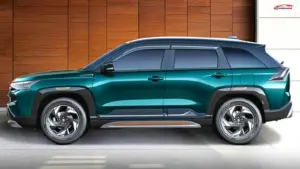











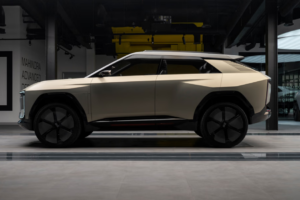















Mitsubishi has finally lifted the covers off the all-new, fifth-generation Pajero. The reveal took place in Tokyo on September 2, 2026, and it brings the iconic Pajero nameplate back after it was discontinued in 2021. For an SUV nameplate that once meant something to an entire generation of Indian buyers, that’s a big deal.
But here’s the question every Indian enthusiast is really asking: does this unveiling mean the Pajero is coming back to Indian showrooms? Not exactly, at least not yet. Mitsubishi’s announcement is a global one, and India has not been named as part of the confirmed rollout so far.
This article breaks down what the new Pajero actually is, what’s changed since the model Indian buyers remember, whether an India launch is realistically on the table, and what the SUV would need to get right if it ever does arrive here.
The 2026 Mitsubishi Pajero Has Been Unveiled, What’s New?
The biggest change is underneath. Mitsubishi has moved the new Pajero to a ladder-frame, body-on-frame chassis based on the current Triton pickup, replacing the unibody construction used by the previous generation.
The company has also given it Triton-derived four-wheel-drive hardware, but with its own suspension tuning, including a five-link rear end aimed at making it more comfortable to live with day-to-day, not just tougher off-road.
Mitsubishi is positioning this generation as its new flagship “cross-country SUV,” a phrase the company has used repeatedly through its teaser campaign. The idea is a vehicle that keeps genuine off-road ability while adding the kind of cabin comfort, technology, and refinement that buyers now expect from this segment, rather than simply reviving an old badge.
Is the 2026 Mitsubishi Pajero Coming to India?
Mitsubishi has not confirmed an India launch for the new Pajero.
What has been confirmed is the initial rollout order. Mitsubishi has said sales will begin in Japan, Thailand and Australia first, all by the end of the current fiscal year. From there, the company plans to export the Pajero, built in Thailand, to more than 100 markets across ASEAN, Latin America and the Middle East over the following year. India does not appear in this confirmed list.
Automotive reports covering the reveal have also pointed to a challenging road back to India. Indian auto outlets have suggested that the Pajero’s India prospects currently look weak, mainly because Mitsubishi does not have an active passenger-vehicle sales and service network in the country. This is based on industry reporting and analysis, not an official statement from Mitsubishi. However, it is worth noting that India is also missing from the confirmed markets listed by Mitsubishi for the new Pajero.
For an India launch to become a realistic possibility, Mitsubishi would first need to establish a sales and after-sales network, work out the necessary homologation and pricing strategy, and officially include India in its rollout plans. So far, there has been no indication of these steps from the company. For now, any talk of the new Pajero launching in India should therefore be treated as speculation rather than a confirmed plan.
What Makes the New Pajero Different From the Old One?
Buyers who remember the last Pajero sold in India will notice some real changes:
- Chassis: back to a ladder frame instead of the unibody construction used later in the previous generation, a shift toward serious off-road durability.
- Size and stance: the new Pajero measures 4,920mm in length with a 2,870mm wheelbase, making it a proper full-size SUV.
- Powertrain: a diesel engine shared in concept with the Triton, but retuned specifically for the Pajero.
- 4WD hardware: an updated Super Select 4WD-II system paired with Mitsubishi’s Super All-Wheel Control (S-AWC), rather than the simpler set-ups on older Pajeros.
- Seating and cabin: a proper three-row, seven-seat layout with a sliding, tumbling second row, aimed squarely at families, not just off-road purists.
- Technology: twin digital screens and the return of Mitsubishi’s signature “Multi Meter” triple-gauge display, now reworked as a digital readout for altitude, compass heading, vehicle pitch/roll, and torque distribution.
What hasn’t changed is the intent. Mitsubishi has been vocal about wanting to keep the Pajero’s Dakar Rally-bred, go-anywhere character intact, even as it dresses the SUV up for a more premium, comfort-focused buyer.
2.4-Litre Diesel, 480Nm and 4WD: What Does It Offer Buyers?
The new Pajero uses a 2.4-litre single-turbo diesel producing up to 480Nm, paired with an eight-speed automatic, a step up from the six-speed unit used in the related Triton pickup.
In practical terms, this combination matters in a few specific ways:
- On the highway, the eight-speed automatic gives the Pajero a wider spread of ratios than the Triton’s six-speed gearbox, which should help balance relaxed cruising with low-speed response.
- On rough or broken roads, the Triton-based ladder frame and dedicated five-link rear suspension are aimed at improving ride comfort without giving up the durability that comes with body-on-frame construction.
- Off-road, Super Select 4WD-II lets the driver switch between two-wheel drive, full-time four-wheel drive and low-range settings, while S-AWC manages traction, stability and braking electronically across all four wheels.
- For everyday driving, the strong torque output should also help when carrying a full load of passengers or driving at low speeds.
Mitsubishi has not released official towing or payload figures at the time of writing, so any specific numbers floating around should be treated as unconfirmed until the company publishes them.
Seven Seats and the New Interior: Is It More Family-Friendly?
Yes, and this is arguably the biggest shift from how older Pajeros were perceived. The new SUV is built as a genuine three-row, seven-seater, with a second row that can slide by around 150mm and tumble forward, making the third row easier to access and freeing up boot space when it’s not needed.
Reports from the unveiling describe a cabin that leans upmarket for a Mitsubishi, leather upholstery on higher trims, soft-touch dashboard padding, three-zone climate control, a panoramic sunroof, and a 12-speaker sound system on top variants. Combined with extra sound insulation and acoustic glass, the goal seems to be a Pajero that’s noticeably quieter and more comfortable than the outgoing model, without losing its off-road identity, visible in details like the exposed grab handles that remain part of the cabin design.
Could the New Pajero Make Sense for Indian Buyers?
Setting aside the availability question for a moment, there’s a reasonable case for why this SUV would appeal here if it ever arrived:
- Diesel and ladder-frame preference: a meaningful chunk of large-SUV buyers in India still prefer a diesel engine and body-on-frame construction, especially for highway touring and rough-road use.
- Genuine off-road capability: Super Select 4WD-II and S-AWC would put it in serious contention with other proper 4x4s sold here, not just soft-roaders.
- Seven-seat practicality: a true three-row layout with a usable third row addresses a common complaint about many premium SUVs.
- Nostalgia and brand recall: the Pajero name still carries real weight among Indian SUV enthusiasts who remember it from the 2000s and its Dakar Rally history.
That said, none of this matters without two things Mitsubishi doesn’t currently have in India: competitive pricing and a functioning dealership and service network. Both would be essential before the Pajero could be taken seriously as a mainstream option here, and neither is guaranteed even if a launch is eventually announced.
2026 Mitsubishi Pajero vs Toyota Fortuner: How Do They Compare?
It’s tempting to immediately frame this as a Toyota Fortuner rival, but that’s not accurate, at least not yet, since the Pajero isn’t confirmed for India and pricing is unknown. What can be compared fairly is how the two are engineered and positioned:
| Aspect | 2026 Mitsubishi Pajero | Toyota Fortuner |
| Construction | Ladder frame, Triton-based | Ladder frame, Hilux-based |
| Engine | 2.4L single-turbo diesel, up to 480Nm | 2.8L diesel |
| Transmission | 8-speed automatic | 6-speed automatic/manual |
| 4WD system | Super Select 4WD-II with S-AWC | Part-time 4WD on select variants |
| Seating | 7-seat | 7-seat |
| India status | Not confirmed | On sale |
Why the New Pajero’s India Launch Could Be Challenging
A few practical hurdles stand between this unveiling and an Indian showroom:
- No existing dealer or service network, as Mitsubishi currently has no active passenger-vehicle retail and service network in India.
- Homologation costs for a low-volume SUV in a market where emission and safety norms require significant local certification work.
- Pricing pressure, since a CBU or low-volume CKD Pajero would likely land well above where the Fortuner and similar SUVs are priced today.
- Limited brand presence, meaning Mitsubishi would effectively be relaunching itself in India alongside the vehicle.
- Established competition, including the Fortuner and other ladder-frame SUVs that already have loyal buyers and strong resale value here.
- Uncertain demand, given how niche full-size, diesel, body-on-frame SUVs have become relative to unibody premium SUVs in India.
These are analytical factors based on Mitsubishi’s current market position, not reasons the company has officially given for excluding India; Mitsubishi hasn’t commented on India specifically at all.
What Does the Pajero Comeback Mean for Buyers?
Globally, the significance is fairly clear: Mitsubishi has chosen to bring back one of its most recognisable nameplates with genuine off-road hardware intact, rather than turning the Pajero into a soft crossover.
For Indian buyers specifically, the unveiling is exciting mainly as a reminder of what the badge once meant here. The practical questions- will it come, when, at what price, and with what kind of ownership support- remain open. Nothing about the September 2 reveal changes that.
Final Verdict
The 2026 Mitsubishi Pajero is a genuine, hardware-first revival of one of the SUV world’s most storied nameplates: a ladder-frame, seven-seat off-roader with real 4WD credentials and a noticeably more premium cabin than before. For global markets already confirmed for launch, it looks like a serious return to form.
For India, however, the story remains one to watch rather than a confirmed comeback. Until Mitsubishi makes an official India announcement, buyers should treat any launch date, price,e or specification claims for the Indian market as unconfirmed.








FAQs
Is the 2026 Mitsubishi Pajero coming to India?
Mitsubishi has not confirmed an India launch. The company's confirmed rollout starts with Japan, Thailand, and Australia, followed by ASEAN, Latin America, and the Middle East. India is not on that list so far.
When will the new Mitsubishi Pajero launch?
It was unveiled globally on September 2, 2026. Sales begin in Japan, Thailand and Australia by the end of the current fiscal year, with wider rollout to other markets over the following year.
What engine does the 2026 Mitsubishi Pajero get?
A 2.4-litre single-turbo diesel engine producing around 150kW and up to 480Nm of torque, paired with a new eight-speed automatic transmission.
How many seats does the new Pajero have?
Seven, across three rows. The second row slides by around 150mm and features a tumble mechanism for easier third-row access.
Does the 2026 Pajero have 4WD?
Yes. It uses Mitsubishi's Super Select 4WD-II system combined with Super All-Wheel Control (S-AWC) for electronically managed traction and stability.