


























One of the most common concerns among potential EV buyers in India is battery replacement. Stories about ₹10 lakh battery packs regularly make headlines, leading many people to question whether owning an electric vehicle could become expensive over time. The reality is more straightforward than those numbers suggest. While EV battery replacement cost can be significant, modern warranties, improving battery technology, and falling prices are changing the picture in favour of buyers.
This guide covers what EV battery replacement actually costs in India for both cars and two-wheelers, what drives those costs, how long batteries typically last, and what the current warranty landscape looks like across major brands.
What Is the Average EV Battery Replacement Cost in India?
In India, the average cost of EV battery replacement varies between ₹3.5 lakh and above ₹12 lakh, depending on the battery size and type of vehicle.
For electric scooters and bikes, replacement costs are considerably lower, ranging from ₹45,000 to ₹1.2 lakh depending on the model and battery capacity.
On average, EV battery costs in India range from ₹15,000 to ₹20,000 per kWh for cars. A 30 kWh pack replacement, therefore, falls in the ₹4.5 lakh to ₹6 lakh range under most circumstances.
Why EV Battery Replacement Cost Matters
The battery pack accounts for 30 to 40 per cent of an electric vehicle’s total cost. It is the most expensive component in any EV, which is why replacement, when it becomes necessary, is worth planning for.
For Indian buyers still evaluating whether to go electric, this cost tends to come up early. Understanding what it involves and when it actually becomes relevant helps make that decision with clearer numbers in hand.
What Makes EV Batteries So Expensive?
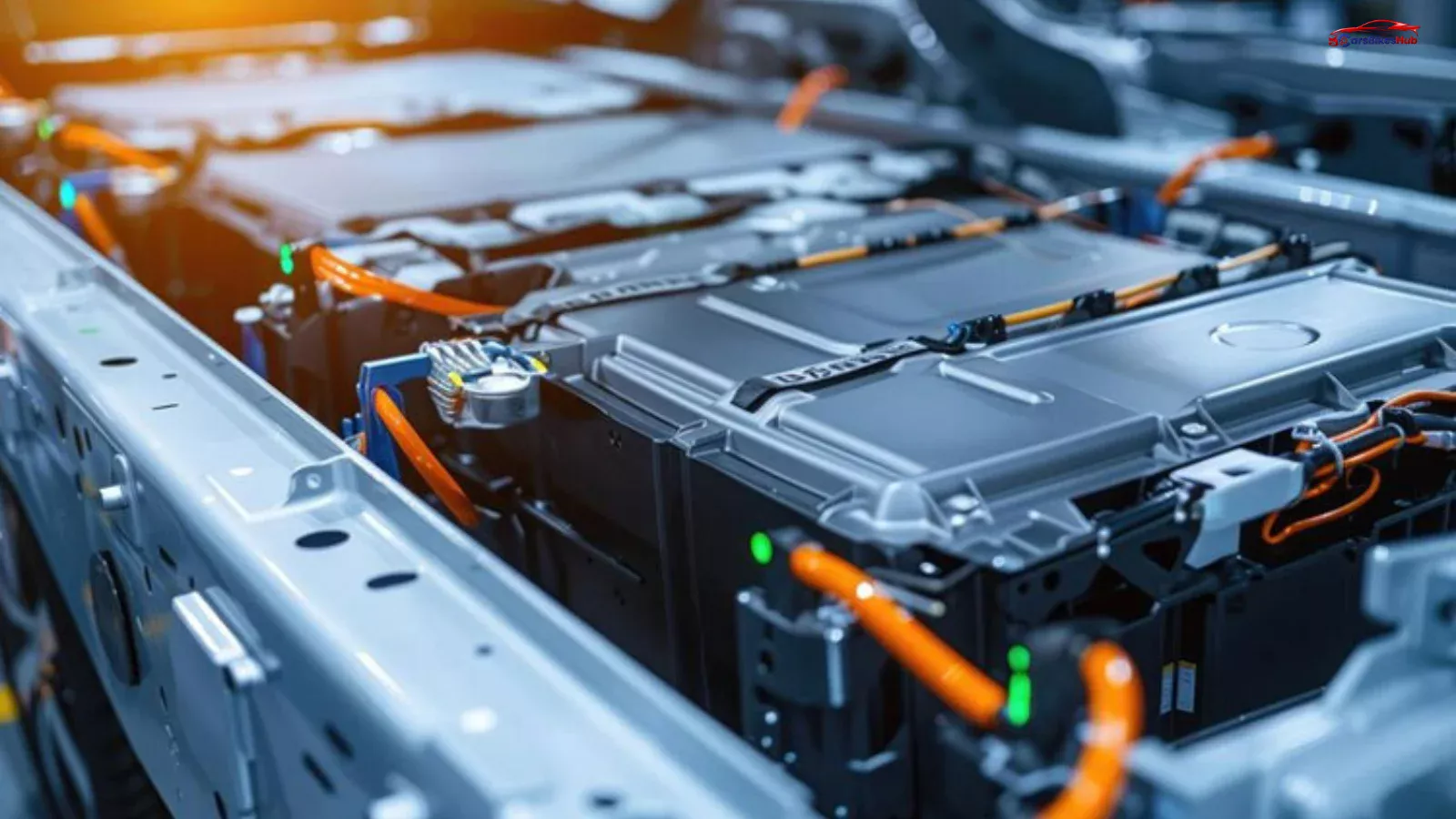
An EV battery pack is a complex assembly of hundreds or thousands of lithium-ion cells, arranged in modules and governed by a Battery Management System (BMS). The BMS monitors cell temperature, voltage balance, charging rates, and discharge limits at all times.
Two battery chemistries are common in India today. NMC (Nickel Manganese Cobalt) is found in the Tata Nexon EV, MG ZS EV, Mahindra XUV400, and Hyundai Ioniq 5. It offers good energy density and range, but is sensitive to heat and deep discharge. LFP (Lithium Iron Phosphate), used in BYD’s Blade battery and some Tata models, has lower energy density but handles Indian heat better and tends to last longer through charging cycles.
Beyond the cells themselves, a full battery replacement includes the pack, BMS recalibration, thermal management system checks, and labour at an authorised service centre, all contributing to the final bill.
Popular EV Battery Replacement Costs in India
Here is a closer look at the estimated out-of-warranty replacement costs for some of the most searched EVs in India.
Tata Nexon EV is the country’s best-selling electric car. The 30 kWh variant’s battery replacement is estimated at ₹5.5 lakh to ₹6.5 lakh at an authorised Tata centre. The 45 kWh long-range variant sits higher at ₹7.5 lakh to ₹9 lakh, though this variant now comes with lifetime warranty coverage for first owners, making out-of-pocket replacement unlikely.
The Tata Tiago EV, which is India’s cheapest electric car, is fitted with a battery of 24 kWh, whose replacement costs are estimated at between ₹3.5 lakh and ₹5 lakh.
MG ZS EV carries a 44.5 kWh battery with estimated replacement costs between ₹6.6 lakh and ₹8.5 lakh.
Mahindra XUV400, available in 34.5 kWh and 39.4 kWh variants, has an estimated replacement cost of ₹5 lakh to ₹6.5 lakh.
Hyundai Creta EV, with its larger ~51 kWh pack, is estimated at ₹8 lakh to ₹10 lakh for a full replacement.
EV Battery Replacement Cost Table: Cars
| EV Model | Battery Size | Warranty Coverage | Estimated Replacement Cost |
| Tata Tiago EV | 24 kWh | 8 years / 1.6L km | ₹3.5L – ₹5L |
| Tata Nexon EV (30 kWh) | 30 kWh | 8 years / 1.6L km | ₹5.5L – ₹6.5L |
| Tata Nexon EV (45 kWh) | 45 kWh | Lifetime – 15 yrs / unlimited km (1st owner) | ₹7.5L – ₹9L |
| MG ZS EV | 44.5 kWh | 8 years / 1.5L km | ₹6.6L – ₹8.5L |
| Mahindra XUV400 | 34.5–39.4 kWh | 8 years / 1.6L km | ₹5L – ₹6.5L |
| Hyundai Creta EV | ~51.4 kWh | 8 years / 1.6L km | ₹8L – ₹10L |
| Kia EV6 | 77.4 kWh | 8 years / 1.6L km | ₹11L – ₹13L |
| Mahindra BE 6 / XEV 9e | 59–79 kWh | Lifetime (1st owner) | ₹10L – ₹15L (est.) |
Figures are estimated averages for out-of-warranty replacements at authorised service centres, inclusive of BMS calibration and labour, exclusive of GST.
EV Battery Replacement Cost Table: Scooters and Bikes
Electric two-wheelers make up the majority of EV sales in India. Battery replacement costs here are far more manageable than those for cars.
| EV Model | Battery Size | Estimated Replacement Cost |
| Ola S1 Pro | 3–4 kWh | ₹70,000 – ₹90,000 |
| Ather 450X / Rizta | 3.7 kWh | ₹70,000 – ₹80,000 |
| TVS iQube (3.5 kWh) | 3.5 kWh | ₹75,000 – ₹80,000 |
| TVS iQube ST | 5.1-5.3 kWh | ₹1,10,000 – ₹1,20,000 |
| Bajaj Chetak | 2.9-3.5 kWh | ₹60,000 – ₹75,000 |
| Hero Vida V1 Pro | 3.9 kWh | ₹75,000 – ₹85,000 |
Figures are estimated at authorised service centres. Actual costs may vary by variant and region.
Battery warranty terms for electric scooters are generally shorter than those for cars. Most brands offer 3 years or 30,000-50,000 km. Ather’s extended Pro plan covers up to 5 years or 60,000 km, which is currently the best available in the scooter segment. Notably, Ola, TVS, Bajaj, and Hero do not publicly define an SOH threshold for warranty claims, which is a point worth checking before purchase.
Factors That Affect EV Battery Replacement Cost
Battery size: Larger packs cost more because they contain more cells. This is straightforward, whether it is a car or a scooter.
Battery chemistry: LFP packs are generally priced and positioned differently from NMC packs due to differences in cell sourcing and manufacturing.
Authorised vs third-party service: Third-party suppliers may quote lower prices, but batteries sourced outside authorised channels often lack certification and system compatibility, which can affect performance and void the remaining warranty.
Labour and recalibration: BMS recalibration after a pack swap is essential; it ensures the battery communicates correctly with the vehicle.
Location: Service centre charges vary between metro cities and smaller towns.
How Long Do EV Batteries Last?
Real-world battery life for a modern EV in India is typically 10 to 12 years, with 70 to 80 per cent capacity retention through that period.
Most major car brands, Tata, Mahindra, MG, Hyundai, and BYD, back this with an 8-year or 1,60,000 km warranty.
A driver covering 15,000 km per year would reach the kilometre limit in about 10 to 11 years, which aligns with expected battery life under normal use.
For electric scooters, the average useful life is typically 5 to 8 years, depending on usage intensity and charging habits.
Understanding EV Battery Degradation
Battery degradation is the gradual reduction in a pack’s ability to hold a charge over time. It is a natural process; it does not mean the battery has failed, only that the range reduces slightly as the vehicle ages.
The key measure is State of Health (SOH), which tracks usable capacity relative to when the battery was new. A battery at 80 per cent SOH on a 400 km car still delivers around 320 km workable for most Indian daily commutes.
What causes faster degradation is fast charging, frequent charging till 100% and discharging to almost 0 per cent, and extended periods of high temperatures. This applies especially to summer in India, in cities such as Delhi, Nagpur, and Chennai.
This is where the Battery Management System can help, as it regulates the charge and discharge rate, balances the cells, and distributes the thermal load. Following standard charging habits makes a measurable difference to long-term EV battery lifespan.
Can EV Batteries Be Repaired Instead of Replaced?
Full pack replacement is not always necessary. Module-level repair is possible in many cases.
A battery pack is built in modules, and if only one or two are degraded or damaged, replacing those modules can be considerably cheaper than a full pack swap. Some authorised service centres in India now offer this as a structured option.
Whether module-level repair is available depends on the manufacturer, the vehicle’s age, and the scope of the fault. For vehicles under warranty, the OEM will determine the appropriate course of action. In case of older cars, going for diagnostics at an authorised workshop is the correct way to begin before thinking of replacing them.
Can Insurance Cover EV Battery Damage?
A usual comprehensive insurance policy will cover the EV batteries only if they are damaged because of collision, fire, or theft. Gradual degradation is not covered. Waterlogging damage, which is a real risk given India’s monsoon conditions and low battery clearances on some EVs, is also typically excluded unless you have the right add-on.
A Battery Protection Cover add-on costs roughly ₹1,500 to ₹4,000 per year and covers accidental damage, water ingress, and fire-related battery damage. This is worth considering, particularly for car owners.
Zero depreciation cover is equally important for EV owners. Without it, IRDAI’s standard 50 per cent depreciation deduction applies to battery claims, meaning on a ₹6 lakh pack, you could pay ₹3 lakh out of pocket even after filing a claim.
Insurers, including Tata AIG, ICICI Lombard, Bajaj Allianz, and Acko, offer EV-specific comprehensive plans and battery protection add-ons. Checking these terms at the time of purchase is a practical step that many first-time EV buyers overlook.
EV Battery Warranty Explained
The battery warranty is one of the most useful documents that comes with an EV purchase.
Most mass-market EVs in India, Tata Nexon EV, Tata Tiago EV, MG ZS EV, Mahindra XUV400, Hyundai Kona Electric, and BYD Atto 3 carry an 8-year or 1.6 lakh kilometre battery warranty with an SOH floor of 70 per cent. This means that if the battery drops below 70 per cent capacity within the warranty window, the manufacturer is required to repair or replace it at no cost.
Getting a battery health check done at an authorised service centre towards the end of the warranty period is a practical step. If the SOH has dropped below the threshold, you have a documented basis to raise a warranty claim before coverage expires.
How Different EV Brands Handle Battery Warranty
Tata Motors has introduced a lifetime battery warranty for the Harrier EV, Curvv EV, and Nexon EV 45 kWh. The warranty is valid for 15 years from the date of first registration and covers unlimited kilometres. It applies to both new and existing first owners, but is limited to private buyers. Vehicles must be serviced at authorised Tata centres to remain eligible.
Mahindra offers lifetime battery warranties for first private owners on the BE 6 and XEV 9e. On resale, this reduces to 10 years or 2,00,000 kilometres, still among the better second-owner coverage in India.
MG Motor provides lifetime battery warranties on the Windsor and Comet for first owners. The older ZS EV continues with an 8-year / 1.5 lakh km structure.
Hyundai and Kia follow the standard 8-year / 1.6 lakh km framework across their Indian lineup, covering the Creta EV, Ioniq 5, and EV6.
BYD’s Atto 3 carries an 8-year warranty. The Blade battery’s LFP chemistry provides thermal stability that supports consistent long-term performance.
For electric scooters, warranty terms are shorter. Most brands cover 3 years or 30,000–50,000 km. Ather’s extended plan goes up to 5 years or 60,000 km. Ola, TVS, Bajaj, and Hero offer standard coverage but do not publicly define SOH thresholds for degradation-based claims.
Will EV Battery Replacement Costs Become Cheaper?
Battery costs have been falling steadily, and that trend is expected to continue. The global price for packs fell from ₹1,20,000 per kWh in 2015 to ₹7,000 per kWh in 2023. The localisation of batteries produced in India by investments from Tata Chemicals, Exide Industries, and Amara Raja Batteries will lead to lower costs in the next few years.
As EV volumes grow and local supply chains mature, both car and two-wheeler battery replacement costs will continue to decline. Buyers purchasing EVs today will very likely have access to cheaper replacement options by the time their batteries need attention.
Should Buyers Be Worried About EV Battery Replacement Costs?
For most buyers, this concern is less significant in practice than it appears on paper.
If you buy an EV from a mainstream Indian brand with a solid warranty, the likelihood of an out-of-pocket replacement within the first 8 to 10 years is low. EV batteries, particularly the newer LFP packs, have shown reliable durability in real-world Indian conditions.
Running cost savings also need to be factored into the equation. The savings on fuel costs and servicing during the first eight years after purchasing an electric car can be as high as ₹3 lakh to ₹5 lakh, based on the vehicle usage. For electric scooter owners, annual savings on petrol and service can be ₹30,000 to ₹50,000 or more, making the overall EV running cost far lower than the battery replacement number alone suggests.
One practical point: if you plan to sell the vehicle before the warranty expires, buyers will look at the remaining battery warranty and documented battery health when deciding what to pay. Keeping service records clean and getting battery health checked before resale protects the vehicle’s value.
Final Verdict
EV battery replacement cost is a real consideration, but it is not the risk it is often made out to be. With most mainstream Indian cars covered under 8-year warranties, several models now offering lifetime coverage for first owners, and electric scooter batteries priced far more accessibly, battery replacement is a manageable part of EV ownership when approached with the right information.
The EV ownership cost equation in India is broadly favourable, with lower running costs, stronger warranties, and falling battery prices pointing in the same direction for both car and two-wheeler buyers. Understanding your warranty terms, maintaining sensible charging habits, and adding battery protection to your insurance policy are the three most practical steps any EV owner can take.
FAQs
How much does EV battery replacement cost in India?
EV battery replacement cost in India ranges from ₹3.5 lakh to over ₹12 lakh for cars, depending on battery size and vehicle segment. For electric scooters, replacement costs range from ₹45,000 to ₹1.2 lakh. Most owners will not face this expense during the warranty period.
How long do EV batteries last?
Most EV car batteries last 10 to 12 years under normal use, retaining 70 to 80 per cent of their original capacity. Electric scooter batteries typically last 5 to 8 years. Official car battery warranty from most brands is 8 years or 1.6 lakh kilometres.
Can EV batteries be repaired instead of fully replaced?
Yes, in many cases. If only one or a few battery modules are faulty, module-level replacement is possible and considerably cheaper than a full pack swap. An authorised service centre diagnostic will confirm the best course of action.
What happens when an EV battery degrades?
Degradation means the pack gradually holds less charge, which reduces driving range over time. It does not mean the vehicle stops working. A battery at 80 per cent health still delivers around 80 per cent of its original range, which is practical for most daily Indian commutes.
Is battery replacement covered under warranty?
Yes, if the battery's State of Health drops 70 per cent below within the warranty period (typically 8 years / 1.6 lakh km for most Indian car brands), the manufacturer is required to repair or replace it at no cost. Several models from Tata Motors, Mahindra, and MG now offer lifetime battery warranties for first owners.