



















The Indian Electric Vehicle Revolution is no longer a distant dream but is becoming a reality with each passing day. In fiscal year 2025-26, more than 2.5 million vehicles have been registered as EVs, an increase of 24% over the previous year.
However, one question persists in the minds of many who just bought their first EV: Where exactly do you go to charge your vehicle, and how do you actually use them? If that question has been sitting at the back of your mind, this guide is going to put it to rest for good.
The EV Charging Network in India Is Bigger Than You Think
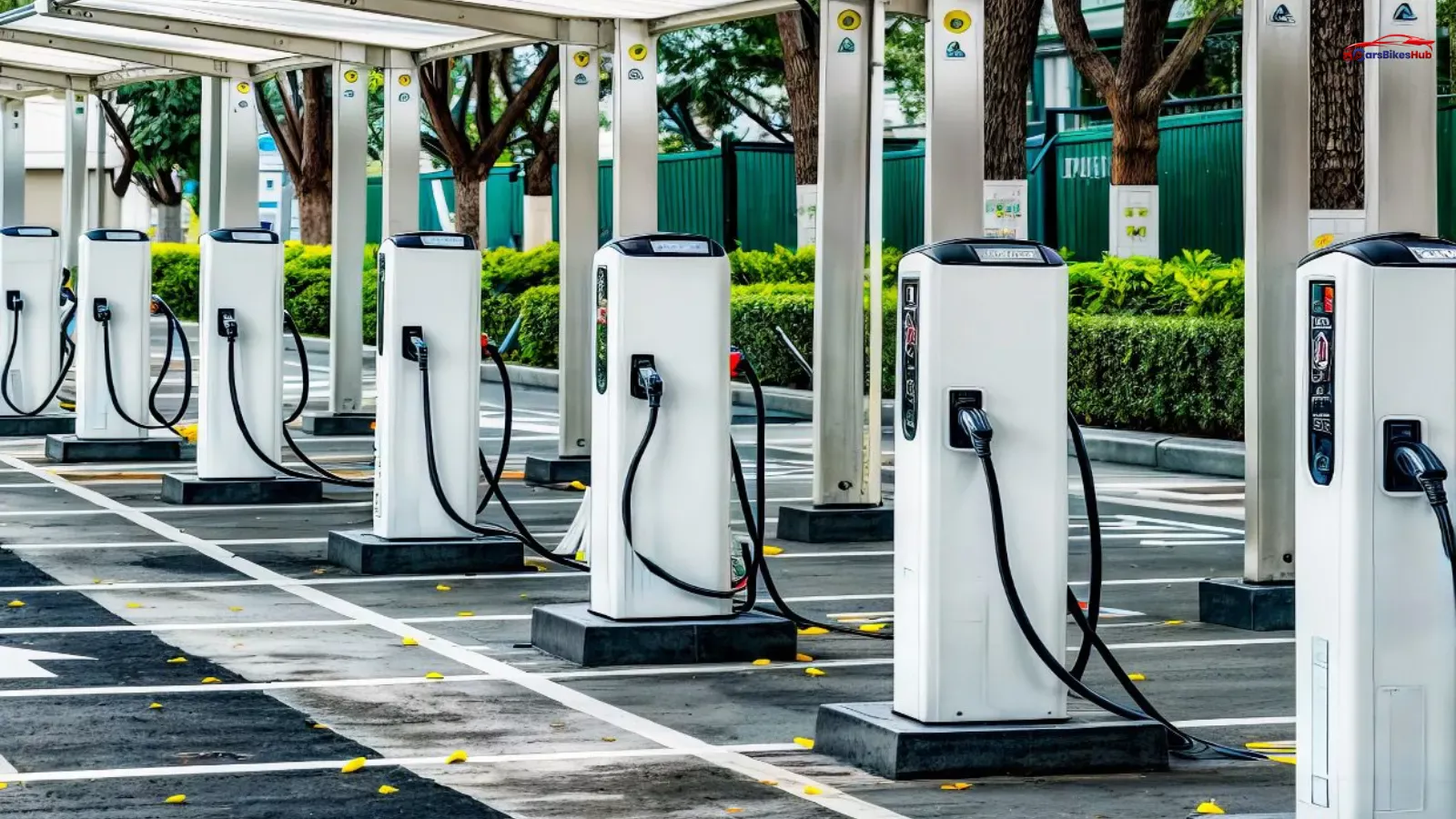
Most people assume EV charging stations in India are rare, scattered, or unreliable. The actual situation in 2026 is very different. The Minister of State for Heavy Industries reported that India had over 29,000 public electric vehicle (EV) charging stations in the country, as confirmed in Lok Sabha in February 2026. That number includes over 8,800 fast charging stations and more than 20,000 slow AC chargers spread across 849 cities.
Karnataka leads with 6,097 stations, followed by Maharashtra, Uttar Pradesh, and Tamil Nadu. Tier-3 and non-metro areas now actually have more chargers (12,040) than Tier-1 cities (9,702), a sign that EV charging stations in India are no longer just a big-city privilege. On the highway front, Tamil Nadu stands out, with roughly 90% of its chargers within one kilometre of a highway. The government’s PM E-DRIVE scheme, backed by ₹2,000 crore specifically for EV charging infrastructure, is pushing this network further every month.
How to Find EV Charging Stations in India Near You
The easiest way to find EV charging stations in India is through apps. Here are the ones that actually work in 2026:
Google Maps continues to be the handiest platform. Type “EV charging station near me” in the search bar, and Google provides you with live locations of EV charging stations in India with charger type and live status information.
Tata Power EZ Charge App operates 6,700+ charging stations across 630+ cities, the largest network of dedicated EV charging stations in India, including QR-based payments, live monitoring, and compatibility with Tata, MG, and Hyundai EVs.
Statiq App provides 7,000+ EV charging stations in India, covering Tier-1, Tier-2, and Tier-3 cities. It supports both AC and DC chargers, along with real-time information about their status.
The ChargeZone App is great for highways and inter-city travel in North and West India. This app offers clear and visible rates per unit displayed beforehand, before starting to charge.
Jio-bp Pulse app has grown really fast to have 5,000 charging points, out of which 95% are fast charging, having the highest number of fast charging points compared to other major providers of charging stations.
PlugShare is the best app for road trip planning, with user reviews on specific stations that tell you what a charger is actually like, not just whether it exists.
The smartest move is to keep at least two apps installed, one large national network like Tata Power or Statiq, and one regional or route-specific app like ChargeZone or PlugShare for backup.
Types of EV Charging Stations in India and What They Mean for You
Not all EV charging stations in India work the same way. Knowing the difference saves you both time and frustration.
Level 1 (Slow AC Charging): This is your standard 15-amp home socket. It adds roughly 8 to 12 kilometres of range per hour, perfectly fine for overnight home charging, but not practical at a public station.
Level 2 (Fast AC Charging): Most popular form of EV charger in India’s publicly available charging infrastructure in India at malls, offices, apartments, and hotels. These add 25 to 80 km of range per hour and work well when you are parked for a few hours.
DC Fast Chargers: The game-changers. DC fast chargers at public EV charging stations in India can restore 100 to 300 km of range in just 30 to 45 minutes. These are the stations you rely on for road trips and highway drives. Tata Power, Jio-bp Pulse, and ChargeZone all operate DC fast chargers across national highways.
How to Use a Public EV Charging Station in India: Step by Step
Using EV charging stations in India for the first time feels complicated, but the process is actually very straightforward.
- Open your preferred EV charging app and find the closest station that has charging slots available.
- Navigate to the station and park in the designated EV bay.
- Connect the charging cable to your vehicle. Most charging stations in India follow a standard CCS2 for four-wheelers and type 2 for AC chargers.
- Scan the QR code available on the charging point either through the charging network’s app or by tapping on your RFID card if you have one registered.
- Select your charging amount either based on kWh units, money, or minutes, whichever charging network you choose to charge your vehicle with.
- Pay digitally via UPI, the app wallet, or a linked card. Every major network running EV charging stations in India accepts UPI.
- Monitor the session live through the app, which shows charging speed, units consumed, and estimated completion time.
- Unplug and go. Sessions end automatically once your target is reached.
What Does Charging Actually Cost in 2026?
At home, electricity costs between ₹5 and ₹8 per kWh, depending on your state and DISCOM tariff. Charging a Tata Nexon EV fully at home costs roughly ₹240 and delivers about 300 km of range, under ₹1 per kilometre.
At public EV charging stations in India, AC slow chargers cost around ₹10 to ₹12 per kWh. DC fast chargers range from ₹18 to ₹25 per kWh across major networks. ChargeZone charges ₹18 to ₹25 per unit, while Jio-bp Pulse is priced at approximately ₹15.99 per kWh plus taxes. Even at those public rates, running an EV costs ₹3 to ₹4 per km versus ₹6 to ₹8 per km for a petrol car. Most experienced EV owners in India charge 80 to 90% at home and use public EV charging stations in India only for longer trips, which is where the real savings compound fast.
Tips to Get the Most Out of EV Charging Stations in India
Never let your battery drop below 20% before heading to a station; it stresses the battery and slows fast-charging speed significantly. Charge to 80% at public EV charging stations in India rather than 100%, as the last 20% takes disproportionately longer. Always plan charging stops before a highway trip using Statiq or ChargeZone, not after the anxiety sets in.
Make an application for a special EV meter to get off-peak tariffs, which can be 30% to 50% lower than domestic tariffs in India. In addition to this, some states such as Delhi, Maharashtra, and Tamil Nadu provide a subsidy of ₹6,000 to ₹10,000 on EV charger installation at home, worth checking before you invest.
The EV charging stations in India may be insufficient compared to the number of EVs; currently, the ratio between chargers and EVs is 1 to 235, while it is supposed to be 1 to 20 globally. But the pace of growth in 2026 makes it clear the infrastructure is catching up fast. For anyone driving in or between Indian cities today, EV charging stations in India are more accessible, more affordable, and easier to use than ever before. The grid is here; all you have to do is plug in.
FAQs
Which is the best app to find EV charging stations in India in 2026?
The Tata Power EZ Charge and Statiq cover the most widespread networks across the country. Use PlugShare for route planning purposes while driving on highways. Make sure you have at least two apps since no network covers all EV charging stations in India.
Are EV charging stations in India free to use?
No, Public EV charging stations in India typically charge anywhere between ₹10 and ₹25 per kWh. Slow charging is free at some of the malls and hotels as an incentive for customers while DC chargers remain paid services.
How long does it take to charge an electric car at a public charging station in India?
Using the DC fast charger of an EV charging station in India takes between 30 and 45 minutes to give your car an additional range of 100km to 200km, while it takes about 3-6 hours to fully recharge your car through the AC charger. However, time will also vary according to battery and charger capacity in your EV.
Can I charge any EV at any charging station in India?
The EV charging stations that are commonly found in India offer CCS2 as a DC charger and Type 2 as an AC charger. Almost all EV models produced in India by Tata Motors, MG Motor, Hyundai, BYD, and Ola are compatible with them. Make sure you know the plug type of your vehicle before reaching any station.
Is it safe to use public EV charging stations in India at night?
Yes. Public EV charging stations available in India, including those by Tata Power, Statiq, ChargeZone, and Jio-bp Pulse, are weather-resistant, equipped with safety cutoff mechanisms, and usually found in illuminated fuel stations, malls, and highways. Stick to branded network stations for the safest experience.