
























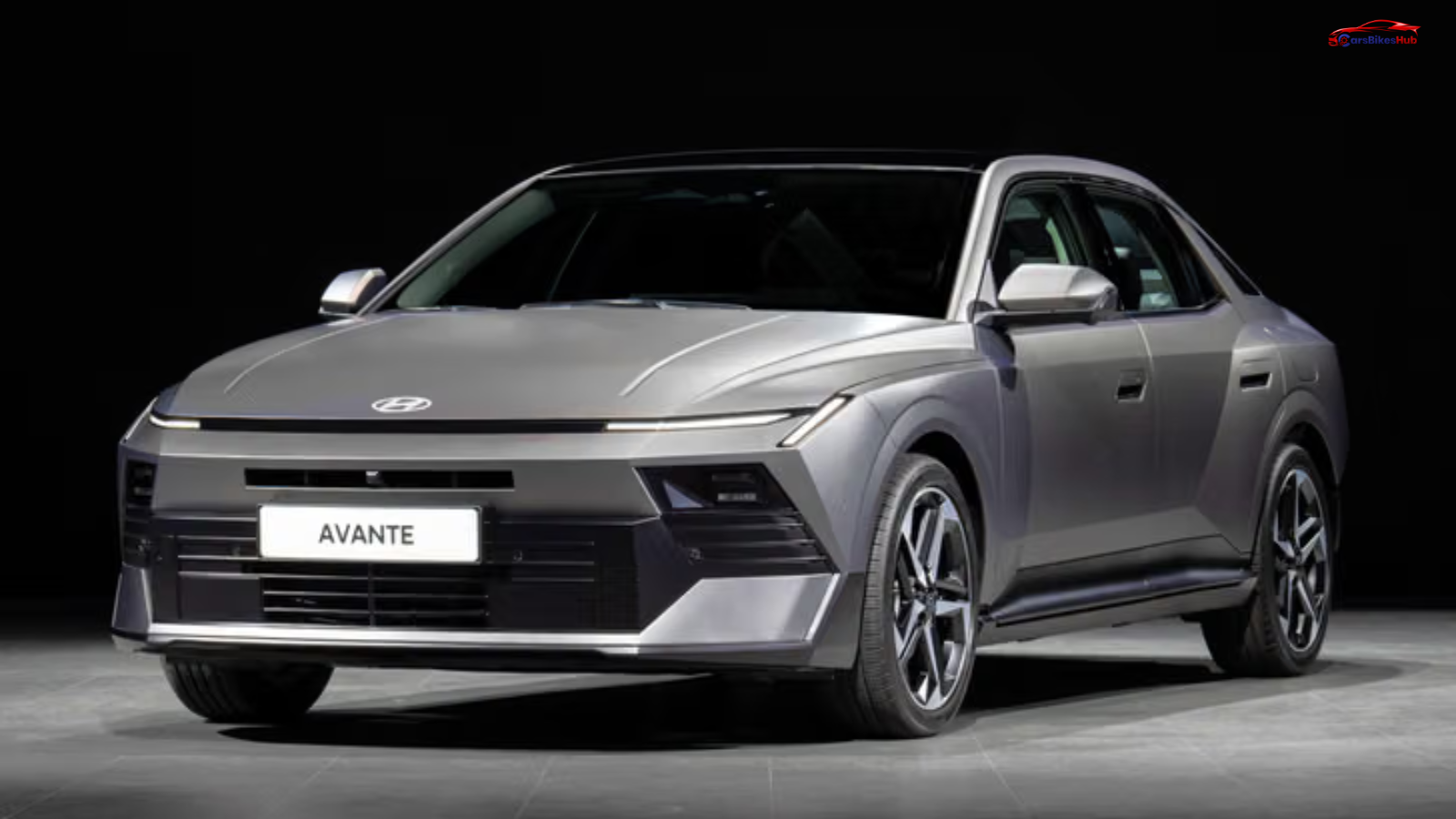
Hyundai has officially unveiled the eighth-generation Elantra, introducing a completely redesigned sedan with a new design language, a more advanced cabin, and upgraded hybrid technology.
The unveiling at the 2026 Busan Mobility Show has quickly become one of the biggest talking points among sedan enthusiasts worldwide. More than just a routine update, this is a full generational redesign that showcases Hyundai’s latest design philosophy, technology, and hybrid advancements.
For Indian buyers, though, the reveal has raised one obvious question: will it actually come here? The confusion is understandable. Some reports have already suggested launch timelines and expected prices, but none of those details has been officially confirmed by Hyundai.
What Is the Eighth-Generation Hyundai Elantra?
Officially, this is the eighth-generation Elantra, sold as the Avante in its home market, arriving a little over six years after the launch of the outgoing CN7-generation model. The scale of change here goes well beyond a mid-life facelift; design, cabin, technology, and powertrain refinement have all been reworked.
Compared to its predecessor, the new Elantra is 55mm longer, 30mm wider, and rides on a wheelbase extended by 30mm, now measuring 4,765mm in length, 1,855mm in width, 1,425mm in height, with a 2,750mm wheelbase. In real-world terms, that’s a meaningfully bigger car; for context, that length puts it firmly in line with (and in some dimensions ahead of) the Skoda Octavia, a segment the original India-spec Elantra used to compete with.
The new Elantra adopts Hyundai’s latest ‘Art of Steel’ design philosophy, giving the sedan a noticeably more angular appearance than before, moving away from the heavily creased “origami” look of the outgoing model. At the front, one of the most notable changes is the split-headlamp setup, comprising T-shaped daytime running lamps up top and rhomboidal LED units below.
What’s New Inside the Eighth-Generation Hyundai Elantra?
This is where the eighth-gen Elantra makes its strongest case, and it’s worth slowing down here because the cabin tech is genuinely segment-leading by global standards.
Inside, the eighth-gen Elantra comes with Hyundai’s new Pleos Connect interface, comprising a massive centrally mounted infotainment touchscreen of up to 14.6 inches and a slim digital driver’s display sitting atop the all-new dashboard. If you’re wondering what “Pleos Connect” even means, it’s simply Hyundai’s next-generation software platform, the same family that will eventually power infotainment across its global lineup, including future India-bound models.
Crucially, and this is a detail many international buyers will appreciate: Hyundai has retained physical controls for frequently used functions like climate settings and media controls, alongside a new flat-bottom steering wheel featuring the brand’s four-dot motif. In an era where many manufacturers are pushing everything into touchscreens, Hyundai keeping physical buttons is a practical, usability-first decision.
Other additions include ambient lighting, dual wireless charging pads, and multiple storage compartments. The features list extends to a Bang & Olufsen audio system, built-in dashcam, over-the-air software updates, Digital Key functionality, 100W USB charging ports, powered front seats with memory function, dual-zone climate control, an electronic parking brake with auto hold, 360-degree camera, automatic parking assist, and a full Advanced Driver Assistance Systems (ADAS) package.
On safety, two new systems stand out for real-world relevance to Indian driving conditions, even though this exact car may not reach our roads: navigation-based Smart Cruise Control 2 can automatically adjust the vehicle’s speed in situations such as speed-restricted zones and intersections, while Pedal Misuse Safety Assist is designed to intervene if the driver accidentally presses the accelerator instead of the brake.
That second feature alone addresses one of the most common causes of parking-lot and low-speed accidents, exactly the kind of incident that happens often in crowded Indian parking structures and narrow lanes.
Engine and Hybrid Performance: What Changed Under the Hood
The new Elantra carries over its predecessor’s 2.0-litre naturally aspirated petrol and 1.6-litre hybrid powertrains. The petrol continues to develop 149hp paired with a CVT automatic, while the hybrid’s output has been bumped to 157hp, up 16hp over the outgoing Elantra hybrid with an improved transmission, drive motor, and battery capacity.
The more interesting story is in how that hybrid system behaves, not just its peak number. The Elantra hybrid features a new smart regenerative braking system that automatically modulates the level of regenerative braking based on traffic flow and navigation information, reducing how often the driver needs to use the brake pedal. For stop-start city driving, which describes most Indian commutes, this kind of adaptive regen braking translates directly into less driver fatigue and better real-world efficiency, even if Hyundai hasn’t published an official mileage figure yet.
There’s also a small but genuinely clever addition: the new Elantra hybrid gets a ‘Stay Mode’ that allows occupants to use in-car functions such as climate control and infotainment for a set amount of time while the engine is turned off, essentially letting you sit in air-conditioned comfort without idling the engine, similar to how an EV behaves when parked.
So, Is the Eighth-Gen Hyundai Elantra Coming to India?
Now, let’s answer the biggest question: is the eighth-generation Hyundai Elantra coming to India?
No official plans have been announced, and an India launch appears unlikely in the near term. Hyundai has not announced any plans for the new Elantra in India. The company currently offers the Verna in the sedan segment, while SUVs continue to attract stronger demand. As of now, there is no official confirmation regarding the launch of the new-generation Elantra for the Indian market.
This isn’t a guess; it reflects a pattern that’s been building for years. Sedans simply aren’t selling the way they used to, with Indian buyers increasingly picking SUVs and EVs instead, and Hyundai is busy expanding its lineup in those categories rather than the D-segment sedan space.
It’s worth understanding why this keeps happening, because it explains the pattern rather than just stating it:
- GST and pricing structure favour sub-4-metre cars. A D-segment sedan like the Elantra falls outside the tax-friendly compact category, forcing it into a higher price bracket where it competes directly with mid-size SUVs that buyers now strongly prefer.
- SUV body styles dominate Indian preference. Higher ground clearance, commanding seating position, and perceived road presence have steadily pulled buyers away from sedans across nearly every price band.
- Import or low-volume local assembly economics don’t work. Without strong projected volumes, bringing in a niche D-segment sedan, built on a global platform not localised for India, becomes financially difficult to justify against Hyundai’s SUV-first India strategy (Creta, Venue, Alcazar, and upcoming compact SUVs).
- The Verna already covers Hyundai’s India sedan strategy. Hyundai has continued investing in the Verna specifically because it sits in a segment (C-segment sedan) that still has reasonable volume, unlike the D-segment the Elantra occupies.
For India, a comeback remains uncertain. The business case for a premium sedan is difficult in a market where SUVs dominate buyer interest. That said, for Indian buyers, the new Elantra hints at what future Hyundai sedans could look and feel like; elements such as Pleos Connect, advanced ADAS, improved hybrid systems, and a more mature design language could eventually influence future Hyundai models for India.
Several pages currently online quote launch dates (some as specific as December 2026) and prices (ranging from ₹15 lakh to ₹21 lakh) for an “Elantra” in India. These are speculative listings, not official Hyundai announcements, and in some cases they appear to reference the outgoing model rather than this newly unveiled eighth generation. Treat any specific India price or date you see right now as unverified until Hyundai India issues an official statement.
The Bottom Line
The eighth-generation Hyundai Elantra is a genuinely strong global product, bigger, smarter, and packed with technology that shows where Hyundai’s design and software direction is heading. But for Indian buyers, the honest answer is that it isn’t coming anytime soon, and no official price or date exists despite what some pages claim.
If you’ve been holding off on a sedan purchase hoping for the Elantra’s return, the more practical move is to evaluate what Hyundai and its rivals already offer in India today, and treat any future Elantra announcement as a bonus, not a plan to bank on.




FAQs
Is the new Hyundai Elantra confirmed for India?
No. Hyundai has made no official announcement about launching the eighth-generation Elantra in India. Current reporting suggests it's unlikely in the near term, given Hyundai's SUV-focused India strategy.
Why did Hyundai stop selling the Elantra in India in the first place?
Sedan demand in the D-segment shrank significantly as Indian buyers shifted toward SUVs, and tax structures favour smaller cars, making a niche sedan like the Elantra commercially difficult to justify in India compared to Hyundai's growing SUV lineup.
If the Elantra did launch in India, what would it likely cost?
There's no official pricing, and any number you see online right now (₹15–21 lakh range across various sites) is speculative. Based on where the outgoing Elantra was positioned and the increased size/features of this generation, a realistic ballpark, purely as an estimate, would sit above the Verna and likely overlap with the Skoda Octavia bracket, but this should not be treated as a forecast.
What should I buy instead if I wanted an Elantra-like sedan in India today?
The Hyundai Verna is the closest equivalent currently sold in India from the same brand. The Skoda Slavia, Volkswagen Virtus, and Honda City are also strong alternatives depending on whether you prioritise driving dynamics, reliability reputation, or features.
Does the new hybrid engine improve real-world mileage significantly?
Hyundai hasn't published an official mileage figure yet, but the upgraded hybrid system (157hp, up 16hp) combined with adaptive regenerative braking that responds to traffic and navigation data should improve real-world efficiency in stop-start driving conditions, even though exact numbers aren't confirmed.