
























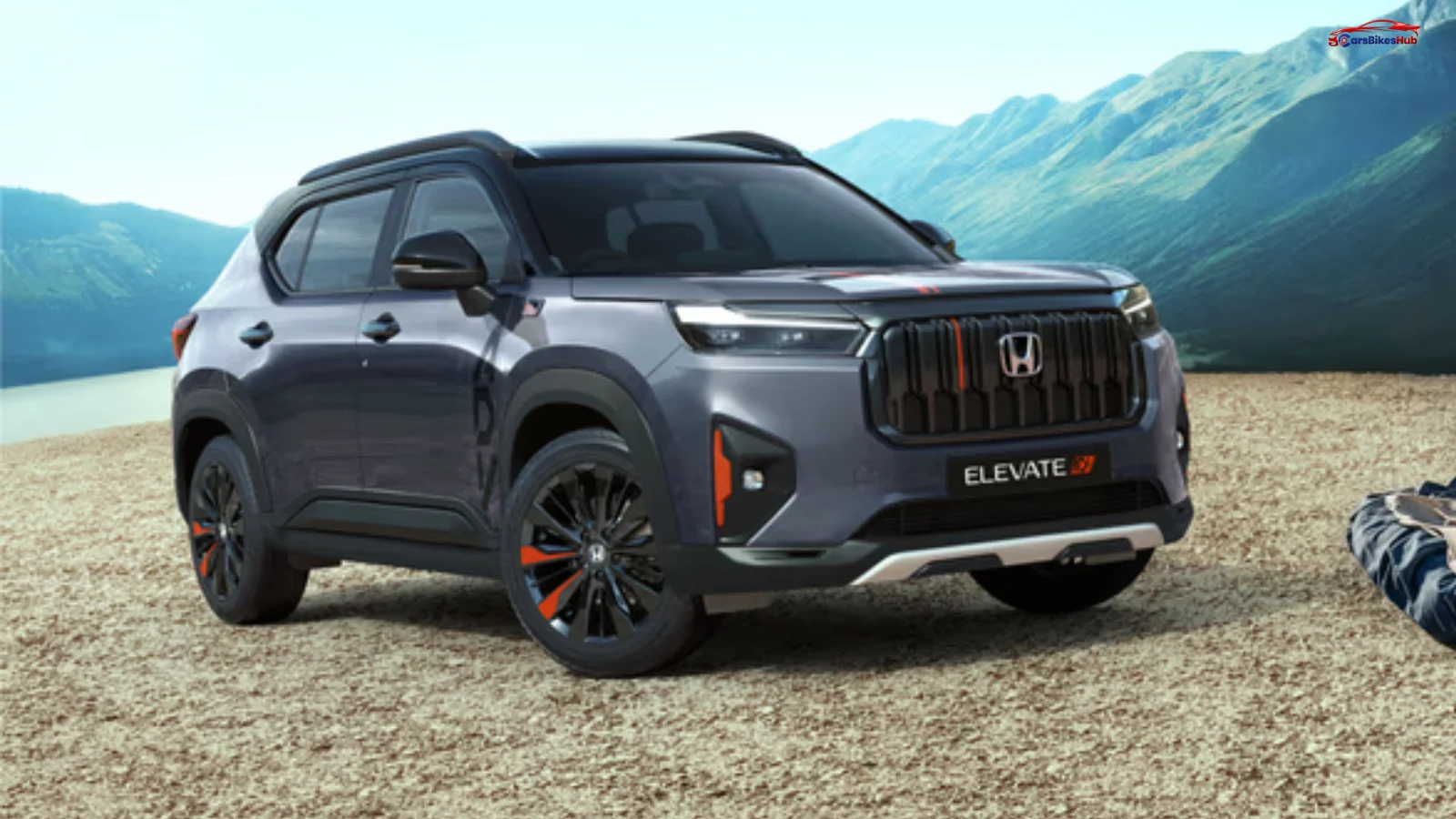
Honda’s only SUV in India is finally getting the update it has needed for a while. A camouflaged test mule of the 2026 Honda Elevate facelift has been spotted on public roads, and the spy shots have given enthusiasts and prospective buyers their first real look at what the refreshed SUV might bring. Given how the Elevate’s sales have lagged behind rivals like the Hyundai Creta and Kia Seltos, this update carries more weight than a typical mid-cycle refresh usually would.
The Honda Elevate facelift features being talked about right now suggest this is more than just a cosmetic refresh. And that’s important, because the Elevate’s problem was never how it drives or how much space it offers. Those have always been strong points. The real complaint has been value for money, with a feature list that started feeling outdated as rivals kept adding more.
Here’s everything we know so far about the upcoming Elevate facelift, from the expected design changes to features, engine details, and price.
Honda Elevate Facelift at a Glance
| Detail | Expected |
| Launch | Second half of 2026 (festive season likely) |
| Starting Price | Around ₹12 lakh (ex-showroom) |
| Engine | 1.5L NA Petrol (unchanged) |
| Transmission | 6-speed MT / CVT |
| Key New Features | 360-degree camera, ventilated seats, bigger touchscreen, digital cluster, enhanced ADAS |
Honda Elevate Facelift: What’s New?
A camouflaged Elevate test mule was recently spotted undergoing road trials in India, giving the first real hints of what the facelift will bring. Despite the wrap, the taillight graphics appeared revised, and there were signs of changes to the front and rear bumpers, along with a new set of alloy wheels. The flat bonnet, tall stance, and upright proportions that define the current Elevate remained clearly visible, which suggests Honda isn’t planning a ground-up redesign here.
This approach lines up with how Honda has handled the Elevate’s platform-mate, the City sedan, which received its second facelift in May 2026. Several of the updates introduced on the City, including styling cues and feature additions, are expected to filter down to the Elevate in some form. That’s fairly standard practice in the Indian market, where shared platforms let manufacturers spread development costs across models.
Honda is currently in an unusually active phase for its India lineup, having already refreshed the City and introduced the ZR-V, with the Elevate next in line. In terms of market positioning, the Elevate sits in a tough spot. It has averaged modest monthly sales compared to segment leaders, largely because rivals have been quicker to add equipment that buyers now expect as standard. The facelift’s job isn’t to reinvent the SUV but to close that equipment gap and give Honda loyalists a stronger reason to stick with the brand.
Honda Elevate Facelift Launch Date and Expected Price
Most reports point to a launch sometime in the second half of 2026, with some suggesting it could arrive around the festive season. Honda hasn’t confirmed an official date yet, so this should be treated as an estimate rather than a fixed timeline.
On pricing, the current Honda Elevate starts at Rs 11.59 lakh ex-showroom. The facelifted version is expected to see a modest increase, with estimates suggesting a starting price somewhere around Rs 12 lakh ex-showroom, depending on which features end up standard versus optional across variants.
This would keep the Elevate broadly competitive with the Creta, Seltos, Grand Vitara, and Hyryder, all of which currently start in a similar Rs 10.5 to 11 lakh range before climbing toward Rs 20 lakh for their respective top variants.
Honda Elevate Facelift Features (Expected)
This is where most of the actual changes are expected to happen, and it’s also the part buyers care about most. The Honda Elevate facelift features under discussion are largely centred around technology, comfort, and safety rather than mechanical changes, which lines up with what the segment has been demanding for a while now.
Bigger Touchscreen and Digital Cluster
A larger infotainment system tops the list. The current Elevate uses a 10.25-inch touchscreen, and reports suggest the facelift could move to a setup closer to what the City facelift now offers, with sharper graphics and quicker response times. A fully digital instrument cluster is also widely expected, replacing or supplementing the semi-digital unit on the outgoing model. This has been one of the more frequently mentioned Honda Elevate facelift features across spy shot reports, and it would bring the SUV in line with what most competitors already offer.
360-Degree Camera and ADAS Upgrades
A 360-degree camera system is another addition that keeps coming up. It’s a feature that has quietly become a baseline expectation in this segment, useful for tight parking spots and Indian traffic conditions where visibility around the car genuinely matters. ADAS enhancements form another important part of the expected update. The current Elevate already comes with Honda Sensing on its top variant, and the facelift could extend this suite further, potentially adding features like rear cross-traffic alert and a more refined automatic emergency braking calibration.
Ventilated Seats and Comfort Features
Ventilated front seats are expected too. Honda already offers this as an accessory, so making it a factory-fitted feature would make sense. Other likely additions include extra charging ports, updated upholstery, and possibly new interior trim options. There’s also talk of a panoramic sunroof, though this hasn’t been confirmed yet, and the current single-pane sunroof could simply continue to remain unchanged.
Connected Car Technology
Wireless connectivity upgrades, including wireless Apple CarPlay and Android Auto, along with wireless phone charging, are likely to be retained and possibly enhanced. Connected car technology, which the Elevate already supports to an extent, is expected to see expanded functionality, covering things like remote vehicle status checks and geofencing alerts. None of these features individually sounds dramatic, but together they would meaningfully narrow the gap between the Elevate and its better-equipped rivals.
Exterior Design Changes (Expected)
Spy shots suggest the styling revisions will be concentrated at the front and rear rather than across the entire body. A redesigned grille appears likely, possibly drawing some inspiration from Honda’s newer global design language seen on models like the CR-V and ZR-V. Updated front and rear bumpers, along with revised LED lighting elements front and back, are also part of the expected changes.
New alloy wheel designs should accompany these updates, giving the SUV a slightly fresher road presence without altering its fundamental proportions. The Elevate’s tall stance, large glass area, and practical silhouette, qualities that have genuinely worked in its favour, are expected to remain untouched. Honda seems to be following a familiar formula here: refresh the face and the details, but don’t mess with what already works.
Interior and Cabin Updates
Inside, the changes are expected to focus on perceived quality as much as new technology. Honda is likely to revise upholstery materials and possibly introduce new colours or trim options to make the cabin feel less utilitarian. Dashboard layout changes, if any, are expected to be minor, with most of the visual difference coming from the larger touchscreen and the new instrument cluster sitting within it.
Practicality, which has always been one of Elevate’s stronger points, with its spacious cabin and decent boot space, should remain a constant. The goal here appears to be making the existing cabin feel more contemporary rather than redesigning it from scratch, which is a sensible approach given how well the current layout has been received.
Engine and Performance Expectations
There’s no real ambiguity here. The Honda Elevate facelift is expected to retain its existing 1.5-litre naturally aspirated petrol engine, which currently produces around 121 PS and 145 Nm of torque. Transmission choices should remain the same as well, with a 6-speed manual and a CVT automatic continuing to be offered.
A few reports also suggest the possibility of a hybrid variant joining the lineup at some point, though this isn’t expected to coincide with the facelift’s initial launch. Honda has indicated it could introduce an electric Elevate further down the line, but that’s a separate development track and shouldn’t be confused with this facelift cycle.
Mileage figures, currently rated at 15.31 km/l for the manual and 16.92 km/l for the CVT, are expected to stay largely similar since no mechanical overhaul is planned. Driving characteristics, including the refined nature of the i-VTEC engine and the SUV’s well-tuned ride quality, should also carry over unchanged, which isn’t necessarily a bad thing given how well-regarded these aspects already are.
Expected Variants
The current Elevate is sold in four trims: SV, V, VX, and ZX, and the facelift is expected to retain this same structure rather than introduce an entirely new variant lineup. The base SV trim currently covers essentials like LED headlights, dual airbags, and a fabric interior, though it’s likely to remain the most basic offering even after the update.
The V and VX trims are where most buyers tend to land, and this is also where the bulk of new features are expected to show up, things like the larger touchscreen, connected car technology, and possibly the 360-degree camera could move down into these mid-spec variants rather than staying locked to the top trim alone.
The ZX, as the range-topping variant, should continue to bundle in the full ADAS suite, six airbags, and any new additions like ventilated seats or a panoramic sunroof, assuming these features do make it into the final specification sheet. Honda Elevate facelift ZX variant details are likely to firm up closer to launch, once the company begins releasing official teasers.
Honda Elevate Facelift vs Creta, Seltos and Grand Vitara
Against the Hyundai Creta and Kia Seltos, the updated Elevate would still be playing catch-up on raw feature count, since both rivals already offer panoramic sunroofs, larger digital displays, and broader ADAS suites across more variants. The latest Seltos, in particular, has pushed the segment forward with its dual-screen layout and segment-first equipment. However, closing even part of that gap through the expected feature additions would make Elevate considerably more competitive than it currently is.
Compared to the Maruti Grand Vitara and Toyota Hyryder, which share their hybrid powertrain and continue to draw buyers focused on fuel efficiency, the Elevate’s reliance on a single petrol engine remains a clear point of difference. Buyers prioritising running costs may still lean toward the hybrid duo, while those who prefer a straightforward, refined petrol experience with Honda’s reliability reputation could find the updated Elevate more appealing than before.
What the facelift does achieve, at least on paper, is bringing the Elevate’s equipment list closer to what buyers expect at this price point, even if it still doesn’t match everything its rivals offer.
Should You Wait for the Honda Elevate Facelift?
If you’re someone who values a longer feature list, particularly items like a 360-degree camera, ventilated seats, and a more modern instrument cluster, waiting makes sense. The facelift should address several of the current model’s most commonly cited shortcomings, and an official launch isn’t expected to be too far away.
On the other hand, if you need a vehicle immediately, or if you’re more focused on the Elevate’s driving dynamics, build quality, and Honda’s mechanical reliability than its feature count, there’s little reason to delay. The core experience of owning an Elevate isn’t expected to change with this update. Buyers in this second category might also find better negotiating room on the outgoing model once dealers start clearing existing stock ahead of the facelift’s arrival.
Conclusion
The Honda Elevate facelift represents a fairly clear-eyed response to where the SUV has fallen behind, not in how it drives, but in what it offers on paper. Expected additions like a 360-degree camera, ventilated seats, a larger touchscreen, and an expanded ADAS suite would address the most common complaints buyers have had since launch. The mechanical package, including the 1.5-litre petrol engine and transmission choices, is expected to remain unchanged, which keeps the focus squarely on equipment and presentation rather than performance.
If Honda manages to add the expected features without a significant price hike, the Elevate facelift could become a much stronger alternative to the Hyundai Creta, Kia Seltos and Maruti Grand Vitara. The final verdict, however, will depend on how aggressively Honda prices the updated SUV when it arrives in India.
FAQs
When will the Honda Elevate facelift launch in India?
Most reports suggest a launch in the second half of 2026, possibly around the festive season. Honda hasn't confirmed an official date yet, so this timeline is based on current testing activity and industry estimates rather than a confirmed announcement.
What new features will the Honda Elevate facelift get?
Expected additions include a larger touchscreen infotainment system, a fully digital instrument cluster, a 360-degree camera, ventilated front seats, expanded ADAS features, and upgraded connected car technology, based on spy shots and current industry reports.
Will the Honda Elevate facelift get a new engine?
No major engine changes are expected. The facelift is likely to retain the existing 1.5-litre naturally aspirated petrol engine producing around 121 PS, paired with a 6-speed manual or CVT automatic transmission.
How much will the Honda Elevate facelift cost?
The current Elevate starts at Rs 11.59 lakh ex-showroom. The facelifted version is expected to start around Rs 12 lakh ex-showroom, with a modest price increase depending on the added features across variants.
Which Honda Elevate facelift variant will get the most features?
The top-spec ZX variant is expected to retain the most comprehensive feature set, including the full ADAS suite and any new additions like ventilated seats. Some features may also move down into the mid-spec V and VX trims.