


























The VinFast VF 3 is shaping up to be one of the most talked-about budget EVs heading to India, and it’s easy to see why. It’s small, boxy, easy to park, and priced to tempt people who’ve never considered an electric car before.
VinFast confirmed the VF 3 for India at the Bharat Mobility Global Expo 2025, where it was shown alongside the brand’s other upcoming models, so this isn’t just speculation; it’s a confirmed future launch, even though the exact date and final India spec are still pending. The VinFast VF 3 isn’t trying to be a highway cruiser or a status symbol. It’s a city runabout, plain and simple, and that focused approach is exactly its biggest selling point: affordability without complexity.
VinFast already sells the VF 6 and VF 7 in India, built at its Thoothukudi plant in Tamil Nadu, and the VF 3 is expected to slot in below both as the brand’s entry point for first-time EV buyers, alongside the VF 5 and a three-row SUV also planned for 2026. Since the VF 3 hasn’t launched here yet, I’ve kept pricing and feature details clearly marked as estimates throughout, based on what’s confirmed globally and what VinFast has shown in India so far.
VinFast VF 3 at a Glance
| Spec | Detail |
| Battery | 18.64 kWh LFP (Lithium Iron Phosphate) |
| Range (claimed) | Around 200-215 km |
| Power | 39.4-43.5 bhp (estimates vary; VinFast’s own regional figure is 40 Hp) |
| Torque | 110 Nm |
| Charging | 10-70% in 36 minutes on DC fast charge; around 5 hours on AC |
| Seating Capacity | 4 |
| Boot Space | 285 litres (global spec); roof capacity up to 50 kg on India-shown unit |
Note: The 0-50 km/h time of 5.3 seconds and the 36-minute fast-charge figure are the two numbers that appear consistently across sources, including VinFast’s own materials, so they can be treated as fairly solid.
VinFast VF 3 Price in India
There’s no official price yet, but most estimates are in a similar range. Expect the VinFast VF 3 to cost somewhere between ₹7.5 lakh and ₹10 lakh (ex-showroom), with ₹8-10 lakh being the range that comes up most often. As a reference point, the same car costs roughly ₹9.8-10.6 lakh in Vietnam, so India’s price should be around there too, maybe even a bit lower once local manufacturing brings costs down.
At that price, the VF 3 sits in an interesting spot. It costs more than the MG Comet, which is smaller and far more basic, but less than something like the Tata Tiago EV or Tigor EV, which give you more space and more range for the extra money.
VinFast has also discussed a Battery-as-a-Service (BaaS) subscription model elsewhere, similar to what MG offers. If that lands in India, the upfront price could drop further, with owners paying a separate monthly fee for the battery instead.
VinFast VF 3 Variants
The VF 3 is expected to come to India in two trims: Eco and Plus, mirroring its global lineup, both built around the same single-motor, rear-wheel-drive setup. The Plus trim should bring modest upgrades like better interior trim and possibly added convenience features, though VinFast hasn’t confirmed a sunroof for the Indian market.
Battery, Motor & Performance
Power comes from a single rear-mounted motor producing somewhere between 39 and 43 bhp, depending on the source, with VinFast’s own regional spec sheet listing 40 Hp. Torque is a confirmed 110 Nm. These aren’t big numbers on paper, but the VF 3 is a light car, which helps make up for the modest power output. VinFast claims a 0-50 km/h time of 5.3 seconds, which is decent for city use, though how it actually feels from behind the wheel will only be clear once it’s driven on Indian roads.
In city traffic, the VF 3 should feel right at home. It’s light, and electric motors give power instantly, so it can move through small gaps in traffic easily. It also has regenerative braking, which means you don’t need to use the brake pedal as much. On the highway, things change. The motor is small, and the battery isn’t really made for high speeds, so range drops faster once you’re going fast, and the car feels less stable than a bigger EV would. In short, this car is best for daily commutes, not long highway drives.
Range & Charging
VinFast says the VF 3 can go around 200-215 km on a full charge, though most Indian reports just round it down to about 200 km. In actual daily use, expect less than that, maybe 140-170 km, especially if you’re running the AC and driving in regular city traffic. That’s still fine for most people, since a daily commute of 30-50 km means you’d only need to charge once every few days.
For charging, a fast charger gets the battery from 10% to 70% in about 36 minutes. This number stays the same across every source, including VinFast’s own info. If you charge at home with a normal AC charger, that same 10-70% charge takes about 5 hours, so plugging it in overnight works just fine.
Exterior Design
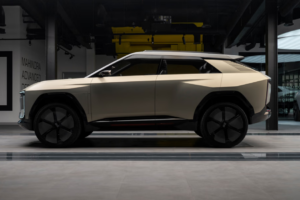
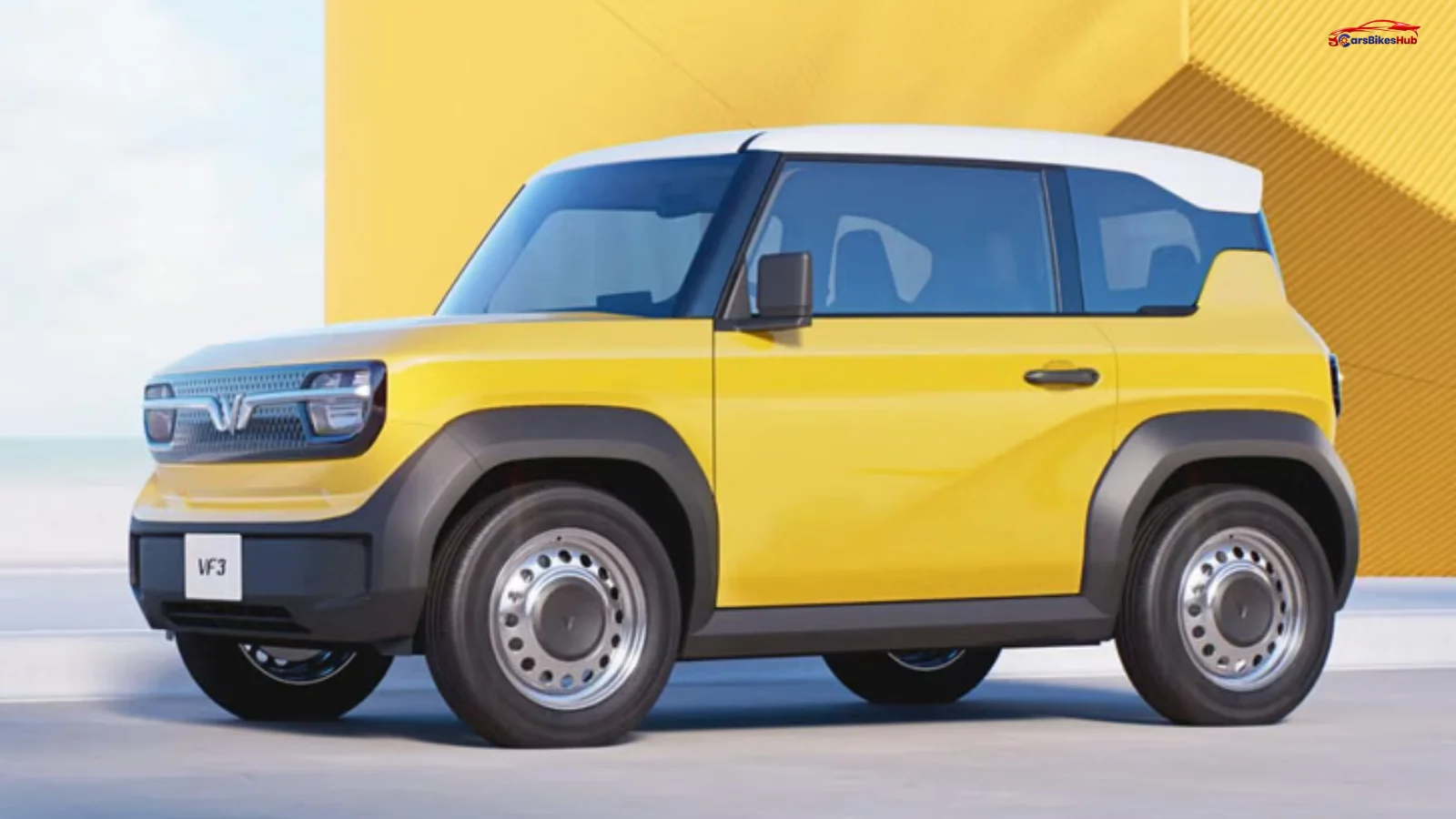
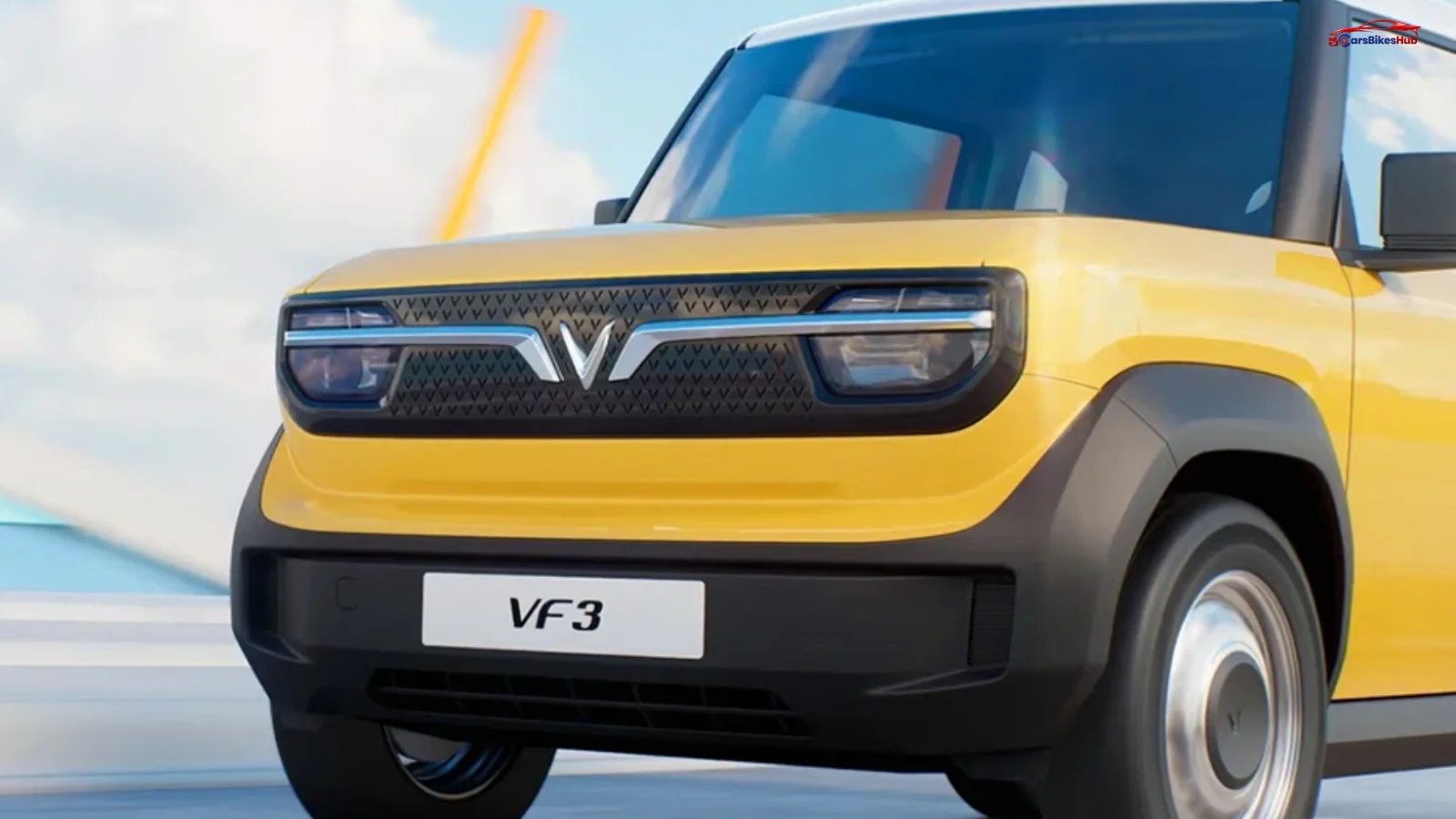
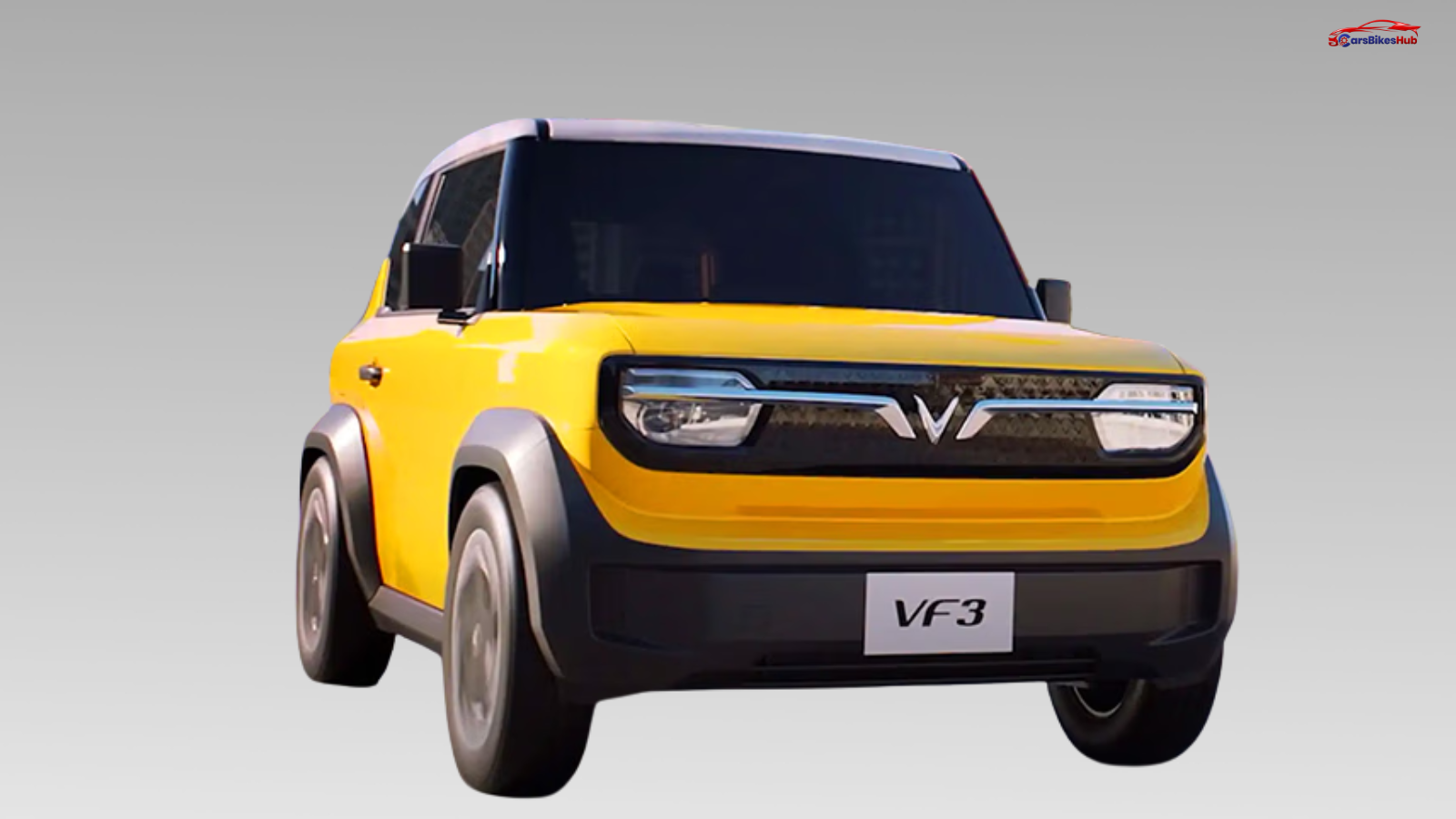
The VF 3 has a deliberately boxy, almost toy-like design, short overhangs, an SUV-style silhouette, and a tall stance for its size. It measures 3,190mm in length, 1,679mm in width, and 1,622mm in height, riding on a 2,075mm wheelbase.
Ground clearance of 191mm is genuinely useful on Indian roads with speed breakers and uneven patches. It doesn’t look like a “proper” SUV up close, but the raised stance and squared-off body give it more visual presence than a typical micro EV.
Interior & Seating Comfort
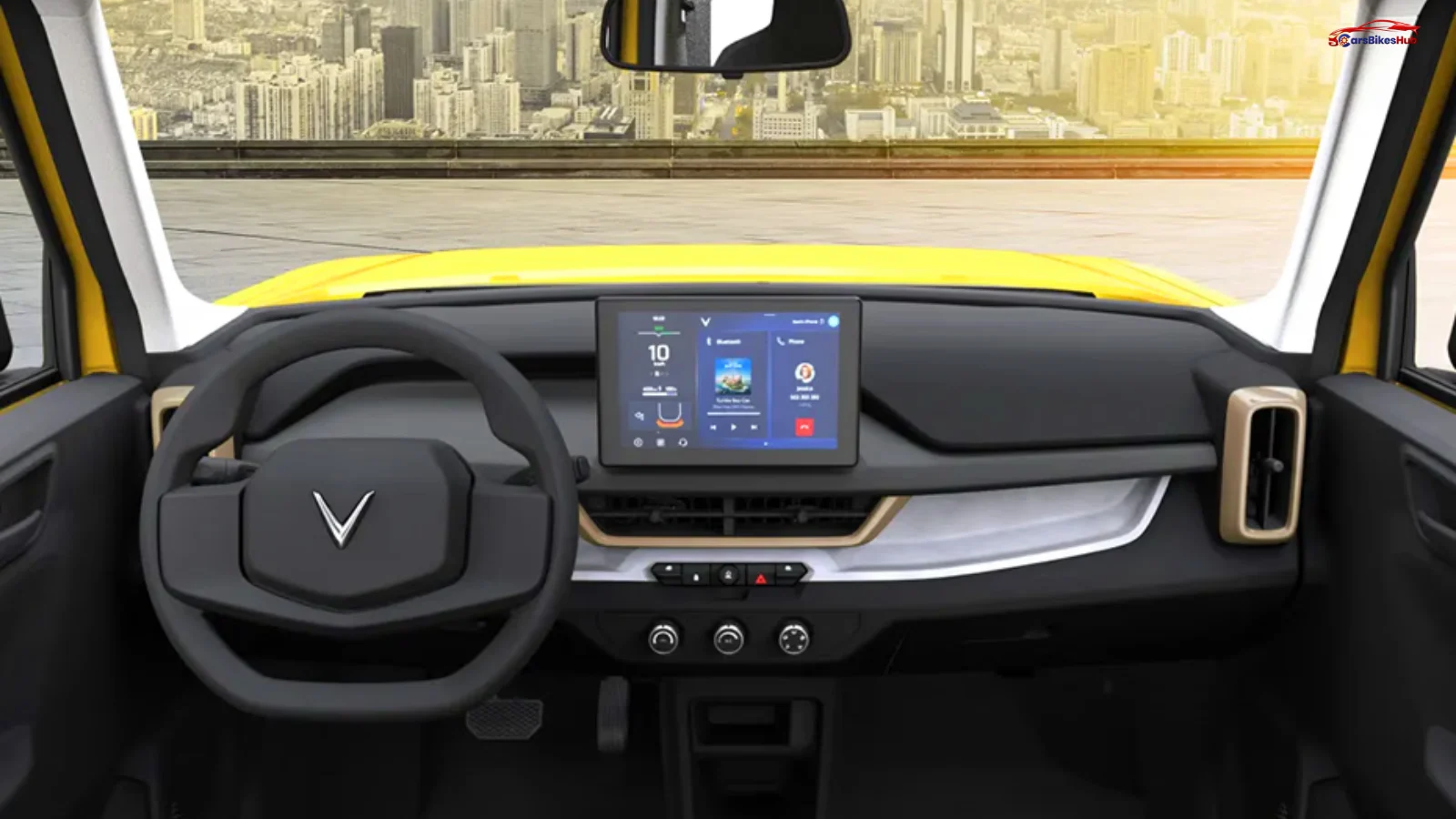
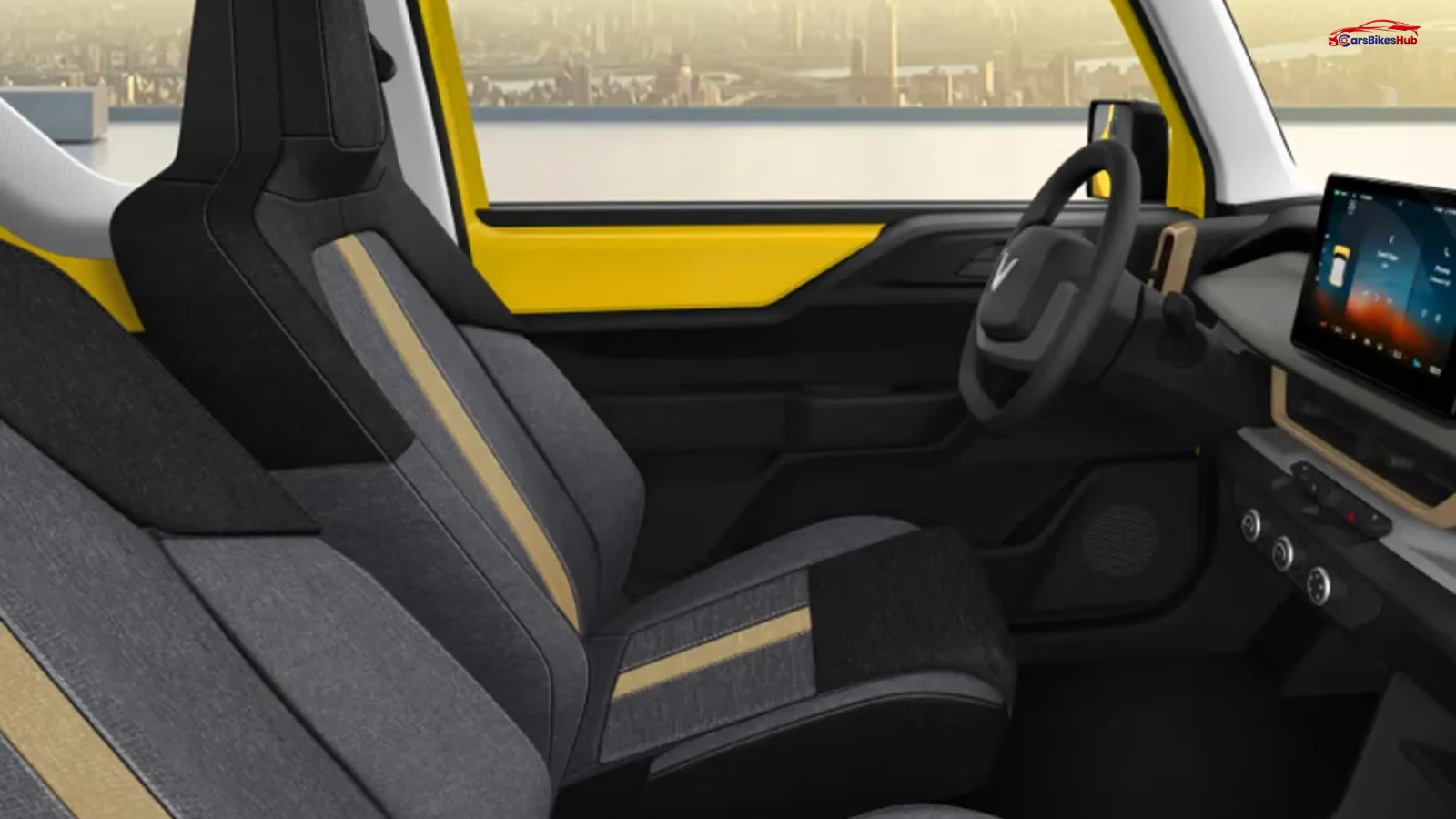
Step inside and the cabin leans minimalist, with a clean dashboard built around a floating touchscreen. It seats four, and the rear bench is best suited to shorter trips, given the limited space typical of cars this compact.
Visibility benefits from the tall glasshouse and upright windscreen, which also helps with city parking. Build quality should lean practical rather than premium, in line with VinFast’s broader approach to the VF 6 and VF 7.
Features & Technology
Expected India-spec features include a 10-inch touchscreen with connected car tech and a digital instrument cluster. There’s some inconsistency in reports about climate control; some mention manual AC on base trim, others mention automatic climate control, so this is genuinely unclear until VinFast confirms final India specs. The India-shown unit was also noted for supporting up to 50kg of roof-mounted luggage, a small but useful practical touch.
Safety Features
The expected safety kit for the India-spec VF 3 includes multiple airbags, ABS with EBD, and rear parking sensors. VinFast hasn’t crash-tested the VF 3 with any major safety body yet, so buyers should treat safety credentials as an open question rather than assume parity with larger, more established EVs.
Boot Space & Practicality
Global boot space is rated at 285 litres, decent for a car this size, enough for a grocery run or a couple of soft bags. The India-spec car’s roof-luggage allowance of up to 50kg adds a bit of flexibility for occasional bulkier loads. For daily urban use, commuting, school runs, and quick errands, this is exactly the kind of practicality the VF 3 is built around, and it’s not pretending to do more than that.
Who Should Consider the VinFast VF 3?
This car is a good fit if you live in the city and want a second car for short trips, or if you’re buying an EV for the first time and don’t want to spend a lot of money. It also works well for singles or couples who don’t need a big five-seater car. If you have young kids, the back seat might feel a bit tight for everyday use, and if you travel between cities often, this probably isn’t the right car for you.
Final Verdict
The VinFast VF 3 fills a real gap in India’s EV market. It’s a small, electric, easy-to-use city car that costs less than most “proper” EVs, while still looking more like an actual SUV than something like the MG Comet. Its range and power numbers aren’t impressive, but that’s fine, because the price matches what you’re getting. The boot space, ground clearance, and the consistent 36-minute fast-charging time all suggest this is a car made for everyday city use, not one trying to impress people with numbers on paper.
The real test for the VF 3 will be whether VinFast can support it well in India, things like service, spare parts, and charging access, since the brand is still fairly new here after entering in 2025. If the price does end up around ₹8-10 lakh, it could be a genuine alternative to the Tata Tiago EV and a more solid-looking option than the Comet. But since nothing is official yet, it’s best to treat all these numbers as estimates for now, not final facts.
For now, the VF 3 looks like a sensible way to get into EV ownership, especially if most of your driving happens within the city. It’s not going to replace a family’s main car, but as a dedicated commuter, it does seem genuinely useful.
FAQs
What is the expected price of the VinFast VF 3 in India?
Estimates range from ₹7.5 lakh to ₹10 lakh (ex-showroom), with ₹8-10 lakh being the most commonly cited band. Official pricing hasn't been announced yet.
What is the range of the VinFast VF 3?
VinFast's claimed range is around 200-215 km; real-world range in Indian conditions will likely be lower, closer to 140-170 km, depending on usage.
Is the VinFast VF 3 a good city car?
Yes, its compact size, tight footprint, and 191mm ground clearance make it well-suited to city traffic and uneven roads.
How long does the VinFast VF 3 take to charge?
DC fast charging takes it from 10% to 70% in 36 minutes; a standard AC charger takes around 5 hours for the same range.
Which cars compete with the VinFast VF 3?
Its closest rival is the MG Comet EV, with the Tata Tiago EV and Tata Tigor EV also competing on price despite offering more space and range.