




















If you’re shopping for an affordable hatchback under ₹6 lakh, the Renault Kwid is likely to be one of the cars on your shortlist. It has been Renault’s entry point into the Indian market for years, and in July 2026, the company gave it another round of updates rather than a full redesign. With newer rivals sharpening their pricing and buyer expectations shifting toward more features and safety kit, is the updated Kwid still worth considering in 2026?
This article breaks down what has actually changed, how the car behaves in everyday driving, and whether it deserves a spot on your shortlist or whether your money is better spent elsewhere.
Renault Kwid at a Glance
| Parameter | Details |
| Price (ex-showroom, Delhi) | ₹4.53 lakh – ₹5.61 lakh |
| Variants | Evolution, Climber |
| Engine | 1.0L, 3-cylinder, naturally aspirated petrol |
| Power | 69 hp |
| Torque | 92.5 Nm |
| Transmission | 5-speed manual / 5-speed AMT |
| ARAI Mileage | Up to 21.7 kmpl |
| Fuel Type | Petrol (dealer-fit CNG kit optional) |
| Boot Space | 279 litres |
| Ground Clearance | 184 mm |
| Safety | Up to 6 airbags, ABS with EBD, rear camera, TPMS |
| Best For | First-time buyers, city commuting, tight budgets |
What’s New in the 2026 Renault Kwid?
The 2026 update is a facelift, not a generation change, and Renault has been upfront about that. The biggest structural move is the simplification of the variant line-up: the earlier Authentic and Techno trims have been dropped, leaving just two, Evolution and Climber.
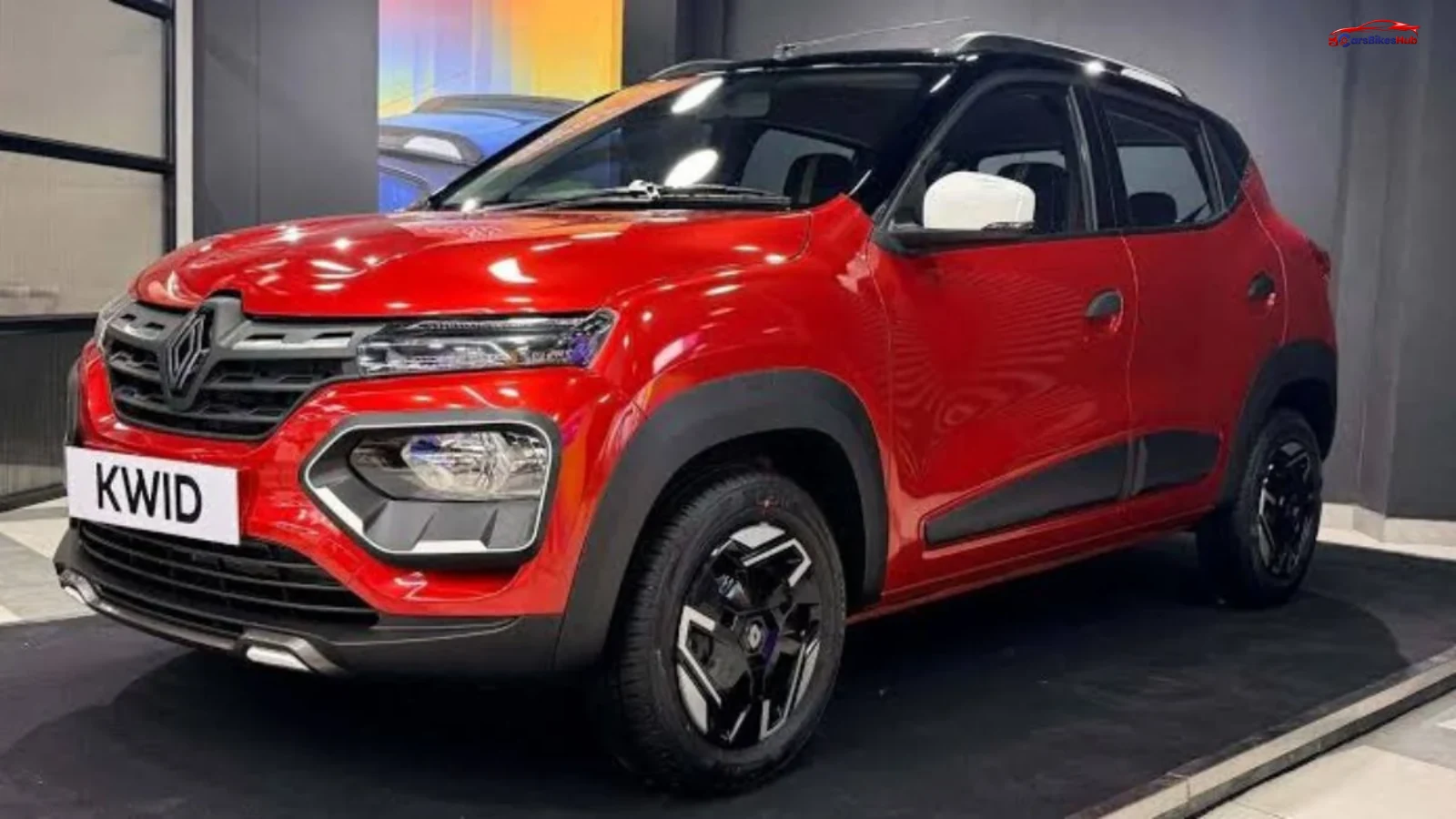
On the outside, you get a new 3D Renault badge, redesigned dual-tone covers for the 14-inch wheels, a fresh font for the “Kwid” lettering on the tailgate, and a silver tailgate finish. Inside, the most noticeable change is a new three-spoke steering wheel borrowed from the Kiger and Triber, with the newer Renault logo and steering-mounted audio controls.
Does any of this change the ownership experience? Mostly no, and that’s worth being honest about. The engine, gearbox, suspension, and cabin layout are unchanged. What has genuinely shifted is the price positioning: dropping the base Authentic variant pushed the starting price up by about ₹22,000, but Renault simultaneously cut prices on the Evolution and Climber trims by ₹14,000 and up to ₹32,000, respectively. So the car you can actually buy today is a little better value than the equivalent trim was last year, even though the “starting price” headline looks higher.
Renault Kwid Price in India
| Variant | Transmission | Ex-Showroom Price |
| Evolution | 5-speed MT | ₹4.53 lakh |
| Evolution | AMT | ₹4.90 lakh |
| Climber | 5-speed MT | ₹5.15 lakh |
| Climber | AMT | ₹5.61 lakh |
A dealer-fitted CNG kit is available on manual variants for an additional ₹70,450, backed by a 3-year/1 lakh km warranty (whichever comes first). Availability can vary by dealership and state, so confirm stock and fitment timelines before booking.
For most buyers, the Evolution AMT at roughly ₹4.90 lakh is the value sweet spot; it adds a genuinely useful gearbox without pushing you into Climber territory. If your budget stretches to the Climber MT, the dual-tone paint (now standard on this trim) and extra styling touches are worth it only if looks matter more to you than features, since the mechanical package is identical either way.
Renault Kwid Variants
Evolution is the practical starting point. It gets the essentials: power windows, power steering, an 8-inch touchscreen with Android Auto and Apple CarPlay, a semi-digital instrument cluster, and the core safety kit. It’s the variant to pick if you want a no-frills city car and don’t care about cosmetic extras.
Climber adds visual differentiation, dual-tone paint as standard, unique badging, and it’s positioned as the “loaded” trim. In some reports, it also carries the fuller six-airbag safety package as standard, while entry Evolution units may ship with fewer airbags depending on the exact configuration at your dealership, so it’s worth confirming the airbag count on the specific unit you’re buying before you sign.
Our recommendation: unless the styling touches specifically appeal to you, the Evolution AMT delivers nearly everything a daily-use buyer needs at a noticeably lower price.
Engine & Performance
The Kwid continues with its familiar 1.0-litre, three-cylinder petrol engine producing 69 hp and 92.5 Nm of torque. In the metal, this translates to a car that feels genuinely at home in city traffic, with light steering, a tight turning radius, and enough low-end response to keep up with city traffic without constant gear-hunting.
The highway is a tougher test, and the Kwid doesn’t quite pass it. Overtaking at 80–100 kmph requires planning; the engine has to be worked hard, and the three-cylinder thrum becomes noticeable at higher revs.
The AMT gearbox, while a genuine convenience in bumper-to-bumper traffic, has a slight pause between gearshifts under hard acceleration something you learn to work around by easing off the throttle mid-shift rather than flooring it. The 5-speed manual remains the smoother, more predictable option for buyers who do a lot of highway driving.
Mileage & Running Costs
Renault claims an ARAI-rated mileage of up to 21.7 kmpl on the petrol manual. In real-world city driving with AC on, expect closer to 16–18 kmpl, and around 19–20 kmpl on a steady highway run, a fairly typical and honest gap for this class of car.
Running costs are where the Kwid earns its keep. Service costs are among the lowest in its segment, spare parts are inexpensive and widely available through Renault’s dealer network, and insurance premiums stay low thanks to the car’s modest declared value and engine size.
The optional CNG kit is worth considering seriously if your monthly running is high; at current fuel prices, the ₹70,450 upfront cost typically pays for itself within a year or so for buyers doing 1,500+ km a month, though it does eat into boot space and adds some weight.
Exterior Design
The Kwid’s SUV-styled design, raised body cladding, a tall stance, and chunky wheel arches are really its biggest selling point. It doesn’t look like a “budget car” in photos or from a distance, and the 184 mm ground clearance is a genuine practical advantage for Indian roads: speed breakers, broken patches, and mild off-road detours (like unpaved parking areas or flooded stretches) are handled with more confidence than most hatchbacks in this price bracket.
The 2026 changes are cosmetic tweaks rather than a redesign, so if you liked how the previous Kwid looked, nothing here will surprise you.
Interior & Comfort
Cabin quality is where the Kwid’s price becomes obvious; there’s a fair amount of hard plastic, and fit-and-finish isn’t in the same league as newer rivals like the Tata Tiago. That said, front seat comfort is decent for a car this size, and visibility out of the cabin is good thanks to slim pillars and a high seating position.
Rear seat space is adequate for two adults on short trips but gets tight for three, and under-thigh support is limited for taller passengers. If four adults frequently travel together, the rear seat will feel adequate rather than spacious. For occasional family trips it’s manageable, but buyers regularly carrying five passengers may find the Tiago more comfortable.
The 279-litre boot is usable for weekly grocery runs and a couple of soft bags, though it’s smaller than what the Tiago or Celerio offer. Storage around the cabin, door pockets, a small glovebox, and a shelf ahead of the front passenger are functional rather than generous.
Features & Technology
- The 8-inch touchscreen with Android Auto/Apple CarPlay is a real convenience for navigation and calls on the move.
- Rear parking camera with sensors reduces the stress of tight parking, especially useful given limited rear visibility in dense traffic.
- Tyre Pressure Monitoring System (TPMS) is a genuine safety and cost-saving feature; it catches slow punctures before they become blowouts or cause uneven tyre wear.
- Keyless entry with central locking saves the small daily friction of fumbling for keys.
- The semi-digital instrument cluster looks modern but doesn’t add functional value over a well-designed analogue one.
- Steering-mounted audio controls are convenient but not something that changes your daily experience meaningfully.
- Dual-tone paint on the Climber is purely cosmetic.
Safety
The 2026 Kwid’s safety sheet is genuinely one of its stronger selling points relative to its price. Depending on variant and specific dealer stock, it offers up to six airbags, ABS with Electronic Brakeforce Distribution (EBD), Electronic Stability Control (ESC) on higher trims, a rear parking camera with sensors, hill start assist (on AMT variants), TPMS, and seatbelt reminders for all occupants.
What this means practically: six airbags and ESC (where fitted) bring the Kwid’s protection closer to cars costing considerably more, which matters given how much of India’s road usage is mixed-speed, unpredictable city and highway driving. Safety equipment can vary depending on the variant and production batch. Before booking, confirm the exact airbag count and ESC availability with your dealership rather than relying solely on brochures or online listings.
Ownership Experience
Renault’s after-sales network in India has improved over the years but is still noticeably thinner than Maruti Suzuki’s or Tata’s, particularly in smaller towns. If you live in a metro or a well-connected Tier-2 city, this isn’t a major concern. If you’re in a more remote area, it’s worth checking the distance to your nearest authorised service centre before buying.
Reliability feedback from long-term Kwid owners has generally been positive on the mechanical side; the engine and gearbox are simple and don’t throw up frequent issues. Resale value, however, is a genuine weak point: the Kwid depreciates faster than the Alto K10 or Tiago, partly due to Renault’s smaller brand footprint in the used-car market and partly due to lower overall sales volumes translating into a smaller pool of buyers.
Renault’s maintenance costs remain competitive, but buyers in smaller towns should also weigh the availability of authorised workshops and spare parts before making a decision.
Renault Kwid’s Rivals
| Car | How It Compares |
| Maruti Alto K10 | Cheaper, better resale, stronger service network; but less ground clearance and a smaller feature list |
| Maruti S-Presso | Similar SUV-styled approach at a lower price; Kwid feels more substantial on the road |
| Tata Tiago | Costs more but offers better build quality, a bigger boot, and a stronger safety reputation. |
| Maruti Celerio | Better mileage and AMT refinement; less rugged styling than the Kwid |
Buyers prioritising resale value and low-cost servicing should lean toward the Alto K10. Buyers who want more cabin quality and don’t mind stretching the budget should look at the Tiago. The Kwid’s edge is in ground clearance, styling, and safety kit for the price.
What Makes the Renault Kwid Different?
The ground clearance and SUV-inspired stance are things you feel every day, over speed breakers, on broken roads, in flooded lanes during monsoon. The safety kit is also something you notice in the sense of confidence it provides, even if you never need to use it.
The cosmetic updates new badges, wheel covers, tailgate lettering are things a buyer will rarely notice unless directly compared to the older model side by side. The “refreshed cabin” language in Renault’s own communication overstates what is, in practice, a new steering wheel design.
Should You Buy It?
Buy it if you want a budget hatchback with better ground clearance and a stronger safety package than typical rivals at this price, you mostly drive in the city, and you’re comfortable with a thinner dealer network in exchange for the value.
Skip it if you do frequent highway trips, prioritise resale value above all else, or want the most refined cabin experience your budget can buy; the Tiago will serve you better on all three counts.
Best suited for first-time car buyers, small families needing a city runabout, and buyers who value all-round safety kit over outright refinement.
Consider another car if
- You drive more than 70% on highways.
- You want the best resale value.
- You need a spacious rear seat.
- You regularly carry five adults.
- You want a more premium cabin.
Final Verdict
The 2026 Renault Kwid update doesn’t reinvent anything, and it shouldn’t be mistaken for one. What it does is sharpen the value proposition slightly, offer better pricing on the trims that matter, a simplified line-up that’s easier to choose from, and a safety kit that punches above its price bracket.
If your driving is largely urban and your priorities are ground clearance, safety, and low running costs, the Kwid remains a sensible pick under ₹6 lakh. If you need highway comfort, strong resale value, or premium cabin quality, you’re better served by a Tiago or, if your budget is tighter, an Alto K10.



FAQs
Is the Renault Kwid worth buying in 2026?
Yes, for city-focused buyers prioritising safety kit and ground clearance at a low price. It's less compelling if highway use or resale value matter most to you.
Which Renault Kwid variant offers the best value?
The Evolution AMT strikes the best balance between features and price for most buyers.
What is the real-world mileage of the Kwid?
Expect around 16–18 kmpl in the city and 19–20 kmpl on highways, against an ARAI rating of up to 21.7 kmpl.
Is the Kwid better than the Alto K10?
The Alto K10 wins on resale value and service network; the Kwid wins on ground clearance, styling, and safety features.
How does the Kwid compare to the Tata Tiago?
The Tiago offers better cabin quality, a bigger boot, and a stronger safety reputation, but at a higher price point.