























If you’re looking for an affordable electric motorcycle, the Revolt RVX has likely caught your attention. With a claimed range of up to 160 km, multiple battery options, and a starting price around ₹1.3 lakh, it promises a lot on paper. But is it actually worth buying, or are there better electric bikes available at this price?
Instead of focusing on the brochure figures, this article breaks down what the Revolt RVX actually offers in everyday use. We’ll cover its price, range, performance, features, charging time, and how it compares with rivals to help you decide if it’s the right electric motorcycle for your needs. Whether you’re a daily commuter tired of petrol price hikes or someone upgrading from a 110cc bike, by the end of this article you’ll know exactly where the RVX fits into your decision.
Revolt RVX at a Glance
| Parameter | Detail |
| Ex-showroom Price (introductory) | ₹1.30 lakh, ~₹1.24 lakh inclusive of PM E-DRIVE incentives |
| Delhi Effective Price | ₹94,990 (after Delhi EV Policy + PM E-DRIVE incentives) |
| Battery | 3.24 kWh removable NMC, IP67 rated |
| Claimed Range (IDC) | 160 km |
| Realistic Real-World Range | Roughly 100-120 km in mixed city riding |
| Top Speed | 90 kmph (in Boost mode) |
| Fast Charging | 0-80% in 80 minutes |
| Standard Charging | 0-80% in ~3 hr 30 min, 0-100% in ~4 hr 45 min |
| Riding Modes | Eco, City/Normal, Sport, Boost |
| Kerb Weight | 120 kg |
| Seat Height | 815 mm |
| Warranty | 3 years/30,000 km (motorcycle); 8 years/80,000 km (battery, as advertised at launch) |
| Best For | Urban commuters wanting quick acceleration and a removable battery, without RV400-level pricing. |
Revolt RVX Price in India
The RVX has launched at an introductory ex-showroom price of ₹1.30 lakh, which comes down to approximately ₹1.24 lakh once PM E-DRIVE incentives are applied.
Revolt has flagged this as a limited-period introductory price, meaning it’s likely to go up once the launch offer window closes, so early buyers do get a genuine advantage here. The final on-road price may vary depending on your state’s incentives and applicable subsidies, so always ask for the exact figure in writing before booking.
The real story, though, is state-level incentives. In Delhi, the new EV policy combined with central subsidies brings the effective ex-showroom price down to roughly ₹94,990, making it one of the most affordable electric motorcycles in its segment while offering motorcycle-level performance. If you’re outside Delhi, check your state’s EV policy before assuming the headline price applies to you, because subsidy structures vary widely across India and can swing your final cost by ₹15,000-20,000 either way.
In terms of value, the RVX undercuts Revolt’s own flagship RV400 by roughly ₹10,000-15,000 at introductory pricing while adding a more powerful motor, a longer claimed range and Boost mode, which on paper makes it the more sensible buy within Revolt’s own lineup, provided you don’t specifically need the RV400’s larger battery.
Revolt RVX Variants
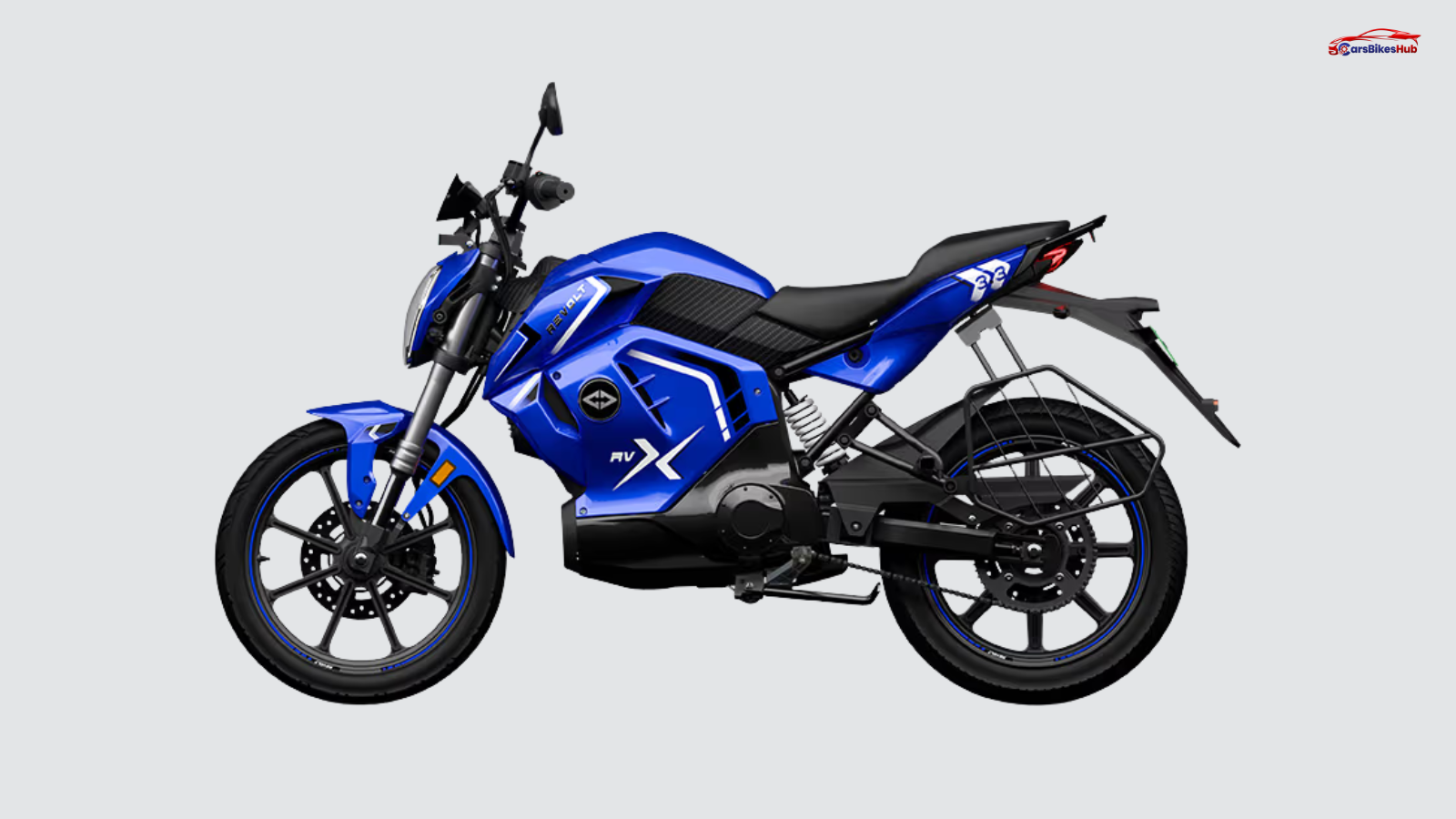
Unlike many petrol motorcycles that come in base, mid and top trims, the RVX is currently sold as a single, fully-loaded variant.
This actually works in the buyer’s favour; there’s no confusing “should I go one variant up for the digital console” decision to make. Every RVX buyer gets the same 3.5-inch colour display, Bluetooth connectivity, four riding modes, hill-hold assist and reverse mode as standard. Since there’s only one variant, buyers don’t have to worry about sacrificing important features to stay within budget. The only real choice you’ll make is colour: Pearl Black, Electric Blue or Eclipse Red.
Battery, Motor & Performance: What Does It Feel Like to Ride?
Numbers on a spec sheet rarely tell you what a bike feels like at a traffic light or while joining a highway, so here’s the practical breakdown.
In the city, the RVX’s new 4kW mid-drive motor (with a peak output of 5.3kW and a claimed 230 Nm of torque at the wheel) makes for genuinely brisk pull-away from signals. Revolt claims a 0-40 kmph time of 3.9 seconds, which in real terms means you’ll comfortably out-accelerate most 110–125cc commuter bikes off the line, useful for merging into fast-moving Indian traffic rather than getting boxed in.
On the highway, Boost mode is the headline feature. It briefly unlocks the motor and battery’s full performance for a claimed top speed of 90 kmph, then automatically reverts to Sport mode once conditions require it. Think of it less as a mode you ride in constantly and more as an overtaking tool, useful for a quick burst past a truck, not for sustained 90 kmph highway cruising, since electric motors run hottest (and least efficient) at their performance ceiling.
Riding modes– Eco, City/Normal, Sport, and Boost- let you trade speed for range depending on your trip. Eco is what you’ll want for your daily 20–25 km commute if range anxiety is a concern; Sport and Boost eat into your remaining kilometres noticeably faster, so treat them as occasional-use tools rather than your default setting.
Throttle response on mid-drive motors (as opposed to hub motors used on cheaper EVs) tends to feel more connected and motorcycle-like, with power delivered through the chain drive rather than directly at the wheel; riders switching from petrol bikes will likely find this transition more intuitive than hub-motor EVs.
Range & Charging: The Numbers That Actually Matter
Revolt claims an IDC-certified range of 160 km from the 3.24 kWh battery. As with virtually every IDC-rated EV in India, treat this as a lab-test ceiling rather than a real-world promise. Based on similar electric motorcycles and typical IDC-to-real-world conversions under Indian riding conditions, factoring in city traffic, occasional Sport/Boost mode use, rider weight and charging losses, buyers can realistically expect somewhere in the 100–120 km range per full charge for mixed city riding, dropping further if you frequently use Boost mode or ride two-up. This is an expected range based on the battery’s specifications rather than independently tested figures, since the RVX has only just launched.
Charging math:
- Fast charger: 0-80% in 80 minutes
- Standard 10A home charger: 0-80% in ~3 hr 30 min, full charge in ~4 hr 45 min
- Cost per full charge: roughly 3.24 units of electricity, at typical Indian residential tariffs of ₹6–8/unit, that’s approximately ₹20-26 per full charge
- Cost per km: works out to well under ₹0.25/km on electricity alone, dramatically cheaper than a petrol commuter bike running at ₹1.5-2/km
Who should rely on home charging? Anyone with access to a private parking spot and a standard socket. Since the battery is removable, you don’t even need a dedicated home charging point; you can carry the battery indoors and charge it like a large power bank.
Who might struggle? Riders without dedicated parking (street parking, shared building parking without power access) will need to plan around public charging infrastructure, which is still patchy outside major metros. If that’s you, budget extra time or consider whether a petrol alternative still makes more sense for your situation.
Design & Comfort
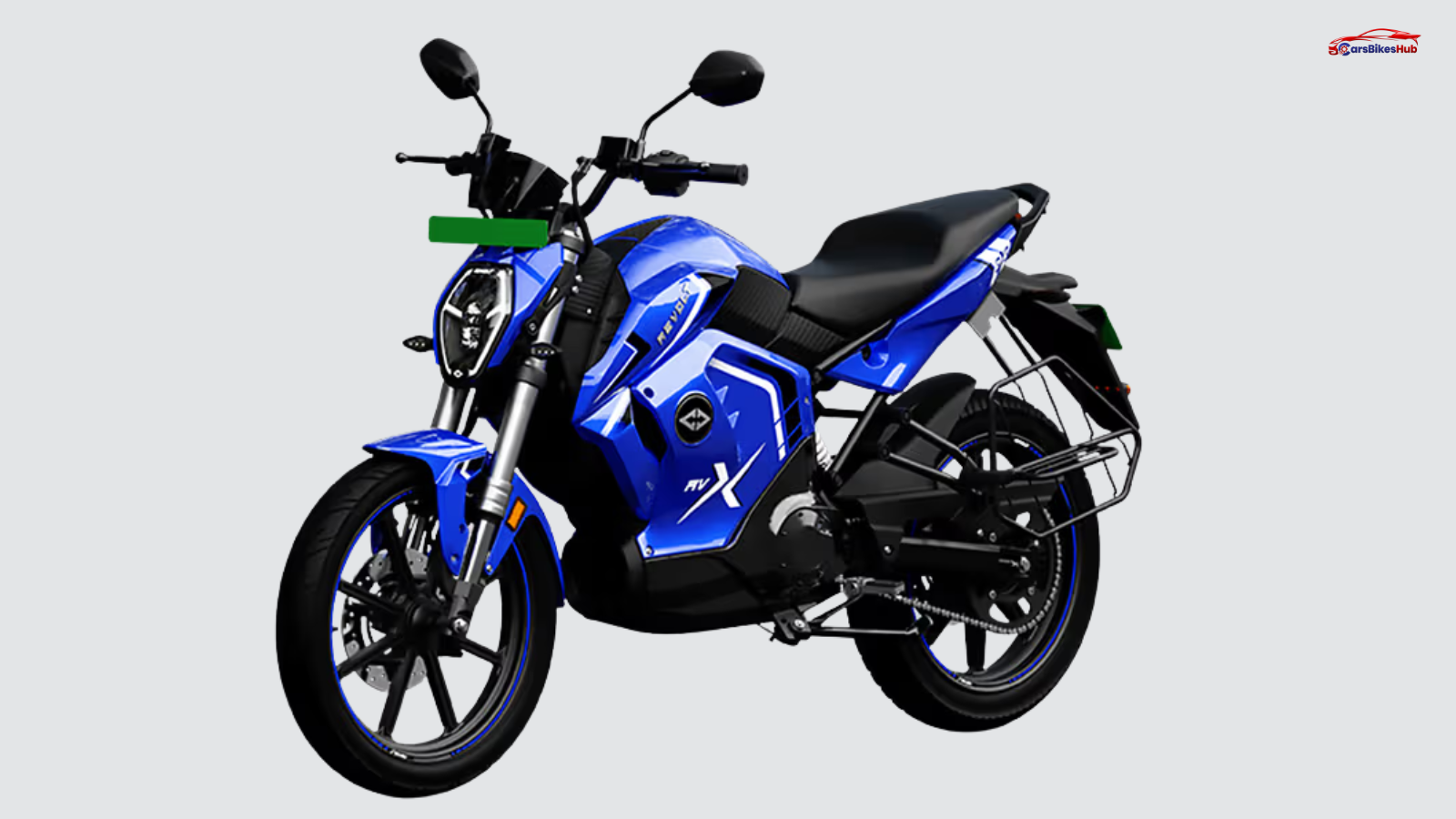
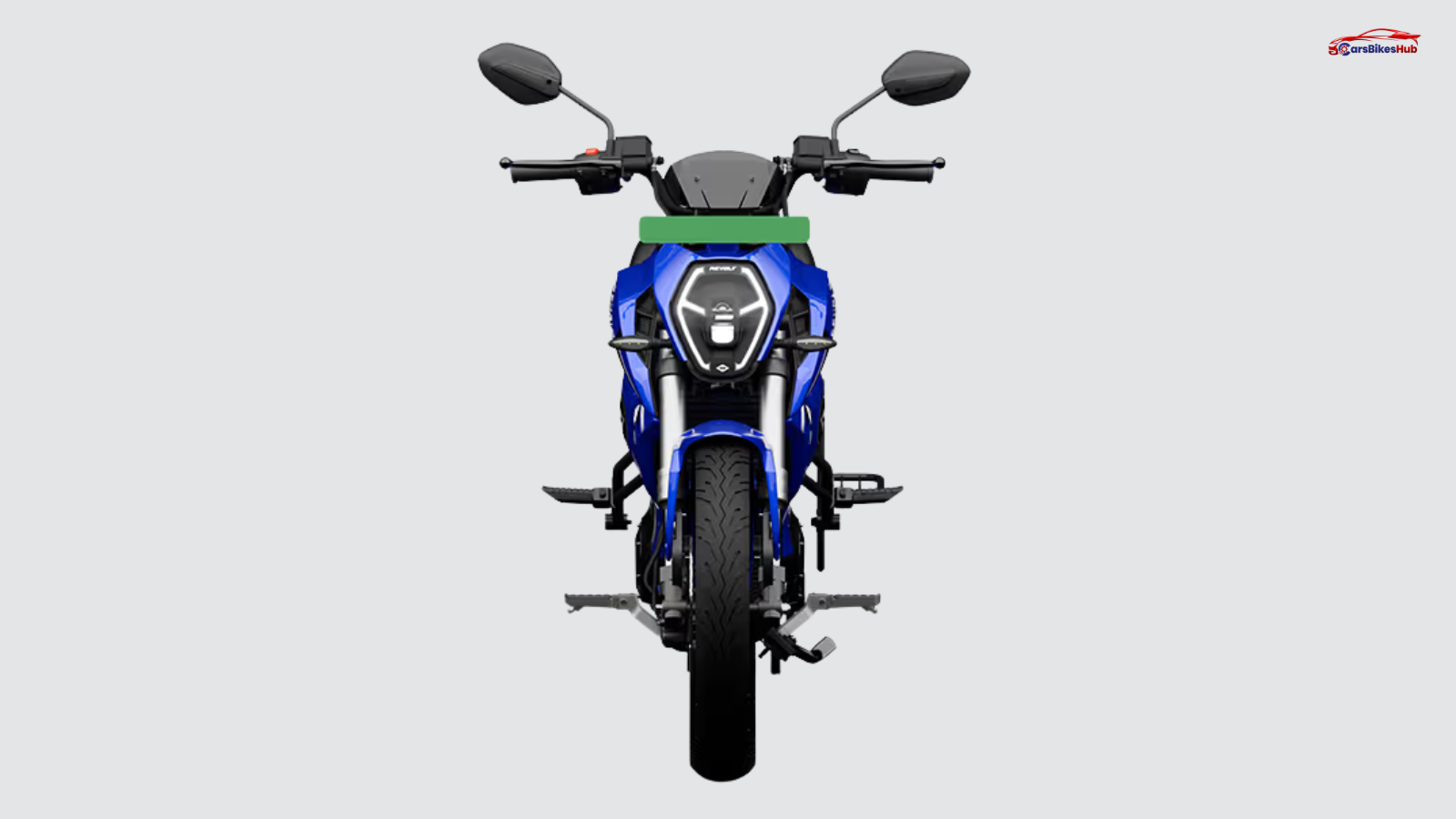
The RVX follows Revolt’s now-familiar styling, an LED headlamp with integrated DRLs, a muscular tank cowl that houses the removable battery, a single-piece sporty seat and a raised tail section. It’s a more aggressive, “streetfighter” look than typical commuter EVs, which should appeal to younger buyers who prefer a sportier design over a conventional commuter look.
At 815 mm, the seat height is on the taller side for a commuter-focused motorcycle, so shorter riders (under roughly 5’4″) should sit on one before buying. Revolt dealerships allow test rides, and this is one spec you genuinely can’t judge from a brochure. The 120 kg kerb weight is respectably light for an EV in this class, which helps with low-speed manoeuvring, U-turns and parking in tight city spaces. Ground clearance of 190 mm should comfortably clear most speed breakers and moderately potholed roads, though it’s not built for serious off-road use.
Build quality on Revolt’s recent bikes has generally been a step up from earlier models, though it’s still worth inspecting panel gaps and switchgear feel in person, since fit-and-finish consistency can vary between individual units in early production batches.
Revolt RVX Features & Technology: What You Actually Get
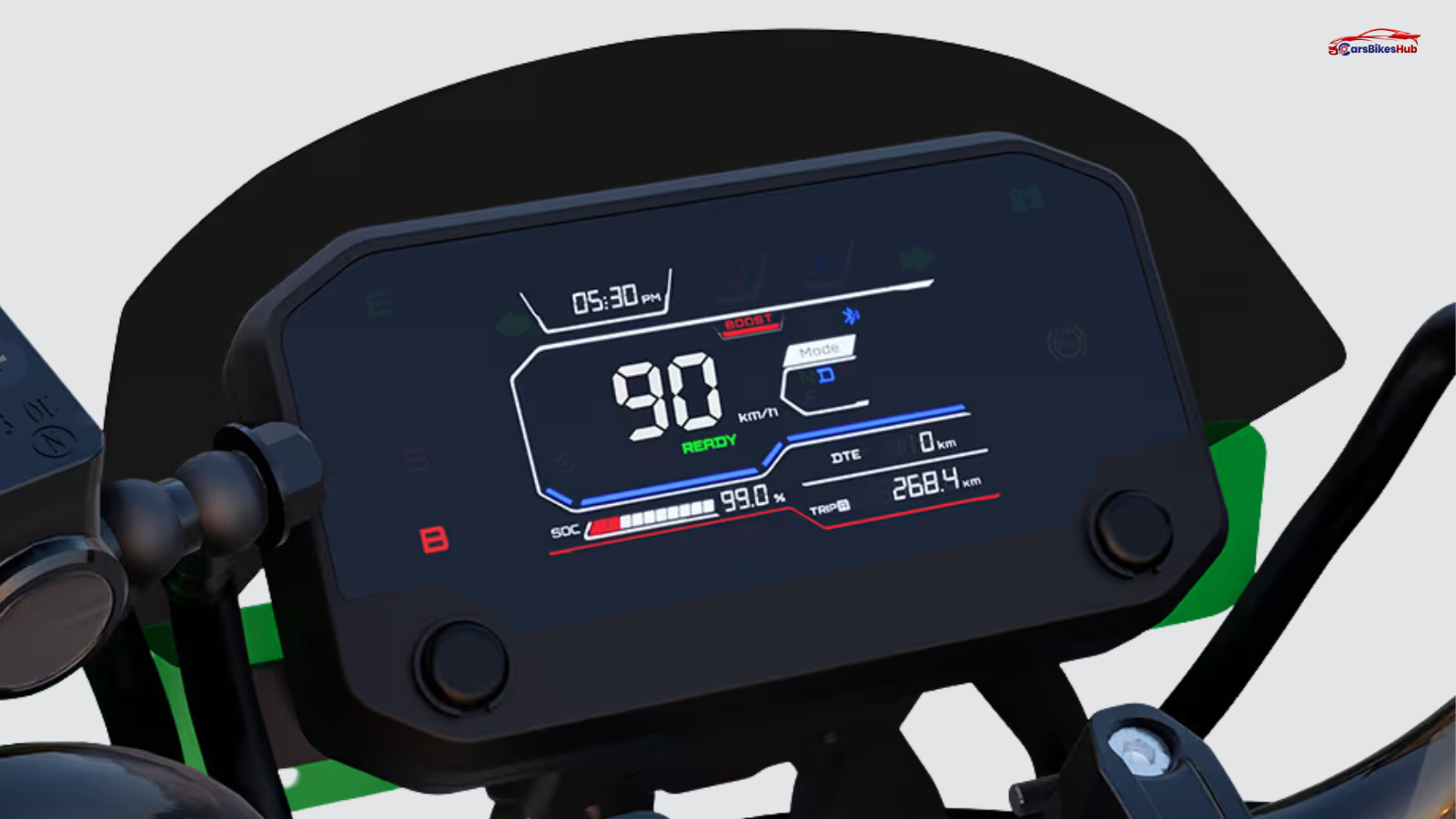
The RVX comes loaded with a 3.5-inch IP67-rated colour display, Bluetooth connectivity, telematics, OTA (over-the-air) software updates, geofencing, call and message notifications, and app-based digital document storage through Revolt’s companion app.
Useful Features:
- Removable battery: lets you charge without dedicated home wiring, a real advantage for apartment dwellers
- Reverse mode: surprisingly practical for backing out of tight parking spots without dismounting
- Hill-hold assist: useful safety feature on inclines in traffic
- OTA updates: means future performance and feature improvements can arrive without a service visit
- Vehicle locator/immobiliser: meaningful anti-theft value, particularly for an expensive electric motorcycle
Nice features but not essential:
- Geofencing and call/message notifications: pleasant conveniences, but not something that changes your daily riding experience
- Cluttered display density: some early reviews note the console shows a lot of information at once, which can feel busy at a glance while riding; worth checking in person if you prefer a cleaner readout
Safety
The RVX gets disc brakes at both ends with a combined braking system (CBS), which is the sensible minimum for a motorcycle capable of a sub-4-second 0-40 kmph run. It rides on 17-inch alloy wheels with tubeless tyres front and rear (90/80-17 front, 110/80-17 rear), and suspension duties are handled by upside-down (USD) front forks and a rear monoshock, hardware you’d normally expect on a bike priced well above this segment, and it should translate to more confident handling over bad roads and during hard braking than a basic telescopic-fork setup.
Rivals Comparison: RVX vs RV400 vs Oben Rorr EVO vs Ola Roadster X
| Model | Ex-showroom Price | Claimed Range | Notable Strength |
| Revolt RVX | ₹1.30 lakh (~₹1.24 lakh with PM E-DRIVE) | 160 km | Best power-to-price ratio in Revolt’s lineup; removable battery |
| Revolt RV400 | ~₹1.40 lakh | ~150 km | Larger, more established battery; higher price |
| Oben Rorr EVO | ~₹1.25 lakh | Comparable segment range | Direct price rival, worth cross-shopping on range and after-sales |
| Ola Roadster X | Segment-competitive | Varies by variant | Backed by Ola’s wider charging/service push, though reliability track record is still being established |
Who should buy which?
If you want the strongest performance-per-rupee within Revolt’s own range and don’t need the RV400’s bigger battery, the RVX is the easy pick. If outright range matters more than acceleration, it’s worth cross-shopping the RV400 and Oben Rorr EVO on their real-world range figures before committing. If you’re drawn to a wider public charging network, evaluate Ola’s infrastructure in your city specifically, since network density varies a lot by location.
Ownership Experience
Running costs are the RVX’s strongest argument: electricity costs a fraction of petrol, and with fewer moving parts than a combustion engine (no gearbox, clutch, or oil changes), routine maintenance should be simpler and cheaper over the ownership period.
Service network: Revolt sells the RVX through a network of 200+ dealerships across India, which is a reasonably wide footprint for an EV-only brand, though still nowhere near the reach of legacy petrol-bike brands; worth confirming service centre proximity to your home before buying, especially if you live outside a major city.
Battery warranty: Revolt has advertised an 8-year/80,000 km battery warranty at launch (motorcycle warranty separately covers 3 years/30,000 km); always get exact warranty terms confirmed in writing at your dealership, since coverage details can be refined post-launch.
Reliability and resale: As a newly launched model, the RVX doesn’t yet have a long-term reliability track record that will only become clear over the next 12-18 months as more units hit the road. Resale value for electric two-wheelers in India generally remains a developing market compared to petrol bikes, so buyers should view the RVX as a rational choice for running costs and daily usability rather than as an asset that holds value the way an established petrol commuter might.
Who Should Buy the Revolt RVX?
Buy it if:
- Your daily city commute is under 50 km
- You have home charging access, even just a standard wall socket
- You want low running costs compared to a petrol commuter bike
- This is your first electric motorcycle, and you want a feature-rich, beginner-friendly option
Consider alternatives if:
- You ride regularly on highways or cover long distances
- You don’t have reliable charging access at home or work
- You need a longer touring range than 100–120 km per charge
Best suited for: young, tech-savvy urban commuters replacing a 110–125cc petrol bike, who value quick acceleration and app-connected features.
Consider rivals if: you specifically need a longer real-world range or want to buy into a brand with a wider, more established public charging network in your city.
Final Verdict
The Revolt RVX earns its “most powerful Revolt yet” tagline honestly; the mid-drive motor, Boost mode and USD forks are genuine upgrades, not just marketing dressing. At its introductory price, it undercuts the RV400 while outperforming it on paper, which makes it the more sensible choice within Revolt’s own showroom right now.
That said, treat the 160 km claimed range as a best-case number, not a planning figure; budget for 100-120 km in real conditions. And because this is a freshly launched model, go in with realistic expectations about reliability data and resale value, both of which will only be proven with time.
If your daily riding fits comfortably within its real-world range and you have reasonable charging access, the RVX is worth serious consideration. If you’re chasing maximum range or buying into an established ownership track record, it’s worth cross-shopping the RV400 and Oben Rorr EVO before signing the booking form.
FAQs
Is the Revolt RVX worth buying?
For urban commuters with home charging access and daily distances under 40–50 km, yes, it offers strong performance and features for the price. If long-distance range or proven reliability matters more, evaluate rivals first.
What is the Revolt RVX's real-world range?
While Revolt claims 160 km (IDC), buyers can realistically expect around 100–120 km in mixed-city riding. Based on typical IDC-to-real-world conversions, this is an estimate rather than independently tested data, since the RVX has only just launched.
Does the Revolt RVX support fast charging?
Yes. Using the fast charger, it charges from 0–80% in approximately 80 minutes. A standard 10A charger takes roughly 3 hr 30 min for the same charge level.
Which is better: RVX or RV400?
The RVX offers more power, a claimed longer range and Boost mode at a lower introductory price than the RV400, making it the stronger value pick, unless you specifically need the RV400's established track record or larger battery capacity.
How many riding modes does the RVX have?
Four: Eco, City/Normal, Sport and Boost, allowing riders to balance performance against range depending on the trip.