














If you’re shopping for a premium seven-seater SUV, chances are you’ve already considered options like the Toyota Fortuner, Volkswagen Tayron R-Line or the standard Skoda Kodiaq. But what if you want all the practicality of a family SUV without giving up performance? That’s exactly where the Skoda Kodiaq RS positions itself. Priced at ₹66.99 lakh (ex-showroom), it promises sports-car-inspired performance, all-wheel drive and everyday usability in one package. But does it justify the significant premium over the standard Kodiaq?
This article looks beyond the specifications to help you decide whether it’s the right SUV for your needs.
Skoda Kodiaq RS at a Glance
| Parameter | Details |
| Price (ex-showroom) | ₹66.99 lakh |
| Variants | Single, fully-loaded RS trim |
| Engine | 2.0-litre TSI turbo-petrol |
| Power | 265 PS (261 hp) |
| Torque | 400Nm |
| Transmission | 7-speed DSG (dual-clutch automatic) |
| Drivetrain | AWD (4×4) |
| 0-100kph | 6.3 seconds (claimed) |
| Top Speed | 231kph (claimed) |
| Seating | 7 |
| Safety | 9 airbags, Level 2 ADAS, 360-degree camera |
| Warranty | 4 years/1,00,000km standard (confirm CBU-specific terms with dealer) |
| Rivals | Volkswagen Tayron R-Line, Skoda Octavia RS |
| Best For | Buyers who want a genuinely quick, practical family SUV and don’t mind paying a premium for exclusivity |
Skoda Kodiaq RS Price in India
The Skoda Kodiaq RS has officially launched in India at ₹66.99 lakh (ex-showroom). On-road prices in most metro cities will land somewhere around ₹76-78 lakh once you factor in registration, insurance, and cess. Bookings had opened earlier at a token amount of ₹3 lakh, and the first allocation of 50 units sold out before this official price was even revealed, a sign of how much confidence Skoda had in demand outpacing supply.
One of the biggest reasons for that premium is that the Kodiaq RS is imported as a Completely Built Unit (CBU), unlike the locally assembled Kodiaq L&K. Higher import duties, combined with the RS-exclusive performance upgrades and limited-volume import costs, account for much of the roughly ₹20 lakh price difference. In simple terms, you’re paying not just for more performance, but also for the higher cost of bringing the vehicle into India.
Is that justified? If you’re cross-shopping on power-per-rupee alone, no. You’d get similar mechanicals from a Volkswagen Tayron R-Line at a noticeably lower price, since it uses a lower-state-of-tune version of the same engine. But if you specifically want the extra power, the adaptive suspension, and the badge that says only a handful of units exist in the country, that’s a different calculation entirely, one about exclusivity, not just numbers.
Skoda Kodiaq RS Variants
Unlike most SUVs, the Skoda Kodiaq RS is offered in a single, fully loaded variant. There’s no lower trim or optional equipment package to choose from, which makes the buying decision refreshingly simple.
Everything Skoda offers on the RS comes as standard, so buyers don’t have to worry about missing out on key features by choosing the wrong variant.
Exterior Design
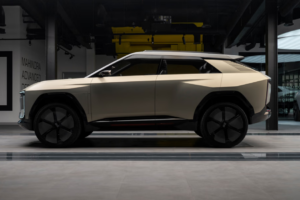
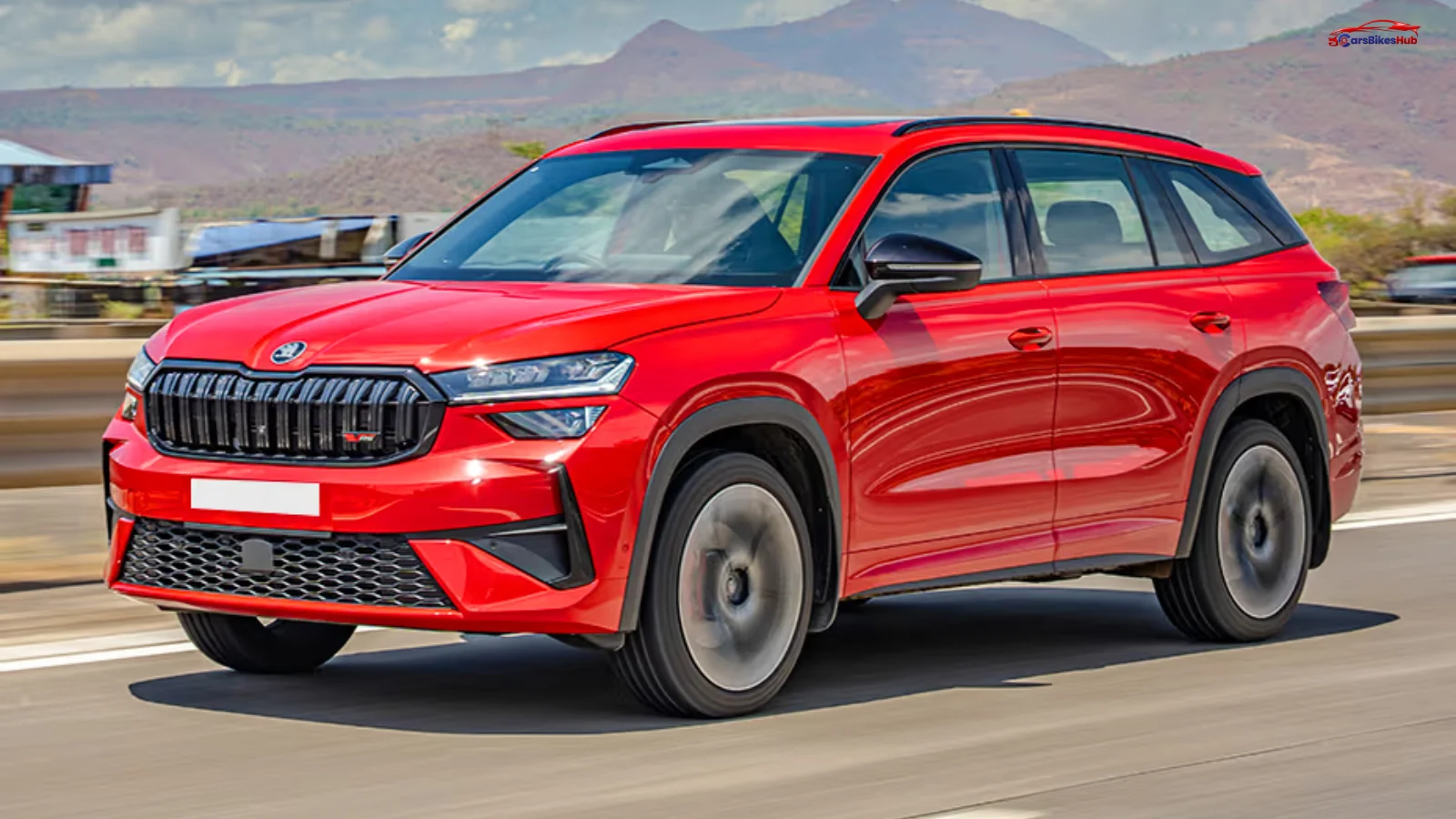
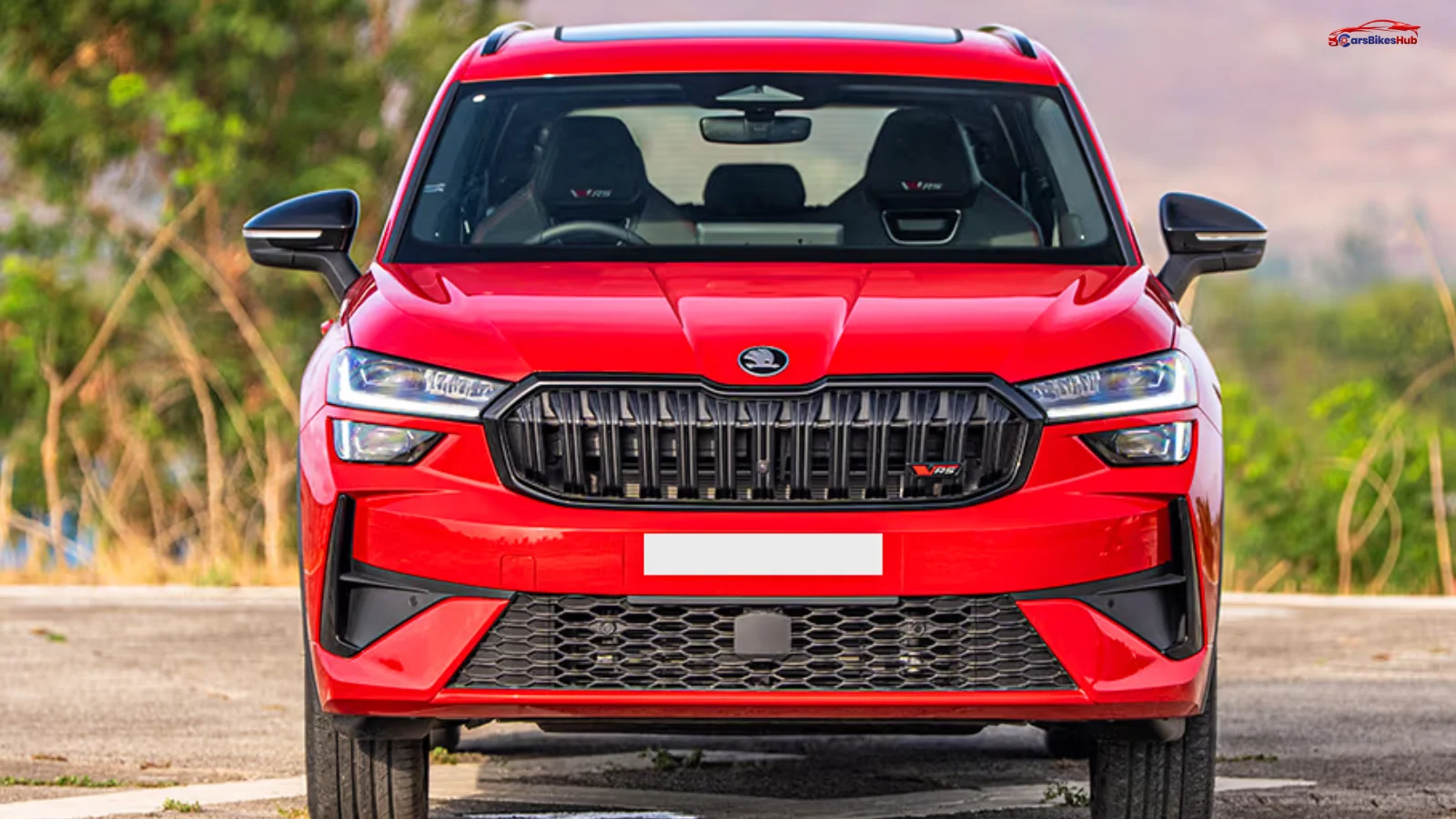
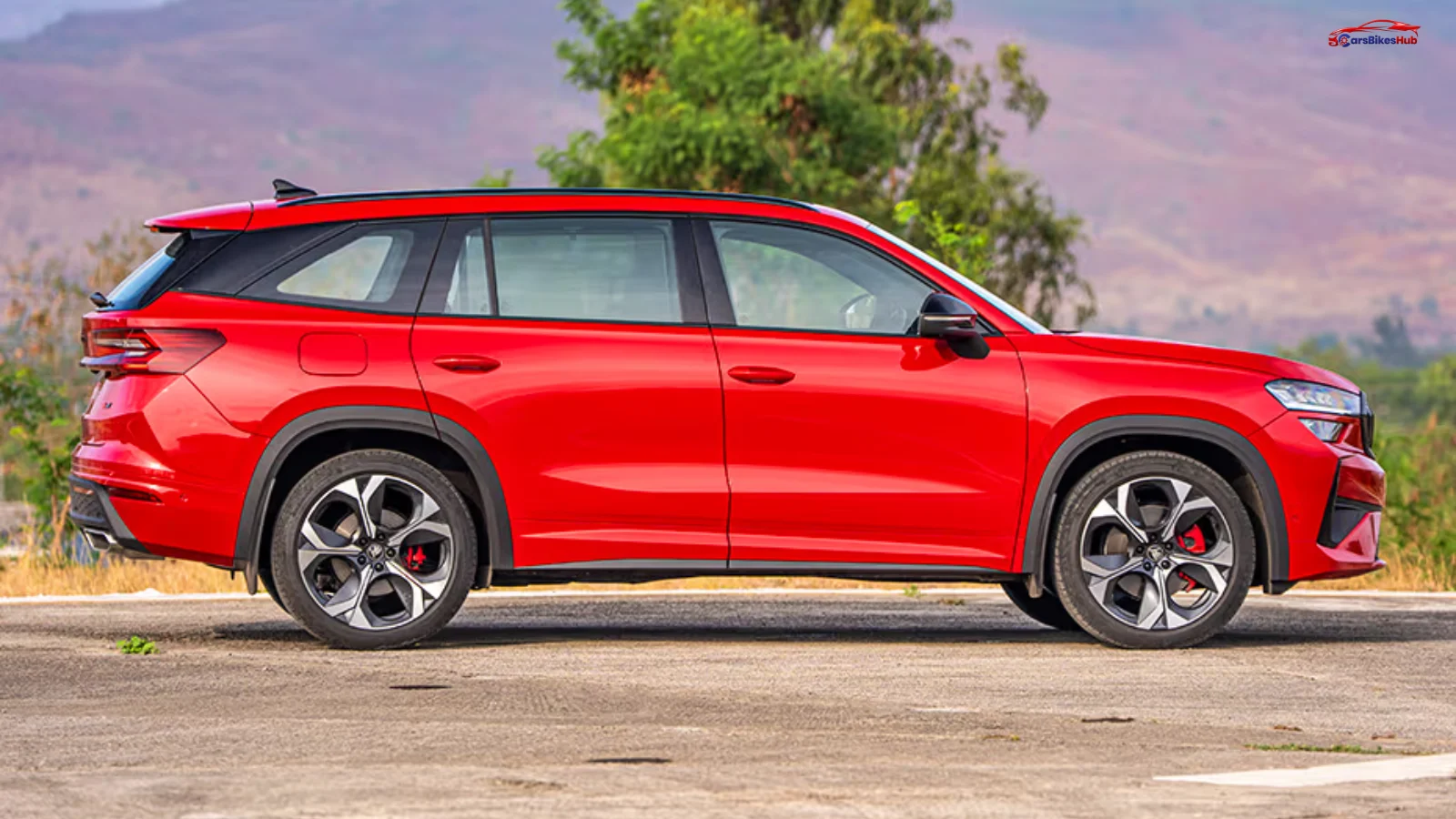
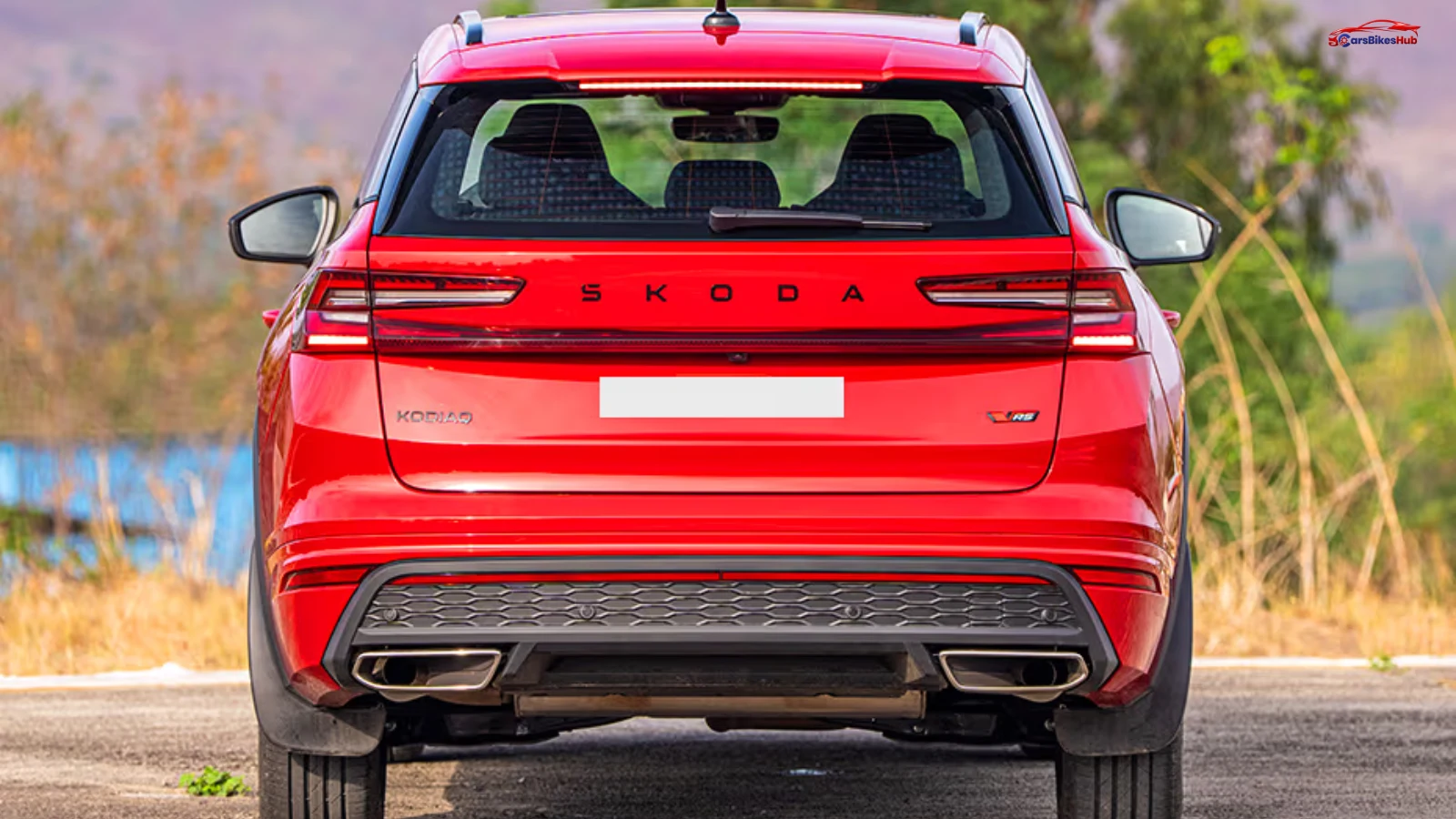
The Kodiaq RS doesn’t reinvent the standard car’s silhouette; it’s still a big, long SUV with the same basic proportions. What changes is the detailing, and it’s more than a badge job. The grille goes gloss black instead of chrome, LED Matrix headlights with adaptive front lighting replace the standard units, and at the rear you get an RS diffuser and polished stainless-steel exhaust tips instead of a single pipe. Red brake callipers peek out from behind 20-inch alloy wheels, a size up from what the standard Kodiaq gets.
In day-to-day use, the Kodiaq RS doesn’t shout for attention. From a distance, it looks much like the standard Kodiaq, but up close, the gloss-black accents, larger alloy wheels, red brake callipers and RS-specific detailing give it a noticeably sportier character. If you’re looking for a performance SUV that attracts attention everywhere it goes, there are louder options. The Kodiaq RS instead appeals to buyers who prefer subtle styling backed by genuine performance.
Ground clearance and dimensions are near-identical to the standard Kodiaq (4761mm long, 1864mm wide, 2789mm wheelbase), so you’re not losing any practicality for the sportier intent, a genuinely sensible decision on Skoda’s part.
Colours Available
The Kodiaq RS is offered in four exterior shades: Moon White, Magic Black, Velvet Red, and Steel Grey. Notably absent are the Bronx Gold, Graphite Grey, and Race Blue options available on the standard Kodiaq; Skoda has deliberately narrowed the palette to shades that suit the RS’s sportier intent.
Velvet Red is the one that draws the most attention in person and best highlights the red brake callipers and interior stitching, but if you’d rather the styling changes do the talking without shouting about it, Steel Grey or Magic Black let the details stand out more subtly.
Interior, Space & Practicality
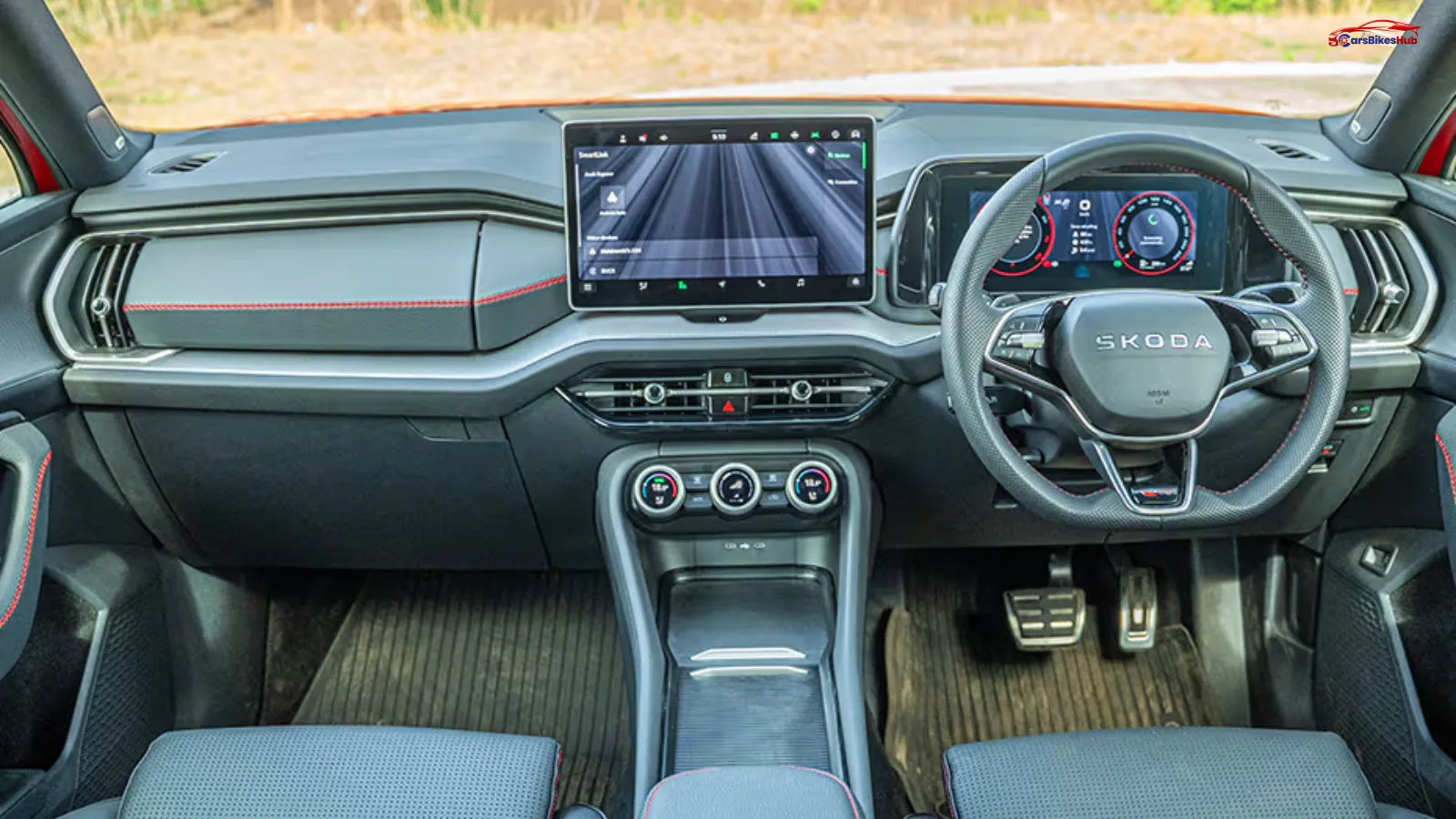
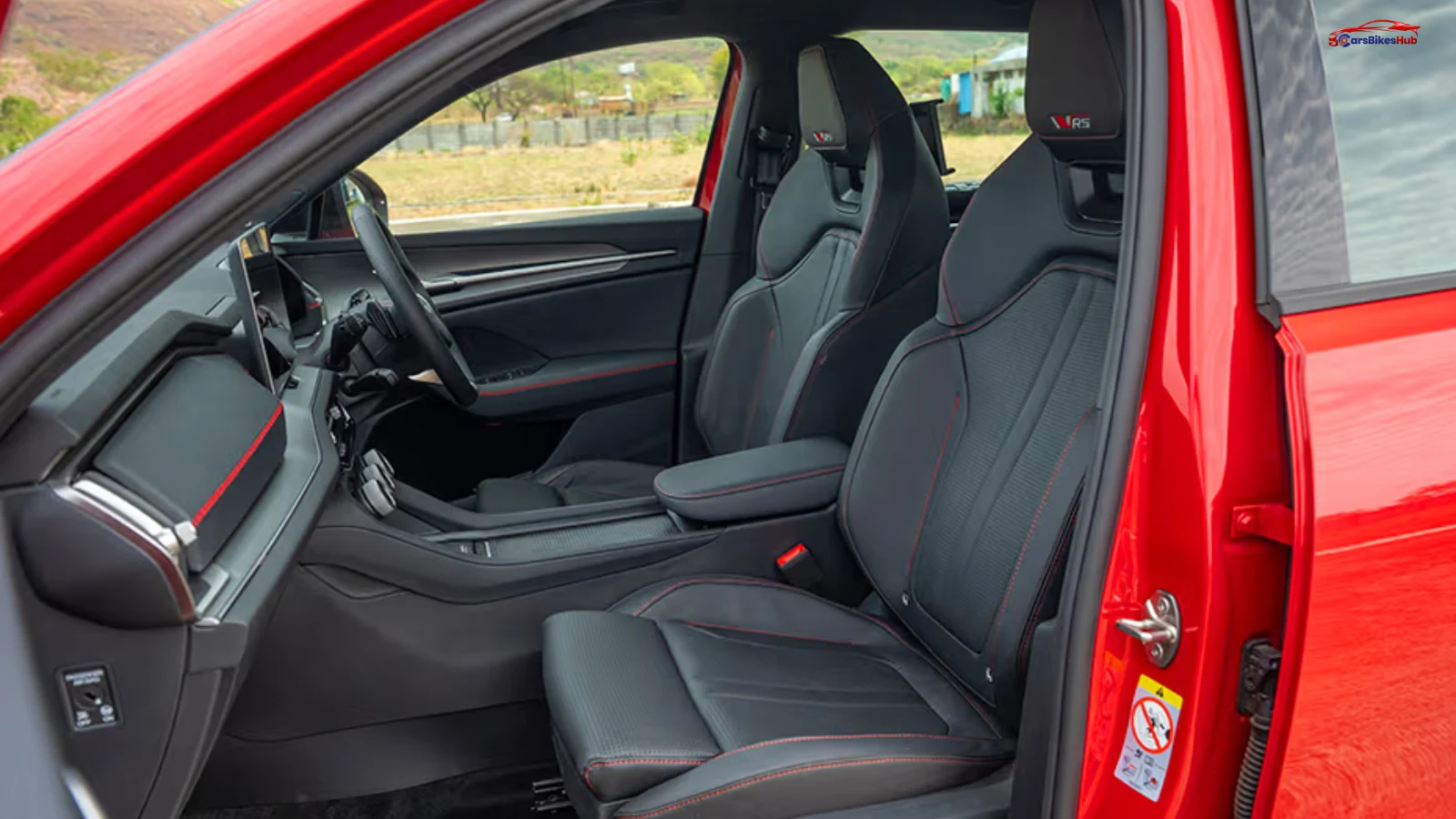
The cabin gets the same treatment as the exterior: evolution, not revolution. It’s an all-black theme with red contrast stitching, RS badging on the seats and steering wheel, and black perforated leather sports seats up front with chrome accents. The two-screen layout, a 12.9-inch touchscreen and a 10.25-inch driver’s display with sportier graphics, carries over from the standard Kodiaq.
Where it matters for families: seven-seat practicality is untouched. Second-row space remains genuinely usable for three adults over shorter trips, though the third row is still best reserved for kids or occasional use, as it is on every Kodiaq.
Boot Space
With all seven seats up, boot space is 340 litres, tight for a family holiday but enough for the weekly shop or a couple of soft bags on a school run. Fold the third row flat, and that jumps to a genuinely massive 910 litres, easily enough for a family’s weekend luggage without playing Tetris.
There’s also a space-saver spare tyre and storage for the cargo cover beneath the boot floor, a small but useful touch missing on some rivals. If your trips regularly involve seven people and full luggage simultaneously, though, be realistic about the compromise; no 7-seat SUV in this segment solves that combination well, and the RS is no exception.
One area where the Kodiaq RS falls short is the 360-degree camera. The image quality isn’t as sharp as you’d expect from a premium SUV in this price range, and the absence of a 3D surround-view function feels like a missed opportunity. These aren’t deal-breakers, but they do stand out in a vehicle positioned as Skoda’s flagship performance SUV.
Engine & Performance
The 2.0-litre TSI engine here is the same EA888 unit that powers the Octavia RS, retuned to make 265 PS (261 hp) and 400Nm, a meaningful jump over the standard Kodiaq’s 204 PS (201 hp). Paired with the 7-speed DSG, AWD, and Progressive Steering, it does 0-100kph in a claimed 6.3 seconds.
In the real world, that translates to genuinely quick overtakes on the highway without the drama of downshifting through three gears first; the DSG is quick to respond, especially in Sport mode, and the AWD system puts the power down cleanly even in wet conditions.
City driving is where the compromise shows: a car this size, with this much power, is never going to feel small in Indian traffic, and the firmer suspension tune (even with DCC Plus dialled to Comfort) transmits more road texture than the standard Kodiaq’s tune.
That adaptive suspension, Dynamic Chassis Control Plus, with multiple levels of damping and integration across all Drive Mode Select settings, is arguably the most important spec on the sheet, and it’s not something the India-spec Octavia RS even got. It lets you toggle between a genuinely comfortable ride for daily use and a properly tied-down setup when you want to enjoy a good road. That flexibility is what sets the Kodiaq RS apart from many performance-oriented cars. It delivers a genuinely engaging driving experience without compromising the comfort and practicality expected from a seven-seat family SUV.
Who does this engine suit? Buyers who drive enough- weekend highway runs, occasional spirited driving to actually use the extra power. If your driving is 90% bumper-to-bumper city traffic, you’re paying a large premium for performance you’ll rarely access.
Mileage
Skoda hasn’t published a separate ARAI figure for the Kodiaq RS at the time of writing. Going by the standard Kodiaq’s 2.0 TSI (which returns figures well below its ARAI rating in real-world use), here’s what to realistically expect:
City: Expect the RS to dip into single digits, roughly 6-8 kmpl in heavy, stop-start traffic, given the added power, larger 20-inch wheels, and AWD system’s extra drivetrain losses.
Highway: With a lighter foot and steady cruising speeds, 11-13 kmpl is a realistic expectation, though spirited driving will pull this down quickly.
This isn’t a car you buy for running costs, and Skoda isn’t pretending otherwise.
Ownership Costs
Running costs aren’t the primary reason most buyers will choose the Kodiaq RS, but they’re still worth considering. With a powerful turbo-petrol engine and all-wheel drive, fuel bills can add up quickly if you plan to use it as your everyday car rather than a weekend SUV.
Skoda’s service network in India has improved significantly over the past few years, but as a CBU import, spare parts availability for RS-specific components (unique bumpers, wheels, suspension parts) could take longer than standard Kodiaq parts, especially in the early ownership years when the car is new to Indian service centres.
Service Interval
Skoda’s standard service package on the Kodiaq range runs on a 1-year or 15,000km interval, whichever comes first, typically bundled as part of a 4-year/60,000km service plan. Confirm with your dealer whether the RS follows the identical schedule, since CBU imports occasionally carry different servicing recommendations tied to the source market.
Warranty
The standard Kodiaq comes with a 4-year/1,00,000km warranty, extendable via Skoda Assist to unlimited kilometres in years three and four. Warranty terms should mirror this for the RS, but confirm this explicitly with your dealer, since CBU imports sometimes carry different terms than locally assembled cars.
Resale value is the genuine unknown here. Limited-run imported performance cars in India have a mixed track record: enthusiasts pay a premium for exclusivity, but the buyer pool is small, and depreciation curves for niche imports are historically steeper than for mainstream variants. Don’t buy this expecting it to hold value the way a Fortuner does.
Features & Technology
Comfort
Ventilated, heated, and massaging front seats, three-zone climate control, and a panoramic sunroof carry over from the standard Kodiaq’s top trim. These genuinely improve daily ownership, especially on longer drives; this is where the price premium feels most tangible.
Convenience
A powered tailgate, wireless phone charging, and a 360-degree camera (picture quality issues aside) make daily use noticeably easier, particularly when parking a car this large in tight Indian spaces.
Technology
The 12.9-inch touchscreen supports wireless Android Auto and Apple CarPlay, paired with a 10.25-inch digital driver’s display and a 13-speaker Canton sound system with a subwoofer. These are features you’ll use every single day, not once-a-year gimmicks, and they’re where Skoda’s engineering genuinely shows.
Where Skoda’s claims deserve more scrutiny is the Level 2 ADAS suite. Adaptive cruise control, lane keep assist, and driver attention monitoring sound impressive on a brochure, but by most early accounts these systems aren’t well calibrated for Indian road conditions; inconsistent lane markings and unpredictable traffic patterns trip them up. More frustrating is that there’s no way to save your preferred ADAS settings, meaning you have to manually disable features you don’t want every single time you start the car. That’s a genuine annoyance for daily use, and one that rivals don’t have with better-localised ADAS calibration.
Safety
Passive safety: The Kodiaq RS comes with 9 airbags as standard, along with a structurally reinforced body shared with the standard Kodiaq. Global NCAP or Bharat NCAP crash test data specific to the RS variant hasn’t been published separately at the time of writing; worth checking for an update closer to your purchase decision, since the RS’s different suspension tune and added weight from the AWD system could theoretically affect crash dynamics, even if only marginally.
Active safety: ABS, ESC, hill hold and descent control, and the Level 2 ADAS suite (adaptive cruise control, lane keep assist, autonomous emergency braking, driver attention monitor) form a comprehensive package on paper. As noted above, real-world calibration for Indian roads is the weak link here, not the hardware itself.
In daily driving, the 360-degree camera and front/rear parking sensors make manoeuvring this large SUV in tight Indian parking lots meaningfully easier than it would be without them, picture quality gripes aside.
Rivals & Alternatives
| Model | Price (ex-showroom) | Power | Key Strength | Winner |
| Skoda Kodiaq RS | ₹66.99 lakh | 265 PS | Exclusivity, adaptive suspension, 7-seat practicality | — |
| Volkswagen Tayron R-Line | Meaningfully lower | 205 PS (202 hp) (same engine, lower tune) | Similar mechanicals at a more sensible price | Value |
| Skoda Octavia RS | ₹49.99 lakh | 265 PS | Same power, sedan agility, lower price | Performance-per-rupee |
| Mini Countryman JCW | Comparable premium segment | Similar performance-badge intent | Compact, sharper handling character | Comfort/handling balance (as a compact) |
Category winners:
- Performance: Kodiaq RS and Octavia RS are evenly matched on paper (same 265 PS engine), but the RS’s AWD system gives it the edge in outright traction and a slightly quicker claimed 0-100kph time.
- Features: Kodiaq RS; it carries over nearly the entire standard Kodiaq feature list on top of RS-specific additions.
- Comfort: Kodiaq RS, thanks to DCC Plus adaptive suspension giving it a genuine comfort mode that most “sporty” SUVs don’t offer.
- Value: Tayron R-Line, by a clear margin; same mechanical base, meaningfully lower price.
- Off-road: Neither is built for genuine off-roading; both are AWD systems tuned for on-road traction and light gravel, not serious trail use. If off-road capability matters to you, look outside this comparison set entirely (a Fortuner or similar body-on-frame SUV).
The honest comparison that matters most is against the Tayron R-Line: same platform, same base engine, meaningfully lower price, and most of the performance experience. Unless you specifically want the extra power, the adaptive DCC Plus suspension, or the rarity of an RS badge, the Tayron makes a stronger financial case. The Kodiaq RS wins on outright performance feel and exclusivity; the Tayron wins on value.
Who should buy the Volkswagen Tayron R-Line instead: buyers who want the sporty look and most of the driving character but don’t need the extra power or DCC Plus, and would rather redirect that ₹15-20 lakh saving toward accessories, a service package, or simply keeping it in the bank.
Who should buy the Skoda Kodiaq RS instead: buyers who will genuinely use the extra performance on regular highway trips, who value adaptive suspension as a daily-use feature rather than a spec-sheet line, and for whom owning one of a limited allocation is part of the appeal, not just the price tag.
What Makes This Vehicle Different?
The DCC Plus adaptive suspension is a real, usable feature, not a badge-engineering exercise, and it’s the difference between this feeling like a proper performance SUV versus a standard Kodiaq with a body kit. The AWD system, DSG gearbox, and Progressive Steering combination also deliver real-world quickness and precision that you’ll notice on every highway overtake and every twisty section of road.
What genuinely stands out is the way the Kodiaq RS combines everyday practicality with meaningful performance upgrades. The more powerful engine, adaptive suspension and all-wheel-drive system aren’t just brochure highlights; they noticeably change how the SUV drives. While Skoda describes it as the quickest production model it has launched in India, it’s best viewed as a performance-oriented family SUV rather than a sports car. Likewise, the limited first allocation adds to its exclusivity, but buyers should focus on whether the vehicle suits their needs rather than letting its limited availability influence the decision.
Should You Buy It?
Buy this if: you want a family SUV that doesn’t feel like a chore to drive, you can genuinely use the performance on weekend highway runs, and you’re comfortable paying a premium for exclusivity and adaptive suspension tech.
Skip this if: your driving is mostly city traffic, resale value matters to you, or you’re buying primarily because it sold out fast rather than because you need what it actually offers.
Best suited for: enthusiast family buyers, people who need 7 seats for real life but don’t want to give up driving enjoyment entirely.
Value for money rating: Moderate. You’re paying a real premium for a genuinely improved driving experience, but the Tayron R-Line offers a more rational alternative for most buyers.
Should you wait? If you missed the first batch, patience is the sensible move; watch for an official next allocation rather than paying above sticker through informal channels. In the meantime, the Tayron R-Line is worth a serious look if you’re not fully committed to the RS badge specifically.
Final Verdict
The Skoda Kodiaq RS earns its badge; the engine, gearbox, AWD system, and especially the adaptive suspension add up to a genuinely more engaging SUV than the standard Kodiaq, not just a styling exercise. At ₹66.99 lakh, it’s a legitimate and rare option in a market starved of exciting three-row SUVs, for buyers who can afford the premium and will actually use the extra performance.
But it’s not the rational choice for most buyers. The Volkswagen Tayron R-Line offers most of the same experience for meaningfully less money; the ADAS tuning needs work, and resale value in a niche CBU segment is genuinely uncertain. Buy it because it suits your needs, not simply because the first allocation sold out quickly.

FAQs
What is the official price of the Skoda Kodiaq RS in India?
The Skoda Kodiaq RS is officially priced at ₹66.99 lakh (ex-showroom) in India.
Why did the Skoda Kodiaq RS sell out so quickly?
Skoda brought in only 50 units as the first batch, a deliberate limited allocation strategy. All 50 sold out within six minutes of bookings opening on June 22, 2026, before official pricing was even revealed.
Is the Kodiaq RS available in multiple variants?
No. It comes in a single, fully-loaded RS trim with no lower or higher variant options.
What is the Kodiaq RS's real-world mileage?
ARAI figures haven't been published separately. Expect real-world mileage in the 9-11 kmpl range given the added power and larger wheels.
What colours is the Skoda Kodiaq RS available in?
Four shades: Moon White, Magic Black, Velvet Red, and Steel Grey.