











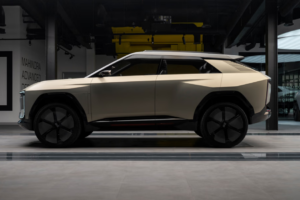















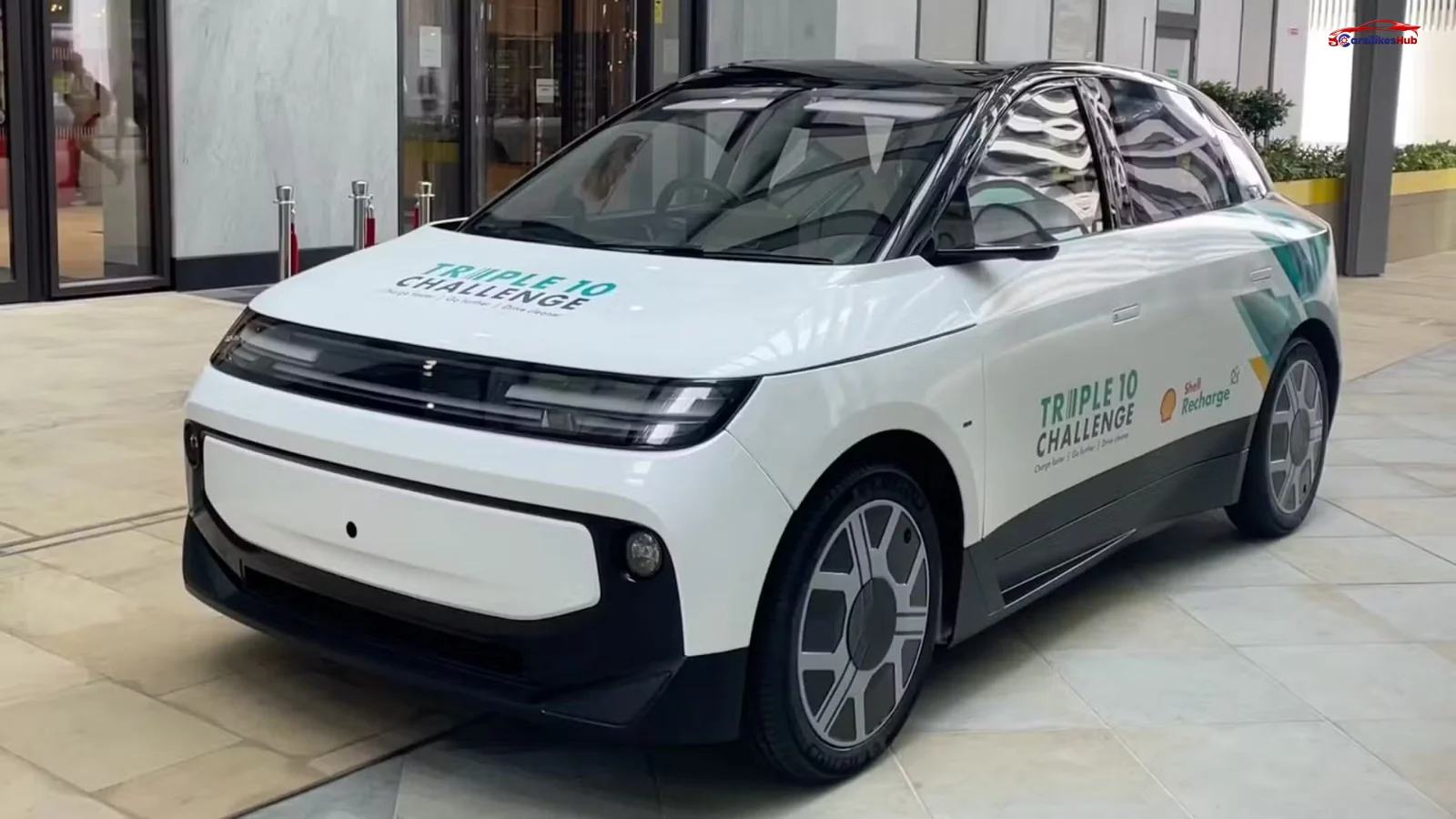
Shell’s Triple 10 Challenge Concept Car is a proof-of-concept electric vehicle designed to demonstrate how future EVs could charge faster, travel farther on smaller batteries, and reduce overall ownership costs.
One of the biggest reasons many people still hesitate to buy an electric car is the charging time. Even with fast chargers becoming more common, waiting 30-40 minutes can feel inconvenient compared to a two-minute petrol stop. That is exactly the problem Shell is trying to solve with the Triple 10 Challenge, unveiled on 23 June 2026.
The technology it demonstrates is road-validated, not just theoretical. And if mainstream car makers adopt it, it could change what an affordable EV looks like, especially for buyers in India who worry about charging infrastructure, battery costs, and long-term ownership expenses.
Shell Triple 10 Challenge at a Glance
| Feature | Details |
| Charging Time | Under 10 minutes (10% to 80%) |
| Efficiency | 10 km per kWh |
| Real-World Range | 300+ km |
| Battery Size | 32 kWh |
| Charger Required | Standard 175 kW |
| Lifecycle CO₂ | ~10 tonnes |
| Status | Concept car only |
| Production | Not confirmed |
What Is Shell’s Triple 10 Challenge Concept Car?
Shell’s Triple 10 Challenge concept car is a compact, mass-market proof-of-concept electric vehicle, designed to inspire a new design philosophy for the next generation of battery electric vehicles. The name comes from three specific targets the car had to hit simultaneously:
- Charge from 10% to 80% in under 10 minutes
- Deliver an efficiency of 10 km per kWh of electricity used
- Achieve a total lifecycle carbon footprint of just 10 tonnes of CO₂ equivalent
All three targets were met and independently validated.
The vehicle is the first road-worthy car to demonstrate the potential of a simplified, single-circuit cooling architecture to manage the thermal load of the entire powertrain, even under the most extreme fast-charging scenarios in real-world conditions.
The Three “10s” in Detail
Sub-10-Minute Charging
The Triple 10 vehicle charged from 10% to 80% in 9 minutes 54 seconds, without compromise to thermal stability or battery lifespan.
The critical context: while some EVs currently on the market can charge in under 10 minutes, this requires ultra-fast chargers exceeding 300 kW, which are uncommon on public charging networks. The Triple 10 vehicle achieves this on a standard 175 kW charger, adding 24 km of range per minute, compared to the typical 13 km per minute on the same hardware. That is nearly 90% more range per minute on ordinary public chargers.
10 km per kWh Efficiency
For context, one of the most efficient EVs currently available, the Tesla Model 3 RWD, achieves around 8 km/kWh. The Triple 10 car’s 30% efficiency improvement means it can extract more range from a smaller, lighter, and cheaper battery. The concept uses a modest 32 kWh battery pack, yet delivers a practical real-world range of over 300 km, directly challenging the industry trend of installing ever-larger batteries to combat range anxiety.
10-Tonne Lifecycle Carbon Footprint
Lifecycle CO₂ means the total carbon emitted from manufacturing the car through to the end of its life, including the energy used to build the battery.
The Triple 10 car’s estimated footprint of approximately 10 tonnes CO₂ equivalent, enabled by its lightweight design, optimised battery capacity, low-carbon and recyclable materials, and renewable electricity for charging, represents around a 50% reduction in lifecycle emissions compared to typical battery electric vehicles in the European market. A smaller battery requires fewer raw materials to manufacture, which cuts emissions before the car even leaves the factory.
How the Technology Works: Immersive Cooling, Simply Explained
The heart of the Triple 10 concept is a special liquid called Shell Recharge thermal fluid. Rather than relying on complex, heavy water-glycol systems that pump coolant through channels around the outside of the battery, Shell implemented a single-circuit immersive cooling system. This architecture bathes the battery cells, the electric motor, and the power electronics directly in a specially formulated, non-conductive dielectric fluid.
A dielectric fluid simply means a liquid that does not conduct electricity, so it can safely make direct contact with battery cells without causing a short circuit.
Think of it this way. Traditional EV cooling wraps cold channels around the outside of the battery, like placing a cold pack on your arm. Shell’s approach submerges the cells directly in the cooling liquid, like putting your hand into a bowl of cold water. Heat is removed far faster and more evenly.
In simple terms, instead of making the battery bigger, Shell is trying to keep it cooler. A cooler battery can charge faster, last longer, and cost less.
Rapid charging is made possible because the immersive cooling prevents the battery from overheating, the primary factor that forces most EVs to throttle their charging speed. By keeping the cells stable, the system allows the battery to accept a high rate of charge for a sustained period without degradation.
Why EV Batteries Keep Getting Bigger, and Why That’s a Problem?
Most EV manufacturers respond to range anxiety and slow charging by fitting larger batteries. A bigger battery stores more energy and can accept more power during charging. The problem: bigger batteries are heavier, more expensive to produce, use more raw materials, and still tend to overheat during fast charging, forcing the car to slow the charge down to protect the cells.
Shell’s immersive cooling breaks that cycle. The simplified architecture contributes to a roughly 25% reduction in battery pack cost. Less complexity, less weight, less cost, without sacrificing range or charging speed.
Who Built It?
The vehicle was co-engineered with RML, which developed the battery pack architecture, Empel Systems, which built the electric motor and drive units, and HORIBA MIRA, which handled integration and validation. HORIBA MIRA tested the system under simulated extreme weather conditions, important credibility for a technology that will need to work in Indian summer heat as reliably as in cold winters.
Shell’s track record includes the 2016 Project M ultra-efficient city car concept and the Starship programme since 2018, pushing freight truck efficiency through successive generations. Most recently, Shell partnered with FAW, China’s largest truck manufacturer, equipping the latest Starship with an advanced hybrid battery incorporating Shell’s immersive thermal cooling fluid. The Triple 10 car is the most advanced consumer-focused proof yet.
What Does This Mean for EV Buyers in India?
This is where the announcement gets genuinely interesting for Indian buyers, even though the car will never be sold here directly.
Will Tata, Mahindra, or Maruti adopt this technology?
No Indian automaker has announced a partnership with Shell’s thermal fluid programme yet. However, Shell hopes to partner with OEMs and battery suppliers to develop next-generation EVs that are lighter, highly efficient, simpler to manufacture, and more cost-effective.
Tata Motors and Mahindra, both scaling their EV platforms aggressively, are exactly the kind of partners this technology is designed for. Maruti Suzuki, targeting the mass-market B-segment with its upcoming EVs, is another natural fit given that the Triple 10 car is itself a B-segment vehicle.
Will charging become faster for Indian buyers?
India’s public fast-charging network is growing, but 300+ kW ultra-rapid chargers remain limited to select highway corridors and premium locations. The practical value of the Triple 10 technology is that it delivers sub-10-minute charging on standard 175 kW chargers, the type already being rolled out across Indian highways. Better results from infrastructure that already exists are more useful than waiting for a new generation of chargers.
When can Indian buyers realistically expect this?
There is no confirmed production timeline. If OEM partnerships are announced in 2026-2027, production vehicles using this technology could realistically appear by 2028–2029, aligning with the next major refresh cycle for Tata’s and Mahindra’s EV platforms.
Will EV prices drop as a result?
The battery accounts for around 35-40% of an EV’s total cost. A 25% reduction in pack cost could translate into a noticeably lower on-road price, particularly meaningful for the sub-₹15 lakh EV segment that India needs to crack for mass adoption.
Should You Buy an EV Now or Wait?
Buy Now If:
- You need a car within the next 12 months
- Your daily driving, city commuting, and weekend trips suit the EVs available today
- Fast charging is not a primary concern for your usage pattern
- You want to lock in current government EV incentives before they change
Consider Waiting If:
- Your purchase timeline extends to 2027-2028
- Ultra-fast charging on highways is non-negotiable for your use case
- You want next-generation battery and thermal technology
- You are buying in the ₹15-25 lakh segment, where technology adoption will be faster
Key Takeaways
- Shell’s Triple 10 concept car is not on sale and has no confirmed production date
- It demonstrated sub-10-minute charging on standard 175 kW chargers, not expensive ultra-rapid hardware
- A 32 kWh battery delivered 300+ km of real-world range at 10 km/kWh efficiency
- Immersive cooling, submerging the battery in a non-conductive fluid, is the core innovation
- The simplified architecture could reduce battery pack costs by around 25%
- Commercial adoption depends on car manufacturers choosing to integrate the technology
- Indian buyers could see the benefits by 2028–2029 if OEM partnerships materialise
Final Thoughts
Shell’s Triple 10 Challenge Concept Car will not reach dealerships tomorrow, but it offers a clear glimpse of what the next generation of electric vehicles could look like. If the technology reaches production, buyers could benefit from faster charging, smaller and more affordable batteries, and improved efficiency without sacrificing everyday usability.
For Indian buyers in particular, sub-10-minute charging on existing 175 kW infrastructure is a more realistic near-term gain than waiting for an entirely new charging network to be built. Today’s EVs remain a practical choice for most needs, but the Triple 10 concept makes a strong case that the future of electric mobility could arrive sooner than expected.





FAQs
Is the Shell Triple 10 Challenge car available to buy in India?
No. It is a proof-of-concept vehicle, not a production car. Shell intends to licence the technology to car manufacturers, who would then incorporate it into consumer EVs. No production car or launch date has been announced.
Will the Shell Triple 10 Challenge come to India?
Not directly. Shell is not a car manufacturer; it supplies technology and fluids to automakers. If Indian brands like Tata Motors or Mahindra adopt Shell Recharge thermal fluid in their next-generation EV platforms, Indian buyers would benefit indirectly. No such partnership has been announced yet.
How is immersive cooling different from what current EVs use?
Most EVs pump water-glycol coolant through channels around the outside of the battery pack. Immersive cooling submerges the battery cells, motor, and power electronics directly in a non-conductive fluid. The direct contact removes heat far more efficiently, allowing faster charging without damaging the cells.
Does a 32 kWh battery give enough range for Indian conditions?
The Triple 10 car delivers over 300 km from 32 kWh at 10 km/kWh efficiency. Real-world Indian driving with AC use, traffic, and varying roads would reduce that figure somewhat, but even at a conservative 8 km/kWh, a 32 kWh pack still delivers around 256 km, which covers most urban and semi-urban use cases comfortably.
Will this technology reduce EV prices?
Shell estimates that the simplified architecture and smaller battery could cut overall battery pack cost by around 25%. Since the battery is typically 35–40% of an EV's total manufacturing cost, this reduction could translate into a meaningfully lower on-road price for future EVs built on this platform.