



















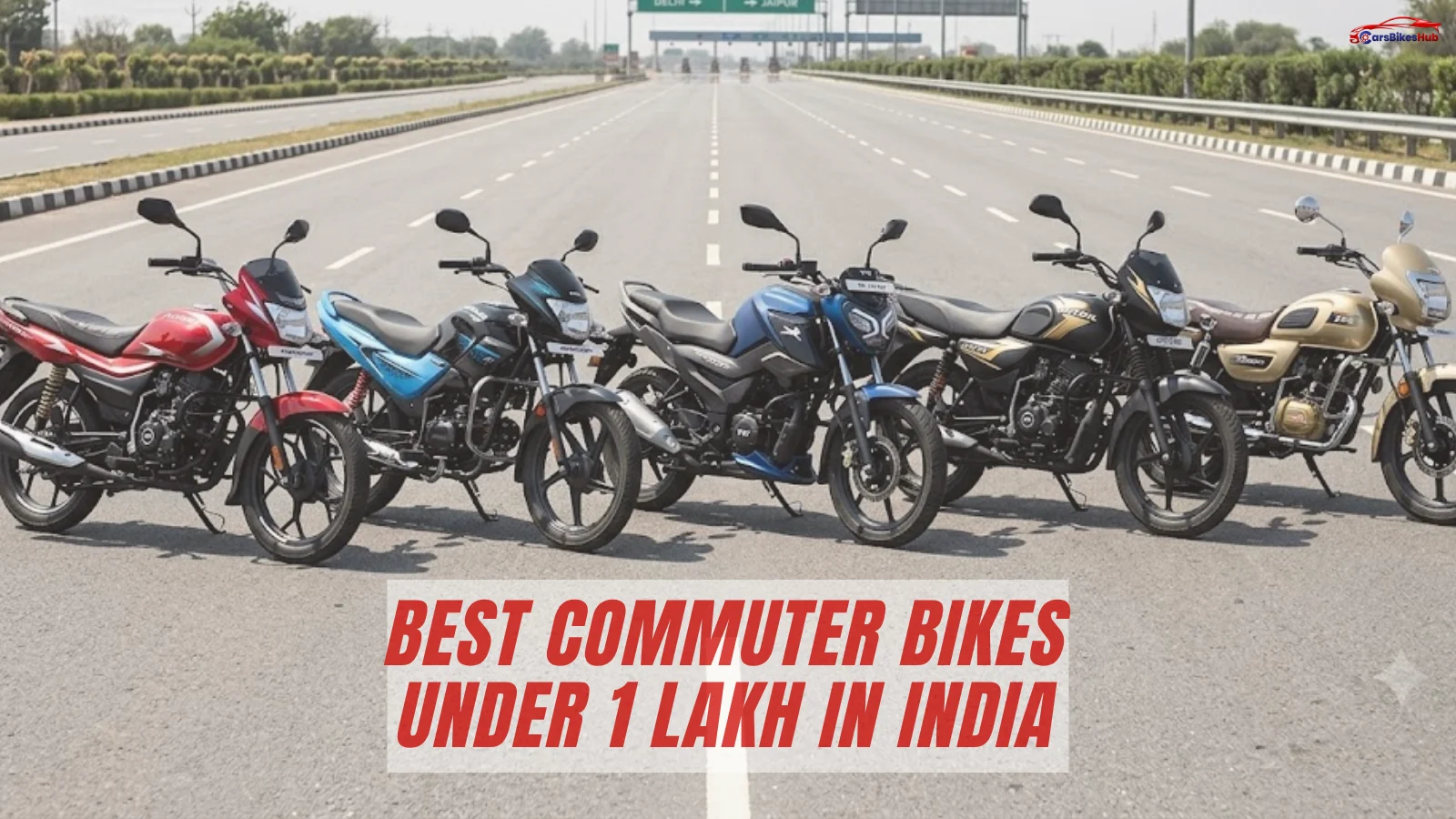
Buying a commuter motorcycle isn’t just about choosing the one with the highest claimed mileage. The best commuter bikes under ₹1 lakh in India also need to be comfortable, reliable, cheap to maintain, and easy to live with for years, not just months. A bike that looks great on a spec sheet can still be a poor daily companion if the seat hurts after 20 minutes, the service centre is 15 km away, or spare parts cost more than they should.
This article isn’t a “Top 10” ranking. It’s built around a simple idea: the right bike depends on who’s riding it, how far they’re going, and what they value most: mileage, comfort, low running costs, or resale value. We’ll walk through eight of the most relevant commuter motorcycles currently sold in India under or very close to ₹1 lakh (ex-showroom), explain how each one actually behaves in real life, and help you match a bike to your specific needs.
Quick Comparison Table
| Bike | Ex-Showroom Price* | Real-World Mileage | Engine | Power | Kerb Weight | Best For |
| Hero Splendor Plus | ₹77,000 – ₹80,500 | 60-65 kmpl | 97.2cc | ~8 PS | 112 kg | Resale value, brand trust |
| Hero HF Deluxe | ₹59,500 – ₹72,000 | 60-65 kmpl | 97.2cc | 7.9 bhp | 110-112 kg | Tightest budget |
| Honda Shine 100 | ₹65,600 – ₹72,000 | 55-65 kmpl | 98.98cc | 7.3 bhp | 99-103 kg | Lightest, easiest to handle |
| TVS Radeon | ₹58,500 – ₹80,200 | 65-70 kmpl | 109.7cc | 8.1 bhp | 113 kg | Comfort + pillion loads |
| TVS Sport | ₹58,600 – ₹66,600 | 70-78 kmpl | 109.7cc | 8.2 PS | 112 kg | Best mileage overall |
| Bajaj Platina 110 | ₹69,300 – ₹79,000 | 55-70 kmpl | 115.45cc | 8.5 bhp | 119-123 kg | Bad-road comfort |
| Hero Glamour | ₹84,300 – ₹90,000 | 55-65 kmpl | 124.7cc | 10.7 bhp | 121-122 kg | More power, still under 1L |
| Honda Shine 125 | ₹83,200 – ₹88,600 | 55-65 kmpl | 123.94cc | ~10 bhp | ~118 kg | Two-up highway comfort |
*Prices vary by city and change frequently due to GST and input-cost revisions. Always confirm the latest ex-showroom price with your local dealer before buying.
How We Chose These Bikes
Every motorcycle on this list had to clear a practical filter, not just a price filter. We looked at:
- Reliability: how the engine and electricals hold up past 30,000-40,000 km, based on long-term owner feedback.
- Real-world fuel efficiency: not just the ARAI-certified number, but what riders actually report in city traffic.
- Running costs: service pricing, spare part costs, and how often the bike needs attention.
- Service network: how easy it is to find an authorised service centre, especially outside metro cities.
- Resale value: how much of your money you get back after 3–5 years of ownership.
- Comfort: seat design, suspension tuning, and riding posture over 20–40 km daily commutes.
- Ease of riding: clutch feel, gear shifts, and manageability in stop-start traffic for riders of all experience levels.
Bikes that scored well purely on paper but had weak service networks, harsh ride quality, or inconsistent real-world mileage were left out, even if they looked attractive on a brochure.
Best Commuter Bikes Under ₹1 Lakh in India
1. Hero Splendor Plus
Overview: The Splendor Plus is India’s best-selling motorcycle for a reason; it’s the safest, most predictable choice in this segment.
Price: Around ₹77,000 to ₹80,500 (ex-showroom), depending on variant and city.
Engine & Performance: The 97.2cc engine isn’t about speed; it’s about not thinking about the engine at all. In bumper-to-bumper traffic, the light clutch and smooth low-end power make stop-start riding painless. On the highway, the lack of a fifth gear shows up as buzzy vibrations past 70 kmph, but that’s a minor trade-off for a bike built for city use.
Mileage: Hero claims figures north of 70 kmpl (E20 fuel); real-world riders typically report 60–65 kmpl in mixed traffic.
Ride Comfort: The upright seating position and long, flat seat make this comfortable for hour-long commutes. Suspension is on the firmer side but copes fine with potholes at city speeds. Pillion comfort is average, fine for short trips, less so for long two-up rides.
Features: Kept deliberately minimal, i3S start-stop tech on higher variants, tubeless tyres, alloy wheels. No frills, and that’s the point.
Running Costs: This is where the Splendor Plus wins decisively. Every mechanic in India can service it blindfolded, spare parts cost next to nothing, and insurance premiums stay low thanks to its low declared value and engine capacity.
Even after decades in the market, its biggest strength isn’t mileage; it’s predictability. You know exactly what you’re getting, and so does every mechanic and dealer in the country.
Pros: Unmatched resale value, widest service network in the country, extremely low cost of ownership.
Cons: Dated design, no disc brake option on base variants, no fifth gear.
Best For: Buyers who want zero ownership stress and the highest resale value, office commuters, small business owners, and first-time buyers.
2. Hero HF Deluxe
Overview: Essentially a value-focused sibling of the Splendor Plus, aimed squarely at buyers who want the lowest possible price without sacrificing reliability.
Price: ₹59,500 to ₹72,000 depending on variant (kick-start drum to self-start i3S).
Engine & Performance: Shares the same 97.2cc engine as the Splendor Plus, so the city riding experience is nearly identical: smooth, unhurried, and easy for new riders to manage.
Mileage: ARAI claims 70 kmpl; real-world owners typically see 60–65 kmpl, occasionally touching higher figures with careful throttle use.
Ride Comfort: A long single-piece seat and neutral ergonomics make it comfortable for daily use. It’s marginally lighter than the Splendor Plus, which makes it a touch easier to filter through traffic.
Features: Integrated braking system, i3S on top variants, USB charging port on newer models, practical rather than flashy.
Running Costs: Among the cheapest bikes to maintain in India. Spare parts are shared with the Splendor Plus platform, so availability is never an issue.
Pros: Lowest entry price in Hero’s lineup, dependable engine, low running costs.
Cons: Basic switchgear, no styling updates in years, drum brakes only on most variants.
Best For: Buyers on the tightest budget who still want a trusted, low-maintenance name.
3. Honda Shine 100
Overview: Honda’s answer to the Splendor, built around refinement and light weight rather than outright frugality.
Price: ₹65,600 (Standard) to ₹72,000 (DX variant, which adds a digital cluster and larger tank).
Engine & Performance: The 98.98cc engine feels smoother than most rivals at this price, with less mechanical noise and vibration a genuine advantage for riders doing long daily stretches.
Mileage: Real-world mileage is typically reported between 55 and 65 kmpl, with some owners reporting higher figures on steady-speed highway runs.
Ride Comfort: At under 100 kg (Standard variant), it’s the lightest bike on this list, which makes it exceptionally easy to manage at low speeds, in traffic, and while parking. If you’re under 5’5″, this low weight makes a noticeable difference during U-turns and tight parking manoeuvres.
Features: The DX variant adds a digital instrument cluster, tubeless tyres, and adjustable rear suspension, meaningful upgrades for commuting, not just cosmetic ones.
Running Costs: Honda’s service network has expanded significantly in recent years, though it’s still not as dense as Hero’s in smaller towns. Spare parts cost slightly more than Hero equivalents but remain reasonable.
Pros: Refined engine, lightest kerb weight in class, strong build quality.
Cons: Slightly smaller service footprint in rural areas, basic braking hardware.
Best For: Riders who prioritise a light, easy-to-handle bike and refined engine feel over outright mileage numbers.
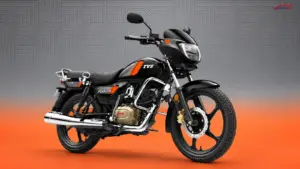
4. TVS Radeon
Overview: A comfort-and-practicality-focused commuter with a noticeably wider seat and sturdier build than typical entry-level bikes.
Price: ₹58,500 (base) to ₹80,200 (Digi Disc variant).
Engine & Performance: The 109.7cc engine has a stronger mid-range than the 97–100cc bikes above, which is useful for slightly quicker overtakes and carrying a pillion without strain.
Mileage: ARAI-rated at 73.68 kmpl; real-world figures generally land between 65 and 70 kmpl, which is strong for an 110cc engine carrying this much weight.
Ride Comfort: This is the Radeon’s strongest card. Owners consistently highlight the wide, well-cushioned seat and a suspension setup that absorbs rough patches better than most rivals, genuinely useful on Indian roads.
Features: USB charging port, synchronised braking, a metal luggage carrier, and a “box iron” chassis that feels sturdier than plastic-heavy competitors.
Running Costs: Slightly higher than Hero’s offerings, and a few owners note that specific spare parts are easier to find at authorised TVS outlets than at local mechanics; worth checking service density in your area before buying.
Pros: Best-in-class seat comfort, strong build quality, solid mileage for its class.
Cons: Marginally heavier, base variants still miss out on a front disc.
Best For: Riders who carry a pillion regularly or want the most comfortable ride quality in this budget.
5. TVS Sport
Overview: TVS’s most affordable and most fuel-focused commuter, built for buyers who care about one thing above everything else: how far a litre of petrol goes.
Price: ₹58,600 to ₹66,600 (ex-showroom).
Engine & Performance: The same 109.7cc engine as the Radeon, but tuned with ET-Fi (Eco Thrust Fuel Injection) for maximum efficiency rather than mid-range punch. It’s smooth at commuting speeds but shows vibration past 70 kmph.
Mileage: ARAI claims a striking 80 kmpl; real-world owners commonly report 70–78 kmpl, making this one of the most fuel-efficient petrol commuters sold in India today.
Ride Comfort: Decent for city use, though a few owners note it isn’t ideal for long, uninterrupted highway stretches; back fatigue can set in on longer rides.
Features: Kept minimal; an economy-riding indicator, alloy wheels, and synchronised braking are the highlights. No disc brake option.
Running Costs: Among the lowest in this list. It’s a genuinely no-frills bike, which keeps both purchase and maintenance costs down.
Pros: Best real-world mileage on this list, light kerb weight, low price.
Cons: Basic feature set, average long-distance comfort, no disc brake.
Best For: Buyers whose single biggest priority is minimising fuel spend on a daily commute.
6. Bajaj Platina 110
Overview: Bajaj’s comfort specialist, built around the idea that Indian roads are rarely smooth, and suspension tuning matters more than outright speed.
Price: ₹69,300 to ₹79,000 (ex-showroom), depending on the Drum or NXT variant.
Engine & Performance: The 115.45cc engine, paired with a 5-speed gearbox on the H-Gear version, makes highway cruising noticeably more relaxed than the 97-100cc bikes above, with less buzz at sustained speeds.
Mileage: Bajaj claims 70–72 kmpl. Real-world reports vary more widely here than with other bikes on this list; some owners report 65–70 kmpl, while others in stop-start city traffic report closer to 50–55 kmpl. Riding style clearly affects this bike’s efficiency more than most.
Ride Comfort: This is the Platina’s defining strength. Bajaj’s “ComforTec” suspension setup and thickly padded seat are tuned specifically to soak up potholes and broken roads, making it the most forgiving ride in this list on bad surfaces.
Features: LED DRL, USB charging port on newer variants, and a semi-digital cluster with a gear-position indicator.
Running Costs: Reasonable, though slightly higher than Hero and TVS equivalents. Bajaj’s service network is strong in most cities but thinner in some rural pockets compared to Hero.
Pros: Best ride comfort over bad roads, relaxed highway cruising with the 5-speed gearbox, strong low-end torque.
Cons: Mileage varies more with riding style, heavier than most rivals, basic styling.
Best For: Riders dealing with poor road quality daily, or those who want a more relaxed highway experience.
7. Hero Glamour
Overview: A step-up option for buyers who want more power than a 100–110cc bike offers, while still staying comfortably under ₹1 lakh.
Price: ₹84,300 to roughly ₹90,000 (ex-showroom) for the Drum and Disc variants.
Engine & Performance: The 124.7cc, 5-speed engine has noticeably more mid-range punch, making overtakes and inclines far less effortful than on the smaller-displacement bikes in this list.
Mileage: Hero claims around 63–65 kmpl; real-world figures typically fall between 55 and 60 kmpl in city traffic, improving to around 65 kmpl on steady highway runs.
Ride Comfort: A diamond-frame chassis with telescopic front forks gives a reasonably planted ride. The seating position feels slightly sportier than the pure commuters above, which some riders prefer, and others find less relaxed for very long stints.
Features: i3S start-stop, a semi-digital cluster with real-time mileage tracking, and an optional front disc brake, genuinely useful additions rather than cosmetic ones.
Running Costs: Slightly higher than 100–110cc commuters simply because of the larger engine, but Hero’s extensive service network keeps this manageable.
Pros: More power without exceeding budget, decent features, strong mid-range torque.
Cons: Lower mileage than smaller commuters, dated switchgear compared to newer 125cc rivals.
Best For: Riders who want more performance headroom for occasional highway trips without stepping into the 150cc segment.
8. Honda Shine 125
Overview: The standard (non-SP) Honda Shine 125 is one of the best-selling 125cc motorcycles in India, prized for refinement over outright features.
Price: ₹83,200 to ₹88,600 (ex-showroom).
Engine & Performance: The 123.94cc engine is known for being unusually refined for its segment, smooth from low revs right up to its comfortable cruising speed of 60–70 kmph, with a genuine 100 kmph top-end achievable in good conditions.
Mileage: Honda doesn’t heavily advertise a claimed figure for this variant, but real-world owners frequently report 55–65 kmpl in daily use, with some long-term owners claiming close to 65–70 kmpl on careful highway runs.
Ride Comfort: Build quality stands out here; panel fit and paint finish feel a notch above typical commuters, and this holds up well even after years of use, according to long-term owner reports.
Features: Kept simple by design; no ABS even on top variants, which is a genuine miss for a bike in this price bracket, especially in wet conditions.
Running Costs: Slightly higher than Hero and TVS equivalents, but Honda’s reliability reputation and strong resale value help offset this over a 4-5 year ownership period.
Pros: Refined, dependable engine; strong build quality; comfortable two-up highway cruising.
Cons: No ABS, fewer features than newer 125cc rivals, braking feel could be more confidence-inspiring.
Best For: Riders who want the most refined engine feel in the 125cc commuter class and plan to keep the bike long-term.
Which Bike Should You Buy?
There’s no single winner here, just the right bike for your specific priorities. Use the table below to match a bike to what matters most to you.
| Category | Best Pick | Why |
| Best Overall | Hero Splendor Plus | Balances reliability, resale value, and low running costs better than anything else here |
| Best Mileage | TVS Sport | Real-world 70–78 kmpl is hard to beat |
| Best Value for Money | Hero HF Deluxe | Lowest price with Hero’s dependability intact |
| Lowest Maintenance | Hero Splendor Plus / HF Deluxe | Widest spare-part availability and cheapest service costs in India |
| Best for Beginners | Honda Shine 100 | Lightest, easiest to balance and manoeuvre |
| Best for Rural Roads | Bajaj Platina 110 | Suspension tuned specifically for rough, uneven surfaces |
| Best for Daily Office Commute | TVS Radeon | Comfortable seat and strong mid-range make stop-start traffic less tiring |
| Best for Pillion Comfort | TVS Radeon / Bajaj Platina 110 | Wider seats and softer suspension handle two-up riding better |
| Best for More Power (still under ₹1L) | Hero Glamour | 124.7cc engine with genuinely stronger mid-range punch |
| Best for Long-Term Highway Comfort | Honda Shine 125 | Refined engine and stronger build for sustained speeds |
Ownership Costs
Buying price is only part of the picture. Over a typical 5-year ownership period, these factors matter just as much:
- Fuel expenses: At roughly ₹100/litre for petrol, the difference between a 55 kmpl bike and a 70 kmpl bike adds up to real money if you’re commuting 30–40 km daily, often several thousand rupees a year.
- Service costs: Routine service costs for Hero and TVS commuter motorcycles are generally competitive, although the exact expense depends on the dealer, city, and replacement parts required.
- Spare parts: Hero’s Splendor and HF Deluxe platforms benefit from decades of parts standardisation; nearly any local mechanic stocks common components. Honda and Bajaj parts are readily available too, but slightly pricier.
- Insurance: Lower-cc, lower-declared-value bikes like the Splendor Plus and HF Deluxe typically carry the lowest insurance premiums in this list.
- Tyres: Commuter tyre replacement costs are broadly similar across this list, though heavier bikes like the Platina 110 and Glamour may see marginally faster tyre wear under load.
- Chain maintenance: All bikes here use standard chain-drive systems; regular lubrication every 500–1,000 km extends chain life significantly regardless of the model.
- Long-term reliability: Hero’s 97–100cc engines have the longest proven track record in India, sometimes running past 80,000–100,000 km with basic upkeep.
- Resale value: The Splendor nameplate holds resale value better than almost anything else in the Indian two-wheeler market, purely due to buyer trust and demand in the used market.
5-Year Running Cost Snapshot (Approximate, for 30 km/day average commute)
| Bike | Est. Fuel Cost/Year* | Est. Service Cost/Year | Est. Insurance/Year | Approx. 5-Year Total |
| Hero Splendor Plus | ₹16,500 | ₹1,800 | ₹1,200 | ₹97,500 |
| Hero HF Deluxe | ₹16,500 | ₹1,700 | ₹1,100 | ₹96,500 |
| Honda Shine 100 | ₹17,500 | ₹2,000 | ₹1,300 | ₹1,04,000 |
| TVS Radeon | ₹15,500 | ₹2,000 | ₹1,300 | ₹94,000 |
| TVS Sport | ₹13,500 | ₹1,800 | ₹1,200 | ₹82,500 |
| Bajaj Platina 110 | ₹17,000 | ₹2,200 | ₹1,400 | ₹1,03,000 |
| Hero Glamour | ₹18,500 | ₹2,300 | ₹1,600 | ₹1,12,000 |
| Honda Shine 125 | ₹18,000 | ₹2,300 | ₹1,600 | ₹1,09,500 |
*Assumes ₹100/litre petrol and roughly 11,000 km ridden per year. These are indicative estimates meant for comparison only; actual costs will vary by city, dealer, riding style, and fuel prices at the time.
Which Bike Is Best For You?
Still unsure? Answer these in your head:
- Do you ride less than 20 km a day and want the lowest possible cost? The Hero HF Deluxe is your best bet.
- Do you regularly ride with a pillion or family member? Go for the TVS Radeon.
- Is resale value your top priority? The Hero Splendor Plus wins this hands down.
- Do you want more engine power without crossing ₹1 lakh? The Honda Shine 125 fits the bill.
- Are your daily roads rough, broken, or rural? The Bajaj Platina 110 is built exactly for this.
- Is stretching every litre of petrol your main concern? The TVS Sport is the one to pick.
- Are you a new rider who wants the lightest, easiest bike to handle? The Honda Shine 100 is ideal.
Final Verdict
There’s no single “best” commuter bike under ₹1 lakh, only the best bike for your specific priorities.
If you want the safest, most trouble-free ownership experience with the best resale value, the Hero Splendor Plus remains the sensible default. If your budget is genuinely tight, the Hero HF Deluxe gets you nearly the same reliability for less money. If mileage is your single biggest concern, the TVS Sport is hard to beat. If comfort and pillion-carrying matter more than outright efficiency, look at the TVS Radeon or Bajaj Platina 110. And if you want a bit more power without crossing ₹1 lakh, the Hero Glamour or Honda Shine 125 give you that extra mid-range punch while still qualifying as genuine commuters.
Take a test ride before deciding. Specifications on paper rarely tell you how a bike actually feels in your city’s traffic, on your daily route, over the years you’ll actually own it.
The best commuter bike isn’t the one with the highest mileage on paper; it’s the one that fits your daily routine, your budget, and the roads you ride every day. Choose based on your needs, not just the brochure.

FAQs
Which commuter bike gives the best mileage?
The TVS Sport leads this list in real-world fuel efficiency, with owners regularly reporting 70–78 kmpl in daily use.
Which bike is easiest to maintain?
The Hero Splendor Plus and Hero HF Deluxe are the easiest and cheapest to maintain, thanks to Hero's dense service network and widely available spare parts across India.
Which commuter bike is best for office use?
The TVS Radeon is a strong pick for daily office commuting, thanks to its comfortable seat and manageable mid-range power for stop-start traffic.
Which bike has the best resale value?
The Hero Splendor Plus holds the strongest resale value in this segment, largely due to brand trust and consistent demand in the used-bike market.
Is a 100cc or 125cc commuter better?
100cc bikes like the Splendor Plus and Shine 100 generally offer better fuel efficiency and lower running costs, ideal for short city commutes. 125cc bikes like the Glamour and Shine 125 offer more power for overtaking and occasional highway trips, at a small cost in mileage.