

























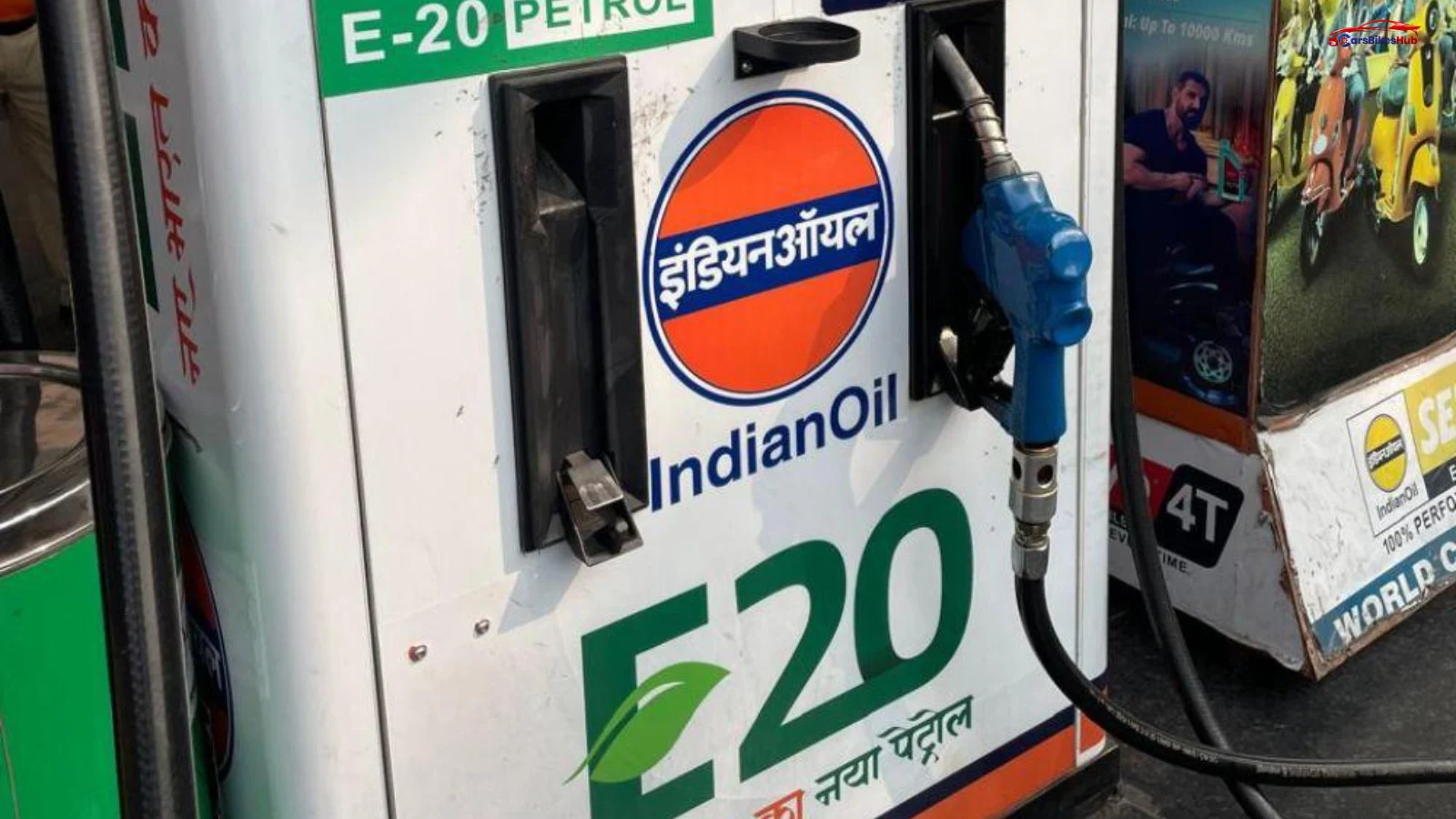
If you’re planning a long drive, filling up your daily commuter, or simply trying to figure out why your car’s mileage has shifted slightly over the past few months, you’ve probably wondered: is the petrol I’m using E20, and is it available everywhere in India?
As of April 1, 2026, E20 petrol in India is no longer a “where can I find it” question; it’s the default fuel at almost every petrol pump in the country. The Ministry of Petroleum and Natural Gas has made the sale of E20 (petrol blended with 20% ethanol) mandatory across all states and Union Territories, with a minimum Research Octane Number (RON) of 95.
But “mandatory” doesn’t mean “fully uniform on day one.” Rollout speed, blending infrastructure, and ethanol supply still vary by region, and if you own an older car, a flex-fuel vehicle, or you’re simply a careful buyer who likes to know exactly what’s going into your tank, the state-wise reality matters a lot more than the headline policy.
This guide breaks down exactly where E20 stands today, which states adopted it fastest, where you might still see gaps, and how to actually check what’s coming out of the nozzle at your local pump.
E20 Petrol in India: At a Glance
| Question | Answer |
| Is E20 available nationwide? | Yes, mandatory from April 1, 2026 |
| Can older cars use it? | Some can; compatibility should be checked per model |
| Is E85 available at Indian pumps? | No, not currently |
| How do I check my nearest pump? | Use the IndianOil, BPCL, or HPCL station locator |
| Will it hurt my mileage? | Possibly 3–7% on older, non-certified vehicles |
What Is E20 Petrol?
E20 is petrol blended with 20% ethanol and 80% conventional gasoline, as part of India’s Ethanol Blending Programme (EBP). The idea isn’t new; India has been gradually raising ethanol content in petrol for years, moving from E5 to E10 and now to E20, a target originally set for 2030 but achieved years ahead of schedule.
Ethanol itself is produced domestically from sugarcane, maize, and other grains, which means every litre of E20 you pump reduces India’s crude oil import bill and puts money back into the hands of farmers and distilleries. According to government estimates, the ethanol blending programme has already saved the country more than ₹1.40 lakh crore in foreign exchange and offset roughly 245 lakh metric tonnes of crude oil imports since 2014-15.
The April 2026 mandate also raised the minimum octane requirement to RON 95, up from the earlier standard. A higher RON rating simply means the fuel is better at resisting engine knocking (premature ignition under compression), helping the engine run more smoothly and consistently.
Here’s how E20 stacks up against the fuel options you’ll hear about most:
| Fuel | Ethanol Content | Who Can Use It |
| Regular Petrol (pre-mandate) | 0-10% | Older vehicles not rated for higher blends |
| E20 | 20% | Most vehicles made 2023 onward; now the national default |
| E85 | 51-85% | Flex-fuel vehicles only, not yet sold at Indian pumps |
It’s also important to note that while flex-fuel vehicles (FFVs) sold in India are designed to run on higher ethanol blends like E85, that doesn’t mean E85 is available at fuel stations. For now, E20 remains the highest ethanol blend widely available across the country.
What Does E20 Petrol Mean for You?
Three groups of people genuinely need to understand this shift:
Own a car or bike made before 2023? Your vehicle may not have been engineered with E20-grade seals, hoses, and fuel system components. Ethanol is more corrosive than pure petrol and can degrade certain rubber and plastic parts over extended use- not instant damage, but worth knowing if your specific model is officially E20-compatible.
Buying a new car or bike in 2026? Almost everything rolling off Indian production lines today is built for E20 as standard, so this is less a buying concern and more a “good to know” fact.
Drive between states or live in a region with developing fuel infrastructure? Blend consistency can vary slightly by local depot supply, so it’s worth knowing which states have mature ethanol-blending ecosystems and which are still catching up.
State-Wise E20 Petrol Availability in India
Because the mandate applies nationwide, virtually every petrol pump in India should now be dispensing E20 as their default unleaded petrol. However, the speed and consistency of the rollout have not been identical everywhere; some states had a head start because they already had strong ethanol production and blending infrastructure in place before the mandate took effect.
States With the Strongest, Earliest Adoption
These states had robust ethanol manufacturing and blending infrastructure well before the April 2026 deadline, so fuel quality and station-level consistency tend to be the most reliable here:
- Maharashtra: A major sugarcane and ethanol-producing state, with deep refinery and blending infrastructure across Mumbai, Pune, Nagpur, and industrial belts.
- Uttar Pradesh: Heavy investment in ethanol distillery capacity, supporting both rural blending plants and urban fuel stations.
- Karnataka: Strong OMC presence combined with established ethanol supply chains around Bengaluru and Mysuru.
- Delhi-NCR: High fuel station density and the most closely monitored fuel quality standards in the country.
States With Moderate, Steady Rollout
Most other states, including Gujarat, Tamil Nadu, Telangana, Andhra Pradesh, Madhya Pradesh, Rajasthan, Punjab, Haryana, West Bengal, Bihar, and Odisha, fall into this category.
These states have functioning OMC networks (IndianOil, Bharat Petroleum, Hindustan Petroleum) and have largely transitioned to E20 in line with the mandate, though pump-level supply timing can lag by a few weeks depending on depot logistics.
States Where Availability May Still Vary
Some North-Eastern states and hill regions, including parts of Assam, Meghalaya, Manipur, Arunachal Pradesh, Himachal Pradesh, and Uttarakhand’s remote belts, are expected to see a comparatively slower full rollout.
This isn’t a policy exemption; it’s largely logistics. These regions have fewer blending facilities nearby, longer fuel transport routes, and lower local ethanol production, which can create short-term supply gaps even though the mandate technically applies to them too.
The government has indicated limited, temporary exemptions may be granted where infrastructure genuinely cannot support immediate full compliance, meant as a short-term bridge, not a long-term carve-out.
How to Actually Check What’s at Your Local Pump
If you’re wondering whether your local petrol pump is dispensing E20, here’s how you can check.
- Use the official OMC locator tools. IndianOil’s pump locator (locator.iocl.com) lets you search by state, city, or neighbourhood for the nearest outlet and contact details. Bharat Petroleum and Hindustan Petroleum offer similar locators.
- Check the fuel dispenser label. Every pump is required to display the ethanol blend percentage on the dispensing unit. If unsure, ask the attendant or look for the “E20” marking near the nozzle.
- Track mileage over 2-3 fill-ups, not just one tank. A single tank’s mileage varies with traffic, AC use, and driving style; a genuine fuel-related change shows up as a consistent pattern.
- Check your owner’s manual or manufacturer website for your model’s E20 compatibility certificate, especially if your vehicle predates 2023.
How Will E20 Petrol Affect Your Car or Bike?
Mileage: Ethanol carries roughly 30% less energy per litre than pure petrol, so owners of older, non-E20-tuned vehicles have reported a mileage drop of roughly 3-7%. Most E20-certified vehicles (2023 onward) compensate for this through revised engine mapping, making the real-world difference far smaller or negligible.
Engine and component wear: In older engines not built with ethanol-resistant materials, prolonged exposure can gradually affect rubber seals, certain plastic parts, and fuel lines, a long-term wear consideration, not an immediate failure risk, and exactly why automakers publish E20-compatibility lists.
Cold starts: Some owners of carbureted two-wheelers and older engines report marginally rougher cold starts, since ethanol vaporises differently than petrol at low temperatures, more noticeable in colder northern regions during winter.
Pricing: E20 petrol prices have generally stayed within the range of standard petrol, usually around ₹97 to ₹106 per litre, depending on city and state taxes.
If you’re curious how this plays out specifically for two-wheelers, our companion piece on Flex-Fuel Bike vs Petrol Bike: What’s the Difference? goes deeper into how ethanol blends affect bike engines and tuning.
Do You Need an E20-Compatible Vehicle?
Who should actively check compatibility:
- Those with pre-2015 petrol cars and two-wheelers, particularly carbureted two-wheelers
- Those with imported or grey-market cars that were never initially built for the Indian market
- Fleet owners and daily commuters covering high annual mileage, where small efficiency losses compound over time
Who doesn’t need to worry much:
- People who purchased their cars or bikes post-2023; these will automatically be compatible with E20 fuel
- CNG, diesel, hybrid, and EV owners, since this mandate applies specifically to petrol
Is it worth buying an E20-certified vehicle specifically for this reason?
If you’re already shopping for a new vehicle, prioritising E20-compatibility (now close to a default feature anyway) future-proofs you against further ethanol increases; India has already notified technical standards for E22, E25, E27, and E30 blends, even without a confirmed nationwide rollout date.
If you already own an older vehicle, there’s rarely a strong case to replace it solely over this; monitor mileage, get fuel-system components checked at routine service, and follow your manufacturer’s specific guidance.
Alternatives worth considering:
If you do high mileage and want long-term flexibility, flex-fuel vehicles (FFVs), which run on a wider range of ethanol-petrol ratios, are an emerging option, with Maruti Suzuki, Toyota, and Bajaj Auto all committed to expanding their presence in the Indian market.
The Bottom Line
E20 petrol is now part of everyday driving in India. The bigger question isn’t where to find it; it’s whether your car or bike is E20-compatible and what, if anything, you need to do differently. Once you know that, the transition is likely to be smooth.
If your car/bike is a new model, then using E20 petrol is likely not going to cause you any problems. But for older cars, it’s advisable to check your automobile manufacturer’s guide on using E20 petrol and perform regular servicing to avoid potential issues.



FAQs
Is E20 petrol available at every pump in India right now?
This mandate applies to all states and UTs, but not all fuel stations from IndianOil, Bharat Petroleum, and Hindustan Petroleum have completed their transition yet. There are a few fuel stations in remote/hill areas that could still be in the process of transitioning because of logistical reasons.
Will using E20 petrol void my car's warranty?
No, not by itself. Manufacturers that sell vehicles in India are required to ensure compatibility with the government's fuel standards. If your car was bought new in India after 2023, it's almost certainly covered. For older vehicles, check your specific model's compatibility notice from the manufacturer rather than assuming either way.
Will my mileage actually drop, and by how much?
For E20-certified vehicles, the difference is typically minimal. For older, non-certified engines, real-world reports suggest a 3-7% mileage reduction is possible, though this varies by engine type, age, and driving style. Track your mileage over a few fill-ups rather than judging from a single tank.
Can I avoid E20 by choosing a specific fuel station or brand?
Not realistically. Since the mandate applies to all Oil Marketing Companies, public and private, there is no standard petrol grade left that excludes ethanol blending nationwide. Premium/high-octane fuel variants sold at a higher price point still contain the mandated ethanol percentage; they differ in octane rating and additives, not in ethanol content.
What should I do if I notice knocking, rough idling, or fuel system issues after the switch?
Get your fuel system inspected by an authorised service centre, particularly checking fuel lines, seals, and the carburettor or fuel injector setup if your vehicle is older. Minor recalibration (such as an ECU reset) is sometimes all that's needed for vehicles close to the compatibility threshold. Persistent issues should be reported to your manufacturer's service network, since they maintain official E20 compatibility guidance for their model lineup.