


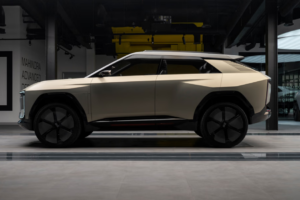









Until this week, River Mobility was best known as the Bengaluru startup behind a single electric scooter, the River Indie, a bulky, storage-first model its founders call the “SUV of scooters.” Now the company has closed a $120 million Series C round, its biggest funding round yet, taking in more money in one go than the company had raised across all its previous rounds combined.
Funding rounds happen every week in Indian startups, and most of them don’t matter to anyone outside the company. This one is worth a closer look for a simpler reason: it’s a large amount of money going to a company that, until now, had a fairly narrow bet, one product, one clear positioning, and a growth curve that’s been climbing fast in a market most people assume is already crowded with TVS, Bajaj, Ather and Ola.
What matters here isn’t the $120 million itself. It’s what River plans to do with it, and whether that changes anything for someone actually shopping for an electric scooter in the next year or two. Here’s what happened, why investors backed it, and what it could mean if River is on your shortlist.
Understanding River Mobility’s $120 Million Funding
River Mobility raised $120 million in what’s called a Series C round. If you’re not familiar with startup funding stages, here’s the simple version: companies usually raise money in rounds, starting with seed funding (small amounts to get the idea off the ground), then Series A, B, C, and so on, with each round typically larger than the last as the company proves it can grow. A Series C round generally means the company has already shown it can sell its product at scale and is now raising bigger money to expand aggressively, build more factories, launch more products, and go after a bigger share of the market.
River’s round was oversubscribed, meaning more investors wanted in than the company had room for, and it was made up of a mix of equity (investors buying a stake in the company) and venture debt (a loan structured specifically for high-growth startups). The round was led by Elev8 Venture Partners and Claypond Capital, with participation from several new institutional investors alongside existing backers Yamaha Motor Corporation, Al Futtaim Group and Mitsui & Co. A handful of venture debt firms, including Alteria Capital, also came in on the debt side. The fact that existing investors put in more money is itself a sign; backers don’t usually double down unless they’re seeing real progress.
What makes this round genuinely notable is that it’s River’s first major round backed by Indian institutional investors. Until now, its investor base was almost entirely global: Yamaha, Toyota Ventures, Marubeni, Lowercarbon Capital, and a few others. Getting Indian asset managers and funds to write large checks changes the story a little, because it suggests domestic investors are now willing to bet serious money on India’s electric two-wheeler space beyond the usual names.
With this round, River has raised close to $188 million in total since it was founded in March 2021 by Aravind Mani and Vipin George, around $68 million across five earlier rounds, and now $120 million in one shot. That jump in round size, more than the total of everything raised before it, is the clearest indicator of how much investor appetite has grown.
Why Investors Are Betting on River Mobility
For a company that has sold only one model, River’s growth numbers are hard to ignore. In January 2025, it was selling around 675 scooters a month. By January 2026, that had climbed to over 2,500 units a month, and by July 2026, monthly sales had crossed 6,000 units, giving it roughly 3 percent of the electric two-wheeler market. That’s a small slice compared to the big three, but the growth rate is what’s catching attention; sales more than tripled year-on-year in some months during 2026.
There’s also the product itself. The Indie is built around 55 litres of underseat storage and 14-inch wheels, positioning it as a practical, utility-first scooter rather than a performance or tech showcase. River calls it the “SUV of scooters,” and that framing has resonated with a specific type of buyer: people who want a scooter that can carry groceries, delivery boxes, or handle daily errands without compromise, rather than one built around acceleration numbers or app-connected features.
Retail performance backs this up too. Around the time of the funding announcement, River had about 75 stores, each averaging roughly 80 units sold per month, reportedly the highest per-store average in the industry. In practical terms, that means River isn’t just growing by opening more showrooms; each store is actually pulling its weight, which suggests demand is growing organically rather than being driven only by rapid showroom expansion.
Put together, steady sales growth, a differentiated product, and stores that are performing well individually, it’s not hard to see why investors, including a company as established as Yamaha, decided this was worth backing at a much larger scale.
Where Will the $120 Million Be Used?
River has been fairly specific about where this money is headed, and each piece connects to a real operational gap the company needs to close.
Expanding the existing factory and building a new one: River’s current manufacturing base is in Hoskote, Karnataka. Part of the funding will go toward scaling that facility further, while a separate greenfield plant, built from the ground up, is also planned. For buyers, this matters because production capacity is often the invisible bottleneck behind long waiting periods. A company that can only build a limited number of scooters a month can’t fulfil demand quickly, no matter how good the product is.
New products beyond the Indie: Until now, River has focused entirely on a single-product strategy. Some of this capital is earmarked for developing new models in what the company describes as the “utility lifestyle” segment, in other words, more scooters built around the same practical, cargo-friendly philosophy as the Indie, rather than a pivot into an entirely different kind of vehicle.
Retail and distribution expansion: More stores, in more cities, is part of the plan. River had already been working toward this before the funding round, with a stated goal of expanding its retail footprint concentrated in South India and gradually moving into other regions.
Improving margins and reaching profitability: This is the less glamorous part, but it’s arguably the most important. River has stated it wants to reach EBITDA profitability, meaning its core operations become profitable before accounting for interest, taxes, depreciation and amortisation by FY29. In reality, funding that goes toward improving gross margins isn’t about flashy new features; it’s about making sure the company can survive and keep pricing sustainable rather than burning cash indefinitely to chase growth.
What Does This Mean for Future River Scooters?
If River executes on its plan, the most direct outcome for buyers is more choice. Right now, if you want a River scooter, you’re choosing the Indie; there’s no second model, no variant built for a different budget or use case. New products in the utility lifestyle segment suggest River is looking to build out a proper lineup rather than staying a single-product company indefinitely.
Better production capacity should also mean fewer supply constraints. A brand growing at the pace River has been growing can run into a situation where demand outpaces what the factory can actually deliver, leading to longer waiting periods for buyers. Expanded manufacturing, if it comes through as planned, should help close that gap.
There’s also a reasonable chance that new models will lean further into what’s already worked: storage space, practicality, and a slightly higher price point than the budget end of the market, where the Indie currently sits around ₹1.5 lakh, notably above rivals priced under ₹1 lakh in similar sales ranks.
What Does This Mean for EV Buyers?
This is the part that actually matters if you’re not an investor and just want to know whether this changes anything for you as a scooter shopper.
Will scooters improve? Potentially, but not immediately. More R&D funding generally translates into better products, but product development takes time, so buyers shouldn’t expect overnight changes just because the funding has arrived. Realistically, it’s a year or two before this kind of investment shows up in showrooms.
Will waiting times reduce? This is one of the more direct benefits. If the new factory comes online as planned, production bottlenecks that sometimes affect fast-growing EV brands should ease, meaning shorter delivery timelines.
Will service improve? Retail expansion usually comes with service network expansion too, since more stores typically mean more service touchpoints. This isn’t guaranteed, but it’s a reasonable expectation given River’s stated retail expansion plans.
Will dealerships expand? Yes, this is explicitly part of the funding plan, with more stores planned across regions beyond River’s current South India-heavy presence.
Will prices change? There’s no direct evidence pointing toward major price cuts. If anything, River’s strategy has been to compete on utility and storage rather than being the cheapest option in the segment, so expect similar positioning with new models rather than a shift toward budget pricing.
Will quality improve? A meaningful part of this funding is going toward gross margin improvement, which companies often achieve through better manufacturing processes and supply chain efficiency, both of which can indirectly support build quality, though it’s not something the funding guarantees on its own.
Can River Challenge Ather, TVS, Bajaj and Ola?
To answer this fairly, it helps to look at where things actually stand. In July 2026, TVS led the electric two-wheeler market with 55,477 units sold and about 27 percent market share, its highest monthly figure yet. Ather Energy held the third spot with 30,323 units, continuing a run of strong, consistent growth.
Ola Electric, once the clear market leader, has seen its share fall sharply, down to around 7 percent from 17 percent a year earlier, as it deals with brand trust issues. Against this backdrop, River’s roughly 3 percent share and 6,000 monthly units in July 2026 place it well behind the top four, but its year-on-year growth rate has consistently outpaced most established players.
Where River is strong: a clearly differentiated product positioning around utility and storage, a loyal and fast-growing buyer base, strong per-store sales efficiency, and now, meaningfully more capital than most similarly sized EV startups have access to.
Where River still has work to do: it remains a single-product company competing against brands that each offer multiple models across price points. Its retail network, even after planned expansion, is still a fraction of what TVS, Bajaj or Ather have built over years. And brand awareness outside markets like Karnataka and Kerala, where River already ranks among the top ten EV two-wheeler brands, is still developing.
In practical terms, River isn’t positioned to overtake the market leaders in the near term. What this funding does is give it a real shot at consolidating a position in the middle of the pack, ahead of some legacy-owned EV brands, and closer to the established pure-EV challengers.
What Challenges Does River Still Face?
Funding solves some problems, but not all of them. River is entering a market that crossed two lakh monthly electric two-wheeler sales for the first time in July 2026, with cumulative sales for the year already up 56 percent, which means competition is intensifying across every price band, not easing up.
Scaling manufacturing quickly without compromising build quality is a real operational risk that many fast-growing EV companies have struggled with before. Expanding a service network fast enough to match new retail stores is another common gap. Profitability is still a target, not a reality. River has set FY29 as its goal for EBITDA profitability, which means it’s still expected to run at a loss for a few more years even with this funding. And customer trust, especially after some EV brands in India faced backlash over service and reliability issues, remains something every new entrant has to earn rather than assume.
Final Verdict
So, should buyers actually care about a $120 million funding round? In a roundabout way, yes. It’s not really about the number; it’s about what the number enables. More factory capacity generally means fewer supply issues. More capital for R&D generally means new products down the line. More stores generally means better access and service. None of this is instant, and none of it is guaranteed, but the direction is reasonably clear.
Does this make River a more serious EV brand? It strengthens the case. A company that’s grown from selling 675 scooters a month to over 6,000 in about 18 months, and has now backed that growth with the largest funding round in its history, is not a brand to dismiss as a niche player anymore.
Should people planning to buy an electric scooter keep an eye on River over the next few years? If you value practicality and storage space over flashy tech features, and you’re comfortable being an early adopter of a brand that’s still building out its service network, River is worth watching closely as it scales. If you’d rather wait for a company with a longer track record and a wider dealer footprint, it makes sense to watch how River executes on this funding over the next year or two before making that call.
Ultimately, this funding round isn’t just about River Mobility raising more money. It’s about giving the company the resources to compete more seriously in India’s fast-growing electric scooter market. Whether that translates into better products and a stronger ownership experience is something only execution will prove.


FAQs
How much funding did River Mobility raise, and what round was it?
River Mobility raised $120 million in a Series C round, made up of both equity and venture debt. The round was oversubscribed and co-led by Elev8 Venture Partners and Claypond Capital.
Who are the investors behind River Mobility's $120 million Series C round?
The equity side included Elev8 Venture Partners, Claypond Capital, Singularity AMC, Anicut Capital, 360 ONE Asset, JIF Capital and HDFC AMC. Venture debt came from Alteria Capital, Innoven Capital and Stride Ventures. Existing backers Yamaha Motor Corporation, Al Futtaim Group and Mitsui & Co. also participated.
How much money has River Mobility raised in total since it was founded?
Including this round, River has raised close to $188 million since its founding in March 2021, around $68 million across five earlier rounds, plus this $120 million Series C.
What will River Mobility do with the new funding?
The company plans to expand its existing Hoskote, Karnataka manufacturing facility, build a new greenfield plant, develop new electric scooters in its utility lifestyle segment, expand its retail and service network, and work toward improving margins and reaching EBITDA profitability by FY29.
Does this funding mean River Mobility will launch new scooter models?
Yes, part of the funding is specifically earmarked for developing new products beyond the River Indie, which has been the company's only model since it launched in 2023.