























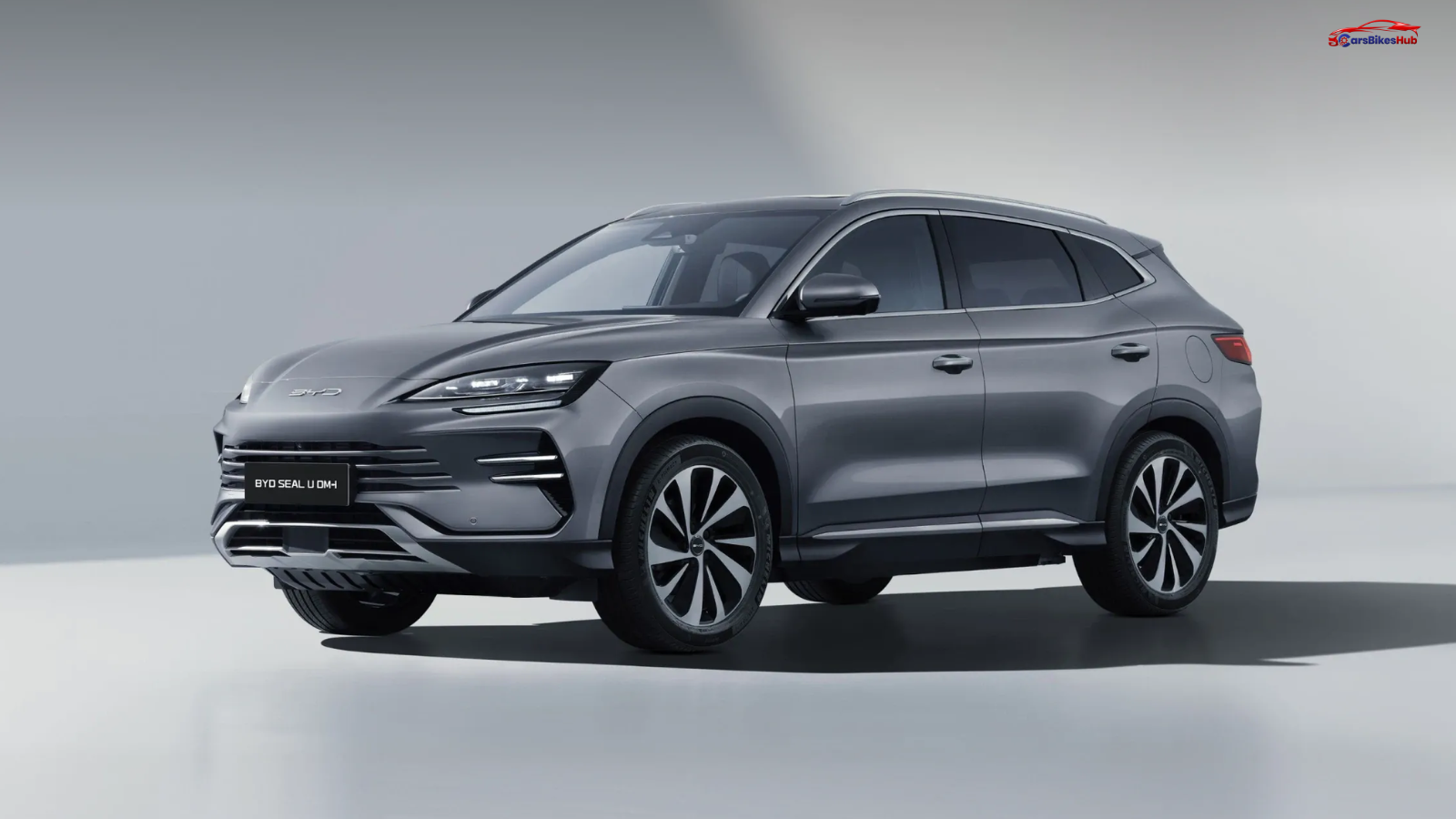
Plug-in hybrids are finally coming to India in a meaningful way, and BYD’s first hybrid SUV could be one of the most important launches of 2026. But should you wait for it, or buy an electric SUV that’s already on sale?
BYD has confirmed that its first plug-in hybrid model for India will arrive by the end of 2026. It’s a five-seat SUV that runs on both a battery and a petrol engine, badged the Seal U in India (the same car is sold as the Sealion 6 in several overseas markets, and as the Song Plus in China). It puts a very real question in front of Indian buyers: should you hold off on your SUV purchase and wait for a plug-in hybrid, or is a full EV (or a regular hybrid) still the smarter buy today?
This article explains what the Sealion 6 offers, how BYD’s DM-i technology works, and whether waiting for it makes sense for Indian buyers.
A quick note: BYD has officially confirmed the India launch timeline, the DM-i technology, and the international powertrain specifications. Indian pricing, exact India-spec range figures, and the final feature list are still expected/estimated, based on industry reporting, and are clearly marked as such throughout this article.
What Is the BYD Sealion 6 (Seal U)?
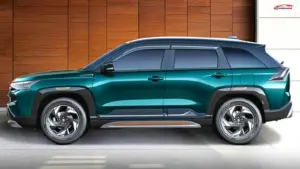
The Sealion 6 is a mid-size, five-seat SUV built on BYD’s e-Platform 3.0 architecture, the same platform underpinning the BYD Seal sedan. It shares its silhouette and much of its front-end design with the Seal, but with raised ground clearance, SUV proportions, and a more upright stance. Globally, BYD sells this model in two variants, a full-electric version and a plug-in hybrid version. It’s the plug-in hybrid variant, running BYD’s DM-i system, that is confirmed for India.
The SUV has already been shown to Indian audiences, appearing at the Bharat Mobility Global Expo in early 2025, where it drew considerable interest despite BYD not confirming a launch date at the time. It has since been spotted testing on Indian roads multiple times, and BYD has now officially stated it will bring the car to market by the end of 2026.
In India, the Sealion 6/Seal U will sit above BYD’s existing electric SUV, the Sealion 7, and will be positioned as a premium, feature-rich SUV rather than a mass-market hybrid.
Three Reasons This Launch Is a Big Deal
- It’s BYD’s first non-EV model for India. Every BYD car sold here so far- the Atto 3, Seal, Sealion 7, and eMAX 7 has been a pure EV. A plug-in hybrid changes the brand’s pitch entirely: instead of asking buyers to go fully electric, BYD is now offering a middle path.
- The DM-i technology has a strong reputation globally. In China and other overseas markets, DM-i-powered BYD cars are known for genuinely low running costs and EV-like everyday driving, while keeping petrol-engine convenience for longer trips.
- The range numbers are eye-catching. BYD’s global claims put the combined range (electric plus petrol) at over 1,200km, with the battery alone capable of stretching well past 50km of pure-electric driving. Numbers like these are what get an SUV trending, but as we’ll get into, claimed figures and real-world figures are rarely identical.
Why This Launch Matters for Indian Buyers
Beyond the buzz, there’s a practical reason this launch is particularly relevant to Indian car buyers.
- Apartment living without a dedicated charger is the reality for a large share of India’s SUV buyers. A plug-in hybrid removes the pressure to solve home charging on day one; you can charge when convenient and rely on petrol the rest of the time.
- Highway travel in India often means long stretches between reliable fast chargers, especially outside major metros. A PHEV sidesteps this entirely, since any petrol pump keeps you moving.
- Fuel prices in India remain high enough that even partial electric running, say, covering a daily commute on battery power, can meaningfully cut monthly fuel spend, without requiring a buyer to go all-in on an EV.
- Public charging infrastructure is still growing unevenly across cities and highways. A PHEV lets buyers benefit from whatever charging is available near them, without being dependent on it.
In short, the Sealion 6 isn’t just a new SUV; BYD attempts to offer electric-style running costs to buyers who aren’t yet ready, or able, to commit to a full EV lifestyle.
What Is BYD’s DM-i Super Hybrid Technology?
DM-i stands for “Dual Mode, intelligent,” and the easiest way to understand it is to stop thinking of it as a “hybrid” in the traditional sense and think of it instead as an EV with a built-in petrol-powered backup generator.
Here’s how the system is built, in plain language:
- A petrol engine (1.5-litre, offered globally in both naturally aspirated and turbocharged forms) that, most of the time, isn’t directly driving the wheels. Its main job is to spin a generator and top up the battery.
- One or two electric motors that do the actual work of moving the car in the vast majority of driving situations.
- A Blade Battery pack (BYD’s own lithium iron phosphate battery technology, the same family used in its EVs) is sized at 18.3kWh or 26.6kWh depending on the international variant.
- An intelligent control system that constantly decides, without any input from the driver, whether the car should run purely on the battery, use the engine as a generator, or — under hard acceleration or high speeds- let the engine assist the wheels directly.
Why should a buyer care about this distinction? Because it changes how the car actually feels and costs to run. In a regular “strong hybrid” like a Toyota Hyryder or Honda City e: HEV, the battery is small and exists mainly to smooth out the petrol engine’s work; you rarely, if ever, drive on electric power alone for any meaningful distance.
In a DM-i plug-in hybrid, the battery is large enough, and pluggable, so that daily commuting can genuinely happen without the petrol engine switching on at all. That’s the entire value proposition: potentially EV-like running costs for your commute, petrol-car convenience for your road trips, with no charging anxiety in between, though, as covered below, the “potentially” is doing a lot of work here.
Plug-in Hybrid vs Hybrid vs Electric Car
| Plug-in Hybrid (Sealion 6/DM-i) | Regular Hybrid (e.g., Hyryder, City e: HEV) | Full Electric (e.g., Sealion 7, e-Vitara) | |
| Charging needed? | Optional, can be charged at home/public chargers, or simply run on petrol | No charging at all | Mandatory |
| Pure electric range | Roughly 50-140km (varies by variant; India spec TBC) | Effectively none (a few hundred metres to 1-2km at low speed) | 300–500km+ typically |
| Combined range (petrol + electric) | 1,000km+ claimed | 800-900km typical | Not applicable |
| Running cost for daily commute | Very low, if charged regularly | Moderate, better than petrol, worse than EV | Lowest |
| Long-distance road trips | No range anxiety, refuel at any petrol pump | No range anxiety | Dependent on charging network |
| Maintenance | More complex than an EV (has an engine); simpler than a pure petrol car | Simplest of the three mechanically over time; still has an engine | Fewest moving parts, lowest long-term maintenance |
| Upfront price | Typically higher than both, due to battery + engine + motors | Moderate | High, but coming down |
Who should choose which:
- Choose a full EV if you have reliable home or workplace charging, your usage is mostly city-bound, and you want the lowest running costs with no engine to maintain.
- Choose a regular hybrid if you don’t want to think about charging at all, do a lot of long-distance driving, and want a simpler, proven mechanical package.
- Choose a plug-in hybrid like the Sealion 6 if you want EV-like commuting and don’t want any anxiety about longer trips, provided you’re disciplined about actually plugging it in. A PHEV you never charge is just a heavy, expensive petrol car.
Battery, Performance & Driving Experience
Officially confirmed (international specification):
- Front-wheel-drive version: 1.5-litre naturally aspirated petrol engine plus a single electric motor, producing a combined 218hp and 300Nm.
- All-wheel-drive “Design” variant: adds a second, rear-mounted electric motor and a turbo-petrol engine, taking combined output to roughly 323-344hp and 550Nm, with a claimed 0-100kph time of 5.9 seconds.
- Both versions use BYD’s Blade LFP battery technology.
Expected for real-world driving: In EV mode, expect the car to feel exactly like a BYD electric SUV, smooth, quiet, and quick off the line, thanks to the instant torque of electric motors. Once the battery depletes or the driver forces “HEV” mode, expect the petrol engine to become noticeably more vocal under hard acceleration, since 1.5-litre engines working as generators or direct-drive assistants tend to rev higher than a typical naturally aspirated petrol motor in a conventional SUV.
On the highway at a steady cruise, most DM-i-based cars are refined, but throttle response can lag slightly compared to a full EV, since the system is juggling battery and engine inputs.
What’s still unconfirmed: Whether India gets the FWD, AWD, or both variants; the exact battery size for India; and whether outputs will be identical to the international car or retuned. Take any specific horsepower number attributed to the “India-spec” car with caution until BYD confirms it closer to launch.
Charging & Running Costs
- Home charging: Like BYD’s EVs, the Sealion 6 should support AC charging via a standard wall box or a 15A socket, meaning a full charge of an 18.3kWh-26.6kWh battery could realistically take anywhere from 3-8 hours depending on the charger used. This is easily done overnight.
- Fast charging: Plug-in hybrids in this segment don’t typically prioritise DC fast charging speeds the way EVs do, since the battery is smaller and the petrol engine is the fallback. Don’t expect the same 30-minute top-up speeds BYD advertises on its pure EVs.
- Running on electricity vs petrol: If you charge daily and your commute fits inside the EV-only range, your running cost approaches that of a pure EV, a fraction of petrol cost per kilometre. If you never charge it and run it purely on petrol, expect fuel efficiency broadly in line with, or somewhat better than, a strong hybrid, since the engine is tuned for efficiency rather than outright power.
- Long-term ownership: A PHEV has more components than an EV (an engine, a transmission-like gear system, exhaust, cooling for the engine) so routine maintenance costs are likely to sit between a full EV and a conventional hybrid, lower than a regular SUV, higher than a Sealion 7.
The honest takeaway: a plug-in hybrid only delivers on its promised low running costs if the owner actually plugs it in regularly. Buyers who won’t have consistent charging access should not expect EV-like running costs.
What Can Buyers Expect from the Interior?
BYD hasn’t confirmed India-spec features yet, but based on the international Seal U/Sealion 6 and BYD’s existing India line-up (Seal, Sealion 7), buyers can reasonably expect:
- A rotating touchscreen infotainment display (BYD’s signature party trick, seen on the Atto 3 and Seal)
- A digital driver’s instrument cluster
- A panoramic sunroof
- Ventilated and possibly heated front seats
- A Level 2 ADAS suite (adaptive cruise control, lane-keep assist, automatic emergency braking)
- Connected car features via BYD’s app
- A reasonably spacious cabin given the car’s mid-size SUV footprint, though second-row space and boot volume will need to be confirmed against India-spec dimensions
Daily usability should be a strong point: the combination of quiet EV running in traffic, a large touchscreen, and BYD’s generally feature-loaded approach to its India cars suggests this won’t feel like a stripped-down car despite being a “hybrid.”
What Safety Features Are Expected?
BYD’s existing India models (Seal, Sealion 7) have performed well in crash testing, and the brand has generally equipped its India cars with six-plus airbags and ADAS as standard on higher variants. Expect the Sealion 6/Seal U to follow this pattern, with multiple airbags, electronic stability control, hill-hold assist, and a Level 2 ADAS suite likely to be offered, at least on top trims.
Battery protection (particularly relevant given the LFP Blade Battery, which BYD markets heavily on thermal stability) should mirror what’s used on its EVs. Official crash-test ratings and confirmed warranty terms for the India-spec car have not yet been announced; don’t take third-party “5-star” claims at face value until BYD or an independent testing agency confirms them for the India model specifically.
Expected Price in India
BYD has not announced official pricing. Industry estimates from established automotive outlets converge on a broad Rs 45–50 lakh (ex-showroom) range, though some estimates run as high as Rs 60–70 lakh depending on variant and import duty structure at the time of launch.
Given that plug-in hybrids attract different tax treatment than pure EVs in India, final pricing will depend heavily on how the car is homologated and whether BYD chooses to assemble or fully import it, none of which has been confirmed yet.
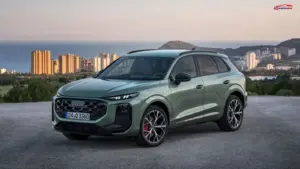
At Rs 45-50 lakh, the Sealion 6 wouldn’t be competing with budget-friendly hybrid SUVs like the Grand Vitara or Hyryder at all; it would land in premium SUV territory, closer to a loaded Toyota Fortuner, VW Tayron, or Skoda Kodiaq. At this price, buyers won’t cross-shop the Grand Vitara. They’ll compare it with premium SUVs like the Skoda Kodiaq, Volkswagen Tiguan, Hyundai Tucson, and entry-level luxury SUVs.
Rivals
Direct Rivals (within its likely actual price bracket)
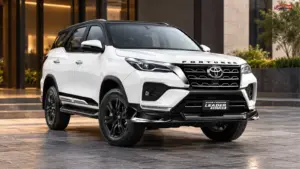
- Toyota Fortuner / Hyundai Tucson / Skoda Kodiaq / VW Tayron established, purely petrol or diesel SUVs with no charging requirement, strong resale value, and wide service networks. Buyers who prioritise reliability and simplicity over new technology should stick with these.
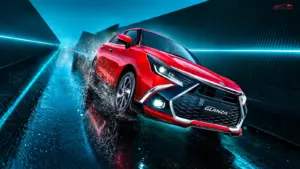
- Upcoming Jetour T2 plug-in hybrid is a direct PHEV rival expected around the same price point, making it the closest apples-to-apples comparison once both launch.
Indirect Rivals (segment context, much lower price)
- Toyota Hyryder / Maruti Grand Vitara, strong hybrids priced far lower (roughly Rs 20–28 lakh), with no charging requirement and proven reliability, but nowhere near the EV-only range or performance of a PHEV.
- Honda City e: HEV similar story in the sedan space, useful as a benchmark for what a “regular hybrid” experience costs and feels like.
- Toyota Innova Hycross strong hybrid MPV, worth a look for buyers who want hybrid efficiency with more outright practicality than an SUV offers.
The key point: the Sealion 6 is not really a rival to affordable hybrid SUVs on price. It’s a premium SUV that happens to run on hybrid tech, and buyers should benchmark it against Rs 45 lakh-plus SUVs, not Rs 20 lakh ones.
Should You Wait for the Sealion 6?
Wait if:
- You want the lowest possible running costs for daily driving and zero range anxiety on long trips.
- You have reliable access to home or office charging and would actually use it regularly.
- Your budget genuinely sits in the Rs 45-60 lakh premium SUV bracket, and you’re not in a hurry.
- You like being an early adopter of new technology and are comfortable with the usual first-year unknowns (service network maturity, resale value uncertainty, unproven long-term reliability).
Skip it if:
- You need a car within the next few months, the car isn’t confirmed to launch until the end of 2026, and India-spec pricing/availability could slip further.
- You have no consistent charging access; in that scenario, you’d be paying a premium-SUV price for what functions as an average-efficiency petrol SUV most of the time.
- You want a proven ownership record. As a first-generation PHEV in an unfamiliar (for India) technology category, from a relatively new brand in this market, it carries more unknowns than an established petrol/diesel SUV.
Buy an EV instead if:
- Your usage is mostly urban, and you have dependable charging at home or work; a full EV like the BYD Sealion 7 (or rivals like the Hyundai Ioniq 5) will have a simpler mechanical package, lower running costs, and fewer moving parts to maintain than a PHEV.
- You don’t need long-distance flexibility regularly; most EV buyers in India already fall into this category, and a PHEV’s petrol-backup advantage matters less to you.
What Actually Matters in Everyday Ownership?
- Silent, EV-like driving in traffic; this is the single biggest everyday benefit of DM-i tech, and it’s real, not marketing.
- Not worrying about charger availability on a road trip, unlike an EV; if you can’t find a charger, you simply fill up with petrol and keep going.
- Charging convenience at home, plugging in overnight, rather than planning around public chargers, genuinely changes the ownership experience for the better.
- Running costs, but only if you’re disciplined about charging regularly; this is the one benefit that depends entirely on owner behaviour, not the car.
- Headline combined range figures (1,200km+). These are lab-test-derived, best-case numbers combining a full tank and a full charge. Real-world combined range, especially in Indian traffic and heat, will be meaningfully lower.
- The “DM-i” branding itself. It’s a well-engineered system, but at its core it’s the same idea used by several other plug-in hybrids globally: a bigger battery than a regular hybrid, paired with an efficient petrol generator. The name is BYD’s marketing hook, not a fundamentally unique concept.
- Minor cosmetic distinctions from the Seal sedan. Bumper details, wheel designs, and trim badges are talking points for reviewers, not decision factors for buyers.
Final Verdict
The BYD Sealion 6 (Seal U) is a genuinely interesting shift in strategy for a brand that has, so far, asked Indian buyers to go all-in on electric. By adding a petrol-engine safety net to its EV-first approach, BYD is targeting buyers who like the idea of electric driving but aren’t ready to commit to charging infrastructure for every single trip.
It’s a smart product for a specific type of buyer: someone with reliable home or office charging, a premium-SUV budget, frequent long-distance driving needs, and a willingness to be an early adopter of a technology and price bracket that’s new to the Indian market. It is not, despite the “hybrid” label, a value-for-money alternative to the Grand Vitara or Hyryder; the expected Rs 45–50 lakh price tag puts it up against proven, well-networked SUVs from Toyota, Hyundai, Skoda, and Volkswagen.
For most buyers who need a car in the next few months, the sensible move is to buy the best SUV, petrol, diesel, hybrid, or EV that fits their budget and usage today, rather than wait on a launch that isn’t confirmed until the end of 2026. The Sealion 6 has the potential to introduce plug-in hybrids to a much wider audience in India. Whether it’s worth waiting for will ultimately depend on its final price, India-spec features, and BYD’s after-sales support, but it’s already one of the most interesting SUVs expected in 2026.


FAQs
Is the BYD Sealion 6 fully electric?
No. It's a plug-in hybrid (PHEV) that combines a petrol engine with electric motors and a rechargeable battery. BYD does sell a separate all-electric version of this platform in some global markets, but India is only confirmed to get the plug-in hybrid.
Do I have to charge the BYD Sealion 6?
No, but you should if you want to see the benefits BYD is advertising. The car will run perfectly well on petrol alone, just with less impressive efficiency, since a large, uncharged battery adds weight without contributing to electric-only driving.
Can I drive it only on petrol, without ever charging the BYD Sealion 6?
Yes. The petrol engine can both drive the wheels directly at higher loads and act as a generator to keep the battery topped up, so the car functions as a self-sufficient hybrid even if you never plug it in.
Is a plug-in hybrid better than a full EV?
Neither is universally "better"; it depends on your usage. A PHEV suits buyers who want EV-like commuting but also do frequent long trips without reliable charging access. A full EV suits buyers with dependable charging who want the lowest running costs and simplest mechanicals.
Should I wait for the Sealion 6, or buy something now?
Only if your timeline allows for a launch that isn't confirmed until the end of 2026, your budget fits the expected Rs 45–50 lakh-plus bracket, and you'll actually use home/office charging regularly. Otherwise, an established SUV in your budget today is the more sensible near-term choice.