


























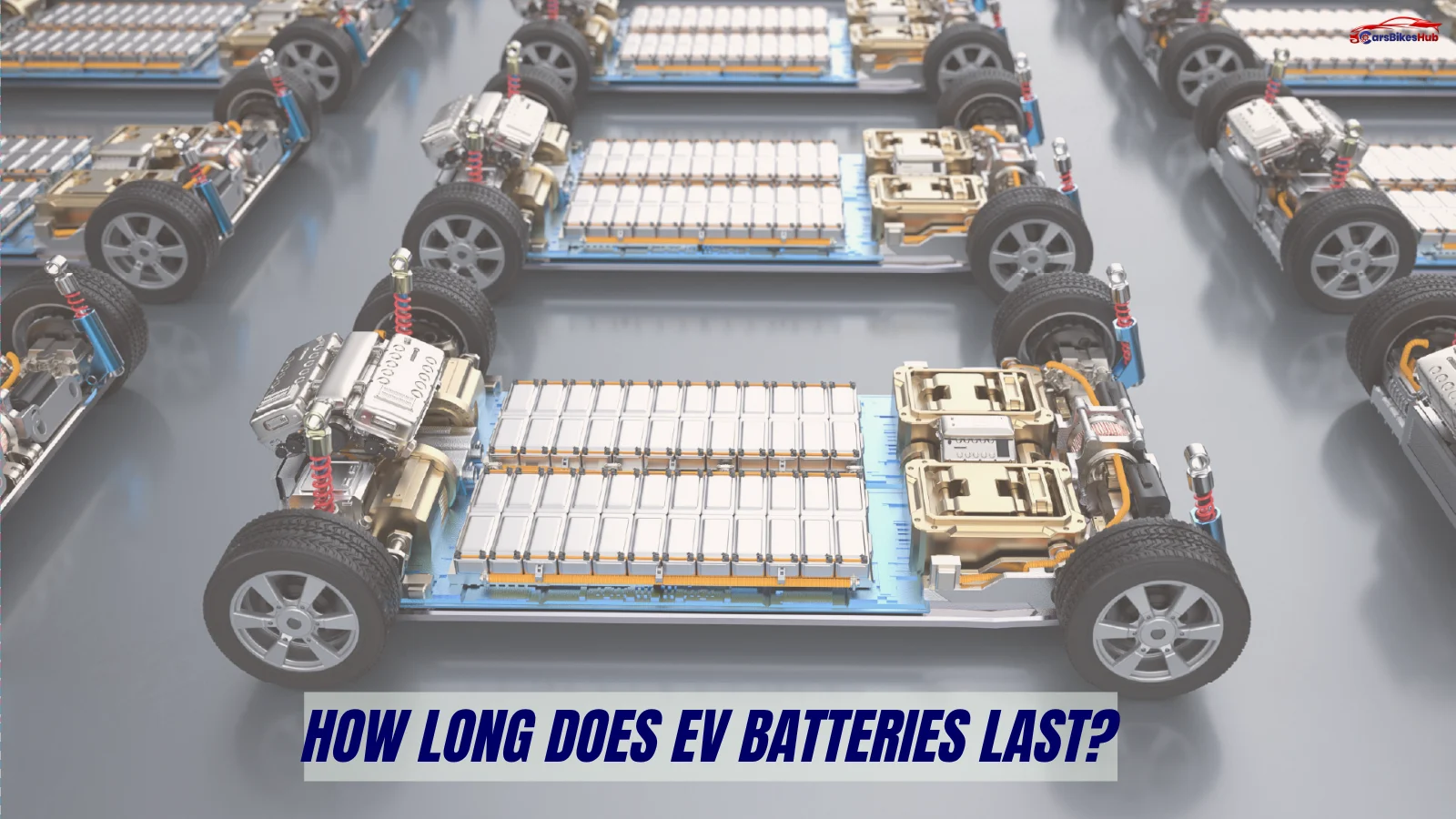
The battery question is the one most Indian EV buyers never quite get a straight answer to. How long do EV batteries really last in India? What happens when it dies? And if it needs replacing, what will that cost you?
This article gives you the honest picture: real-world lifespan, degradation numbers, what Indian summers actually do to your battery, and exactly what a replacement costs for the most popular models on sale today.
How Long Do EV Batteries Really Last in India?
Most EV batteries in India are covered by an 8-year or 1,60,000 km warranty and typically last 10-12 years with normal use. Even after a decade, many retain around 70-80% of their original capacity, enough for everyday urban driving.
Most major brands selling EVs in India- Tata, Mahindra, MG, Hyundai, and BYD warrant their batteries for 8 years or 1,60,000 km. Real-world useful life, with proper charging habits, is typically 10 to 12 years, with 70 to 80 per cent capacity retained.
That is longer than most people keep a car in India.
EV batteries do not die like a phone battery. They degrade in an S-curve, a slightly faster drop in the first year or two as the battery settles, then a long, slow, stable middle phase, followed by a steeper decline much later in life.
Across real-world data from 2024 to 2026, EV batteries lose roughly 1.5 to 2.5% of capacity per year on average.
In simple terms: Buy an EV today. Keep it for 10 years. You will probably still have around 70-80% battery health, and enough range for daily Indian commuting.
Real-world data from used EV evaluations shows that 2- to 4-year-old EVs consistently return battery health scores of 95% or higher. The fears about early degradation are largely unfounded for modern EVs with liquid-cooled battery packs.
EV Battery Degradation Over Time
| Year | Capacity Retained | What It Means for You |
| Year 0 | 100% | Full range as advertised |
| Year 5 | 90-92% | Barely noticeable difference in daily driving |
| Year 8 | 80-85% | Still above the 70% warranty floor, no action needed |
| Year 10 | 70-80% | Enough for 40–60 km daily commutes across most Indian cities |
Based on real-world degradation rates of 1.5-2.5% per year. Actual figures vary by chemistry, climate, and charging habits.
EV Battery Myths That Still Confuse Buyers
- You will definitely need to replace the battery after 5 years. Real-world data puts useful battery life at 10-12 years. The 5-year fear traces back to early EV generations with far less capable battery management systems.
- Indian summers destroy EV batteries. Heat does accelerate degradation, but only by roughly 0.4% extra per year compared to mild climates. Sensible parking and charging habits go a long way toward offsetting this.
- DC fast charging always ruins your battery. Occasional fast charging is fine. The problem is using it as your only charging method every single day. Use it for highway trips, not daily top-ups.
- Once the warranty expires, the battery fails immediately. Warranty thresholds exist to protect you financially, not because the battery collapses the moment coverage ends. Most batteries continue performing well beyond the warranty period.
- All EV batteries are the same. Chemistry makes a significant difference, especially in Indian heat. LFP and NMC batteries behave very differently at high temperatures.
Which EV Battery Type Lasts Longer in India?
Not all EV batteries behave the same way in Indian conditions. Chemistry is the key variable.
NMC (Nickel Manganese Cobalt) batteries offer high energy density and longer range but are sensitive to heat and deep discharge, with a typical life of 1,500–2,000 cycles. LFP (Lithium Iron Phosphate) batteries have lower energy density but are thermally stable, safer, and rated for 2,500–3,500 cycles. In Indian heat conditions, LFP chemistry has a noticeable durability advantage.
| Feature | LFP | NMC |
| Lifespan (cycles) | 2,500-3,500 | 1,500-2,000 |
| Heat resistance | Better | Less suited |
| Range per charge | Moderate | Higher |
| Safety | More stable | More sensitive |
| Best for India | Yes | City use, mild climates |
LFP is used in newer Tata Nexon EV variants, the BYD Atto 3’s Blade Battery, and the MG Comet EV. If you are buying in a hot city like Delhi, Jaipur, Ahmedabad, or Chennai, an LFP-equipped car is the smarter long-term choice, not just for range, but for how the battery ages across years of ownership.
Does India’s Heat Reduce EV Battery Life?
EVs operating in hot climates degrade roughly 0.4% faster per year than those in mild conditions. Over 10 years, that adds up to approximately 4% additional capacity loss. On a typical mid-size EV, that means around 10-15 km less range after a decade. Real, but not catastrophic.
Where Indian conditions matter most is when multiple factors combine: daily parking in direct sun, plus heavy reliance on DC fast charging, plus no charge limit set on the battery. Together, these accelerate degradation far more than any single factor alone.
In cities like Jaipur and Ahmedabad, which experience the hottest summers, buyers should specifically look for EVs with active liquid cooling; the Hyundai Ioniq 5, BYD Atto 3, and newer Nexon EV variants all offer this.
EV Battery Replacement Cost in India: The Actual Numbers
Out-of-warranty replacement costs in India range from ₹4 lakh to ₹12 lakh, representing 30 to 40 per cent of the vehicle’s original price.
Model-specific estimates based on available 2026 data:
| Model | Battery Size | Estimated Replacement Cost |
| Tata Tiago EV | 19.2 kWh | ~₹3.8 lakh |
| MG Comet EV | 17.3 kWh | ₹3-3.5 lakh |
| Tata Punch EV | 25 kWh | ₹4.5-5.5 lakh |
| Tata Nexon EV | 30.2 kWh | ₹5.5-7 lakh |
| Tata Nexon EV Max | 40.5 kWh | ₹7.5-9 lakh |
| MG ZS EV | 44.5 kWh | ₹6.6–8.5 lakh |
Estimates based on available service data. Confirm with your authorised service centre before making any decisions.
Tata Motors is rolling out module-level serviceability at selected authorised centres, allowing individual module replacement within the Nexon EV’s pack rather than a full pack swap, which can significantly reduce costs. For most other OEMs in India, the default currently remains full pack replacement.
Third-party cell-level repair workshops in cities like Bengaluru, Hyderabad, Pune, and Delhi-NCR offer 40-60% cost savings, but this voids any remaining OEM warranty. This route is only advisable for post-warranty vehicles, and only after verifying the workshop’s certification and track record.
Why Are Replacement Costs Falling?
Three factors are working in your favour as an EV owner. Average battery prices declined by 8% in 2025, supported by improvements in manufacturing efficiency, advances in battery chemistry, and intensifying global competition.
India’s domestic battery manufacturing push is adding to this, with Tata’s gigafactory in Gujarat beginning production in 2026 and Ola Electric scaling its own cell manufacturing capacity; local supply reduces import dependence and brings service costs down. A replacement costing ₹7 lakh today could realistically cost ₹3.5-4 lakh by 2030.
How to Make Your EV Battery Last Longer
The single biggest factor in battery longevity is how you charge, not which brand you own or where you live.
Vehicles relying on DC fast charging above 100 kW for more than 12% of sessions degrade at up to 3.0% per year, double the rate of AC-primary users at approximately 1.5% per year.
Five habits that make a measurable difference:
- Charge at home on AC as your default. Reserve DC fast charging for highway trips, not daily top-ups.
- Keep daily charge between 20% and 80%. Most EVs let you set a charge limit. Use it every day.
- Park in shade whenever possible. Especially critical during May through July across North and Central India.
- Avoid leaving the battery at 0% or 100% for extended periods. Both extremes stress the cells unnecessarily.
- Get a battery health check before your warranty expires. Most authorised service centres offer this at no extra charge. If degradation is above expected levels, that is your window to raise a warranty claim before coverage ends.
What Does an EV Battery Warranty Actually Cover?
Every major EV brand in India offers an 8-year or 1,60,000 km battery warranty. But the fine print matters more than the headline number.
Tata’s warranty covers battery degradation below 70% of original capacity within 8 years or 1,60,000 km, whichever comes first. If the vehicle is sold to a second owner, that buyer is treated under a different clause of the warranty plan rather than the original terms.
Check the same clauses with MG, Mahindra, and Hyundai before finalising any purchase. Flood damage to the battery is typically excluded unless you have taken a specific add-on with your EV insurance policy a step many buyers skip and later regret.
One practical tip: read the warranty booklet yourself rather than relying solely on what the sales executive tells you. The booklet has the exclusions; the showroom pitch often does not.
Should You Worry About EV Battery Life When Buying?
For most Indian buyers in 2026, no. Not as your primary concern. The warranty covers 8 years or 1,60,000 km. Real-world degradation data shows batteries outlasting most owners’ typical usage cycles. Even at 80% capacity after a decade, the remaining range handles everyday urban commuting without issue.
Battery concern is more legitimate in two specific situations: buying a used EV older than 4 years without documentation of its charging history, or if your daily travel regularly exceeds 150 km in an area with unreliable charging infrastructure.
For buyers purchasing new from a dealer with a full warranty in place, the battery should be the last thing stopping you.
For most buyers today, battery longevity is no longer the biggest obstacle to owning an EV. Understanding how batteries age and how to look after them matters far more than worrying about replacing one.





FAQs
How long does the Tata Nexon EV battery actually last in India?
With regular AC home charging and sensible charging habits, the Nexon EV battery is expected to last 10-12 years before capacity drops below 70%. Within the warranty period of 8 years or 1,60,000 km, Tata replaces it if capacity falls below that threshold.
Does India's summer heat significantly shorten EV battery life?
Hot climates add roughly 0.4% extra degradation per year compared to mild climates, around 4% additional loss over 10 years. It is real but manageable, especially with shaded parking and AC home charging as the daily default.
What is the battery replacement cost for popular EVs in India?
The Tata Nexon EV ranges from approximately ₹5.5-9 lakh depending on battery size. The MG ZS EV falls in the ₹6.6-8.5 lakh range. Costs are expected to fall meaningfully by 2028-2030 as domestic battery manufacturing scales up in India.
Is DC fast charging harmful to EV batteries in Indian conditions?
Occasional fast charging is fine. Relying on it as your primary charging method roughly doubles the annual degradation rate compared to regular home AC charging. Use public fast chargers for highway trips, not daily commute top-ups.
Does the EV battery warranty transfer to a second owner in India?
Policies vary by brand. With Tata, the second owner is covered but under modified terms compared to the original buyer. Always ask for the original warranty booklet and verify the exact transfer clause before buying any used EV; do not rely on verbal assurances from the seller.