























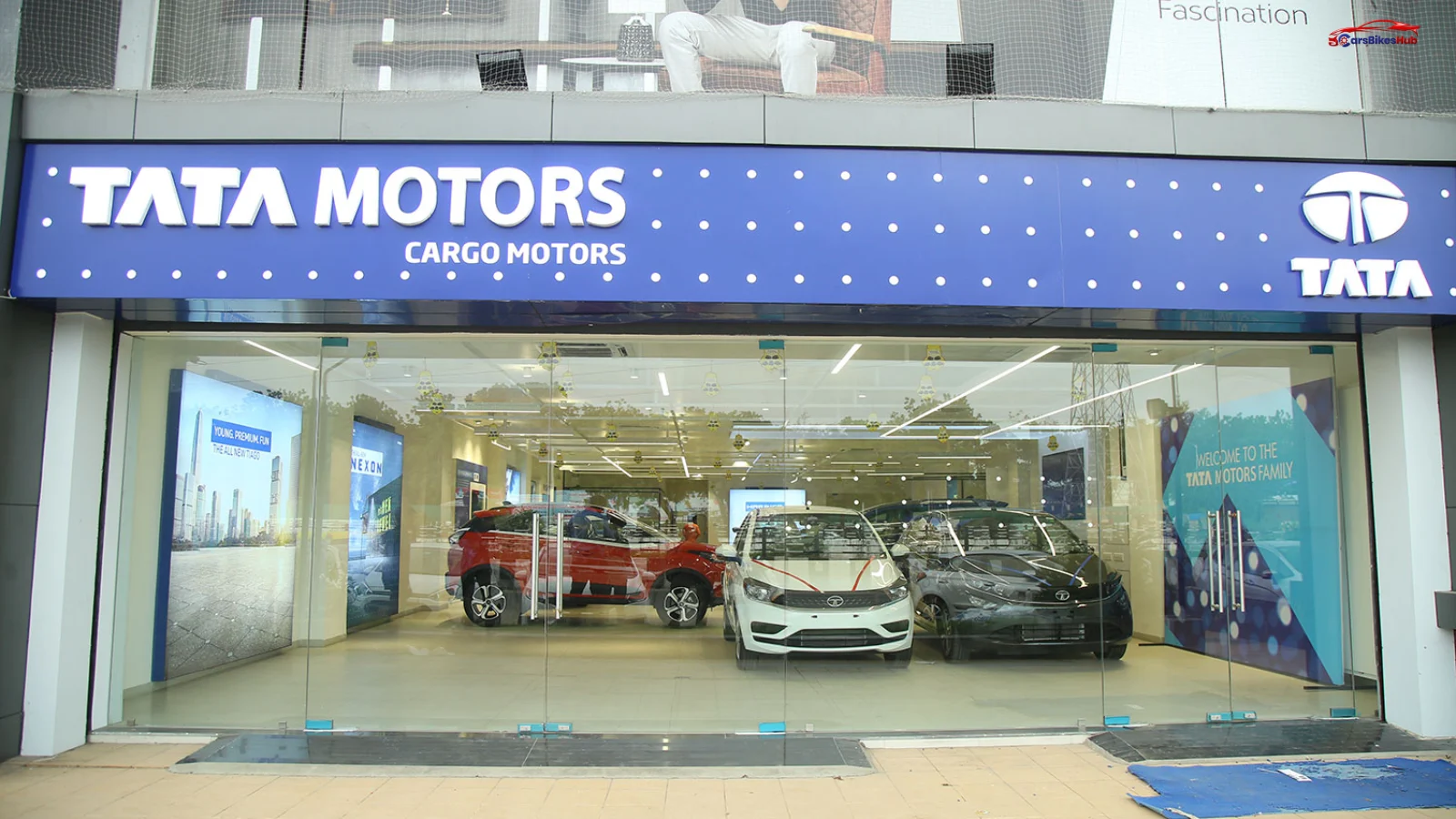
Tata Motors’ May 2026 sales came in strong, with the automaker reporting a total of 59,790 units sold across domestic and international markets. This marks a 42% increase over the 42,040 units sold in May 2025, a solid jump that puts the brand firmly on an upward trajectory.
What makes Tata Motors’ May 2026 sales more notable is the consistency behind it. This motor wasn’t a one-off spike. The Punch and Nexon continued to anchor volumes, EV sales crossed the 10,000-unit mark for the first time, and VAHAN retail registrations grew by over 50% year-on-year. That last figure matters because it reflects actual deliveries to customers, not just wholesale dispatches moving from factory to dealerships.
Here’s a full breakdown of how the month played out.
Tata Motors May 2026 Sales: Domestic vs International Split
Total domestic passenger vehicle sales were at 59,090 units in May 2026, rising from 41,557 units in May 2025. International business sales reached 700 units, compared to 483 units during the corresponding period last year, registering a 45% increase.
The domestic market is clearly where the action is, and the export number, while small, is growing at 45% YoY, a quiet indicator that Tata’s international push isn’t entirely stagnant either.
In terms of retail performance, the number of registrations for the VAHAN increased by more than 50% on an annual basis, reflecting strong consumer demand. The positive wholesale performance alongside 50%-plus retail growth means that products are actually moving out of showrooms on their own momentum rather than being pushed down the supply chain.
Model-Wise Breakdown: What Sold and What Didn’t
However, there were variations in the performance of all of these models of Tata Motors for May 2026 sales. While some of these models contributed largely towards these sales, on the contrary, some of them lagged. This can be better understood from the table below.
| Model | May 2026 Sales | YoY Change |
| Punch | 20,208 units | +54% |
| Nexon | 19,100 units | +46% |
| Sierra | 6,606 units | New launch |
| Harrier | 2,815 units | +215% |
| Curvv | 1,680 units | -45% |
| Tigor / Tigor EV | 531 units | -51% |
Punch maintained its position as the best-selling model for Tata Motors in May 2026 with sales figures of 20,208 units, growing at an annual rate of 53.87% from 13,133 units recorded in May 2025. The model accounted for 34.2% of Tata’s total sales during the month.
Close behind was Nexon, which recorded sales of 19,100 units, up 45.85% from 13,096 units a year ago. Together, Punch and Nexon contributed over 66% of Tata’s total passenger vehicle volumes.
That’s two models carrying two-thirds of the monthly volume. Tata Punch sales and Tata Nexon sales have settled into a pattern where they consistently deliver high volumes month after month, making them the backbone of Tata’s passenger vehicle business right now.
Another standout was the Harrier. Following the introduction of the Harrier EV and increased attention around the nameplate, sales jumped 215% to 2,815 units, compared to just 894 units a year ago. Its month-on-month volumes also improved 11%. A 215% year-on-year jump is the kind of recovery that happens when a brand correctly reads what its customers want from a refresh, and the Harrier EV has clearly done that job.
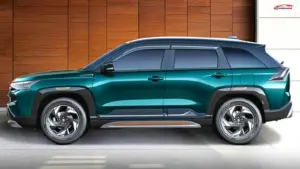
Tata Sierra sales held their own at 6,606 units, though they were down about 10% compared to April 2026. SUVs remained the biggest draws for Tata last month, as Punch, Nexon, Sierra, Harrier, Curvv, and Safari collectively contributed more than 51,000 units. The SUV-heavy portfolio is no accident; it directly mirrors where Indian buyer demand sits today.
However, the Curvv’s YoY drop of 45% and the fall of Tigor could be considered as something noteworthy. The latter increased by 19.74% compared to April’s results, showing that its MoM performance is getting better despite the fact that its annual performance is declining.
Tata EV Sales: A New Monthly Record
What caught headlines in Tata Motors’ May 2026 sales figures was not the volume, but the EV figures.
Tata Motors registered an increase of 85% in its domestic and international EV sales to reach 10,517 units in May 2026, compared to 5,685 units in the corresponding period last year. It also witnessed their record monthly EV sales of 10,517 units, making it clear why Tata Motors remains one of the dominant players in India’s EV space.
Crossing 10,000 EV units in a single month is a genuine milestone for the Indian market. To put it in context, Tata EV sales were at 5,685 units in May 2025, so this isn’t incremental growth; it’s a near-doubling in twelve months.
New EV bookings grew 3.5x year-on-year, with the Punch EV and Nexon EV models in the sub-₹15 lakh segment leading the momentum. That price bracket is where the bulk of Indian car buyers operate, and Tata currently has it largely to itself when it comes to electric options. No mainstream rival offers a credible EV under ₹15 lakh with the same range, brand trust, and after-sales network that Tata does right now.
The Nexon EV, Punch EV, Tiago EV, and Curvv EV have helped the company build one of the broadest electric vehicle portfolios of any Indian manufacturer. That breadth, spanning roughly ₹8 lakh to ₹25 lakh, means Tata EV sales have multiple price points working simultaneously, which gives the total EV number a sturdier base than if it were dependent on a single model.
May 2026 Industry Numbers: Tata Leads the Growth Race
The sales of Tata Motors in May 2026 cannot be viewed in isolation, as the industry witnessed a good performance overall, making the 42% sales growth of Tata even more relevant.
Maruti Suzuki India Ltd, the market leader, announced total wholesales of 242,688 units, reflecting a 35% increase. Mahindra & Mahindra Ltd reported passenger vehicle sales of 58,021 units, up 11% year-on-year. Hyundai Motor India Ltd’s domestic market sales reached 47,837 units in May, representing a 9.1% rise year-on-year.
Tata’s 42% growth rate outpaced every major rival in the month. Maruti grew 35%, Hyundai 9.1%, and Mahindra 11%. When you’re growing faster than the market leader and both major Korean and domestic SUV rivals, the brand is clearly doing something right at the product and pricing level.
The performance improves Tata Motors’ standing as the second largest manufacturer in the Indian passenger vehicles industry.
Month-on-Month Consistency Tells a Bigger Story
What often gets overlooked amidst the yearly comparisons is what happened during April and May 2026.
Compared to April 2026, Tata’s overall sales remained almost flat at 59,090 units versus 59,000 units, registering marginal growth of 0.15%.
Holding near 59,000 units in back-to-back months is a sign of sustained, stable demand, not a festive-season spike or a one-time promotional push. Punch and Nexon continued to gain momentum monthly, rising 5.76% and 5.37%, respectively. Altroz posted a healthy 12.72% MoM increase, while Harrier gained 10.61%.
For a brand working at this volume level, that kind of month-on-month steadiness is actually the more meaningful data point. It’s easier to post a big YoY number when the base year was weak. Sustaining nearly 60,000 units per month, consistently, with retail keeping pace, that’s harder to do.
What’s Powering This Growth
Tata’s sales of May 2026 also do not exist in a vacuum; there are some fundamental structural reasons for their success story.
Depth of portfolio in each segment: The brand has become one that offers something for everyone, whether it be a budget under ₹10 lakh car or a luxury SUV over ₹25 lakh. This breadth ensures that the brand takes advantage of sales potential at different price points.
Multi-powertrain approach: The multipowertrain approach has enabled the company to maintain its market leadership. Those consumers who are not yet ready for an electric vehicle (EV) still purchase other models of Tata, while EV-ready customers have a range of vehicles to choose from.
EV ecosystem advantage: Tata has been investing in building its EV ecosystem not only by developing cars but also by establishing itself as an established manufacturer of vehicles in India. This will be hard for the competitors to match in a short time, even with their excellent products.
The success emphasises how Tata Motors has succeeded in sustaining its initial advantage during the transition period despite the tough competition from other brands, including Mahindra, MG Motor, Hyundai, and upcoming Chinese rivals.
The Road Ahead
From the results of Tata Motors in May 2026, we see a company that operates with great momentum, clearly focused on its path ahead. The Punch and Nexon are delivering consistent volume, the Harrier has been revitalised, the Sierra is finding its feet, and Tata EV sales just hit a record high. The Curvv and Tigor have ground to recover, but they represent a smaller share of the overall mix.
If Tata can maintain the 55,000-60,000 units per month range through the second half of 2026, while continuing to grow Tata EV sales toward the 12,000-15,000 unit monthly range, it will finish the year in a very strong position both in total volumes and in cementing its lead in India’s electric mobility space.
The company is aiming for an 18-20% market share in the Indian passenger vehicle market by FY2030, translating to roughly 1-1.2 million annual car sales. The May 2026 run rate, if sustained, puts that target well within reach.
FAQs
What were Tata Motors' total sales in May 2026?
In May 2026, Tata Motors Passenger Vehicles registered 59,790 unit sales, both at home and abroad, which was 42 per cent higher than that of May 2025.
Which is the most-selling Tata car in India in 2026?
The Tata Punch is the most popular Tata car for 2026. It accounted for 20,208 units of sales in just May 2026, which accounts for more than 34% of all Tata's monthly sales.
How many EVs did Tata sell in May 2026?
In May 2026, Tata Motors delivered its best-ever monthly figure of 10,517 EVs, up 85% year-over-year, driven mainly by the Punch EV and Nexon EV.
What is the target price of Tata Motors in 2026?
The average price target for Tata Motors is projected at ₹850-₹1,000 per share, suggesting room for significant upside from here. But keep in mind that price targets may differ among analysts and not be investment recommendations.
What is Tata Motors' target by 2030?
By fiscal year 2030, Tata Motors hopes to have 30% penetration of EVs in its total sales base, with a targeted market share of 18-20% in the Indian passenger vehicles category, which would mean 1-1.2 million yearly passenger vehicle sales. Furthermore, it intends to launch five more EV models before then.