



















The 2026 Mahindra Scorpio-N facelift has officially launched in India, with prices starting at Rs 13.69 lakh (ex-showroom) and going up to Rs 25.49 lakh for the range-topping Z8L variant.
The key changes are a panoramic sunroof, a much bigger touchscreen and digital instrument cluster, a 540-degree camera system, and a few styling tweaks. What hasn’t changed is the mechanical package; the same 2.0-litre turbo-petrol and 2.2-litre diesel engines carry over largely untouched.
So this facelift is really about the Scorpio-N catching up on cabin technology and convenience features, rather than becoming a new SUV underneath. That distinction matters, because it tells you exactly where your extra money is going if you’re upgrading from the older model, and whether that’s worth it for how you actually use the car.
2026 Mahindra Scorpio-N Facelift Price in India
The Scorpio-N facelift starts at Rs 13.69 lakh for the base Z2 petrol manual variant and tops out at Rs 25.49 lakh for the Z8L diesel automatic with 4WD (all prices ex-showroom, India). These figures aren’t final on-road numbers; the amount you’ll actually pay after RTO registration, road tax and insurance will be higher, and it varies by state, so it’s worth checking the on-road price at your local dealership before you finalise a variant.
Compared to the outgoing Scorpio-N, the price hike is fairly small at both ends. The entry-level Z2 petrol manual is about Rs 20,000 more expensive than before, while the range-topping Z8L diesel 4WD automatic costs around Rs 54,000 more. For a facelift that adds a panoramic sunroof, a much larger touchscreen, a digital cluster and a full surround-view camera system, that’s a modest increase; Mahindra hasn’t used the update as an excuse for a steep price jump.
Broadly, here’s how the range is split by powertrain:
- Petrol manual (2WD): Rs 13.69 lakh-Rs 21.69 lakh
- Petrol automatic (2WD): Rs 17.16 lakh-Rs 23.05 lakh
- Diesel manual (2WD): Rs 14.19 lakh-Rs 22.47 lakh
- Diesel automatic (2WD): Rs 17.68 lakh-Rs 23.80 lakh
- Diesel with 4WD (4XPLOR): Rs 18.03 lakh-Rs 25.49 lakh
If you’re comparing this to rivals, keep in mind the Scorpio-N’s pricing overlaps with monocoque three-row SUVs like the Tata Safari, even though the Scorpio-N itself is a body-on-frame vehicle, a fundamentally different, more rugged type of construction.
2026 Mahindra Scorpio-N Facelift Variants
The lineup includes Z2, Z4, Z6, Z8S, Z8, Z8T and Z8L, with the Z8L available in both 6-seat and 7-seat layouts. The Z8S is new to the range, slotted in above the Z6, and its job is to bring several premium features further down the price ladder than before.
Here’s roughly how the equipment steps up as you move through the range:
- Z2 and Z4 cover the basics: LED tail lamps, a touchscreen infotainment unit, steering-mounted controls, and steel wheels. These are practical, no-frills variants for buyers who mainly want the size and toughness of the Scorpio-N without paying for extras. One thing worth flagging: the Z2, Z4 and Z6 variants only get two airbags, which is on the lower side for an SUV at this price point.
- Z6 adds a single-pane sunroof, electric power steering, a reverse camera, and a six-speaker audio system a meaningful step up in daily comfort.
- Z8S is where the bigger technology upgrades start appearing, including the larger screens and additional safety kit like curtain airbags.
- Z8 and Z8T bring dual-zone climate control, keyless entry, ventilated front seats, a 12-speaker Sony sound system, and the new 18-inch alloy wheels. The Z8T is also where you can get the 4XPLOR four-wheel-drive system on diesel automatic versions. Importantly, the Z8T misses out on the panoramic sunroof, the 540-degree camera and blind-view monitor, and Level 2 ADAS; all three are reserved exclusively for the range-topping Z8L.
- Z8L is the flagship, and the only variant with the panoramic sunroof, the full 540-degree camera with blind-view monitor, and Level 2 ADAS (a suite of driver-assistance functions such as forward collision warning, automatic emergency braking and lane keep assist).
4WD is only available on select diesel variants; petrol buyers don’t get this option at all, and it isn’t offered on the 6-seat Z8L either.
If you’re trying to pick one variant without overspending, the Z8T with the diesel automatic gearbox is worth a close look. It carries most of the meaningful convenience upgrades the bigger screens, ventilated seats, powered driver’s seat, and 4WD availability at a noticeably lower price than the Z8L. But it’s worth being clear that the Z8T does not get the panoramic sunroof, the 540-degree camera, or ADAS. Buyers who specifically want any of those three features will need to step up to the Z8L.
What’s New in the 2026 Scorpio-N Facelift?
This is where the facelift’s main changes become clear. The changes are concentrated in the cabin and in visibility-related features, rather than under the bonnet.
Bigger infotainment screen. The touchscreen grows to 12.3 inches, up from the smaller unit on the outgoing model. In practical terms, this means larger, easier-to-tap icons, better split-screen views when you’re using navigation and music at once, and less squinting while driving, something that genuinely helps on a vehicle this size where you’re often glancing at the screen briefly rather than staring at it.
Digital instrument cluster. A new 10.25-inch digital display replaces the older analogue-heavy setup. Beyond looking more modern, this lets the driver customise what information is shown, trip data, navigation prompts, or the SUV’s new “Adventure Statistics” screen, which displays roll and pitch angle, compass heading, altimeter reading, and G-force. It’s a nice-to-have for off-road enthusiasts, though most urban buyers won’t use it daily.
Panoramic sunroof. A large single-pane sunroof replaces the smaller unit from before. It changes how airy the cabin feels, especially for rear passengers, but it’s worth being clear-eyed about this: a sunroof doesn’t add practicality. It’s a comfort and perception feature, not a functional one.
540-degree camera and blind-view monitor. This is arguably the most useful addition for everyday driving. It combines a 360-degree top-down view with an additional under-body camera, and the blind-view monitor shows a live feed in the instrument cluster when you indicate to change lanes. On an SUV this large, at 4,662mm long and 1,917mm wide, parking in tight basements or navigating narrow lanes in Indian cities has always required a bit of guesswork. This system removes a lot of that guesswork.
New alloy wheels. The higher variants get a fresh five-spoke 18-inch alloy design. It’s a styling update, not a functional one; don’t expect any difference in ride or handling because of it.
Faster USB Type-C charging. The front row gets a 65W USB-C port. For a family that relies on phones for navigation, music and rear-seat entertainment on long trips, faster charging genuinely matters; it means less anxiety about battery levels on a long highway drive.
Other cabin updates. These include a slightly revised dashboard layout, a new silver insert on the centre console, revised switchgear, and two new colour options — Galaxy Grey and Oceanic.
Engine & Performance: What Has Changed?
Nothing, mechanically. This is worth stating plainly because it’s easy to assume a facelift brings performance changes too; it doesn’t, in this case.
The 2.0-litre turbo-petrol engine continues to produce 203hp, with 370Nm of torque on the manual gearbox and 380Nm on the automatic. The 2.2-litre diesel engine is offered in two states of tune: the lower-output version makes 132hp and 300Nm, while the higher-output version produces 175hp and 370Nm with the manual (400Nm with the automatic). Both engines can be paired with a 6-speed manual or a 6-speed torque-converter automatic transmission.
Four-wheel drive continues to be available only on select diesel variants, through Mahindra’s 4XPLOR system, which includes shift-on-the-fly functionality and terrain modes for Sand, Mud & Ruts, and Snow. Rear-wheel drive remains standard across the rest of the lineup.
If you’re buying the facelift for how it drives, you’re essentially getting the same Scorpio-N performance and character that the outgoing model already offered. What you’re paying the extra money for is a more modern, better-equipped cabin, not a quicker or more capable SUV underneath.
Mileage & Fuel Efficiency
Mahindra has not announced updated ARAI mileage figures for the facelift. Since the engines and transmissions remain unchanged, efficiency should be broadly similar to the outgoing Scorpio-N, although actual mileage will vary significantly with traffic, driving style and fuel type. If exact figures matter to your decision, it’s worth asking your dealer for the latest official ARAI numbers before booking.
Design & Interior
Does the facelift actually look and feel different? Mostly on the inside — the exterior changes are minor.
Exterior: The overall silhouette, proportions and stance are unchanged. You still get the same dual-pod LED headlamps, the black grille with vertical chrome slats, C-shaped LED DRLs in the fog lamp housing, and the tall LED tail lamps at the rear. The most noticeable exterior update is the new five-spoke 18-inch alloy wheel design on higher variants. If you park the facelift next to the outgoing Scorpio-N, most people won’t immediately spot the difference from a distance.
Interior: This is where the changes are more obvious. The dashboard has a slightly revised layout with a new silver trim insert, and the jump from the older screens to the new 12.3-inch touchscreen and 10.25-inch digital cluster is genuinely noticeable the moment you sit in the driver’s seat. The switchgear on the centre console has also been reworked.
Seating and practicality: The Scorpio-N continues to be offered in both 6-seat (captain seats in the second row) and 7-seat (bench seat) configurations, just as before. Cabin space, boot room and storage layout haven’t changed with this update.
Features: Which Ones Actually Matter?
Not every new feature adds equal value. Here’s a practical read on the ones buyers ask about most.
540-degree camera: This is the standout addition. On a large, tall SUV like the Scorpio-N, judging where the corners of the vehicle are, especially in multi-level parking or narrow residential lanes, has always been a challenge. A camera system that shows the underbody view along with the usual top-down feed directly addresses that.
Larger infotainment screen: Genuinely improves usability. Bigger touch targets and a clearer layout mean less time spent looking away from the road while adjusting navigation or music.
Digital instrument cluster: Useful mainly for customisation and the off-road-focused Adventure Statistics display. For a buyer who mostly drives in the city, the practical difference over a well-designed analogue cluster is smaller than the marketing suggests, but it does look and feel more premium.
Panoramic sunroof: Improves how the cabin feels, particularly for rear-seat passengers, but doesn’t add any functional benefit. Don’t let it be the sole reason you pick a pricier variant if you have simpler priorities like a safety kit or 4WD.
Faster USB-C charging: A small but genuinely useful update for families who depend on their phones for navigation on long trips, especially with kids in the back needing entertainment.
2026 Scorpio-N Facelift vs Old Scorpio-N: What’s Actually Different?
| Aspect | Old Scorpio-N | 2026 Scorpio-N Facelift |
| Starting price (ex-showroom) | Roughly Rs 20,000–54,000 lower | Rs 13.69 lakh – Rs 25.49 lakh |
| Infotainment screen | Smaller touchscreen | 12.3-inch touchscreen |
| Instrument cluster | Mostly analogue | 10.25-inch fully digital |
| Sunroof | Smaller single-pane unit | Larger panoramic sunroof |
| Camera system | Reverse/360-degree camera on select variants | 540-degree camera with blind-view monitor (top variant) |
| Alloy wheels | Older design | New five-spoke 18-inch design |
| USB charging | Standard USB | 65W USB Type-C (front row) |
| Petrol engine | 203hp, 370–380Nm | Unchanged |
| Diesel engine | 132hp/300Nm and 175hp/370–400Nm | Unchanged |
| Transmission | 6-speed manual/automatic | Unchanged |
| 4WD | 4XPLOR on select diesel variants | Unchanged |
The short version: what’s changed is almost entirely what you see and touch inside the cabin, plus a handful of visibility and convenience features. What hasn’t changed is everything that determines how the SUV actually drives; the engines, gearboxes, drivetrain, and body-on-frame construction are all carried over.
2026 Scorpio-N Facelift: What Buyers Should Consider
A few practical points worth thinking through before you book one:
- Price vs equipment: The entry-level variants (Z2, Z4, Z6) are budget-friendly but only get two airbags, which is worth weighing carefully against safety priorities. If safety kit matters to you, the Z8S and above bring meaningfully more.
- Petrol vs diesel: The diesel gets you access to the higher-output 175hp state of tune and the option of 4WD — features unavailable on petrol variants. If you regularly drive long distances or through poor terrain, diesel makes more sense. For largely city-based use, the petrol is smoother and easier to live with day to day.
- 2WD vs 4WD: Unless you genuinely drive off-road, through snow, or in regions with poor road conditions, 4WD adds cost without adding everyday value. Most urban buyers will be well served by the 2WD versions.
- City use: The SUV’s size, combined with the new 540-degree camera, makes tighter parking manageable, but the Scorpio-N is still a large vehicle to navigate through narrow city lanes and small parking spaces.
- Highway and family use: This remains a strong point for the Scorpio-N — a comfortable, high-riding SUV well suited to long family road trips, particularly with the added charging and cabin comfort updates.
- Ownership costs: Mahindra hasn’t published updated service costs or maintenance intervals specific to the facelift at the time of writing, so it’s best to confirm current service package details directly with your dealer before purchase.
Should You Buy the New Scorpio-N Facelift or the Older Model?
The facelift makes more sense if:
- You want the latest cabin technology; the bigger screens make a real difference to daily use.
- The 540-degree camera and blind-view monitor matter to you, especially if you drive in dense urban areas or use tight parking spaces regularly.
- You want the panoramic sunroof and a more contemporary-feeling interior.
- You’re buying a new Scorpio-N anyway, since the price increase over the outgoing model is small; there’s little reason to specifically seek out old stock once the facelift is widely available.
The older model could make sense if:
- Dealers are offering a significant discount to clear outgoing stock; this can sometimes outweigh the value of the added features.
- You genuinely don’t need the new screens, camera system, or sunroof, and would rather save money on a variant with similar core equipment.
- You want the same core engine and drivetrain either way, since mechanically there’s no difference between the two.
- Availability matters; if you need the vehicle immediately and the facelift has longer waiting periods in your city, the outgoing model (where still available) might get you on the road sooner.
Scorpio-N Facelift vs Rivals
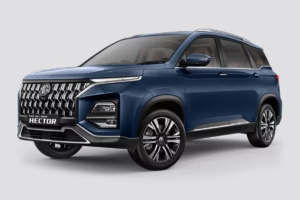
The Scorpio-N’s closest rival within Mahindra’s own lineup is the Thar Roxx, but for buyers cross-shopping across brands, the more relevant comparisons are three-row SUVs like the Tata Safari, Hyundai Alcazar, and MG Hector Plus, even though these are monocoque vehicles rather than body-on-frame like the Scorpio-N.
- Tata Safari: Closest in size, seating and pricing overlap. The Safari offers a more car-like ride due to its monocoque construction, while the Scorpio-N’s body-on-frame build and the availability of a proper 4WD system give it an edge for poor roads and light off-roading, something the Safari doesn’t offer.
- Hyundai Alcazar: More urban-focused, with a smoother ride and strong feature list, but it’s a smaller SUV overall and doesn’t offer the low-end torque or off-road ability of the Scorpio-N’s diesel engines.
- MG Hector Plus: Competitive on features and cabin tech, but again lacks the body-on-frame toughness and 4WD option that some Scorpio-N buyers specifically seek out.
There’s no single winner here; it depends on what you value. If ride comfort and a more car-like driving experience matter most, the monocoque rivals have an edge. If off-road ability and the availability of 4WD are priorities, the Scorpio-N has an advantage that these monocoque rivals don’t offer, and it remains the only body-on-frame three-row SUV in this price bracket.
Who Is the 2026 Scorpio-N Facelift For?
- Families who want a large, practical SUV with genuine 7-seat usability.
- Buyers who want a rugged, go-anywhere SUV but also expect modern cabin technology.
- Anyone who specifically wants a diesel engine with a 4WD option, which few rivals in this segment offer.
- Buyers upgrading from an older Scorpio-N or similar SUV who want better in-cabin tech without changing the core driving experience they already know.
It may be less suited to buyers who prioritise a smoother, more refined on-road ride above rugged capability; those buyers are likely better served by a monocoque rival like the Alcazar or Hector Plus.
Final Verdict
The 2026 Mahindra Scorpio-N facelift doesn’t try to reinvent the SUV, and it doesn’t need to; the outgoing model was already a strong seller. What Mahindra has done is address the areas that were starting to feel dated: a smaller screen, an analogue-heavy cluster, and a camera system that wasn’t quite up to the standard buyers now expect at this price point. The panoramic sunroof and new alloy wheels round out the update with a more premium feel.
What hasn’t changed is just as important to understand: the engines, transmissions, drivetrain options, and core dimensions are all carried over from the outgoing Scorpio-N. This is a technology and equipment update, not a mechanical one.
The price increase is small enough that it’s easy to justify, especially for buyers picking variants like the Z8S, Z8T or Z8L, where the new features are concentrated. If you’re specifically drawn to the bigger screens, the 540-degree camera, or the panoramic sunroof, the facelift is a straightforward and sensible choice. If none of those genuinely matter to you and you can find a well-priced outgoing Scorpio-N, there’s no mechanical reason to pay more for the update; you’d be getting the same SUV underneath either way.
For most buyers considering a new Scorpio-N, the 2026 facelift is the version worth looking at, especially if the new cabin technology and camera system matter to them. It brings the cabin experience closer in line with what buyers now expect in this segment, without asking for a significant premium over the model it replaces.

FAQs
What is the price of the 2026 Mahindra Scorpio-N facelift?
The 2026 Scorpio-N facelift starts at Rs 13.69 lakh for the base Z2 petrol manual and goes up to Rs 25.49 lakh for the top-spec Z8L diesel automatic 4WD (all prices ex-showroom, India). On-road prices will be higher and vary by state.
How much more expensive is the facelift compared to the outgoing Scorpio-N?
The price increase is small. The entry-level Z2 petrol manual costs about Rs 20,000 more than before, while the range-topping Z8L diesel 4WD automatic costs around Rs 54,000 more.
What are the variants of the 2026 Scorpio-N facelift?
The lineup includes Z2, Z4, Z6, Z8S, Z8, Z8T and Z8L, with the Z8L offered in both 6-seat and 7-seat configurations. The Z8S is a new addition, positioned above the Z6.
Is 4WD available on the 2026 Scorpio-N facelift?
Yes, but only on select diesel variants through Mahindra's 4XPLOR system. Petrol variants don't get a 4WD option, and it also isn't offered on the 6-seat Z8L.
What is the mileage of the 2026 Scorpio-N facelift?
Mahindra hasn't announced updated ARAI figures specific to the facelift. Since the engines and transmissions are unchanged, mileage is expected to be broadly similar to the outgoing Scorpio-N, though actual figures will vary with driving conditions and style.