






















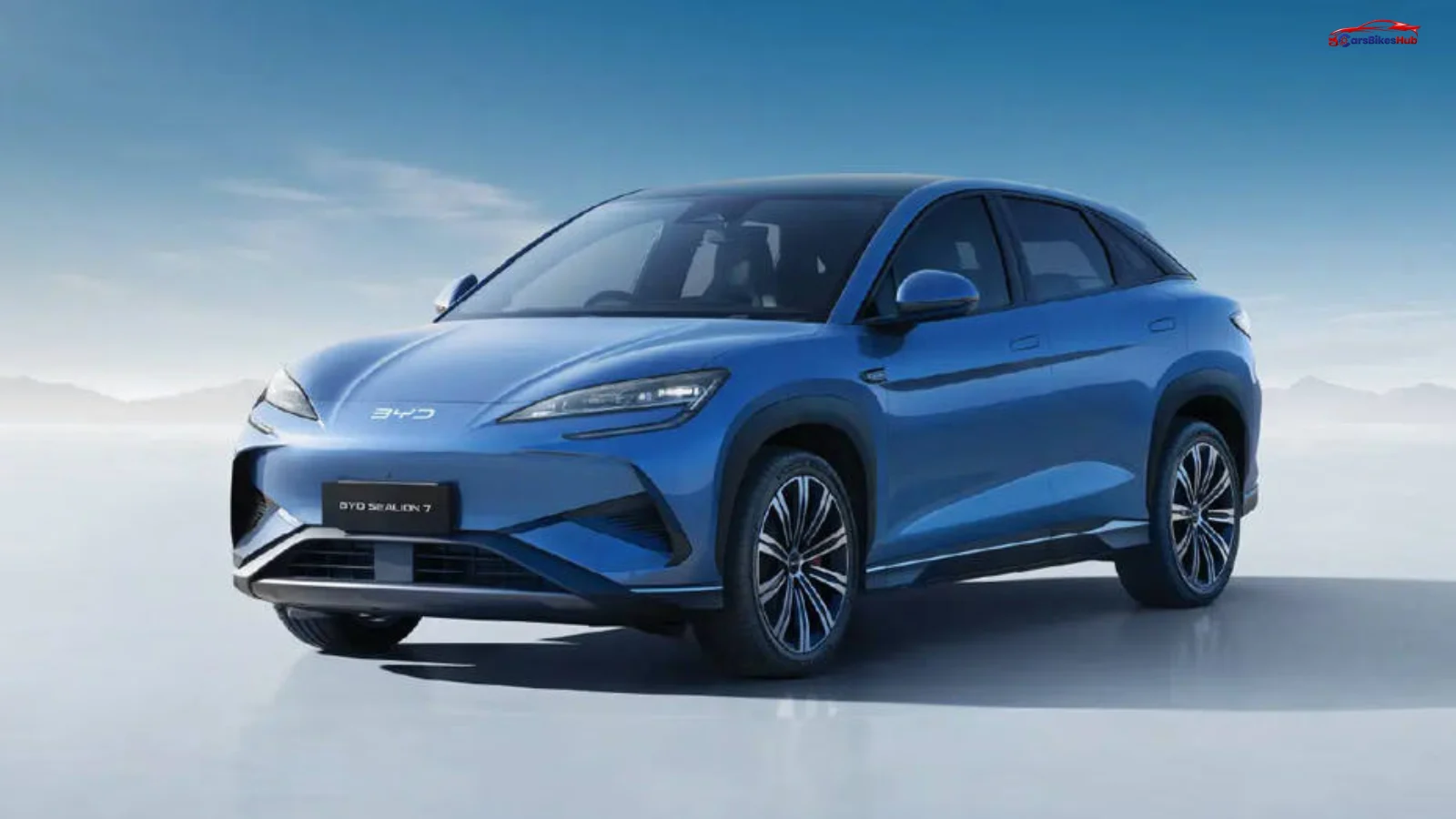
Buyers today expect premium interiors, long driving range, fast charging and dependable ownership. The BYD Sealion 7 promises all of that while undercutting many premium rivals on price. Sixteen months after its India launch, with over 2,500 units on Indian roads, enough real-world data exists to answer the only question that matters: should you actually buy one?
This article breaks down pricing, real-world range, ownership costs, safety, and how the Sealion 7 stacks up against the Hyundai Ioniq 5, Kia EV6, Volvo EX40 and BMW iX1, so you can decide with facts, not brochure claims.
BYD Sealion 7 at a Glance
| Price (ex-showroom) | ₹49.40 lakh – ₹54.90 lakh |
| Battery | 82.56 kWh LFP Blade Battery |
| Claimed Range (NEDC) | Up to 567 km |
| DC Fast Charging | Up to 230 kW · 30–80% in ~18–24 min |
| Power | 313 PS (RWD) / 530 PS (AWD) |
| Battery Warranty | 8 years / 1,60,000 km |
| Best For | Buyers who want luxury-EV tech without a German price tag |
Why Buyers Are Paying Attention
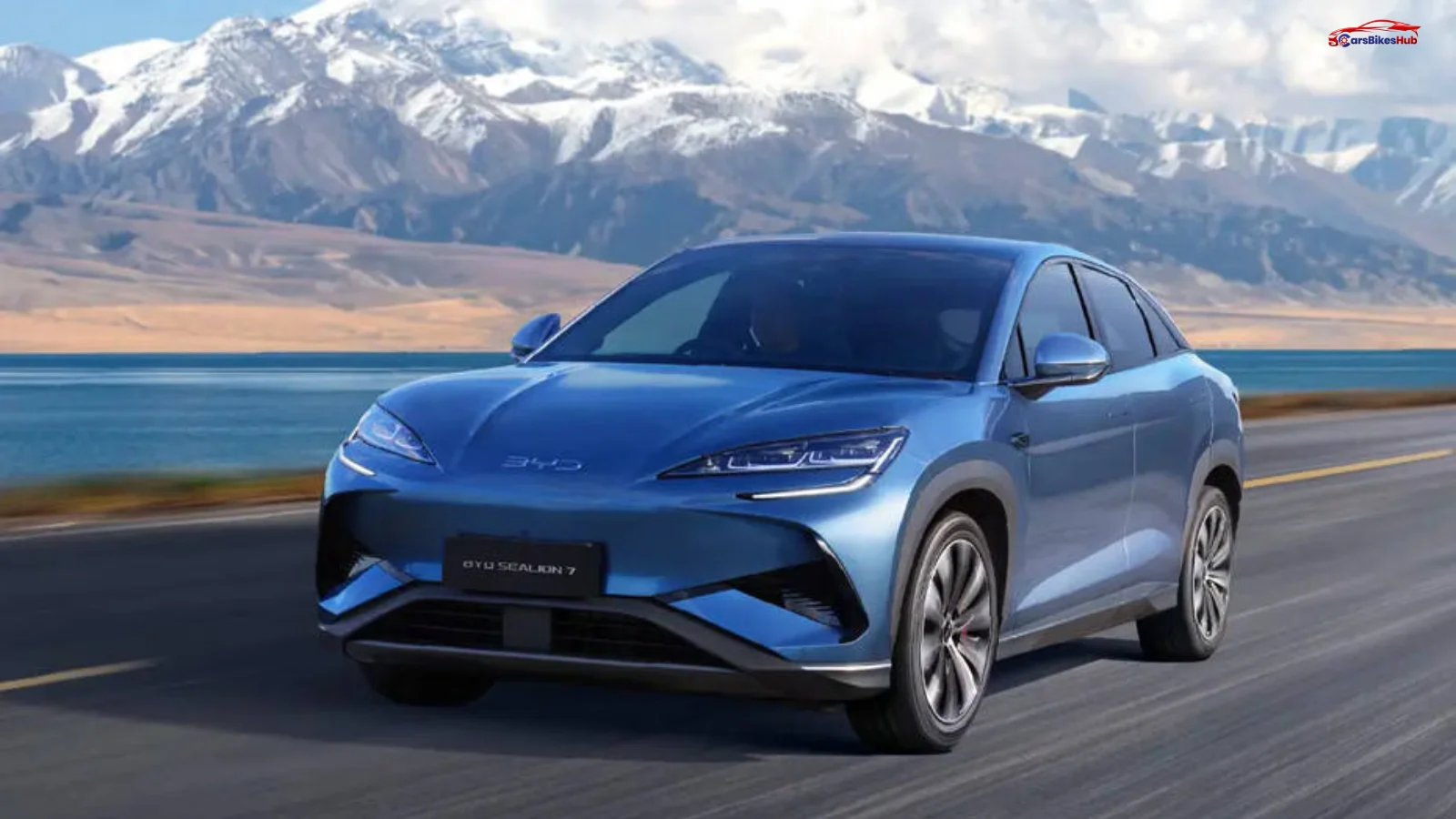
The Sealion 7 launched in India in February 2025 as BYD’s flagship SUV, sitting above the Atto 3 and alongside the Seal sedan. It’s built on BYD’s e-Platform 3.0, the same architecture underpinning the Seal, but repackaged into a coupe-SUV body with a raised 170 mm ground clearance (up from the Seal’s 145 mm), making it noticeably more usable on Indian roads without losing the sedan’s low-slung handling manners.
The bigger story is what it brings that most rivals in this price bracket don’t: a 5-star Euro NCAP rating, 11 airbags as standard, Level 2 ADAS, and a battery chemistry (LFP, or Lithium Iron Phosphate) that’s inherently more thermally stable and better suited to India’s climate than the nickel-based chemistry used by several rivals. For buyers, that combination- safety, range, and a battery less prone to degradation in heat is the actual reason to care, more than the badge on the bonnet.
BYD Sealion 7 Price in India
As of mid-2026, the Sealion 7 is offered in two variants:
- Premium (RWD): ₹49.40 lakh, ex-showroom (revised up from ₹48.90 lakh effective January 1, 2026, due to rising manufacturing costs)
- Performance (AWD): ₹54.90 lakh, ex-showroom, unchanged since launch
On-road prices in a city like Delhi work out to roughly ₹50.3 lakh for the Premium and ₹56.4 lakh for the Performance, once RTO, insurance and registration are added. BYD has also flagged a broader price hike of up to 3% across its India lineup from May 2026, so if you’re close to booking, locking in current pricing sooner rather than later makes financial sense.
Which variant offers better value?
For most buyers, the Premium RWD is the smarter buy. You give up two seconds of 0-100 km/h time and all-wheel traction, but you keep nearly all the feature list, and the ₹5.5 lakh saved is significant. The Performance variant only makes sense if you genuinely want the acceleration and AWD grip, not just as a “top variant” purchase.
Variants Explained
| Premium | Performance | |
| Drivetrain | Single motor, RWD | Dual motor, AWD |
| Power / Torque | ~313 PS / 380 Nm | ~530 PS / 690 Nm |
| 0–100 km/h | 6.7 seconds | 4.5 seconds |
| Wheels | 19-inch | 20-inch |
| Claimed range (NEDC) | Up to 567 km | Up to 562 km |
Both variants share the same 82.56 kWh battery, the same 15.6-inch rotating touchscreen, the same safety suite, and nearly identical feature lists. The Performance variant’s real advantage isn’t the extra kit; it’s the drivetrain.
Battery, Range & Performance
BYD quotes the Sealion 7’s range on the NEDC test cycle, which, like most lab cycles, is optimistic. Here’s the honest breakdown:
Claimed range: Up to 567 km (Premium) / up to 562 km (Performance), NEDC.
Expected real-world range: Based on how the model has performed with Indian owners in mixed city and highway conditions, expect roughly 450–500 km from the Premium (RWD) and slightly less from the Performance AWD, given its extra weight and power delivery. In pure city driving with regenerative braking doing most of the work, some owners have reported figures closer to the claimed number; on the highway at 120 km/h+, expect a noticeably steeper drop, similar to every EV in this category.
Performance: The Performance AWD’s 4.5-second 0-100 km/h time is genuinely quick — quicker than several petrol performance SUVs costing more. But the more relevant number for daily use is mid-range punch: overtaking on a two-lane highway is effortless in both variants, since even the “slower” Premium has more low-end torque than most ICE SUVs. The Sealion 7 also feels notably refined at speed; BYD has used double-glazed glass on the windscreen and front windows specifically to cut cabin noise, and it shows; road noise only creeps in past triple-digit speeds.
Ride and handling: The ride leans firm rather than plush, a trade-off for the sharper handling that comes with a coupe-SUV silhouette. It’s composed on Indian highways but can feel a touch stiff over broken city roads compared to softer-riding rivals like the Ioniq 5.
Charging & Running Costs
- DC fast charging: Up to 230 kW, taking the battery from roughly 30–80% in about 18 minutes under ideal conditions (real-world figures on India’s DC network will typically be slower, since few public chargers here currently deliver above 60-90 kW).
- AC home charging: An 11 kW onboard charger is standard, though the complimentary wallbox that comes with the car is rated at 7 kW; a full charge from near-empty on AC takes roughly 8–10 hours overnight, perfectly workable for daily top-ups.
- Running cost: At typical Indian residential electricity rates (₹7–9/unit in most metros), a full charge of the 82.56 kWh battery costs approximately ₹580–750, translating to a running cost of roughly ₹1.3–1.7 per km, a fraction of what a comparable petrol SUV would cost to run.
- Battery longevity: BYD’s Blade Battery uses LFP chemistry, which typically degrades more slowly than nickel-based packs, especially in hot climates. The traction battery carries an 8-year/1,60,000 km warranty, one of the stronger commitments in this segment.
Exterior Design: What It Means for Daily Use
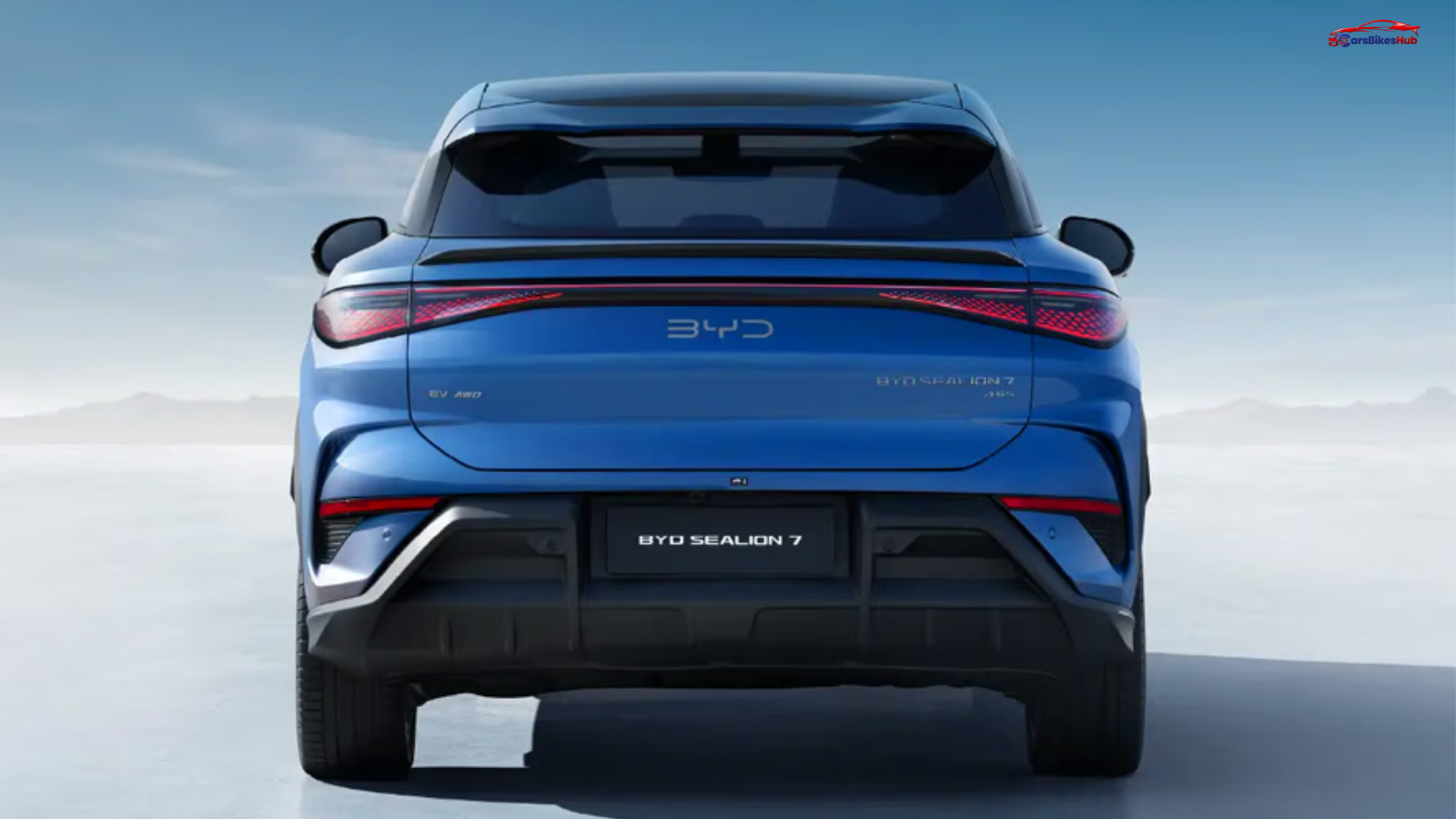
The practical questions matter more here than the styling. Is visibility good? Not entirely; the sloping coupe roofline that gives the Sealion 7 its road presence also restricts rear outward visibility, so lean on the standard 360-degree camera and parking sensors when reversing into tight spots.
Is ground clearance enough? At 170 mm (up from the Seal sedan’s 145 mm), it comfortably clears speed breakers and moderately broken roads without the scraping concerns that plague some low-slung EVs. Does the roofline affect practicality? Yes, modestly; taller rear passengers will need to duck slightly getting in, and outright headroom is a touch tighter than in boxier rivals like the Ioniq 5.
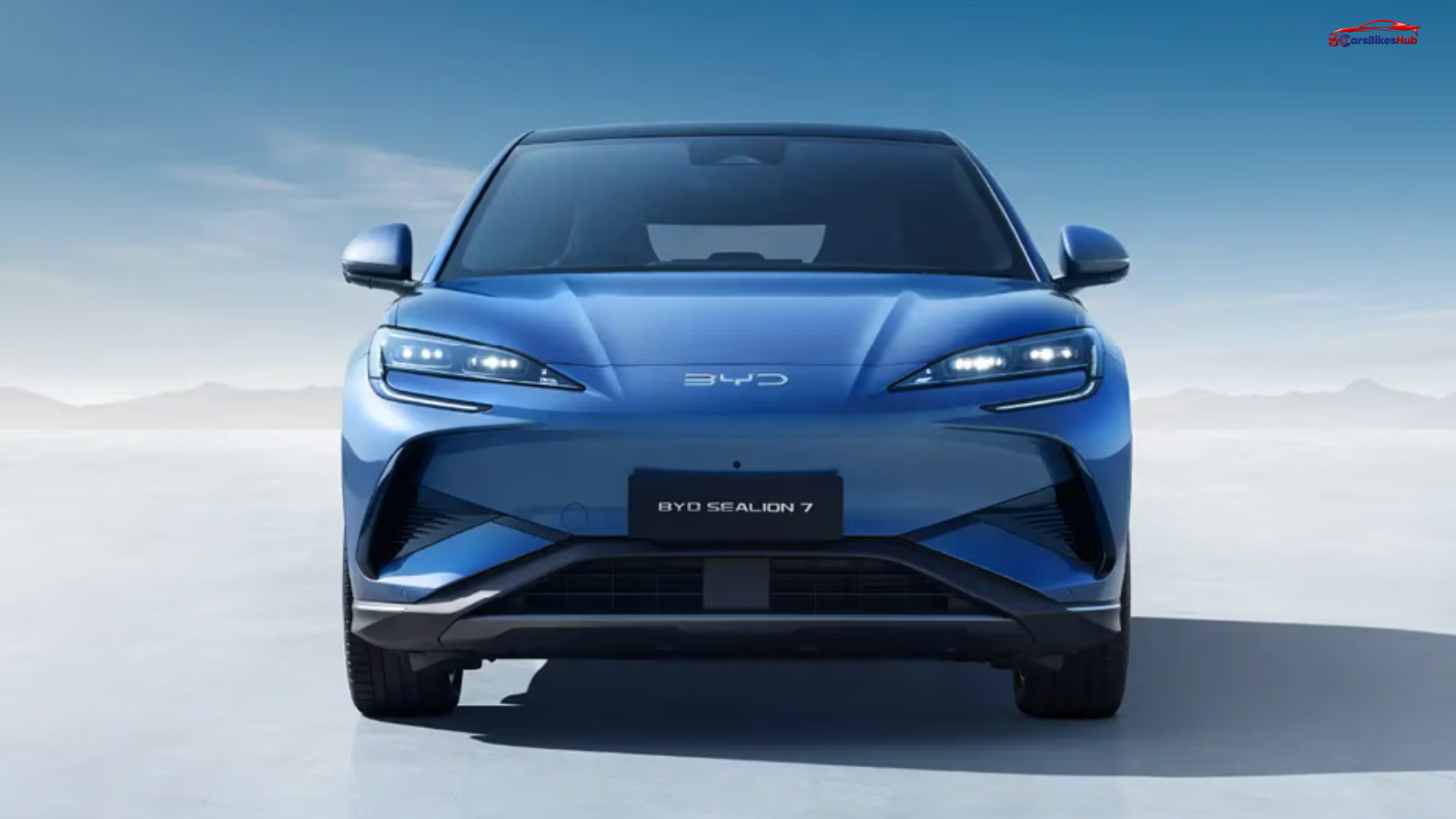
Beyond that, the Sealion 7 shares the Seal’s “Ocean X” design language, full-LED sharp headlamps, a closed-off front grille, and flush door handles that improve aerodynamics, but the styling is secondary to how it behaves in everyday driving: composed, quiet, and easy to place on the road despite its 4,830 mm length.
Interior & Cabin Experience
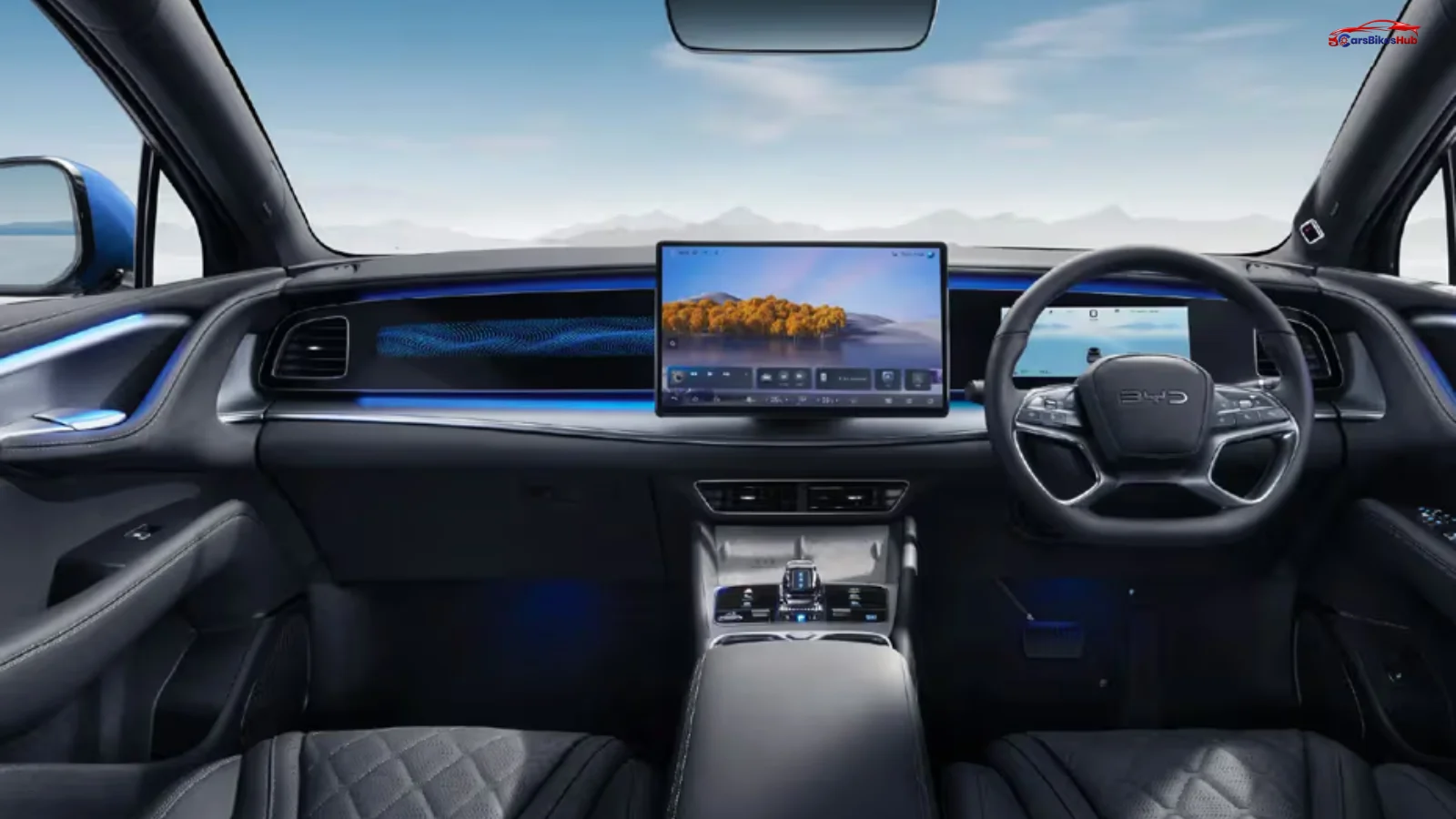
The cabin is all-black as standard (a lighter “Tahiti Blue” theme is available on the First Anniversary Edition), trimmed in quilted Nappa leather with soft vegan leather elsewhere. Despite the dark palette, the cabin doesn’t feel claustrophobic thanks to genuinely generous space; the flat floor and low-slung platform make ingress and egress easier than in a typical SUV, which matters for elderly passengers.
- Boot space: 500-520 litres, expanding to roughly 1,789 litres with the rear seats folded, plus a 58-litre front “frunk” for charging cables or a soft bag.
- Rear seat comfort: Genuinely spacious for two adults, adequate for three on shorter trips; the coupe roofline is the only real compromise for taller occupants.
- Cabin storage: Practical for family use, a deep centre console box, a dedicated wireless charging tray up front, twin cupholders for both rows, door pockets sized for large bottles, and rear USB-C charging ports for back-seat passengers.
- Technology: The signature feature is a 15.6-inch rotating touchscreen (portrait or landscape) that controls nearly everything, from ambient lighting to ADAS settings; a party trick, but also a genuine usability concession since several functions that would be physical buttons in rivals are touchscreen-only here.
Features & Technology
- The 360-degree camera and front/rear parking sensors, invaluable given the restricted rear visibility
- Ventilated front seats, a real comfort feature in Indian summers
- Dual-zone climate control and the wireless phone charger
- Adaptive cruise control on the highway
- The fixed panoramic glass roof (can’t be opened, so it’s more about the sense of space than function)
- The 12-speaker Dynaudio sound system, excellent, but not something that changes the ownership experience day to day
- The head-up display, useful, though many buyers adapt within weeks and stop actively noticing it
- The rotating 15.6-inch touchscreen, a genuine showroom draw, but most owners settle into landscape mode within the first week and never rotate it again
- Multiple ambient lighting themes, fun to show a passenger once, largely ignored afterwards
- The full ADAS suite’s more elaborate driving modes, most owners default to standard adaptive cruise on the highway and rarely touch the rest
Safety
This is genuinely one of the Sealion 7’s strongest arguments. It carries a 5-star Euro NCAP rating (awarded in 2025) and comes with 11 airbags as standard, more than most rivals offer even as an option.
The Level 2 ADAS suite includes adaptive cruise control, lane departure warning, blind-spot detection, and forward collision warning, layered over a strong passive safety structure thanks to the Cell-to-Body (CTB) design that integrates the battery pack into the vehicle’s structure for added rigidity. One frequently noted quirk: the driver attentiveness monitor can be overly sensitive, occasionally flagging alerts during normal driving, a minor annoyance rather than a dealbreaker.
Ownership Experience
- Warranty: Traction battery, 8 years/1,60,000 km. Motor and controller: 8 years/1,50,000 km. Standard vehicle warranty on other components typically runs 6 years/1,50,000 km, with the low-voltage battery separately covered. BYD’s current First Anniversary offer (bookings until April 30, 2026, limited to the first 1,100 customers) sweetens this further with a free 11 kW home charger and installation, two years of complimentary service, and an extended 8-year low-voltage battery warranty.
- Service network: This is the honest caveat. BYD’s India network has grown steadily, around 48 showrooms nationally, including six in the Delhi NCR region, but it remains meaningfully smaller than what Hyundai, Kia, or even BMW can offer through their established dealer networks. If you live outside a major metro, it’s worth checking drive times to your nearest BYD service centre before booking.
- Resale value: As a relatively new brand in India with under two years of sales history for this model, resale value data is still thin. Expect depreciation to track closer to other EVs (which generally depreciate faster than ICE cars) rather than to an established luxury badge, at least until BYD builds a longer track record here.
- Reliability: No major reported reliability issues at scale so far, though the ownership base (a little over 2,500 units) is still small enough that this should be treated as an early, cautiously positive signal rather than a settled verdict.
Specifications at a Glance
| Specification | Premium | Performance |
| Battery | 82.56 kWh LFP (Blade Battery) | 82.56 kWh LFP (Blade Battery) |
| Drivetrain | RWD, single motor | AWD, dual motor |
| Power / Torque | ~313 PS / 380 Nm | ~530 PS / 690 Nm |
| 0–100 km/h | 6.7 sec | 4.5 sec |
| Top speed | — | 215 km/h |
| Claimed range (NEDC) | Up to 567 km | Up to 562 km |
| DC fast charging | Up to 230 kW | Up to 230 kW |
| AC charging | 11 kW onboard | 11 kW onboard |
| Dimensions (L x W x H) | 4,830 x 1,875 x 1,670 mm | Same |
| Wheelbase | 2,930 mm | Same |
| Ground clearance | 170 mm | Same |
| Boot space | 500–520 L (1,789 L folded) + 58 L frunk | Same |
| Airbags | 11 | 11 |
| NCAP rating | 5-star (Euro NCAP, 2025) | Same |
Rivals: Who Should Buy What
| Rival | Approx. Ex-Showroom Price | How It Compares |
| Hyundai Ioniq 5 | ~₹3 lakh below the Sealion 7 Premium | The most affordable of this group; softer ride, only offered as RWD, gets a panoramic sunroof the Sealion 7 lacks |
| Kia EV6 | ~₹65.98 lakh (single top-spec AWD variant) | Roughly ₹11 lakh pricier than the Sealion 7 Performance; strong range and tech, but a steep, single-variant price tag as a fully imported unit |
| Volvo EX40 | ~₹7.2 lakh above the Sealion 7 Premium (RWD-to-RWD) | Comes with Volvo’s brand equity and safety pedigree, but fewer features per rupee than the Sealion 7 |
| BMW iX1 LWB | Roughly on par with the Sealion 7 Premium | The strongest badge-value argument in this list; slightly less rear-seat space and a smaller battery (66.4 kWh) but genuine German driving dynamics |
Who should buy what:
If badge value and resale confidence matter most to you, the BMW iX1 LWB or Volvo EX40 make more sense despite costing similar or more. If you want the most car, features, safety kit, and range per rupee spent, and you’re comfortable with a newer brand and a smaller service network, the Sealion 7 is hard to beat. The Ioniq 5 remains the value pick if you’re willing to trade some performance and AWD availability for a lower price.
What Actually Matters in Everyday Ownership?
Day to day, it’s the small things that win you over: the effortless mid-range acceleration that makes overtaking in traffic feel unhurried, the hushed cabin at highway speeds, and the simple convenience of plugging in at home overnight and waking up to a full charge. With kids in the back seat, the 11 airbags and 5-star safety rating aren’t just numbers on a spec sheet; they’re the kind of reassurance you actually feel. The ventilated seats and 360-degree camera earn their keep just as often, quietly making city driving and Indian summers more bearable.
Not everything on the brochure holds up the same way, though. The fixed panoramic roof looks lovely and opens up the cabin visually, but since it doesn’t actually open, its appeal fades fast. The rotating touchscreen is a great showroom trick, yet once you’re living with the car, it works no better than a regular fixed screen of the same size. And the top-speed figure, while fun to quote, means nothing on Indian roads, where you’ll rarely get anywhere close to it.
Should You Buy the BYD Sealion 7?
Buy it if: you want the most range, safety kit, and performance for your money in the ₹49-55 lakh EV SUV bracket, and you’re comfortable being an early adopter of a newer brand with a growing but smaller service footprint.
Skip it if: resale value certainty and an established luxury badge matter more to you than outright specification, or if you live somewhere without a nearby BYD service centre.
Better alternatives for: buyers prioritising ride comfort and interior ambience, look at the Hyundai Ioniq 5. Buyers prioritising brand pedigree and driving dynamics look at the BMW iX1 LWB or Volvo EX40.
Five Things to Know Before Buying the Sealion 7
- Check your nearest BYD service centre. Coverage is growing but still thinner than Hyundai or Kia’s network; confirm drive time from your home or office before booking.
- Install a home charger early. The complimentary 11 kW wallbox needs a dedicated electrical point; sort out the installation logistics with your housing society or building management ahead of delivery, not after.
- Test the rear visibility yourself. The coupe roofline restricts the rear windscreen view; spend time reversing and parallel parking on your test drive rather than assuming the camera will fully compensate.
- Compare insurance premiums before you commit. Premium electric SUVs, especially from newer brands, can carry higher comprehensive insurance costs than equivalent ICE SUVs; get a quote before finalising your budget.
- Decide whether you really need AWD. The Performance variant’s extra ₹5.5 lakh buys genuine speed and traction, but most buyers will find the Premium RWD covers daily needs just as well.
Final Verdict
The BYD Sealion 7 isn’t the safest badge to park in your driveway, but it is, on pure numbers, one of the strongest value propositions in the premium electric SUV segment. It combines genuine performance, class-leading safety credentials, and a battery chemistry built for Indian conditions, at a price that undercuts most direct rivals by several lakhs.
The trade-offs- a smaller service network, firmer ride, and unproven resale value are real, but for buyers who value specification and substance over badge prestige, the Sealion 7 earns its place on the shortlist. For buyers who need the reassurance of an established luxury network and predictable resale, the BMW iX1 or Volvo EX40 remain the safer, if pricier, choice.
If you can live with BYD’s smaller service network, the Sealion 7 is one of the most complete electric SUVs available under ₹55 lakh today.


FAQs
Is the BYD Sealion 7 worth buying in 2026?
Yes, for buyers who prioritise specification, safety, and range over brand badge value. It undercuts most rivals while matching or beating their feature lists.
What is the BYD Sealion 7's real-world range?
Expect roughly 450–500 km on the RWD Premium variant in mixed driving, and somewhat less on the AWD Performance variant, against a claimed NEDC figure of up to 567 km.
How much does it cost to charge the Sealion 7?
A full home charge costs approximately ₹580-750 at typical Indian electricity rates, working out to roughly ₹1.3-1.7 per km, significantly cheaper than running a petrol equivalent.
Is BYD reliable in India?
Early signs are positive, but the brand has a relatively short track record here (Sealion 7 sales crossed 2,500 units by early 2026), so long-term reliability data is still developing.
Does the Sealion 7 support fast charging?
Yes, up to 230 kW DC, capable of a 30-80% charge in around 18 minutes under ideal conditions, though actual India charging speeds will depend on the charger used.