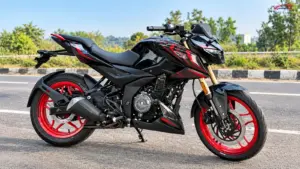























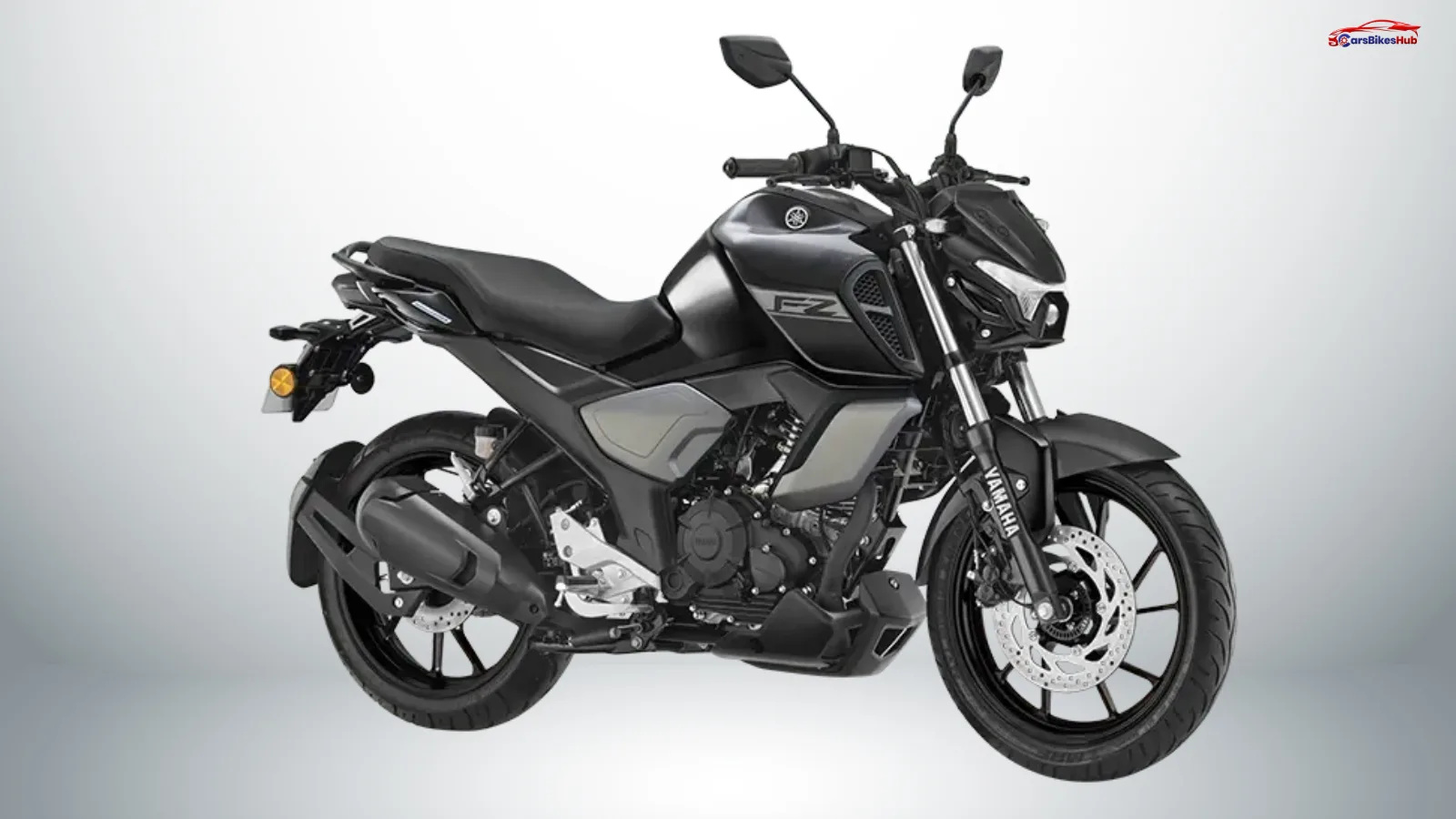
Yamaha has officially entered India’s growing flex-fuel motorcycle segment with the launch of the FZ Blue Flex. At first glance, it looks almost identical to the FZ Rave, but beneath the familiar styling is a motorcycle engineered to run on ethanol blends from E20 to E85, a first for Yamaha in India. Priced at ₹1,24,240 (ex-showroom, Delhi), it’s built on a platform you probably already know, with an engine that can drink fuel most other bikes simply can’t handle.
The real questions here aren’t about power or looks. They’re about where you’ll find E85 near you, what it does to your mileage, and whether it’s worth paying for that flexibility today.
Quick Overview
| Parameter | Details |
| Price (ex-showroom, Delhi) | ₹1,24,240 |
| Engine | 149cc, air-cooled, fuel-injected, single-cylinder |
| Power | 11.7 PS at 7,250 rpm |
| Torque | 12.8 Nm at 6,000 rpm |
| Gearbox | 5-speed |
| Fuel compatibility | E20 to E85 (any blend in between) |
| Fuel tank | 12 litres |
| Kerb weight | 139 kg |
| Ground clearance | 135mm |
| Colour | Metallic Black (single option) |
| Biggest highlight | First mainstream 150cc bike in India with E85 compatibility |
| Biggest drawback | E85 pumps are still scarce, and power drops slightly versus the standard FZ |
| Should you buy it? | Yes, if you ride in a city getting E85 stations soon and want to future-proof your purchase. Wait, if E85 isn’t reaching your city anytime soon. |
What Is the Yamaha FZ Blue Flex Fuel E85?
The FZ Blue Flex sits in the middle of Yamaha’s nine-model FZ lineup, built on the same platform as the FZ Rave that launched late last year. It borrows the Rave’s LED headlamp, fuel tank, faux air vents and single-piece seat, so if you’ve seen the regular FZ on the road, this one won’t stand out except for its badging.
The real change is under the surface. Yamaha has recalibrated the engine, revised the ECU mapping, and swapped in fuel system components that can handle ethanol content far beyond what a standard petrol motorcycle is built for. This makes it Yamaha’s answer to a question the Indian government has been pushing hard: can everyday two-wheelers run on much higher ethanol blends without any compromise in reliability?
Yamaha isn’t alone here. Hero MotoCorp introduced flex-fuel versions of the Splendor+ and HF Deluxe in June 2026, and Suzuki has offered the Gixxer SF 250 FFV for a while. As of its July 2026 launch, the FZ Blue Flex is the fourth E85-compatible two-wheeler on sale in India, and the first in the popular 150cc commuter-sport segment. Given how quickly new flex-fuel models are arriving, it’s worth treating this as a snapshot rather than a fixed number.
What Does E85 Actually Mean?
Petrol at Indian pumps today is mostly E20, meaning it’s blended with 20% ethanol and 80% petrol. Regular motorcycles, including the standard FZ, are built to run on this blend without issue.
E85 flips that ratio almost entirely. It’s a fuel made up of up to 85% ethanol and just 15% petrol. Ethanol itself is a renewable fuel, usually produced from sugarcane, maize or other crops, and burns cleaner than petrol. That’s the whole point of India’s ethanol push: less dependence on imported crude oil, lower emissions, and more demand for domestically grown feedstock.
A flex-fuel vehicle like the FZ Blue Flex is built with a smarter fuel system and an ECU that can sense the ethanol percentage in your tank and adjust the engine’s fuelling and ignition timing to match. That means you don’t have to think about what’s in your tank. You can run it on pure E20 petrol, on E85, or anything in between, and the bike adjusts automatically. No switch, no setting, no manual intervention needed.
The catch is that ethanol carries less energy per litre than petrol. Roughly 30% less. So an engine burning E85 has to use more fuel to produce the same output, which shows up as lower mileage. It’s not a flaw specific to Yamaha’s engineering. It’s basic chemistry, and every flex-fuel vehicle in the world deals with the same trade-off.
Price & Availability
The FZ Blue Flex costs ₹1,24,240 ex-showroom in Delhi, just ₹400 more than the standard FZ Rave at ₹1,23,840. That’s a negligible premium for the flex-fuel hardware, which is a smart move on Yamaha’s part. It removes price as an excuse not to buy the flex-fuel version.
On-road pricing will vary by state depending on RTO and insurance charges, so it’s worth checking with your local dealer before you commit.
For just ₹400 more than the standard FZ Rave, the Blue Flex is one of the few instances where adopting a newer technology doesn’t significantly increase the purchase price.
For now, the FZ Blue Flex is only available through Yamaha’s Blue Square dealerships, and only in six states and union territories: Delhi, Uttar Pradesh, Maharashtra, Karnataka, Telangana and Tamil Nadu. If you’re outside these regions, you may need to wait for a wider rollout or check with a dealer for special order options.
Engine & Performance
The FZ Blue Flex uses the same 149cc, air-cooled, fuel-injected single-cylinder engine found across the FZ range, but tuned specifically for ethanol tolerance. Output stands at 11.7 PS and 12.8 Nm against the standard FZ Rave’s 12.4 PS and 13.3 Nm. On paper, the output is slightly lower than the standard FZ Rave, but the difference is unlikely to be noticeable during everyday commuting.
That’s not a number that will bother most riders. The FZ has never been about outright performance. It’s built for a relaxed, refined riding experience in city traffic, with enough mid-range grunt to keep up on the highway without feeling stressed. The small power deficit is the price of ethanol tolerance, and in real-world riding through Indian traffic, you’re unlikely to notice it.
The 5-speed gearbox carries over unchanged, and the riding experience Yamaha is known for- smooth power delivery, comfortable ergonomics, an upright seating posture built for city commutes- remains intact.
Mileage & Running Costs
This is where buyers need to set realistic expectations. Running on E85 will drop your mileage compared to running on E20 or petrol, and the gap isn’t small. Based on real-world data from other flex-fuel two-wheelers in India, expect a mileage drop of roughly 20 to 35% when running on E85 compared to standard petrol.
Yamaha hasn’t published separate ARAI mileage figures for the FZ Blue Flex at the time of writing, so treat any specific kmpl number you see elsewhere as an estimate rather than a confirmed figure.
Here’s where it gets interesting for your wallet. E85 was launched in Delhi at ₹82.12 per litre, roughly ₹20 cheaper per litre than regular petrol. That price gap is meant to offset the mileage drop. If you’re doing the math, a bike that gives you 55 kmpl on petrol might drop to somewhere around 38 to 44 kmpl on E85, but every litre of that E85 costs noticeably less. In theory, your running cost per kilometre should land close to what you’d pay on regular petrol, sometimes slightly better, depending on local pricing and exactly how much ethanol is in your tank at any given time.
One thing worth knowing: E85 isn’t always a fixed 85% ethanol blend. The actual ratio can vary seasonally, dropping to around 70% ethanol in colder months. Your mileage and running costs will shift slightly along with it.
Is E85 Fuel Easily Available in India?
Honestly, not yet, and this is the single biggest factor that should influence your buying decision.
E85 was commercially launched in India on 5 June 2026, at an Indian Oil pump on Pusa Road in Delhi. At launch, only around 48 outlets across the country were dispensing it, concentrated in Delhi-NCR, Mumbai, Pune and Nagpur, with Bengaluru joining shortly after.
The government’s rollout plan targets 500 E85 pumps by December 2026 and roughly 5,000 pumps across major cities by the end of 2027. That’s a serious commitment, but it also means that if you’re buying the FZ Blue Flex today, you might be riding on E20 petrol for a while before E85 becomes something you can casually fill up on during a regular commute.
The good news is that this isn’t a downside unique to this bike. Every flex-fuel vehicle sold in India right now, from Hero’s commuters to Maruti’s Wagon R Flex Fuel, faces the same infrastructure gap. And unlike CNG or LPG, there’s no aftermarket conversion kit for E85. You either buy a factory-built flex-fuel vehicle or you don’t get access to it at all, which makes buying now a bet on how fast the infrastructure catches up in your city specifically.
If you live in or regularly ride through Delhi-NCR, Mumbai, Pune or Nagpur, that bet looks reasonable. If you’re in a smaller city, you may be running on E20 for the foreseeable future, which isn’t a problem since the bike handles that fuel just fine, but it does mean the E85 cost savings won’t kick in immediately.
Design & Features
Since the FZ Blue Flex borrows most of its parts from the FZ Rave, don’t expect anything visually new here.
- Full-LED projector headlamp with integrated position lamps
- LED tail lamp
- Telescopic front forks and rear monoshock for a comfortable, planted ride
- Single-channel ABS for reliable braking confidence
- Tubeless tyres
- Muscular fuel tank with aerodynamic extensions and faux air vents, for street-fighter styling
- Single-piece seat, comfortable for solo and pillion rides
- Metallic Black paint, the only colour offered at launch
There’s no new instrument cluster or connectivity feature specific to the flex-fuel version. Yamaha has focused entirely on what’s under the tank rather than what you see on top of it.
Safety
Braking duties are handled by disc brakes with single-channel ABS, which is standard across the FZ Rave-based lineup and works well for the kind of stop-and-go city riding this bike is built for. The chassis, telescopic fork and monoshock setup are unchanged from the standard FZ, so handling characteristics and rider confidence should feel identical to the FZ Rave you may have already tested.
One number worth flagging: ground clearance on the FZ Blue Flex drops to 135mm, down from 165mm on other FZ variants, confirmed in Yamaha’s official specifications. If you regularly ride over speed breakers, potholed roads or uneven terrain, this is worth factoring in, though it shouldn’t be a dealbreaker for typical city and highway use.
Who Should Buy the Yamaha FZ Blue Flex Fuel E85?
Buy it if:
- You live in or frequently ride through a city where E85 stations are already live or arriving soon (Delhi-NCR, Mumbai, Pune, Nagpur, Bengaluru).
- You want a future-ready motorcycle and don’t mind paying a negligible premium (₹400) over the standard FZ Rave for that flexibility.
- You already like the FZ Rave’s styling, ride quality and refinement, and simply want the added benefit of ethanol compatibility without changing anything else about the ownership experience.
- You care about reducing your carbon footprint and want to be an early adopter of India’s ethanol-blending push.
Skip it if:
- You live in a city with no E85 rollout plans in the near term. You’ll effectively be running the bike on E20 petrol anyway, which the standard FZ already handles.
- Outright power matters to you. The 0.7 PS and 0.5 Nm deficit versus the standard FZ, while small, is still a deficit.
- You ride mostly on uneven or rough roads where the reduced 135mm ground clearance could be a genuine practical issue.
- You’d rather wait for E85 infrastructure to mature before locking into a specific model, especially since more flex-fuel launches are expected through 2026 and 2027.
How Does It Compare to Its Rivals?
The FZ Blue Flex doesn’t have direct 150cc flex-fuel competition yet, so the closest comparison is with Hero’s flex-fuel commuters, even though they sit in a different displacement and price bracket.
| Yamaha FZ Blue Flex | Hero Splendor+ Flex Fuel | Hero HF Deluxe Flex Fuel | |
| Price (ex-showroom) | ₹1,24,240 | ₹82,710-82,810 | ₹72,792 |
| Engine | 149cc | 97.2cc | 97.2cc |
| Power (on E85) | 11.7 PS | ~8.57 PS | ~8.44 PS |
| Segment | 150cc commuter-sport | 100cc commuter | 100cc commuter |
The Hero pair are pure commuters built for maximum fuel economy and the lowest possible running cost, while the FZ Blue Flex is aimed at riders who want a more premium, sportier commuter experience alongside flex-fuel capability.
If your priority is the cheapest possible flex-fuel ownership, the Hero twins make more financial sense. If you want the FZ’s refinement, styling and slightly larger engine with the same ethanol flexibility, Yamaha’s offering is the only one in its class right now.
At the moment, the FZ Blue Flex effectively creates its own niche by combining flex-fuel technology with a 150cc commuter-sport motorcycle, whereas its closest flex-fuel rivals are more basic commuter bikes.
Final Verdict
The FZ Blue Flex isn’t trying to be a faster or flashier FZ. It’s Yamaha’s way of making sure its most popular commuter platform is ready for where India’s fuel policy is heading, without asking buyers to pay much for that readiness. At just ₹400 over the standard FZ Rave, there’s barely a financial argument against choosing the flex-fuel version if you’re buying an FZ anyway.
The real question isn’t whether the bike is good. It’s whether E85 will actually be available where you ride. If you’re in Delhi-NCR, Mumbai, Pune, Nagpur or Bengaluru, the infrastructure is already showing up, and this bike puts you ahead of that curve. If you’re elsewhere, you’re buying now for a benefit that arrives later, and there’s nothing wrong with that if you’re planning to keep the bike for the next 4 to 5 years.
Either way, you’re not compromising on the FZ experience to get there. That’s what makes this launch worth paying attention to.

FAQs
Can the Yamaha FZ Blue Flex run on normal petrol?
Yes. It's compatible with any blend from E20 up to E85, including the regular petrol sold at most Indian pumps today. The ECU adjusts automatically based on what's in the tank.
What is E85 fuel?
E85 is a fuel blend made of up to 85% ethanol and 15% petrol, designed specifically for flex-fuel vehicles with compatible engines and fuel systems.
Is E85 fuel available everywhere in India?
Not yet. As of its June 2026 launch, E85 was available at around 48 outlets, mainly in Delhi-NCR, Mumbai, Pune and Nagpur. The government has targeted 500 pumps by December 2026 and 5,000 by the end of 2027.
Does running on E85 damage the engine?
No, provided the vehicle is a genuine factory-built flex-fuel model like the FZ Blue Flex. Yamaha has upgraded the fuel lines, seals, fuel pump and ECU specifically to handle higher ethanol content safely.
Will the FZ Blue Flex give lower mileage than the standard FZ?
Only when running on higher ethanol blends. Mileage on E85 can drop by roughly 20 to 35% compared to petrol, since ethanol carries less energy per litre. Running on E20 should return mileage similar to the standard FZ.