






















The Honda Rebel 300 has finally arrived in India, bringing Honda’s low-slung bobber-style cruiser to a segment where the Royal Enfield Meteor 350 has been a familiar choice. Starting at ₹2.22 lakh ex-showroom, the Rebel 300 is available in two versions, with the E-Clutch variant asking ₹40,000 more.
But the interesting part isn’t just the price. It’s the combination of a compact 286cc engine, modern features, and Honda’s E-Clutch technology, and whether those differences are enough to make the Rebel 300 a better fit for you than the more established alternatives.
Honda Rebel 300 Price in India
| Variant | Ex-showroom Price |
| Rebel 300 Standard | ₹2.22 lakh* |
| Rebel 300 E-Clutch | ₹2.62 lakh* |
Price quoted for Bengaluru; final pricing may vary by location.
The key difference between the two variants is the E-Clutch system. So the decision really comes down to how much you value that one piece of technology, which we’ll get into in detail further down.
A few practical things to know before you head to a dealership. Honda is selling the Rebel 300 exclusively through its BigWing dealerships, not the regular Honda showrooms where you’d buy a Shine or an Activa. Bookings are open now for a token amount of ₹5,000, either through the HMSI website or directly at a BigWing outlet. Deliveries are expected to start from mid-October 2026, so if you book today, you’re looking at roughly a six-to-eight-week wait depending on your city and how the initial order pipeline fills up.
One more thing worth flagging: the ₹2.22 lakh and ₹2.62 lakh figures are ex-showroom Bengaluru prices. Ex-showroom pricing varies by state because of local taxes, so if you’re in Delhi, Mumbai, or anywhere else, expect the ex-showroom figure to shift slightly, and the on-road price (which adds RTO registration and insurance) to be meaningfully higher than the ex-showroom number. Don’t take the Bengaluru price as a nationwide on-road figure; check with your local dealer for the exact number in your city.
Honda Rebel 300: What Sets Its Design Apart?
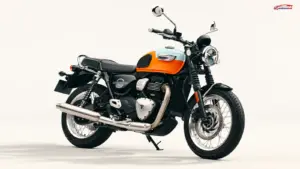
Honda Rebel 300 is Honda’s entry-level cruiser for India, built around a low, stripped-down, bobber-style look rather than the upright, faired styling you’d associate with Honda’s regular roadsters and adventure bikes.
The character of the bike is really the point here. It’s not trying to be a big, imposing cruiser; it’s compact, low-slung, and deliberately minimal. You get a teardrop-shaped metal fuel tank, an exposed frame and subframe instead of body panels covering everything up, short stubby fenders, and a lot of blacked-out hardware. The overall effect is closer to a factory-built bobber than a conventional showroom cruiser, which is exactly the space Honda is going after: riders who want something that looks hand-built without actually having to build it themselves.
It’s a relatively compact motorcycle too, which matters more than it might sound. This isn’t a bike you’ll feel intimidated managing at a signal or while reversing out of a tight parking spot, and that accessibility is central to what the Rebel 300 is trying to be.
Design and Everyday Practicality
The Rebel 300’s size and riding position matter just as much as its engine. Here’s what they mean for everyday use.
Seat height (690mm): At 690mm, the seat is quite low for a motorcycle of this type, which should make it easier for shorter riders to get their feet down at stops, a real confidence booster in traffic, especially for anyone stepping up from a smaller motorcycle for the first time.
Kerb weight: At 172 kg, the Rebel 300 is relatively manageable for a cruiser in this segment. That translates directly into how easy it feels to paddle around a parking lot, hold up at a red light, or manoeuvre in the kind of stop-start traffic most Indian riders deal with daily.
Ground clearance: Reported figures put this around 125mm, which is on the lower side, not surprising given the low-slung stance. This is worth keeping in mind if you regularly deal with speed breakers, uneven roads, or a driveway with a steep ramp; you’ll want to be a little more careful than you would on a taller adventure bike.
Riding position: The Rebel 300 uses forward-set footpegs and a wide, pulled-back handlebar, classic cruiser ergonomics. Your feet go forward, your back stays upright, and your arms reach out and up slightly to the bars. It’s a genuinely relaxed posture for city riding and short highway stretches, though how it holds up on longer three-to-four-hour rides will depend on your own build and riding style; that’s the kind of thing worth confirming with a proper test ride before you commit.
Fuel tank (11.2 litres, as reported): A reasonably sized tank for a bike of this size. Actual real-world range will depend on how the engine performs in everyday use, which is best judged with a proper road test rather than the spec sheet alone.
Honda Rebel 300 Engine and Performance
The Rebel 300 is powered by a 286cc, single-cylinder, liquid-cooled engine producing around 30hp and 27.5Nm of torque, paired with a 6-speed gearbox. It’s worth noting Honda hasn’t published a fully detailed India-spec power curve at launch, so treat these as the figures currently being reported rather than a final factory specification sheet.
The 286cc single-cylinder engine should offer enough flexibility for everyday city riding, while the 6-speed gearbox gives the rider more scope to keep the engine in its useful rev range on faster roads.
On the highway, this is where the smaller displacement compared to some rivals will show on paper; a 286cc single isn’t going to have the same low-end shove as a 350cc engine. How that translates into real-world overtaking and sustained-speed comfort is best left to a proper road test rather than the specification sheet.
What Is Honda E-Clutch and How Does It Work?
This is probably the single most important thing to understand before choosing between the two variants, and it’s also one of the most misunderstood.
The Rebel 300 E-Clutch still has a normal manual gearbox and a clutch lever on the handlebar. Nothing about the transmission itself changes. What E-Clutch adds is a system that can automatically operate the clutch for you during specific moments, starting from a stop and shifting gears, without you needing to pull the lever yourself.
So when you’re at a red light in first gear, you can simply twist the throttle and pull away without touching the clutch lever, and the bike won’t stall. When you want to shift up or down, you can just work the gear lever with your foot, and the system handles the clutch engagement and disengagement behind the scenes. It’s designed specifically to smooth out the parts of riding a manual bike that get tedious in heavy, stop-and-go traffic: constantly feathering the clutch, worrying about stalling, working the lever every few seconds.
Crucially, you’re not locked into using it. The clutch lever is still there on the handlebar, fully functional, so you can ride the bike exactly like a conventional manual motorcycle whenever you want, for spirited riding, for finer control on tricky surfaces, or simply out of habit.
What it does not do is turn the Rebel 300 into an automatic or a CVT-style scooter. You still choose your gears yourself using the gear lever; the system isn’t shifting for you or deciding what gear you should be in. Think of it less as “automatic” and more as “clutch-assist”; it takes over one specific, repetitive mechanical task, while leaving the actual riding decisions entirely with you.
Rebel 300 Standard vs E-Clutch
| Feature | Rebel 300 Standard | Rebel 300 E-Clutch |
| Price (ex-showroom, Bengaluru) | ₹2.22 lakh | ₹2.62 lakh |
| Engine | 286cc, single-cylinder, liquid-cooled | Same |
| Power/Torque | ~30hp / 27.5Nm | Same |
| Gearbox | 6-speed manual | 6-speed manual |
| Clutch operation | Manual, lever-operated | Manual lever retained + E-Clutch auto-assist |
| TFT + RoadSync | Yes | Yes |
| Navigation | Yes | Yes |
| HSTC | Yes | Yes |
| Dual-channel ABS | Yes | Yes |
| E-Clutch | No | Yes |
What does the ₹40,000 premium actually buy you?
Based on what Honda has confirmed so far, the mechanical package and equipment list are largely shared between the two variants; the real difference the money buys is the E-Clutch system itself. That’s not a criticism of the pricing; it just means the decision comes down entirely to how much that one feature is worth to you personally, rather than being wrapped up in a bunch of other equipment differences.
The E-Clutch version makes more sense for:
- Riders who spend a lot of time in heavy, stop-and-go city traffic
- Newer riders who want the flexibility of a proper manual bike without constantly working the clutch lever
- Anyone who wants the convenience of reduced clutch fatigue but isn’t ready to give up a conventional gearbox and rider control
The Standard version makes more sense for:
- Riders who genuinely enjoy operating the clutch themselves as part of the riding experience
- Buyers who want to keep the purchase price down and don’t see traffic-clutch-fatigue as a real problem for their commute
- Anyone who doesn’t see enough day-to-day value in automated clutch operation to justify the extra spend
Features That Actually Matter
TFT instrument cluster: The India-spec Rebel 300 gets a circular TFT display, replacing the LCD unit seen on international versions. Beyond looking modern, it’s what enables the connectivity features below.
Honda RoadSync: This is Honda’s smartphone connectivity system, pairing your phone to the TFT display over Bluetooth. It’s what puts call and message alerts, and navigation, onto the dash instead of leaving you glancing down at your phone mounted on the handlebar.
Turn-by-turn navigation: With RoadSync connected, the display can show turn-by-turn directions. For anyone who rides with a phone mount purely for Google Maps, this is a genuinely useful, safety-relevant feature — one less reason to glance away from the road.
Honda Selectable Torque Control (HSTC): The Rebel 300 also gets Honda Selectable Torque Control (HSTC), along with dual-channel ABS. This gives riders a layer of electronic assistance to help manage rear-wheel slip, particularly useful on wet or loose surfaces.
Dual-channel ABS: Both wheels get their own ABS sensor and control, which means more consistent, predictable braking at both ends rather than just the front wheel being protected. This matters most in sudden braking situations, particularly on wet or loose surfaces.
LED lighting: The bike also gets LED lighting, including a projector headlamp.
E-Clutch (optional): Covered in detail above, the standout feature that separates the two variants.
Honda Rebel 300 vs Royal Enfield Meteor 350
If you’ve got somewhere between ₹2 lakh and ₹2.6 lakh to spend on a cruiser-style motorcycle, the Meteor 350 is the bike most people will cross-shop against the Rebel 300. It’s been the default choice in this space for a few years now, and Honda has priced the Rebel to sit right alongside it.
| Feature | Honda Rebel 300 | Royal Enfield Meteor 350 |
| Price (ex-showroom) | ₹2.22 lakh – ₹2.62 lakh | ₹2.00 lakh – ₹2.21 lakh |
| Engine | 286cc, single-cylinder, liquid-cooled | 349cc, single-cylinder, air-oil-cooled |
| Power | 30 bhp | 20.2 bhp |
| Torque | 27.5 Nm | 27 Nm |
| Gearbox | 6-speed | 5-speed |
| Kerb Weight | 172 kg | 191 kg |
| Seat Height | 690mm | 765mm |
| ABS | Dual-channel | Dual-channel |
| Traction Control | HSTC | Not equipped |
| Key Technology | TFT + RoadSync navigation, optional E-Clutch | Tripper turn-by-turn navigation |
| Riding Character | Compact, light, liquid-cooled refinement | Larger-capacity, torquier low-end, classic air-cooled cruiser feel |
There isn’t a straightforward winner here; it genuinely depends on what you’re prioritising.
The Rebel 300 may appeal more to buyers who want:
- A lighter, more compact motorcycle that’s easier to manage at low speed and in traffic
- A liquid-cooled engine with a 6-speed gearbox
- The option of E-Clutch for reduced clutch fatigue
- A distinct, bobber-inspired look that stands apart from the classic Royal Enfield cruiser silhouette
- Honda’s dealer network and ownership experience, via BigWing
The Meteor 350 may appeal more to buyers who want:
- A larger 349cc engine and a more traditional cruiser-oriented character
- The established, well-tested Royal Enfield ownership ecosystem and accessory support
- A more traditional, relaxed cruiser riding character built up over several years in the market
- A lower starting price on the base variant
Both are legitimate choices; this isn’t a case of one bike being objectively better than the other, more a question of which set of trade-offs suits how and where you actually ride.
Is the Honda Rebel 300 Worth Buying?
Reasons to consider the Rebel 300
- The styling is genuinely distinct in this price bracket. If you want a bobber look rather than a classic cruiser silhouette, there hasn’t been much else at this price.
- The engine is refined, liquid-cooled, and paired with a 6-speed gearbox that gives it more flexibility than a 5-speed rival.s
- The TFT display with RoadSync and navigation is a meaningful daily-use upgrade over a basic LCD
- HSTC and dual-channel ABS add a layer of electronic safety not every rival in this segment offers
- The E-Clutch option gives you a genuine choice most rivals don’t offer at all
- Low seat height and light weight make it approachable, especially for newer riders or shorter riders.
- You get Honda’s ownership ecosystem and service network behind it
Reasons to think before buying
- It’s priced above the Meteor 350’s starting price, and the gap widens further if you go for the E-Clutch variant.
- The ₹40,000 E-Clutch premium is a real amount of money; it’s only worth paying if you’ll genuinely use and value the feature.
- The 286cc engine gives away some displacement, and with it some low-end grunt, to the 349cc Meteor.r
- It’s sold only through BigWing dealerships, which may mean fewer outlets to visit or service at compared to Royal Enfield’s wider network, depending on your city.
Nothing here is a dealbreaker on its own; it’s a case of weighing what matters most to you as a rider.
Final Verdict
Is the Honda Rebel 300 worth buying? Yes, for the right buyer. It’s not trying to out-muscle the Meteor 350 on displacement or outright torque, and it doesn’t need to; it’s carving out its own space with distinct styling, a more modern electronics package, and a genuinely different riding character built around a lighter, more compact platform. If what you want is a stylish, easy-to-manage cruiser with real 2026-era tech, it earns its place on the shortlist.
Is the E-Clutch version worth ₹40,000 extra? That depends entirely on how you ride, not on which variant is “better.” If you spend real time in heavy traffic and clutch fatigue is something you actually notice and dislike, the E-Clutch variant solves a real problem, and the extra spend is easy to justify. If your riding is mostly open roads, or you simply enjoy working a manual clutch, the Standard variant gives you the same core motorcycle, including the same engine, gearbox and main equipment, for ₹40,000 less, and you lose nothing you’d actually miss.
And the Meteor 350 hasn’t gone anywhere; it remains the right call for buyers who want more displacement, a more traditional cruiser feel, and Royal Enfield’s long-established ecosystem, often at a lower starting price. The Rebel 300 doesn’t replace it; it simply gives buyers in this segment a genuinely different option to choose from.


FAQs
What is the price of the Honda Rebel 300 in India?
The Rebel 300 Standard is priced at ₹2.22 lakh ex-showroom, and the E-Clutch variant at ₹2.62 lakh ex-showroom, with these figures based on Bengaluru pricing. Prices may vary slightly by city.
Has the Honda Rebel 300 launched in India?
Yes. Honda officially launched the Rebel 300 in India in August 2026, following its unveiling as part of a 10-product lineup reveal in July 2026. Bookings are open, and deliveries are scheduled to begin from mid-October 2026.
What engine does the Honda Rebel 300 use?
It uses a 286cc, single-cylinder, liquid-cooled engine producing around 30hp and 27.5Nm of torque, paired with a 6-speed gearbox.
What is Honda E-Clutch?
E-Clutch is a system that automatically operates the clutch during starts and gear changes, while keeping a fully functional manual gearbox and clutch lever. You can still shift gears and use the clutch manually whenever you want.
Is the Rebel 300 E-Clutch fully automatic?
No. It's still a manual motorcycle with a 6-speed gearbox; you choose your own gears. E-Clutch only automates the clutch operation itself, not gear selection.