


























Maruti Suzuki launched the facelifted Baleno in India on September 5, 2026, just ahead of the festive season. On paper, it looks like a routine mid-life update: a new face, some extra kit, a fresh engine. But two changes are big enough to actually shift how the Baleno fits into the segment: a brand-new engine and Level 2 ADAS, a first in this segment.
This isn’t a case of new badges and old substance, but it isn’t a ground-up redesign either. The core platform and cabin architecture are carried over, with length, width and wheelbase confirmed unchanged. What’s changed is mostly under the skin: a new engine and Level 2 ADAS, both of which significantly change what the Baleno offers in this segment, plus a handful of new comfort features.
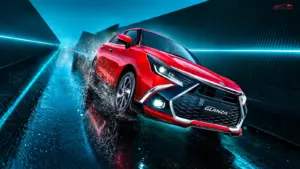
This article breaks down exactly what’s different, what buyers get for the extra money, and whether it’s worth choosing the facelift over the outgoing car or rivals like the Hyundai i20, Tata Altroz and Toyota Glanza.
2026 Maruti Baleno Facelift Price
Maruti has confirmed an ex-showroom starting price of Rs 6.10 lakh for the base Sigma petrol-manual variant, pitched as an introductory festive offer.
The facelift is now confirmed to span five broad trims: Sigma, Delta, Zeta, Alpha, and a new range-topping Alpha (O), which is the only variant to get the Level 2 ADAS suite (more on that below). At the time of writing, Maruti hadn’t yet released the full variant-wise price list for the remaining trims, so treat any mid-range or top-end figures you see elsewhere as provisional until the official breakup is out; we’ll update this once it is.
Compared with the outgoing Baleno’s base price, the new Sigma variant is only about Rs 20,000 more, which is a reasonable ask given the new engine and safety hardware added.
What’s New on the 2026 Baleno Facelift?
Exterior design changes
Almost all the visual changes sit at the front. The grille has grown larger and now houses the radar module needed for the ADAS system; the Suzuki badge has moved from the grille to just above it, and there’s a new bumper and redesigned LED fog lamps to go with it.
A chrome garnish on the front fenders and a shark-fin antenna are also new touches. Everything else- the LED headlights, the three-block DRL signature, the 16-inch dual-tone alloy wheels, and the taillights- is unchanged. In short, you’d need to look closely to spot this as a facelift from the side or rear.
Interior and cabin changes
The dashboard layout, the 9-inch touchscreen, the analogue instrument cluster with a colour MID, the flat-bottom steering wheel and the physical climate control buttons are all carried over. Maruti hasn’t touched the fundamental cabin design, which means the practicality and layout buyers already know from the current Baleno remain the same.
New features
The genuine additions are a wireless phone charger with active cooling, a Clarion-branded sound system, and ventilated front seats, the last being a segment-first for this class of hatchback. A tyre pressure monitoring system (TPMS) is also new.
For everyday use, ventilated seats matter more in India’s climate than they might elsewhere, and the cooled wireless charger addresses a common real-world complaint about phones overheating while charging on a dashboard pad. A sunroof and a rear centre armrest are still missing, which will disappoint buyers cross-shopping the i20 or Altroz.
Safety and ADAS
Six airbags are standard, including on the base Sigma trim, along with ABS with EBD, hill-hold assist (ESP) and a rear window defogger, while features such as the 360-degree camera are available on higher variants. The headline addition is Level 2 ADAS, but it’s worth being precise about where it sits: it’s exclusive to a new range-topping Alpha (O) variant, not offered across the line-up.
New engine/powertrain
The old 90hp, 113Nm 1.2-litre four-cylinder K12N engine has been dropped in favour of a new Z12E 1.2-litre three-cylinder naturally aspirated unit, the same engine family used in the Swift and Dzire, producing 83hp and 112Nm. Maruti claims this unit has been tuned for better low-end torque in the Baleno specifically, though independent figures to verify that claim aren’t out yet.
Transmission options
The petrol engine is available with a 5-speed manual or 5-speed AMT, while the CNG version gets a 5-speed manual only. Peak outputs in CNG mode are 70hp and 102Nm.
New 1.2-Litre Engine: What’s Changed?
The switch from a four-cylinder to a three-cylinder engine is the single biggest mechanical change in this update. Peak power actually drops slightly, from 90hp to 83hp, and peak torque is marginally lower too, 112 Nm versus 113Nm. On paper, that reads like a downgrade. But Maruti’s claim is about how that torque is delivered; a three-cylinder engine can be tuned to bring peak torque in earlier in the rev range, which would make it feel more responsive in city driving even if the peak numbers are lower.
What this means for a buyer in practice: Maruti’s own claim is that this specific engine has been tuned for better low-end torque in the Baleno, which would suit stop-go city driving even though the peak figures haven’t gone up. Whether that translates into a noticeably better city-driving experience, and how it compares to the outgoing four-cylinder unit for refinement at idle, will need to be judged in a real-world test drive rather than assumed from the spec sheet. Fuel efficiency does show a real improvement on paper, with Maruti claiming 23.80kmpl for the manual and 24.77kmpl for the AMT, and 33.61km/kg for the CNG version, all figures better than the outgoing car’s ARAI ratings.
Level 2 ADAS: What Does It Actually Do?
Level 2 ADAS is a big deal in this segment because none of the Baleno’s direct rivals, the i20, Altroz or Glanza, currently offer it. The suite reportedly includes adaptive cruise control, lane-keep assist, automatic emergency braking, and high-beam assist.
It’s important to be clear about what this actually is: these are driver-assistance features, not self-driving. Adaptive cruise control maintains a set following distance from the car ahead and adjusts speed accordingly; lane-keep assist and lane departure warning help the car stay in its lane or alert the driver if it drifts; forward collision warning and advanced emergency braking can flag or brake for an imminent collision the driver hasn’t reacted to. All of these still require the driver to stay attentive and in control; none of them let you take your hands off the wheel or stop paying attention to the road.
Availability is confirmed and worth flagging clearly: the ADAS suite is exclusive to the new top-spec Alpha (O) variant. It isn’t offered on the Sigma, Delta, Zeta or even the regular Alpha trim, so buyers who specifically want this feature will need to budget for the range-topping variant.
What Has NOT Changed?
This is worth dwelling on, because it tells you how far this update actually goes:
- Platform, length, width and wheelbase: The Baleno retains its familiar footprint; length, width and the 2,520mm wheelbase are confirmed unchanged from the outgoing model, so rear-seat legroom should be unaffected. Maruti hadn’t published an updated height figure at the time of writing; some listings suggest a minor change, but this isn’t independently confirmed yet, so we’re not stating a number here.
- Boot space and practicality: No changes have been reported to the 318-litre boot capacity or the 60:40 split-folding rear seat.
- Peak power ceiling: Despite the new engine, maximum power output has actually gone down slightly, not up.
- Missing comfort features: No sunroof, no rear centre armrest, both still absent, and both still offered by some rivals.
- Infotainment hardware: The 9-inch touchscreen size is unchanged; this is a software and feature carryover, not a new unit.
2026 Baleno Facelift vs Previous Baleno
| Aspect | Outgoing Baleno | 2026 Baleno Facelift |
| Starting price | ~Rs 5.99–6.35 lakh (last known ex-showroom) | Rs 6.10 lakh* |
| Engine | 1.2L, 4-cylinder K12N, petrol | 1.2L, 3-cylinder Z12E, petrol |
| Power/torque | 90hp / 113Nm | 83hp / 112Nm |
| CNG power/torque | ~77hp / ~98.5Nm | 70hp / 102Nm |
| Transmission | 5-speed MT / AMT (CVT on some trims historically) | 5-speed MT / 5-speed AMT |
| Trim structure | Sigma, Delta, Zeta, Alpha | Sigma, Delta, Zeta, Alpha, Alpha (O) |
| ADAS | Not offered | Level 2 ADAS, exclusive to Alpha (O) (adaptive cruise, lane-keep assist, AEB) |
| Key new features | — | Ventilated front seats (Alpha and up), cooled wireless charger (Zeta and up), TPMS (Delta and up), Clarion audio (Alpha and up) |
| Claimed fuel efficiency | Lower (exact figure varies by trim/year) | 23.80kmpl (MT) / 24.77kmpl (AMT) / 33.61km/kg (CNG) |
| Length, width, wheelbase & boot | 3,990mm x 1,745mm; 2,520mm wheelbase; 318-litre boot | Length, width and wheelbase confirmed unchanged; boot capacity reported as retained at 318 litres, pending official confirmation |
Note: Rs 6.10 lakh is the confirmed introductory ex-showroom price for the Sigma petrol-manual variant. Maruti hadn’t released the full variant-wise price list at the time of writing; check the latest NEXA price list for Delta, Zeta, Alpha and Alpha (O) pricing.
Baleno vs Hyundai i20 vs Tata Altroz vs Toyota Glanza
Powertrain: The Baleno’s move to a smaller-output three-cylinder engine narrows its power advantage over some rivals. The i20 offers a turbo-petrol option with a DCT for buyers who want stronger performance, while the Altroz offers both naturally aspirated and turbo-petrol three-cylinder engines. If outright performance matters most to you, it’s worth cross-checking the i20’s turbo variant or Altroz’s turbo-petrol before deciding purely on the Baleno’s efficiency numbers.
Features: This is where the Baleno pulls ahead this year. Ventilated seats and Level 2 ADAS are not available on the i20, Altroz or Glanza at all, making the Baleno the only car in this group with either feature.
Safety technology: Level 2 ADAS is the Baleno’s standout advantage here; none of its rivals currently match it. That said, all four cars typically offer six airbags on top trims, so basic crash-safety hardware parity remains close; ADAS is an assistance layer on top of that, not a replacement for it.
Space/practicality: The Altroz and Glanza have historically offered more boot space than the Baleno (reported around 340 litres and 339 litres respectively, versus the Baleno’s 318 litres), while the i20 has the longest wheelbase of the group. Buyers prioritising outright cabin and boot room may find the Baleno slightly behind on paper, though real-world usability differences are often marginal.
Pricing: Current listed ranges put the Altroz starting from around Rs 6.00 lakh, the i20 also from around Rs 6.00 lakh, and the Toyota Glanza from around Rs 6.73 lakh, broadly overlapping with the Baleno’s Rs 6.10–6.70 lakh starting point. At the top end, the i20 stretches higher (up to roughly Rs 11.59 lakh) than the Baleno’s roughly Rs 9.92 lakh, reflecting its more premium positioning in top trims.
Overall buyer appeal: The Baleno’s case this year rests almost entirely on being the only car in the group with Level 2 ADAS and ventilated seats. Buyers who don’t specifically value those two features may find the segment more evenly matched, with the choice coming down to boot space (Altroz/Glanza), turbo-petrol performance (i20/Altroz), or brand and dealer network preference.
Is the 2026 Maruti Baleno Facelift Worth Buying?
Who should consider it: Buyers who specifically want driver-assistance features like adaptive cruise control and lane-keep assist, or who value ventilated seats for Indian summers, get something genuinely unavailable elsewhere in this segment right now. It also makes sense for existing Baleno owners or Maruti loyalists who want an efficiency bump without switching brands.
Who may be better served by alternatives: Buyers chasing outright power or a punchier drive may prefer the i20 or Altroz’s turbo-petrol options, since the Baleno’s peak output has actually gone down slightly with this update. Those who need maximum boot space might lean toward the Altroz or Glanza instead.
Do the new features justify choosing the facelift over the outgoing car? If you can still find the outgoing Baleno at a discount, that’s a legitimate trade-off to weigh; you’d save money but miss out on ADAS, ventilated seats, TPMS and the efficiency gains. For most buyers paying close to list price either way, the roughly Rs 20,000 premium for the facelift’s added hardware looks like reasonable value.
Should buyers consider a higher variant? Yes, specifically if ADAS matters to you, it’s confirmed as exclusive to the new range-topping Alpha (O) trim, so there’s no way to get adaptive cruise control, lane-keep assist or automatic emergency braking on any lower variant. Buyers who want ventilated seats will also need at least the Alpha trim, since that feature isn’t offered lower down the range either.
Final Verdict
The 2026 Maruti Baleno facelift is not a transformative redesign; the platform, dimensions, boot space and cabin architecture are all carried over from the outgoing car. What it delivers instead is a targeted set of upgrades: a new three-cylinder engine that trades a small amount of peak power for better claimed efficiency, and more significantly, the segment’s first Level 2 ADAS system along with ventilated seats.
For buyers who specifically want those two features, this update makes the Baleno the clear pick among its direct rivals. For buyers focused on boot space, turbo-petrol performance, or outright cabin size, the segment remains competitive enough that the Altroz, i20, or Glanza are still worth a look before signing on the dotted line.





FAQs
What is the starting price of the 2026 Maruti Baleno facelift?
Maruti has launched the 2026 Baleno facelift at an introductory ex-showroom price of Rs 6.10 lakh for the Sigma petrol-manual variant. Variant-wise pricing for the rest of the range should be checked against the latest NEXA price list, as Maruti hadn't published the complete breakup at the time of writing.
Does the 2026 Baleno facelift get a more powerful engine?
No. The new 1.2-litre, 3-cylinder Z12E engine actually produces slightly less peak power (83hp) than the outgoing 4-cylinder engine (90hp), though Maruti claims improved low-end torque delivery and better fuel efficiency.
What does Level 2 ADAS on the Baleno actually do, and which variant gets it?
It includes features like adaptive cruise control, lane-keep assist, lane departure warning, and automatic emergency braking. These assist the driver but don't replace them; the driver must stay attentive at all times. It's confirmed exclusive to the new range-topping Alpha (O) trim.
Has the Baleno's size changed with this facelift?
Length, width and the 2,520mm wheelbase are confirmed unchanged. An official updated boot space figure hadn't been published at the time of writing.
Does any rival of the Baleno offer ADAS or ventilated seats?
No. As of this launch, neither the Hyundai i20, Tata Altroz nor Toyota Glanza offers Level 2 ADAS or ventilated seats, making the Baleno the only car in this group with either feature.