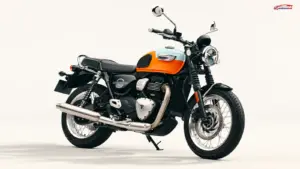










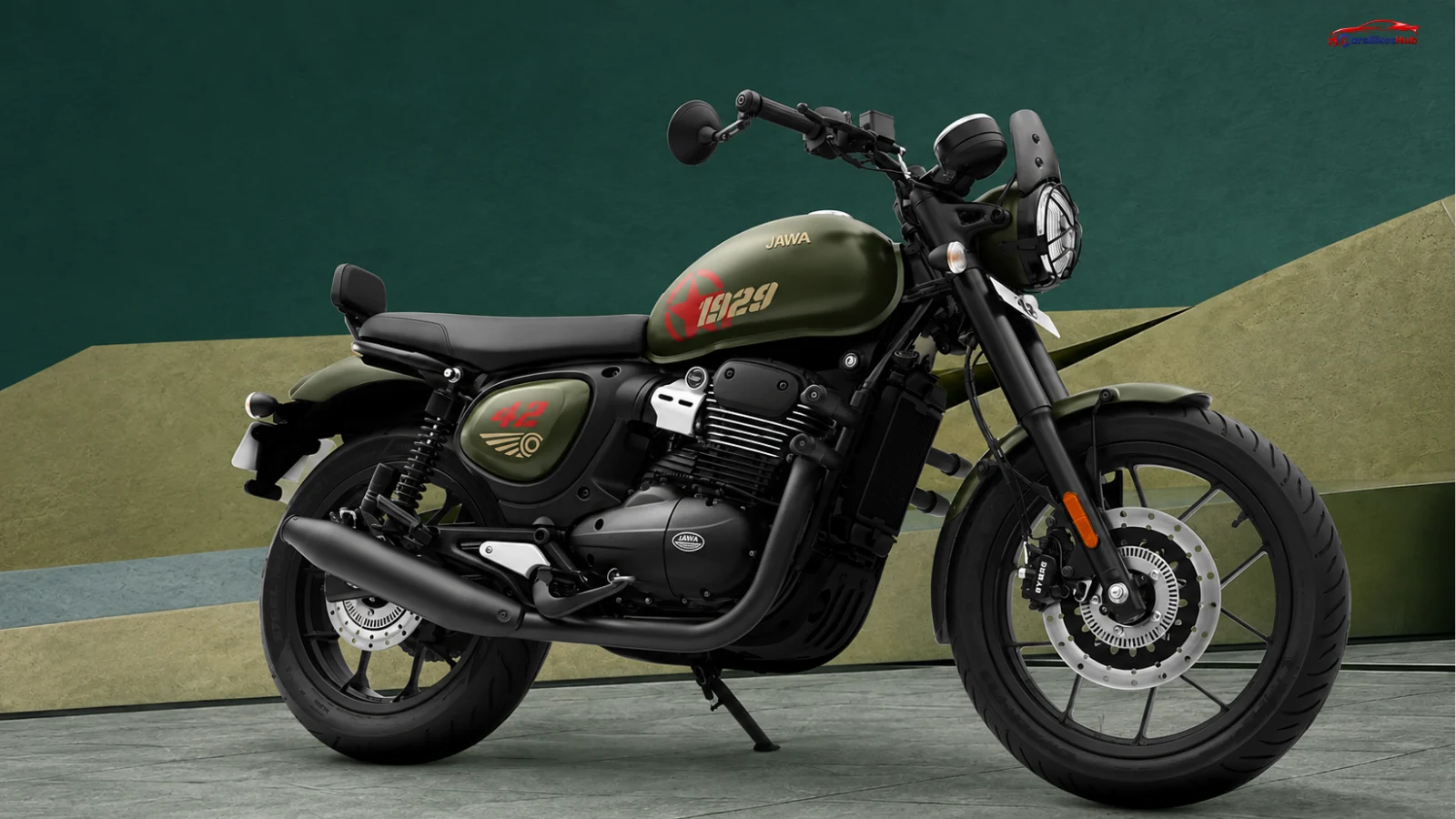
Jawa has just given the 42 its biggest update since the motorcycle launched back in 2018. The new Jawa 42 All Stars isn’t a fresh model in the strict sense; the engine, the frame layout and the core silhouette all carry over, but Classic Legends says it has made more than 60 changes to the bike, spanning design, chassis and ergonomics. That’s a big number for a motorcycle that, on paper, still looks like a 42 with new colours.
The obvious question for anyone shopping in this price bracket is whether those 60-odd tweaks add up to a motorcycle that rides, handles and feels meaningfully different, or whether this is really a styling and equipment update wearing a bigger number for marketing effect.
This article works through what has actually changed, what hasn’t, and whether the All Stars makes sense against the standard 42 and against established rivals like the Royal Enfield Hunter 350, Classic 350 and Honda CB350.
Jawa 42 All Stars Price and What You Get
The Jawa 42 All Stars is priced from around ₹1.85 lakh to ₹1.90 lakh (ex-showroom, Delhi), depending on the colour. Ivory is the most affordable option; Moss Grey, Battle Green, and Nebula Blue sit in the middle, and Black is at the top of the range. Exact pricing can vary by location, so buyers should confirm the on-road price with a Jawa dealership before booking.
The All Stars range is offered in five colour options: Ivory, Moss Grey, Battle Green, Nebula Blue and Black, grouped into these three price tiers. Jawa continues to sell a non-All Stars version of the 42 alongside this, in Black and Ivory, at a lower starting price, which is worth knowing if the extra styling and hardware of the All Stars edition isn’t a priority for you.
Bookings for the Jawa 42 All Stars are open at dealerships now, and deliveries are scheduled to begin on 14 September, timed for the festive season. This launch also completes Jawa’s three-bike All Stars line-up, following the 42 FJ All Stars (from around ₹2.02 lakh) and the 42 Bobber All Stars (from around ₹2.09 lakh) earlier this year.
What Has Changed on the Jawa 42 All Stars?
This is where the “60+ enhancements” claim needs unpacking, because most of those changes cluster around a handful of genuinely noticeable areas rather than being spread evenly across the motorcycle.
Design and stance. The most visible update is at the back. Jawa has reworked the rear section with a wider mudguard and fitted a considerably fatter 150/70-17 rear tyre, up from the narrower unit on the standard bike. At the front, the tyre grows to a 100/90-18 section. Combined with redesigned side panels, revised footpegs and a more compact, upswept twin-exhaust layout, the bike gets a visibly broader, more muscular stance than the regular 42. Jawa also says the revised exhaust improves the bike’s water-wading capability, which could be useful during monsoon riding.
Wheels and tyres. The All Stars switches to a new alloy-wheel design as standard, paired with tubeless tyres on both ends. This matters in daily use: tubeless tyres are considerably easier and faster to repair after a puncture than the wire-spoke, tube-type wheels that come on cheaper 42 variants.
Chassis and swingarm. Jawa says it has revised the frame and swingarm stiffness specifically to improve handling and control. This is a genuine engineering change rather than a cosmetic one, though Jawa hasn’t published independent stiffness figures, so how much of a difference this makes on the road is something only a proper test ride will confirm.
Seat and ergonomics. The bench-style seat, a signature 42 element, has been redesigned with extra cushioning while keeping its flat, retro profile. Seat height is around 795mm, and the company says footpeg placement has also been revised as part of the ergonomics work.
Suspension and brakes. The basic suspension hardware remains familiar, with 35mm telescopic forks at the front and gas-filled twin shocks with adjustable preload at the rear. Braking duties continue with a 280mm front disc and 240mm rear disc, with dual-channel ABS as standard across the range.
Taken together, the real substance of this update sits in three places: the wider rear-biased tyre and tubeless-alloy wheel package, the reworked rear-end design, and the frame/swingarm stiffness changes. The seat, exhaust,t and panel updates are meaningful quality-of-life and styling improvements, but they don’t fundamentally change what kind of motorcycle the 42 is.
Engine and Performance: What Has Not Changed
If you were hoping the All Stars badge meant a more powerful engine, it doesn’t. The motorcycle continues with Jawa’s 294.72cc, single-cylinder, liquid-cooled, DOHC engine, producing around 27.19PS at 7,950rpm and 26.3Nm of torque at 6,000rpm, mated to a six-speed gearbox with electronic fuel injection.
This is an important thing for buyers to understand clearly: despite the “60+ enhancements” framing, the All Stars is not a mechanically new motorcycle. Jawa has concentrated its update budget on styling, tyres, wheels, the rear section and chassis stiffness, not on the powertrain. If outright performance or a bump in power was the reason you were waiting for an update, this isn’t it. What you’re paying the premium for, relative to the base 42, is largely how the bike looks, how it’s shod, and (in theory) how it handles — not how hard it accelerates.
Which Changes Will Riders Actually Notice?
Not every one of those 60-plus tweaks will register with a rider on a day-to-day basis. A few, though, plausibly will:
- The wider rear tyre and tubeless setup is likely to be one of the more noticeable changes in daily use; better visual stance aside, tubeless tyres are a genuine practical upgrade for anyone who’s dealt with a tube puncture on a retro-style motorcycle before.
- Frame and swingarm stiffness revisions, if effective, could translate into more planted, predictable handling through corners and less flex under hard braking or over broken roads, though this is a claim from Jawa rather than something independently verified yet.
- The redesigned seat may improve long-ride comfort, particularly for taller riders or on extended weekend trips, though seat comfort is subjective and best judged on a test ride.
- The upswept exhaust’s water-wading benefit is a small but real practical plus during the monsoon months, relevant to city commuters more than highway tourers.
The basic performance character should remain familiar because the engine and gearbox carry over unchanged, though the wider tyres, chassis tweaks and slightly revised weight could still have some effect on how the bike feels through corners or under acceleration. Riders expecting a transformed riding experience purely because of the “All Stars” badge should recalibrate that expectation; this is an evolution of the 42’s usability and presence, not a reinvention of how it rides.
Jawa 42 All Stars vs Standard Jawa 42
Is the All Stars meaningfully different from the regular 42, or mainly a more thoroughly dressed-up version of the same motorcycle? The honest answer sits somewhere in between.
The All Stars commands a relatively modest premium over the standard 42, depending on the colour and version being compared. For that money, you get alloy wheels and tubeless tyres as standard (versus spoke wheels on cheaper standard variants), a wider rear tyre, the reworked rear-end styling, the revised seat, and the claimed chassis stiffness improvements. The engine, braking hardware and basic suspension setup remain largely unchanged across both bikes, so the difference is mostly in specification and presence rather than mechanicals.
Jawa 42 All Stars vs Its Rivals
The Jawa 42 All Stars sits in a price band, roughly ₹1.80–1.90 lakh ex-showroom, that puts it in direct contention with some of the best-known names in the Indian retro-motorcycle segment.
The Royal Enfield Hunter 350 is priced lower, from around ₹1.51 lakh to ₹1.71 lakh ex-showroom, making it noticeably cheaper than even the base All Stars. It uses a 349cc single-cylinder engine putting out about 20.2bhp and 27Nm, so it trails the Jawa on outright power despite the larger displacement, and it’s a smaller, more compact roadster rather than a classic-styled cruiser. For buyers prioritising price and agility over outright presence, the Hunter remains hard to ignore.
The Royal Enfield Classic 350 overlaps closely with the All Stars on price, currently running from about ₹1.87 lakh to ₹2.23 lakh ex-showroom across its many trims. It also brings Royal Enfield’s much larger dealer and service footprint, which can matter to buyers who prioritise easier access to service and parts. The Jawa counters with noticeably higher claimed power output and a sportier, more modern-classic design language rather than the Classic’s vintage silhouette.
The Honda CB350 sits a notch higher, priced from around ₹1.97 lakh to ₹2.00 lakh ex-showroom. Its 348.66cc engine produces about 20.7bhp and a healthy 29.4Nm of torque, and Honda’s reputation for refinement and its established service network are a real draw for buyers who value long-term reliability over outright character. Against the CB350, the Jawa is meaningfully cheaper and more powerful on paper, though Honda’s build quality and dealer service reputation are considerations the Jawa can’t simply out-spec.
None of these rivals has a direct 60-point “All Stars” style update to compare against, so the practical differentiator for the Jawa is less about outright accessories and more about whether its styling, power figures,s and chassis changes are enough to pull buyers away from more established badges.
Who Should Consider the Jawa 42 All Stars?
The All Stars makes the most sense for riders who already liked the standard 42’s design and character but wanted a more complete package, alloy wheels, tubeless tyres, a wider rear tyre and sharper styling, without stepping up to the pricier 42 FJ or 42 Bobber. It suits city commuters who want the convenience of tubeless tyres, weekend riders who care about road presence and styling, and buyers who prioritise a distinctive look over outright brand pedigree. If you’re cross-shopping the Hunter 350 and want more visual road presence with claimed extra power for similar money, the All Stars is a reasonable case.
Who Should Look at the Alternatives?
If budget is the primary concern, the Hunter 350 is meaningfully cheaper and remains a capable, agile option. If dealer network reach, resale value and long-standing brand trust matter more than outright specifications, the Classic 350’s scale advantage is hard for Jawa to match today. And if refinement, long-term reliability reputation and Honda’s after-sales record are your priorities over outright power figures, the CB350 is worth a closer look, even at its higher price.
Final Verdict
The Jawa 42 All Stars is a genuine, if incremental, step forward, not the wholesale reinvention that “60+ enhancements” might suggest at first glance. For a new buyer already sold on the 42 platform, the All Stars offers a more complete specification without moving far beyond the standard bike’s price territory. Against the segment’s established names, it holds its own on power and price, particularly against the Classic 350, but it still has to prove itself on long-term reliability and service experience in a market where Royal Enfield and Honda have a considerable head start.
For riders who value distinctive styling and a sharper on-paper spec sheet over brand history, the Jawa 42 All Stars is worth serious consideration. For those who prioritise dealer reach and a longer proven track record, the established rivals still have a case.




FAQs
What is the price of the Jawa 42 All Stars?
The Jawa 42 All Stars is priced from around ₹1.85 lakh to ₹1.90 lakh (ex-showroom, Delhi), depending on the colour. Ivory is the most affordable, and Black sits at the top of the range.
Is the engine different on the Jawa 42 All Stars?
No. It continues with Jawa's 294.72cc, single-cylinder, liquid-cooled, DOHC engine, producing around 27.19PS and 26.3Nm, paired with a six-speed gearbox, identical to the standard 42's powertrain.
What are the real differences between the Jawa 42 All Stars and the standard Jawa 42?
The All Stars gets alloy wheels and tubeless tyres as standard, a wider 150/70-17 rear tyre, a reworked rear section and mudguard, a redesigned seat, and claimed frame/swingarm stiffness improvements. The engine, brakes and basic suspension setup remain largely unchanged.
How does the Jawa 42 All Stars compare with the Royal Enfield Classic 350?
The two overlap closely on price. The Jawa claims higher power output and a sportier design language, while the Classic 350 brings a much larger Royal Enfield dealer and service network.
When do deliveries of the Jawa 42 All Stars begin?
Bookings are open now, with deliveries scheduled to start on 14 September, timed for the festive season.