



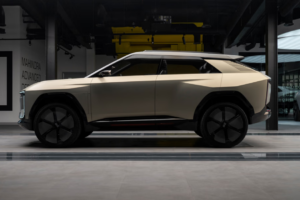








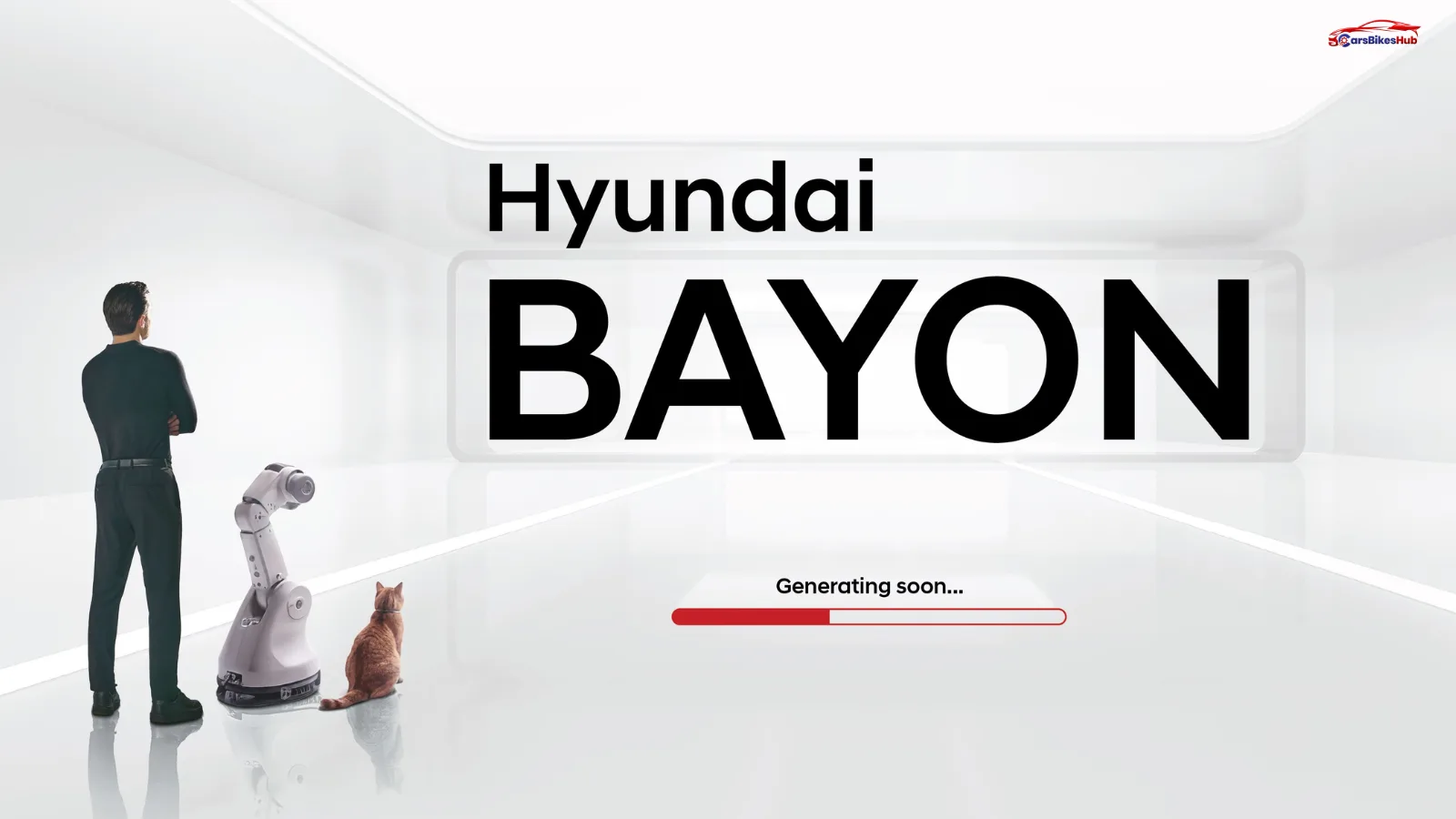
Hyundai Motor India has confirmed, through an official reveal campaign, that its upcoming SUV will be called Bayon. The name is drawn from Bayonne, a city in the French Basque Country, and Hyundai has framed it around a “new approach to intelligent mobility,” with the campaign built around the line “Intelligence ON.” Hyundai Motor India MD and CEO Tarun Garg described the model as representing more than just another SUV, calling it a shift in mindset for the brand’s India lineup.
Beyond the name and the marketing framing, Hyundai has confirmed relatively little at this stage. The company has not released specifications, images of the production car, variant details, engine options, or a firm on-sale date. Hyundai has said only that further details will follow “in the coming weeks.”
One useful data point does come from Hyundai’s own FY26 financial disclosures, which referenced two new SUV nameplates planned for the current financial year; the Bayon is understood to be one of them, which lines up with a launch sometime in FY2026-27 (April 2026 to March 2027). Some automotive publications, citing sources familiar with Hyundai’s India plans, have pointed to a festive-season 2026 launch, but Hyundai itself has not confirmed a date. That should be treated as an expectation, not a fact, until Hyundai says otherwise.
Why Is the Hyundai Bayon Name Announcement Important?
On its own, a name reveal isn’t unusual; brands do this ahead of most launches. What makes this one worth paying attention to is what it confirms after a long stretch of speculation.
The SUV had been reported under a codename (BC4i) for months, with its identity, segment, and even its size shifting across different rounds of coverage; some early reports described it as a sub-4-metre crossover rivalling the Maruti Fronx, while more recent spy-shot coverage repositioned it as a larger, Creta-adjacent SUV. The Bayon name doesn’t resolve every one of those contradictions, but it does anchor the product to a name Hyundai already uses internationally, which gives buyers and analysts a reference point that didn’t exist before.
It also comes as Hyundai continues to expand and refresh its SUV portfolio in India. The Bayon name announcement is best read as one confirmed step in that broader expansion, rather than a standalone event. It’s worth being careful not to overstate its significance: it’s a name reveal, not a product reveal, and Hyundai has deliberately held back everything else for a later date.
Hyundai Bayon India: What We Know So Far
Here’s what can currently be said with some confidence, sorted by how solid the information is.
Confirmed (by Hyundai):
- The SUV will be called Bayon.
- It is part of Hyundai India’s planned SUV additions for FY2026-27.
- Full details, specifications, features, and pricing will be announced separately at a later date.
Reported (not yet confirmed by Hyundai):
- The SUV is internally codenamed BC4i and has been undergoing testing in India for several months.
- It is expected to be positioned close to the Creta in size, larger than earlier assumptions of a sub-4-metre model.
- A naturally aspirated petrol engine is widely expected, alongside a factory-fitted CNG option, which would be a notable first for Hyundai’s India SUV range if the production SUV ultimately crosses the four-metre mark.
- A 1.2-litre turbo-petrol engine has also been linked to the project by multiple reports, though this hasn’t been confirmed.
- Manual and automatic transmission options have also been reported, although Hyundai has not confirmed the final combination.
- Some reports point to a launch window between July and September 2026 or during the 2026 festive season; neither has been confirmed by Hyundai.
Spotted (in test-mule spy shots):
- Split-style headlamp design, with slim LED DRLs positioned high on the front fascia.
- Split-style tail lamp design that mirrors the front layout.
- Piston-shaped alloy wheel design (exact size unconfirmed).
- Front and rear disc brakes.
- Black-coloured roof rails, a shark-fin antenna, and a rear parking camera with sensors.
- Thick body cladding and muscular wheel arches, giving the test mule a more rugged, upright stance than a typical hatchback-based crossover.
Expected/ Inference:
- An N Line variant, based on a separately spied test mule showing a sportier bumper, twin exhaust tips, and red seat piping; none of this has been officially confirmed for India.
- A reasonably well-equipped feature list, inferred from Hyundai’s “intelligent mobility” campaign framing rather than any confirmed equipment sheet.
A specification table isn’t included here deliberately; at this stage, there simply isn’t enough officially confirmed data to make one meaningful rather than speculative.
Hyundai Bayon India Design: What the Spy Shots Tell Us
Test mules spotted through 2026 show a car with a noticeably more upright, SUV-like stance than the outgoing global Bayon’s hatchback-derived profile. The front end uses a split-lighting layout, slim LED daytime running lights positioned high on the fascia, with the main headlamp units set lower in the bumper, a layout that several publications have compared to the current Hyundai Venue rather than the international Bayon.
In profile, the window line and overall proportions have been described as closer to the global Bayon sold in Europe, the Middle East and North Africa, suggesting Hyundai has retained the silhouette of the international car while reworking the front and rear detailing for India. Black cladding around the wheel arches, silver-finished roof rails and piston-styled alloy wheels (differing from the 16-inch units on the international Bayon) point to a design deliberately dialled toward a rugged, SUV-like read rather than a crossover-hatchback one, a positioning choice that matters in a market where buyers respond strongly to visual SUV cues.
At the rear, spy shots show a split tail-lamp arrangement echoing the front design, with the lower section housing brake lights and the upper section likely reserved for turn indicators. A visible reverse camera and sensors are present on test mules, though the absence of a camera pod on the wing mirrors suggests a 360-degree camera system may not be a given; that’s an observation from the spy shots, not a confirmed omission.
None of this is officially confirmed. It’s what can reasonably be read from heavily camouflaged test mules, and Hyundai could still make changes before the car reaches production form.
Hyundai Bayon vs Global Bayon: What Could Be Different?
It’s tempting to assume the India-spec Bayon is simply the European Bayon with a new number plate. That assumption doesn’t hold up well against the available evidence.
The international Bayon is sold as a B-segment crossover, positioned below cars like the Kona in Hyundai’s global range, with 1.0-litre turbo-petrol mild-hybrid and 1.2-litre petrol engines. Reports from Indian test-mule sightings, however, describe a car with proportions closer to the Creta than to a typical sub-4-metre crossover, a meaningfully different size and market position from the European model.
Powertrains are also expected to diverge. The international Bayon’s turbo-petrol and mild-hybrid engines aren’t confirmed for India; instead, reporting points toward a naturally aspirated petrol engine and a CNG option, both far more relevant to Indian buying patterns than to European ones. Design elements, the split-headlamp treatment resembling the Venue, the cladding, and the roof rail finish, also appear tailored for India rather than lifted directly from the export-market car.
The most accurate way to describe the relationship, based on current evidence, is that the India-spec Bayon is Bayon-based rather than Bayon-identical, sharing a name and some elements of the global car’s design language, while being reworked in size, styling detail and powertrain for the Indian market.
Where Will the Hyundai Bayon Sit in India?
This is one of the least settled parts of the story, and different reports genuinely disagree on it.
Some coverage places the Bayon between the Exter and Venue, effectively a compact SUV filling a gap below the Venue. Other, more recent reports, based on test-mule proportions that put it closer in size to the Creta, describe it as sitting just below the Creta, or even as Hyundai’s second midsize SUV in India, in the way Maruti Suzuki runs both the Grand Vitara and Victoris in a similar bracket. A third line of reporting places it broadly between the Venue and Creta without specifying an exact slot.
Rather than pick one of these as fact, it’s more honest to say Hyundai hasn’t confirmed a segment, and the reporting itself has shifted as more test mules have surfaced, with the more recent and more detailed spy shots trending toward a larger, Creta-adjacent SUV rather than a small crossover. What this tells prospective buyers, in practical terms, is that the Bayon is being built to occupy space in Hyundai’s SUV lineup that isn’t yet clearly held by an existing model, whether that’s between the Venue and Creta, or as a Creta sibling aimed at a different kind of buyer within that price band, is something only Hyundai’s own reveal will settle.
Hyundai Bayon Expected Price and Rivals
Hyundai has not announced pricing for the Bayon, and estimates currently vary widely depending on where the SUV is ultimately positioned. Some reports expect a starting price above ₹8 lakh, but there is not enough confirmed information yet to establish a reliable price range.
Rivals depend heavily on where the Bayon ends up being positioned, which is itself unconfirmed. If it lands as a compact SUV below the Venue, it would compete with the Maruti Suzuki Fronx, Tata Punch, and Toyota Taisor, cars built around similar sub-4-metre dimensions and urban-focused pricing. If it ends up closer to the Creta in size, as more recent spy shots suggest, its natural rivals shift toward the Maruti Suzuki Grand Vitara and Victoris, Toyota Urban Cruiser Hyryder, and potentially newer entrants like the Nissan Tekton, cars aimed at buyers who want a larger SUV footprint without stepping up to a three-row model. Until Hyundai locks in the Bayon’s size bracket and pricing, its rival set can only be discussed as a range of possibilities tied to each positioning scenario.
What the Bayon Means for Hyundai India
The clearest, most supportable point here is that the Bayon adds another SUV nameplate to a lineup that already includes the Exter, Venue, Creta, Alcazar and Tucson. Whether it’s filling a genuine gap or simply adding density to an already crowded internal range depends on where it’s finally positioned, something Hyundai hasn’t spelled out yet.
What can be said is that Hyundai is entering the Bayon into a part of the market, sub-4-metre and compact SUVs, where competition from Maruti Suzuki, Tata, Toyota and Renault-Nissan has intensified over the past couple of years. Adding a new nameplate here gives Hyundai another product that can be positioned separately from the Venue, although its eventual pricing and positioning will determine how distinct that role actually is. Beyond that, any claims about sales targets, internal strategy, or how the Bayon fits Hyundai’s global product plans would be speculation not supported by what the company has said publicly.
What We Still Don’t Know About the Hyundai Bayon
- Exact ex-showroom pricing and variant-wise pricing
- Final engine and transmission line-up
- Whether a turbo-petrol option will make it to India alongside the naturally aspirated engine
- Confirmed segment positioning relative to the Venue and Creta
- Exact length, width, wheelbase and ground clearance
- Full feature and safety-equipment list, including whether ADAS will be offered
- Whether an N Line variant will be offered in India, and if so, at launch or later
- Confirmed launch date and start of bookings
Who Should Be Interested in the Hyundai Bayon?
If the Bayon ultimately sits between the Venue and Creta, it could appeal to buyers looking for more SUV presence and space than the Venue without moving fully into Creta territory. If it instead lands as a Creta-adjacent model, it may appeal to buyers who want a second, differently styled option within Hyundai’s own showroom rather than cross-shopping a rival brand.
Either way, it’s too early to recommend waiting for or ruling out the Bayon. Buyers currently shopping in the compact-to-midsize SUV space should treat it as one more name to track, not a reason to pause a purchase decision until pricing, a final spec sheet, and initial reviews are available.
Final Verdict
The Bayon name announcement matters less for what it reveals and more for what it confirms: a car that has been circulating through spy shots and shifting reports for months has an official identity, and Hyundai is treating it as a meaningful addition rather than a footnote update to the Venue. The design cues visible in test mules, a more upright stance, SUV-styled cladding, and detailing that borrows from both the international Bayon and the current Venue, suggest Hyundai is building something distinct rather than a badge-engineered rehash.
What’s genuinely promising is the direction of travel: a CNG option on an SUV over four metres, if it materialises, would be a notable first for Hyundai in India and a smart read of where buyer demand is heading. What’s still unclear is basic but important: where exactly it sits between the Venue and Creta, and what it will cost. Buyers should hold off on any judgement until Hyundai’s next round of announcements fills in those gaps.









FAQs
What is the Hyundai Bayon?
The Bayon is an upcoming SUV for the Indian market, officially named by Hyundai Motor India on September 14, 2026. It's based on Hyundai's international Bayon nameplate but is being developed with changes to size, styling, and powertrain for India.
When will the Hyundai Bayon launch in India?
Hyundai hasn't confirmed a launch date. Various reports have pointed to a window sometime in FY2026-27, with some suggesting a festive-season 2026 launch, but none of this is official yet.
Is the Hyundai Bayon coming to India?
Yes, Hyundai has officially confirmed the Bayon name for its upcoming India SUV, though full specifications and pricing are yet to be revealed.
Is the India-spec Hyundai Bayon the same as the European Bayon?
Not necessarily. Reports and spy shots suggest the India-spec model shares the Bayon name and some design language with the international car but differs in size, styling details,s and expected powertrains. It's best described as Bayon-based rather than identical to the export-market version.
What engine will the Hyundai Bayon get?
Not officially confirmed. Reports suggest a naturally aspirated petrol engine, a possible CNG option, and a 1.2-litre turbo-petrol engine under consideration, but Hyundai hasn't announced final powertrain details.