















Editor’s Note (Updated: July 2026): This article was originally published before the official launch of the Nissan Tekton. It has now been updated with the latest launch details, pricing, variants, specifications, and features.
The Nissan Tekton has officially launched in India, with prices starting at Rs 10.49 lakh (ex-showroom) across six variants. If you’ve been waiting for confirmed numbers instead of speculation, this is it, and this article exists to help you decide whether the Tekton deserves a spot on your shortlist, not just to tell you what was unveiled on stage.
Nissan has been without a midsize SUV in India since the Kicks was discontinued three years ago. The Nissan Tekton ends that gap. It shares its CMF-B platform with the Renault Duster, takes styling inspiration from the flagship Patrol, and enters a segment dominated by the Hyundai Creta and Kia Seltos.
Quick Overview
| Price | Rs 10.49 lakh onwards (ex-showroom) |
| Variants | Six, from a base trim to the range-topping Tekna+ |
| Engines | 1.0-litre turbo-petrol (99bhp/166Nm); 1.3-litre turbo-petrol (160bhp/280Nm) |
| Transmission | 6-speed manual (both engines); 6-speed DCT (1.3-litre only) |
| Fuel type | Petrol only, no hybrid at launch |
| Mileage (claimed) | 19.5kmpl (1.0L MT), 17.8kmpl (1.3L MT), 18.5kmpl (1.3L DCT) |
| Safety | 5-star BNCAP rating, 6 airbags standard, Level 2 ADAS on top variant |
| Rivals | Hyundai Creta, Kia Seltos, Renault Duster, Maruti Grand Vitara, Maruti Victoris, Honda Elevate, Tata Sierra, MG Astor, Toyota Hyryder |
| Best suited for | Buyers who want Duster-level ride and mechanicals with a more premium cabin and design, without stepping up to Creta-plus pricing |
Price & Variants: Which One Should You Actually Buy?
At Rs 10.49 lakh, the Tekton undercuts the Creta and Seltos at entry level while sitting close to where the Duster starts, which makes sense, since they share their underpinnings. Nissan has spread the range across six variant names, Visia, Visia+, Acenta, N-Connecta, Tekna, and Tekna+, offered across twelve engine-and-gearbox combinations in total. Here’s the full price list:
| Variant | Engine | Transmission | Ex-Showroom Price |
| Visia | 1.0L (T160) | 6-speed MT | Rs 10.49 lakh |
| Visia+ | 1.0L (T160) | 6-speed MT | Rs 11.14 lakh |
| Acenta | 1.0L (T160) | 6-speed MT | Rs 11.79 lakh |
| Acenta | 1.3L (T280) | 6-speed DCT | Rs 14.99 lakh |
| N-Connecta | 1.0L (T160) | 6-speed MT | Rs 13.69 lakh |
| N-Connecta | 1.3L (T280) | 6-speed MT | Rs 14.99 lakh |
| N-Connecta | 1.3L (T280) | 6-speed DCT | Rs 16.49 lakh |
| Tekna | 1.0L (T160) | 6-speed MT | Rs 15.39 lakh |
| Tekna | 1.3L (T280) | 6-speed MT | Rs 16.39 lakh |
| Tekna | 1.3L (T280) | 6-speed DCT | Rs 17.79 lakh |
| Tekna+ | 1.0L (T160) | 6-speed MT | Rs 16.49 lakh |
| Tekna+ | 1.3L (T280) | 6-speed DCT | Rs 18.59 lakh |
Prices are introductory, ex-showroom, and may be revised by Nissan after the initial launch phase; confirm current pricing with your dealer before booking.
The base and lower-mid variants are aimed at buyers who want a modern, safe SUV without chasing every feature. Six airbags, ABS with EBD, and the core safety kit are standard across the range, so you’re not compromising on the essentials even at entry level.
The sweet spot for most buyers will likely be a mid-spec variant paired with the 1.3-litre turbo-petrol engine. This is where you get meaningful power for highway driving, a touchscreen with smartphone connectivity and enough creature comforts for daily use, without paying for the ambient lighting and top-tier convenience features that don’t change how the car drives.
If you want everything- panoramic sunroof, ventilated front seats, 360-degree camera, Level 2 ADAS, and the full LED light package- the Tekna+ is the one to look at. It’s a genuinely loaded cabin for the segment, but it’s also where the price climbs closest to Creta and Seltos top-spec territory, so it only makes sense if you’ll actually use those features regularly.
Who should choose which variant?
- City-first, budget-conscious buyers: a mid-variant with the 1.0-litre turbo-petrol and manual gearbox covers daily commuting comfortably.
- Highway drivers and small families: the 1.3-litre engine, ideally with the DCT if you deal with heavy traffic, is the stronger long-term pick.
- Feature-focused buyers who want the works: Tekna+ is justified only if you’ll genuinely use ADAS, ventilated seats, and the 360-degree camera regularly, not just for the spec sheet.
Engine & Performance: What It’s Actually Like to Drive
Numbers on paper are one thing; how a car behaves in real conditions is another.
The 1.0-litre turbo-petrol makes 99bhp and 166Nm, paired exclusively with a 6-speed manual. This engine is tuned more for efficiency than outright punch; it’ll do daily city driving and gentle highway cruising without fuss, but it isn’t the one to pick if you frequently carry a full load of passengers or drive long distances at higher speeds.
The 1.3-litre turbo-petrol, with 160bhp and 280Nm, is the more rounded option. It has meaningfully more mid-range torque, which translates to easier overtakes on highways and less strain when the cabin is full. The 6-speed DCT should offer quicker gear changes and better efficiency than a conventional torque-converter automatic, although some buyers may notice slight hesitation at very low speeds; a test drive is the best way to judge whether it suits your driving style, since this can vary noticeably by individual.
For city usability, either engine will do the job. The difference shows up on highways and inclines, where the 1.3-litre’s extra torque makes the car feel less strained. Given that Nissan hasn’t offered the 1.8-litre hybrid seen on the Duster, buyers who specifically want a hybrid powertrain will need to look elsewhere for now.
Exterior Design
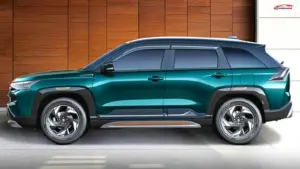
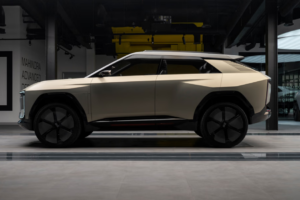
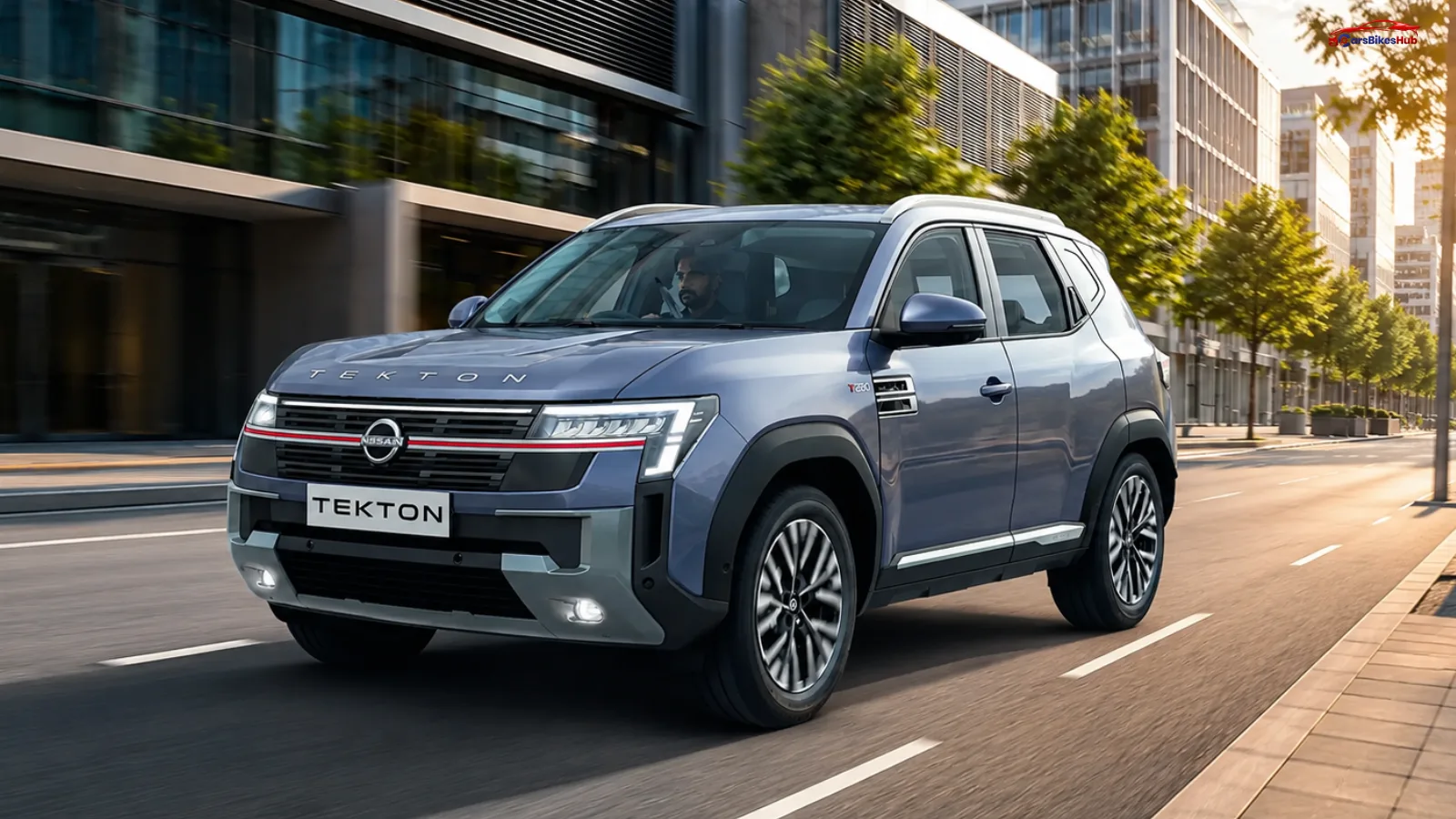
The Tekton’s styling draws heavily from the Nissan Patrol; a large logo, a bold red strip across the grille, slim LED headlamps, and vertical LED DRLs give it a more upright, SUV-like stance than the Duster it’s based on.
The 18-inch wheels fill out the wheel arches well, and the connected LED tail lamp treatment at the rear keeps it visually current. The upright stance also gives the Tekton stronger road presence than many crossover-style rivals, making it look more like a traditional SUV rather than a jacked-up hatchback.
Beyond looks, the design choices are largely practical. The stance and higher ground clearance associated with this platform help with light off-road use and pothole-heavy Indian roads. The panoramic sunroof (offered on higher variants) is a genuine daily-use feature rather than a gimmick, especially for rear passengers.
Six single-tone shades, including Moonbrow Grey, Indigo Blue, Flare Garnet Red, Blade Silver, Onyx Black, and Pearl White, plus five dual-tone combinations with an Onyx Black roof, give buyers reasonable choice without overwhelming complexity.
Interior & Comfort
Inside, the cabin follows a black-and-white dual-tone theme with burgundy inserts on the dashboard and seats in higher variants, giving it a slightly more upmarket feel than a typical SUV in this price bracket. Because it shares its underlying structure with the Duster, 4,346mm long, 1,815mm wide, 1,701mm tall, with a 2,657mm wheelbase, cabin space and rear-seat legroom should feel comparable, which is a genuine positive given how well-packaged the Duster already is.
Rear Seat Experience
Rear-seat comfort tends to be a deciding factor for Indian buyers, many of whom are chauffeur-driven or regularly carry family. With a 2,657mm wheelbase shared with the Renault Duster, knee room and headroom should be generous for the segment. Higher variants add rear AC vents and, based on Nissan’s typical feature distribution, likely a centre armrest with cupholders and adjustable headrests for outer passengers, worth confirming on a showroom visit, since exact rear-seat equipment can vary by variant and hasn’t been fully itemised by Nissan yet.
Boot space stands at 518 litres with the rear seats up, expanding to 1,789 litres with them folded, enough for a family’s luggage on a road trip, or bulky items like a stroller and a couple of suitcases without needing to fold anything down.
Storage throughout the cabin, dual-zone climate control with rear AC vents on top variants, and front seats that are both powered and ventilated (Tekna+) all point to a cabin built with real-world daily use in mind, not just showroom appeal.
Features & Technology
- 6 airbags and 5-star BNCAP rating (30.49/32 for adult protection, 45/49 for child protection): this is a real, measurable safety advantage, not a marketing number. It matters every single day you’re on the road.
- Level 2 ADAS (Tekna+): features like lane-keep assist and adaptive cruise genuinely reduce driver fatigue on highway stretches.
- 360-degree camera: in Indian traffic and tight parking, this is one of the most-used features owners report relying on daily.
- Rear AC vents: in a country where rear-seat comfort matters as much as front, this is a practical win, not a luxury add-on.
- Ambient lighting with multiple shades: pleasant, but it has zero effect on how the car drives or how comfortable your commute is.
- Powered tailgate: convenient, but not a dealbreaker if you’re choosing a lower variant to save money.
- Full LED light package on lower trims: nice for consistency, but functional halogen or LED-DRL combinations on base variants still do the job.
Safety
This is genuinely one of the Tekton’s strongest arguments. A 5-star BNCAP rating puts it among the safer choices in its segment, and the fact that six airbags, electronic stability control, ISOFIX mounts, and seatbelt reminders for all occupants come as standard, not locked behind the top variant, means safety isn’t something you have to pay extra for here. The Level 2 ADAS suite on the Tekna+ adds a further layer for highway-heavy drivers, though it remains optional rather than standard across the range.
Ride & Ownership
The Nissan Tekton is closely related to the Renault Duster, sharing its underlying engineering. That means buyers can expect a ride that’s tuned for comfort on rough Indian roads, rather than a firm, sporty feel.
On running costs: claimed mileage figures of 19.5kmpl for the 1.0-litre manual and around 17.8–18.5kmpl for the 1.3-litre variants are competitive for the segment, though real-world figures for turbo-petrol engines typically run 15-20% lower depending on driving style and traffic conditions.
Nissan’s service network in India is smaller than Hyundai’s or Maruti’s, which is worth factoring in if you live outside a major city; check dealer and service centre proximity before booking. Since the Tekton shares major mechanical components with the Duster, spare parts availability and repair costs should broadly track with Renault’s, though it’s worth confirming warranty terms and service package costs directly with your dealer, as these can vary by city and time of purchase.
Expected Maintenance Costs
Nissan hasn’t published official service package pricing for the Tekton at the time of writing. That said, because it’s mechanically a near-twin of the Renault Duster, running costs, routine service intervals, parts pricing, and labour are expected to land in a similar range to the Duster’s, rather than tracking with Nissan’s smaller, cheaper models like the Magnite. If predictable, low-cost servicing is a priority, it’s worth asking your dealer for a written service-cost estimate over 3–5 years before booking, rather than relying on assumptions from the shared platform alone.
Rivals: Who Should Buy What
| If you want | Consider | Why |
| Best crash safety at this price | Tekton | 5-star BNCAP, six airbags standard across the range |
| Best resale value and service reach | Creta or Seltos | Longer track record, larger dealer network |
| Best hybrid efficiency | Grand Vitara or Hyryder | Strong-hybrid powertrain not offered on Tekton |
| Lowest price for near-identical mechanicals | Duster | Same CMF-B platform, typically priced a notch below |
| Boldest, most design-led cabin | Tata Sierra | Distinctive interior styling, different brand ecosystem |
What Actually Matters in Everyday Ownership?
- Ride quality on broken roads, given the Duster-proven suspension tuning.
- Cabin comfort and rear-seat space, since dimensions match the already-spacious Duster.
- Safety confidence from the 5-star BNCAP rating; this genuinely changes how you feel driving with family.
- Fuel costs, especially if you pick the 1.0-litre engine for a city-heavy routine.
- Service network reach, which will matter far more in year two or three of ownership than it does on day one.
- Ambient lighting shades, pleasant in photos, irrelevant to daily driving.
- The Patrol-inspired styling narrative: it looks good, but it doesn’t change ride, safety, or running costs.
- “Connected car” branding useful in principle, but most owners end up using only a handful of the advertised connected features regularly.
Should You Buy It?
Buy if
- You want strong safety credentials without paying Creta-top-spec money.
- You like the idea of Duster-proven mechanics with a more distinctive design and richer top-end feature list.
- You’re comfortable with a newer nameplate in India that doesn’t yet have a long resale or reliability track record.
Skip if
- You specifically want a hybrid powertrain; it isn’t offered on the Tekton at launch.
- You live somewhere without a nearby Nissan service centre; check this before signing on.
- Resale value and long ownership track record matter more to you than being an early adopter.
Consider alternatives if
- You want proven long-term reliability data; the Creta and Seltos have years of ownership feedback behind them.
- You need a strong-hybrid option; the Grand Vitara or Hyryder fit that need better.
- Budget is the primary constraint, the Duster offers nearly the same mechanical package for less.
Final Verdict
Now that the Tekton has moved from spy shots and speculation to a confirmed, on-sale product, the buying decision becomes much clearer. This is a genuinely competent midsize SUV, safe, reasonably priced, and mechanically proven thanks to its Duster underpinnings, wrapped in styling that gives it its own identity rather than feeling like a badge-engineered afterthought.
It’s best suited to buyers who prioritise safety and design over an established resale track record, and who don’t specifically need a hybrid powertrain. If that describes you, the Tekton deserves a test drive alongside the Creta, Seltos, and Duster before you make a final call. If a long ownership history or hybrid efficiency matters more, it’s worth weighing those alternatives first.


FAQs
Is the Nissan Tekton worth buying?
It's a strong option if safety, design, and Duster-proven mechanicals matter to you more than a long resale track record or hybrid power. For most mainstream buyers, it's worth a test drive alongside the Creta and Seltos before deciding.
Which Nissan Tekton variant is best value?
A mid-spec variant with the 1.3-litre turbo-petrol engine typically offers the best balance of performance, safety, and features without paying for extras you may not use.
What is the mileage of the Nissan Tekton?
Claimed figures are 19.5kmpl for the 1.0-litre manual, 17.8kmpl for the 1.3-litre manual, and 18.5kmpl for the 1.3-litre DCT automatic. Real-world mileage will typically be somewhat lower.
Does the Nissan Tekton have a hybrid engine option?
No. At launch, Nissan is offering only two turbo-petrol engines. The 1.8-litre hybrid available on the related Renault Duster has not been introduced on the Tekton.
How does the Nissan Tekton compare to the Renault Duster?
They share the same CMF-B platform and core mechanicals. The Tekton differentiates itself with distinct styling and a higher-spec feature ceiling on its top variant, generally at a comparable or slightly higher price point.