

























Kia has entered one of India’s most competitive EV segments with the Syros EV, and it’s doing so with some big promises. A claimed range of up to 526 km, a starting price of ₹13.49 lakh, a lifetime battery warranty, and an optional Battery-as-a-Service model have quickly made it one of the most talked-about electric SUVs in the country. But do these headline figures actually make it a better buy than rivals like the Tata Nexon EV or the MG Windsor EV? That’s exactly what this review sets out to answer.
Kia Syros EV, the second mass-market EV of Kia in India, went on sale on July 23, 2026, and it’s the first genuinely new option in this price bracket in a while. The reason it’s got people’s attention isn’t the badge; it’s the number ₹13.49 lakh next to a claimed range of 526 km, a 171 PS motor, and a 15-year battery warranty- specs that, on paper, beat almost everything else in the segment. Add a buyback scheme and a battery-rental option that drops the entry price to under ₹8 lakh, and you can see why this car is suddenly the one everyone’s asking about.
But claimed figures and showroom brochures don’t tell you whether this is the right car for your driving. That’s what this article is for: a straight look at what the Syros EV actually offers, and where it genuinely leads the segment.
Kia Syros EV: Specs At a Glance
| Price Range | ₹13.49 – 19.99 lakh (ex-showroom) |
| BaaS Starting Price | ₹7.99 lakh + ₹3.30/km |
| Battery Options | 42 kWh / 51.4 kWh |
| Claimed Range | 443 km / 526 km |
| Power | 135 PS / 171 PS |
| 0-100 km/h | 8.1 seconds (claimed, 51.4 kWh) |
| DC Fast Charging | 10-80% in ~39 minutes |
| AC Charging | 10-100% in ~4.5 hours |
| Boot Space | 465 litres + 16-litre frunk |
| Airbags | 6 (standard) |
| ADAS | Level 2, 16 functions (HTX+ and X-Line) |
| Battery Warranty | Lifetime, 15 years, unlimited km |
| Buyback | Up to 80% resale value after 3 years |
Kia Syros EV Price in India
Prices below are ex-showroom, India, as announced at launch. On-road prices will run roughly 6-8% higher depending on your state’s RTO charges and insurance.
| Variant | Battery | Ex-Showroom Price |
| HTK | 42 kWh | ₹13.49 lakh |
| HTK+ | 42 kWh | ₹15.00 lakh |
| HTK+ ER | 51.4 kWh | ₹17.00 lakh |
| HTX | 42 kWh | ₹16.00 lakh |
| HTX ER | 51.4 kWh | ₹18.00 lakh |
| HTX+ ER | 51.4 kWh | ₹19.50 lakh |
| X-Line ER | 51.4 kWh | ₹19.99 lakh |
Under the Battery-as-a-Service (BaaS) scheme, the effective entry price drops to ₹7.99 lakh, with a battery usage charge of ₹3.30 per km on top. More on whether that math actually works out further down.
Kia Syros EV Variants
HTK (42 kWh): You get dual 12.3-inch screens, wireless Android Auto and Apple CarPlay, automatic climate control, drive modes, and the full standard safety kit: 6 airbags, ESC, hill-start assist, TPMS. If you want a well-equipped EV without chasing every feature, this is genuinely the value pick, not a stripped-out base trim to avoid.
HTK+ (42 kWh / 51.4 kWh ER): adds cruise control and a rear camera. It’s the variant most reviewers flag as having a weak price-to-feature jump over the HTK, so cross-check carefully before choosing this over the base trim.
HTX (42 kWh / 51.4 kWh ER): this is where the car starts to feel properly loaded: panoramic sunroof, rear wiper and defogger, 360-degree camera, front parking sensors. For buyers who want a fully equipped mid-spec car without paying for ADAS, HTX is the sweet spot that most publications recommend.
HTX+ (51.4 kWh ER only): steps up to Level 2 ADAS with 16 functions, a head-up display, digital key, leg-projection headlamps, auto-dimming IRVM, Harman Kardon 8-speaker audio, wireless charging, ventilated front seats, and leatherette upholstery. This is the trim to pick if driver-assist tech and a premium cabin matter more to you than saving money.
X-Line (51.4 kWh ER only): the same mechanical package as the HTX+ with X-Line-specific styling, a unique Hunter Green and Onyx Black interior theme, and cosmetic extras. Buy this one for the look, not because it’s the smartest spend; mechanically, it’s identical to the HTX+.
Kia Syros EV Battery, Motor & Performance
The Syros EV comes with a single front-mounted motor, offered in two states of tune depending on which battery you pick.
- 42 kWh pack: 135 PS, 255 Nm of torque
- 51.4 kWh Extended Range pack: 171 PS, 255 Nm of torque, 0-100 km/h in a claimed 8.1 seconds
Torque stays identical across both packs; it’s the power figure and range that change. In everyday driving, the extra power on the 51.4 kWh version is noticeable mainly in overtakes and highway merges; around town, both versions feel brisk off the line, which is typical of EVs thanks to instant torque delivery.
City usability should be strong; the boxy body shape generally translates to good visibility and an easy sense of the car’s edges while parking, though we’d want a full test drive to confirm ride quality on Indian road surfaces. On the highway, the extra power of the 171 PS motor should make it a more relaxed cruiser for triple-digit speeds and quick overtaking manoeuvres, while the 135 PS version will feel adequate but less effortless once you’re regularly doing highway trips.
Kia Syros EV Real-World Range
Kia’s claimed range figures, 443 km for the 42 kWh pack and 526 km for the 51.4 kWh pack, come from the MIDC/ARAI test cycle, which is measured under controlled conditions that rarely match everyday Indian driving.
As a rule of thumb, expect real-world range to land somewhere around 65-75% of the claimed figure in mixed city and highway use with the AC running, a pattern that’s held across most EVs tested in India so far. That would put the 42 kWh version realistically in the 290-330 km range, and the 51.4 kWh version somewhere around 340-395 km, though Kia’s own efficiency numbers could push these figures higher once independent real-world tests are published.
Factors that will affect your actual range:
- AC usage: running the compressor hard in Indian summers is one of the biggest range drains
- Driving style: aggressive acceleration and high cruising speeds eat into range faster than gentle throttle inputs
- Load and occupancy: a full car with luggage will always return less range than a solo commute
- Traffic and terrain: stop-start city traffic actually helps EV range thanks to regenerative braking, while sustained highway speeds and inclines hurt it
- Battery age and conditioning: like all lithium-ion packs, expect a gradual, marginal capacity dip over years of use, which Kia’s battery conditioning feature in the Kia Connect app is designed to help manage.
If you drive under 50 km a day and charge at home, either battery will comfortably serve you. If you do frequent 200 km+ highway runs, the 51.4 kWh ER version is the safer choice.
Kia Syros EV Charging Time
- DC fast charging: Up to 100 kW capacity, taking the battery from 10% to 80% in around 39 minutes, genuinely quick for this price bracket, and about the length of a coffee-and-restroom stop on a highway drive
- AC charging: A 10.8 kW onboard charger takes the pack from roughly 10% to 100% in about 4.5 hours; a standard home wallbox will take considerably longer overnight
- Home charging: The most practical, cheapest way to live with this car day-to-day, plug in overnight and wake up to a full battery
- Kia’s K-Charge network connects owners to more than 20,300 charging points across India through the MyKia app, along with an integrated EV route planner for longer trips.s
Who actually needs DC fast charging? Mostly highway travellers and buyers without reliable home or workplace charging access. If your daily driving is confined to the city and you can charge overnight at home, you may rarely, if ever, need to visit a public DC charger. It’s a nice-to-have for road trips, not a daily necessity for most urban owners.
What Will It Cost to Drive?
Here’s a rough sense of what charging the Syros EV at home could cost, using a typical residential electricity rate of ₹8 per unit as an example; your actual local tariff may be higher or lower, so treat this as a template to plug your own numbers into rather than a fixed figure.
42 kWh battery, home charging:
- Full charge (42 kWh × ₹8/unit) ≈ ₹336
- Estimated real-world range ≈ 300-330 km
- Running cost ≈ ₹1.02-1.12 per km
51.4 kWh battery, home charging:
- Full charge (51.4 kWh × ₹8/unit) ≈ ₹411
- Estimated real-world range ≈ 340-395 km
- Running cost ≈ ₹1.04-1.21 per km
For comparison, a petrol compact SUV returning around 15-16 kmpl at current petrol prices typically works out to roughly ₹6-8 per km. Even accounting for the higher upfront cost of an EV and the extra expense of relying on public DC charging occasionally (which costs more per unit than home charging), the per-km running cost advantage is substantial for anyone who charges primarily at home.
Exterior Design
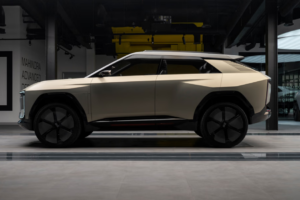
The Syros EV is nearly a mirror of its ICE sibling, the Syros, right down to the boxy, upright silhouette that’s already divided opinion in the segment; you’ll either love the rugged, distinct stance or find it too slab-sided compared to the more rounded shapes of rivals like the Nexon EV.
Distinguishing features include a 3-pod headlamp design at either end of the front bumper, a charging flap on the front fender, and a nearly grille-less front face (since EVs don’t need engine cooling in the same way). Alloy wheel sizes vary by variant, topping out at 17-inch units on the higher trims, with a unique triangular-spoke design that’s exclusive to the EV. The green number plate is the easiest giveaway that you’re looking at the electric version rather than the petrol Syros.
Ground clearance and overall footprint carry over from the ICE Syros, which means it should handle Indian road conditions, speed breakers, and uneven surfaces reasonably well, though exact ground clearance figures for the EV specifically weren’t part of Kia’s published spec sheet at launch. Practicality-wise, the compact, sub-4-metre-adjacent footprint should make it easy to manoeuvre and park in crowded city spaces.
Interior & Comfort
Cabin quality appears to be a genuine strength here. The Syros EV uses a 30-inch Trinity Panoramic Display, a combination of a 12.3-inch digital instrument cluster, a 12.3-inch touchscreen, and a 5-inch climate control panel, set into a triple-screen dashboard layout that gives the cabin a modern, tech-forward feel.
A new floating centre console frees up storage space and makes the cabin feel roomier than the standard Syros. Kia is claiming best-in-segment second-row space, backed up by ventilated rear seats on higher trims and 60:40 split-folding rear seats with slide-and-recline functionality, a genuinely useful feature for adjusting between passenger comfort and boot space.
Storage includes a wireless charging pad, and visibility should benefit from the boxy, upright body style, which typically translates to a better view out and an easier sense of the car’s corners while parking or navigating tight streets.
Boot space is rated at 465 litres, a strong figure for this class, plus a 16-litre frunk (front boot) under the bonnet, which is handy for stashing charging cables separately from luggage.
Features
Infotainment
- 30-inch Trinity Panoramic Display (dual 12.3-inch screens plus a 5-inch climate interface)
- Kia Connect 2.0 with 95+ connected features
- Wireless Android Auto and Apple CarPlay
- Harman Kardon 8-speaker premium audio (higher trims)
- Over-the-air (OTA) software updates
Driver Assistance
- Level 2 ADAS with 16 autonomous functions (HTX+ and X-Line only), including forward collision-avoidance assist, smart cruise control with stop & go, lane keeping and lane following assist, and driver attention warning
- 360-degree camera
- Blind View Monitor
- Front and rear parking sensors
Comfort
- Dual-pane panoramic sunroof
- Ventilated front and rear seats (higher trims)
- 4-way powered driver seat
- 64-colour ambient mood lighting with LED footwell lamps (X-Line)
- Wireless phone charger
Connectivity
- Kia Connect app for remote functions, OTA updates, and battery conditioning
- Digital Key (higher trims)
- Digital Owner’s Manual
- EV Route Planner integrated with K-Charge network
Convenience
- Electric parking brake with auto-hold
- Dual-camera smart dashcam
- Rear door sunshade curtains
- Paddle-shifter controlled regenerative braking with Auto Mode and i-Pedal (one-pedal driving)
- Vehicle-to-Load (V2L) and Vehicle-to-Vehicle (V2V) charging support
Safety
Kia has equipped the Syros EV with 25 standard safety features, which is a strong baseline for the class:
- 6 airbags as standard across every variant, worth noting, since some rivals reserve six airbags for top trims only
- Level 2 ADAS with 16 functions on HTX+ and X-Line variants, covering forward collision-avoidance, lane keeping, lane following, smart cruise control with stop & go, and driver attention warning
- Electronic Stability Control (ESC)
- Hill-Start Assist Control (HHC)
- All-wheel disc brakes
- Tyre Pressure Monitoring System (TPMS)
- ISOFIX child seat mounts
- Rear Occupant Alert
- Electronic parking brake with auto-hold
- 360-degree camera system
The ICE version of the Syros has a 5-star Bharat NCAP crash safety rating, though this doesn’t automatically transfer to the EV variant, which carries a different weight distribution due to the battery pack. An independent Bharat NCAP rating specifically for the Syros EV wasn’t available at the time of writing; worth checking for before you buy if crash-test data specifically for the EV matters to your decision.
Ownership Experience
Service network: Kia backs the Syros EV with over 129 DC fast-charging-equipped dealerships, 275+ EV-ready workshops, and 900+ customer touchpoints across India, a meaningfully larger EV-specific service footprint than some newer EV entrants.
Maintenance expectations: EVs generally cost less to maintain than petrol or diesel cars, since there’s no engine oil, spark plugs, or complex transmission to service. Expect routine checks on brakes, tyres, coolant, and the battery-cooling system rather than the frequent service intervals of an ICE car.
Battery warranty: Kia is offering a lifetime high-voltage battery warranty covering 15 years with unlimited kilometres, one of the strongest battery warranty commitments in the Indian EV market right now, and a genuine confidence-builder for anyone worried about battery degradation costs down the line.
Running costs: With home charging, running an EV typically costs a fraction of an equivalent petrol car per kilometre, since electricity is cheaper than fuel and EV drivetrains are more energy-efficient. Exact per-km costs will depend on your local electricity tariff and how much you rely on public DC charging (which costs more per unit than home charging).
Resale: EV resale values in India are still an evolving picture, since the used EV market is relatively young. This is exactly the gap Kia’s buyback programme is designed to address (see below).
Buyback programme: Kia is offering an assured buyback programme with up to 80% resale value after 3 years, a meaningful hedge against the uncertainty around EV depreciation, and one of the more generous buyback commitments currently available in this segment.
Battery-as-a-Service Explained
How it works: Under the BaaS scheme, you buy the Syros EV without paying for the battery upfront, which drops the effective on-road price to ₹7.99 lakh. Instead, you pay a per-kilometre usage charge, ₹3.30/km for the battery separately, on top of your EMI or purchase cost for the rest of the car.
Who benefits: BaaS makes the most sense for buyers who are cash-strapped upfront but plan to drive a modest number of kilometres annually, or for buyers uncertain about long-term EV ownership who want a lower entry price and more flexibility. It can also suit fleet or commercial buyers who want predictable, itemised running costs.
Who shouldn’t choose it: If you drive a lot, with daily long commutes or frequent highway trips, the per-km charge adds up quickly and can end up costing you more over 3-5 years than simply financing the full price of the car, including the battery. High-mileage buyers are generally better off buying the battery outright.
Does it actually save money? It depends entirely on your annual kilometres. Do the maths before committing: work out your expected yearly mileage, multiply by ₹3.30/km, add that to your EMI on the ₹7.99 lakh base price, and compare the total over 3-5 years against simply financing the full ex-showroom price of an equivalent variant. For low-mileage, budget-conscious buyers, BaaS lowers the barrier to entry. For anyone doing serious kilometres, it’s often the costlier route.
Kia Syros EV vs Rivals
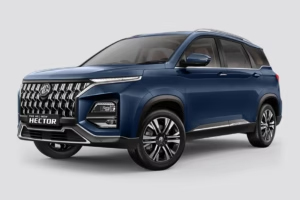
| Kia Syros EV | Tata Nexon EV | Mahindra XUV 3XO EV | MG Windsor EV | |
| Price (ex-showroom) | ₹13.49 – 19.99 lakh | ₹12.49 – 17.69 lakh | ₹13.89 – 14.96 lakh | ₹13.50 – 15.50 lakh |
| Battery | 42 kWh / 51.4 kWh | 30 kWh / 45 kWh | 39.4 kWh | 38 kWh |
| Claimed Range | 443 – 526 km | 275 – 489 km | ~285 km (real-world claim) | ~331 km |
| Power | 135 PS / 171 PS | ~127 PS (45 kWh) | 148 bhp (110 kW) | 134 bhp |
| DC Fast Charging (10-80%) | ~39 minutes (100 kW) | ~56 minutes | ~50 minutes (0-80%) | Not a primary focus; battery-rental model available |
| Best for | Buyers wanting the longest range and most power in class | Buyers wanting the widest variant spread and established service history | Buyers prioritising strong torque and city agility | Buyers wanting a low upfront cost via battery rental |
Note: MG Windsor EV is also offered with its own battery-as-a-service style rental model (₹3.5/km), similar in spirit to Kia’s BaaS scheme. Specifications above reflect publicly available figures at the time of writing and can change with running updates or new variants from any manufacturer; always verify current figures at the dealership before booking.
Who Should Buy the Kia Syros EV?
City buyers: If most of your driving is within city limits with occasional weekend trips, either battery option will comfortably cover your needs, and the strong feature list and cabin comfort make daily use pleasant.
High-mileage users: The 51.4 kWh Extended Range version, paired with fast DC charging support, makes this a genuinely usable EV for people who regularly clock 300+ km in a day, provided you’re comfortable planning around a highway charging stop.
First-time EV buyers: The lifetime battery warranty and buyback programme directly address the two biggest anxieties first-time EV buyers have, battery longevity and resale uncertainty, making this an easier first step into electric ownership than many rivals.
Families: The claimed best-in-segment second-row space, generous boot, and strong 6-airbag safety baseline make it a sensible family car, not just a city runabout.
People upgrading from petrol: If you’re moving from a petrol hatchback or compact SUV, the instant torque, quieter cabin, and lower running costs should feel like a genuine step up, while the familiar Syros-based design keeps the transition visually comfortable.
Who Should Skip It?
If you’re extremely budget-conscious and don’t need the range or power headroom the Syros EV offers, the Tata Nexon EV’s lower entry price and wider variant spread might suit you better.
If you drive high daily kilometres and were considering BaaS specifically to save money, run the numbers first; you may end up paying more than buying the battery outright. And if you’re someone who wants a car with an established, multi-year real-world track record, reliability data, resale trends, long-term ownership reviews, the Syros EV is simply too new to have that yet; you’d be an early adopter, not a safe-bet buyer.
Final Verdict
The Kia Syros EV doesn’t try to compete by being the cheapest electric SUV in its segment. Instead, Kia has focused on offering a longer claimed range, a feature-rich cabin, fast charging, and one of the strongest battery warranty packages currently available in India. Add the assured buyback programme and the optional Battery-as-a-Service model, and it becomes clear that Kia is targeting buyers who want reassurance alongside everyday practicality.
Of course, being a newly launched model means there are still a few unanswered questions. Independent real-world range tests, long-term reliability, and ownership experience will only become clearer once the first batch of owners has spent time with the car.
Even so, based on what Kia has brought to the table, the Syros EV makes a compelling case for itself. If it delivers on its claimed efficiency and ownership promises, it has the potential to become one of the benchmark electric SUVs under ₹20 lakh. For buyers looking for a modern, well-equipped EV that balances performance, technology, and everyday usability, the Kia Syros EV deserves serious consideration.


FAQs
What is the starting price of the Kia Syros EV in India?
The Kia Syros EV starts at ₹13.49 lakh (ex-showroom) for the base HTK variant with the 42 kWh battery.
What is the real-world range of the Kia Syros EV?
Kia's claimed range is 443 km (42 kWh) and 526 km (51.4 kWh) on the MIDC cycle. Real-world range, accounting for AC use and city driving, is typically lower, expect somewhere in the region of 65-75% of the claimed figure until independent tests confirm exact numbers.
How long does it take to charge the Kia Syros EV?
With a 100 kW DC fast charger, the battery goes from 10% to 80% in about 39 minutes. On a home AC charger, a full charge takes roughly 4.5 hours.
Does the Kia Syros EV have ADAS?
Yes, Level 2 ADAS with 16 functions is available, but only on the HTX+ and X-Line variants.
What is the Battery-as-a-Service (BaaS) option on the Syros EV?
BaaS lets you buy the car without the battery upfront, dropping the effective price to ₹7.99 lakh, with a battery usage charge of ₹3.30/km. It suits low-mileage buyers more than high-mileage ones.