
























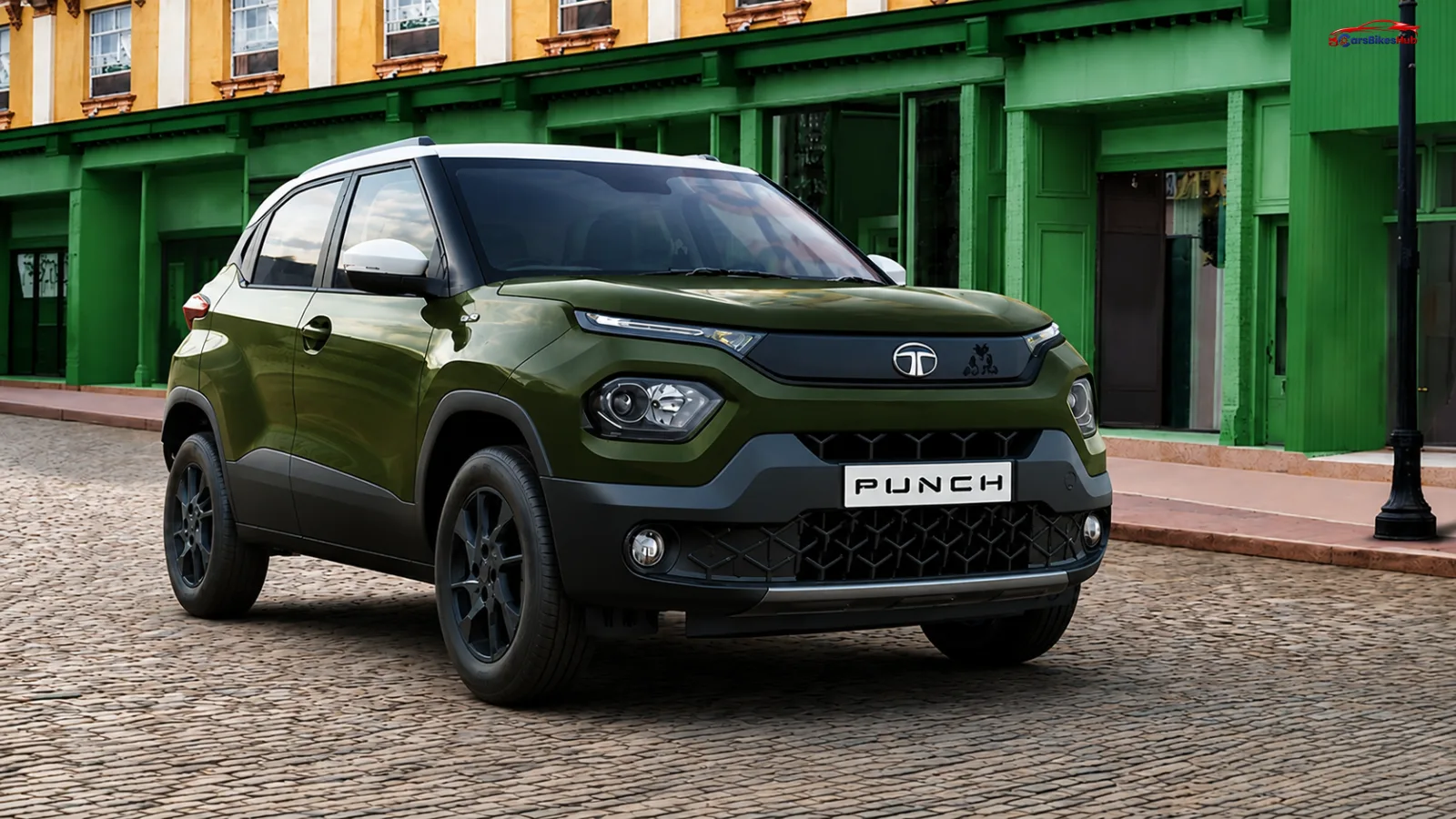
The Tata Punch has just crossed the 8 lakh domestic sales mark, making it only the second SUV in Tata Motors’ current line-up, after the Nexon, to reach this milestone. Tata Motors dispatched 7,97,479 units of the Punch between its launch in October 2021 and the end of June 2026, with the remaining units needed to cross 8 lakh sold in the first few days of July.
On its own, a sales number is just a number. What makes this one worth paying attention to is the pace at which it arrived. The Punch reached 7 lakh sales in early February 2026 and added the next 1 lakh units in under five months, its quickest 1-lakh milestone yet. For context, that’s faster than any compact SUV in India has managed this stage of its life cycle: the Maruti Brezza took around 80 months to hit 8 lakh units, the Hyundai Venue took 85 months, and the Tata Nexon took 89 months. The Punch got there in a little over 57 months.
That’s the real story here. Most cars, even successful ones, follow a familiar arc: a strong launch, a peak somewhere in year two or three, and then a gradual decline as novelty fades and rivals catch up. The Punch’s sales curve is trending in the opposite direction. It’s accelerating nearly five years after launch, not slowing down. That raises a genuinely interesting question: what has made the Tata Punch such a long-term success when many cars lose momentum after their initial launch?
This isn’t a review, a buying guide, or a specifications rundown. Instead, it’s an attempt to unpack the “why” behind the numbers: what’s driving demand, how Tata has kept the product relevant, and what the milestone says about where Indian car buyers are headed.
Quick Highlights
- Milestone: 8,00,000 domestic sales crossed in early July 2026
- Launch year: October 2021
- Time to 8 lakh: Approximately 57 months, the fastest any compact SUV has reached this mark in India
- Recent momentum: Record monthly wholesales of 21,006 units in June 2026; best-selling SUV in India for Q1 FY2027 with 60,321 units
- Market position: Regularly trades the No. 1 compact SUV spot with the Maruti Fronx and Tata Nexon
- Key takeaway: The Punch’s growth is accelerating rather than plateauing, nearly five years post-launch, an unusual pattern in a segment where most models peak early
Tata Punch Crosses 8 Lakh Sales Milestone: How It Happened
The Punch’s sales journey has been steady rather than explosive at any single point, which is part of what makes the overall trajectory notable. It crossed 1 lakh units just 10 months after launch, becoming the first SUV in India to hit that mark so quickly. From there, it reached 4 lakh units by June 2024, 5 lakh in January 2025, 6 lakh in July 2025, and 7 lakh in early February 2026.
What stands out is that each successive milestone has arrived faster, not slower. The jump from 6 lakh to 7 lakh took roughly seven months; the jump from 7 lakh to 8 lakh took under five. In a segment where sales typically taper off as a model ages, the Punch has done the reverse; its best month came in year five, not year one.
Some of this is explained by product timing. The current wave of demand lines up closely with the arrival of the MY2026 facelift, the introduction of a turbo-petrol engine, and an updated Punch EV with a battery-as-a-service option. But timing alone doesn’t fully explain sustained five-year growth; that requires a product that continues to answer a real, ongoing need for buyers, which is really what the rest of this article tries to unpack.
Why Has the Tata Punch Become So Popular?
Strip away the model updates and variant changes, and a few consistent themes emerge in why buyers keep choosing the Punch.
SUV looks without the SUV price. The Punch was one of the first vehicles to package genuine SUV styling cues, a tall stance, boxy proportions, and high seating into a sub-4-metre, budget-friendly footprint. For a large segment of Indian buyers upgrading from a hatchback, that combination matters more than raw performance figures. It lets them buy into the SUV image without stretching into a mid-size SUV budget.
A size that actually suits Indian cities. Compact dimensions aren’t a limitation here; they’re the point. Narrow lanes, tight parking, and stop-start traffic in most Indian cities reward a car that’s easy to place and manoeuvre, and the Punch’s proportions are tuned for exactly that kind of daily use.
Tata’s safety reputation. Tata Motors has built a distinct brand identity around crash safety over the past several years, and the Punch benefited from that positioning early, having earned a strong Global NCAP rating ahead of its launch. In a market where safety awareness among buyers has grown noticeably, that reputation is a meaningful differentiator rather than a marketing footnote.
Fuel flexibility without complexity. Between petrol, CNG, and fully electric variants, the Punch line-up covers most of the ways Indian buyers now think about running costs, without forcing anyone into an either/or decision at the showroom. This isn’t about comparing engine specs; it’s about the Punch being one of the few models in its price band where a buyer can pick a fuel type that matches their usage pattern and still stay within the same model family.
Low running costs and strong resale demand. Because the Punch has sold in such high volumes for years now, it has built a large, liquid used-car market. That, combined with generally low maintenance costs associated with Tata’s mass-market models, feeds into buyer confidence; a car that’s easy to sell later is an easier car to buy in the first place.
Growing trust in Tata as a brand. None of the above factors would matter as much if buyers didn’t trust the manufacturer behind them. Tata’s broader push, better dealership experience, improving perceived build quality, and consistent product updates have gradually shifted brand perception in a way that benefits the entire Tata SUV range, the Punch included.
How Tata Kept the Punch Relevant
A product doesn’t stay in high demand for five years by standing still, and Tata has been notably active in updating the Punch rather than letting it coast on its initial launch reputation.
The MY2026 facelift brought styling revisions and cabin updates across the range. More significantly, Tata introduced a 1.2-litre turbo-petrol engine, borrowed from the Nexon, giving the Punch meaningfully stronger performance than the naturally aspirated version it launched with, addressing one of the more common criticisms of the original car.
On the alternative-fuel side, the Punch iCNG arrived in 2023 with Tata’s twin-cylinder CNG technology, notable for not eating into boot space the way most CNG conversions do. The Punch EV followed in January 2024 and received its own major update in February 2026, with revised battery options (30 kWh and 40 kWh packs replacing the earlier smaller units) and a battery-rental scheme designed to lower the upfront purchase price for EV buyers still wary of the higher sticker price.
Each of these updates targeted a specific gap rather than being a cosmetic refresh: more power for buyers who found the base engine underwhelming, a genuine CNG option for cost-conscious buyers, and an EV variant with improved range and a friendlier price structure for early electric adopters. That’s arguably the more important story behind the milestone: Tata treated the Punch as an evolving product line rather than a car it launched once and left alone.
How Does the Punch Compare With Its Rivals in the Market?
The sub-4-metre SUV segment in India is now genuinely crowded, and the Punch’s position within it says as much about buyer behaviour as any single feature does.
Against the Hyundai Exter, the Punch has consistently outsold its Korean rival by a wide margin, even though the Exter offers a lower starting price in some configurations. This suggests brand trust and Tata’s safety positioning are carrying real weight with buyers, beyond just price comparisons.
Against the Maruti Fronx, the competition is much closer; the two models have repeatedly traded the top spot in monthly sales charts, sometimes separated by only a few hundred units. The Fronx draws on Maruti’s enormous dealer network and brand reach, while the Punch counters with its SUV-first styling and broader fuel-type spread. This rivalry is probably the clearest sign of just how tight the top of this segment has become.
Against the Nissan Magnite, there’s no real contest in volume terms; the Magnite sells a fraction of what the Punch does, reflecting Nissan’s much smaller dealer footprint and lower brand visibility in this price band in India.
The Citroën C3, meanwhile, occupies a different space altogether. It’s positioned more as a value-focused, no-frills alternative, and it hasn’t built the same volume or brand pull that the Punch or Fronx have.
What stands out across these comparisons isn’t a single spec sheet advantage; it’s that the Punch has managed to combine broad brand trust, multiple fuel choices, and consistent product updates in a way that few rivals have matched all at once.
What Does This Milestone Say About Indian Car Buyers?
Pull back from the Punch specifically, and this milestone fits into a much bigger shift in how Indians are buying cars.
Hatchbacks are losing ground to compact SUVs. A decade ago, the entry point into car ownership for most Indian buyers was a hatchback. That entry point has visibly shifted toward compact SUVs, and the Punch, priced from around ₹6 lakh, sits almost exactly where hatchbacks used to. Buyers are choosing to spend similar money on a vehicle that looks and feels more substantial.
Safety has moved from a nice-to-have to a genuine purchase driver. Increased awareness around crash-test ratings, partly fuelled by high-profile safety campaigns and greater media coverage of NCAP results, means safety scores now influence buying decisions in a way they largely didn’t a decade ago.
Affordable SUVs are the new mass-market sweet spot. The sub-4-metre SUV segment posted close to 19% year-on-year growth in mid-2026, comfortably outpacing the broader passenger vehicle market. That’s not one model doing well; it’s an entire body style winning share from other segments.
CNG and EV adoption is broadening beyond early adopters. The fact that a mass-market model like the Punch can offer CNG and EV variants alongside petrol, and see meaningful demand across all three, suggests alternative fuels are no longer a niche consideration reserved for fleet buyers or committed EV enthusiasts.
Value consciousness remains the constant thread. Even as buyers move up to SUVs, they’re doing so without necessarily increasing their budgets dramatically. The success of value-focused compact SUVs like the Punch and Fronx, relative to pricier options like the Skoda Kylaq or Mahindra XUV 3XO, reflects a buyer base that wants more car for roughly the same money, not a bigger budget altogether.
Can the Tata Punch Continue This Momentum?
Sustaining this pace won’t be automatic. The compact SUV segment is only getting more crowded, and rivals aren’t standing still. Maruti continues to push the Fronx aggressively, Mahindra has repositioned the XUV 3XO with a noticeably more premium cabin, and Hyundai and Kia keep refreshing the Venue and Sonet with updated tech packages to hold onto younger buyers.
Tata’s advantage going forward will likely hinge on continuing to do what it’s done so far: iterating on the Punch rather than letting it age unchanged. The turbo-petrol engine and the updated EV variant show a willingness to plug gaps as they show up. That pattern will need to continue as competitors close in on specific strengths, whether that’s cabin quality, tech features, or pricing.
There are risks, too. As the segment matures, differentiation gets harder, and buyers have more credible alternatives than they did in 2021. Sustained double-digit growth rates, like the ones the Punch posted through early-to-mid 2026, are difficult to maintain indefinitely as the base of comparison grows larger. A more realistic expectation is that growth moderates from here, even if the Punch retains a leading position in the segment.
Final Verdict: What Does the 8 Lakh Milestone Actually Tell Us?
An 8-lakh sales figure, on its own, doesn’t tell a buyer whether the Punch is the right car for them; that’s a separate question, and one worth answering through a proper review and a test drive, not a sales chart. What the milestone does tell us is that, for nearly five years running, the Punch has consistently met the expectations of a very large and diverse set of Indian buyers, across price points, fuel types, and city types, without the demand tapering off the way it typically does for most models at this stage.
That’s a meaningful signal about product-market fit and about how Tata has managed the car’s lifecycle. But popularity isn’t the same as personal suitability. Before assuming the Punch is the right choice, it’s still worth working through the specifics: variant, fuel type, ownership costs, and how it compares against the Fronx or Exter for your particular needs, rather than treating the sales numbers as the final word.



FAQs
How many Tata Punch cars have been sold in India?
Tata Motors has sold over 8,00,000 units of the Punch (including petrol, CNG, and EV variants) since its launch in October 2021, as of early July 2026.
Why is the Tata Punch so popular in India?
Its combination of SUV styling at an affordable price, compact city-friendly dimensions, Tata's safety reputation, multiple fuel options, and strong resale value has made it appealing across a wide range of buyers.
When was the Tata Punch launched?
The Tata Punch was launched in October 2021.
Which is Tata Motors' best-selling SUV?
The Nexon and the Punch are Tata's two best-selling SUVs, and the two models regularly trade the top spot within Tata's own line-up depending on the month.
How long did the Tata Punch take to reach 8 lakh sales?
Around 57 months from launch, faster than the Maruti Brezza, Hyundai Venue, or Tata Nexon took to reach the same milestone.