





















When you’re shopping for a fully faired sportbike under ₹4 lakh, newer options like the Aprilia RS 457, Yamaha R3, and KTM RC 390 naturally grab your attention. Yet the Kawasaki Ninja 300 continues to sit on dealership floors despite being one of the oldest motorcycles in the segment; it first went on sale in India back in 2013. With Kawasaki quietly rolling out the 2027 model year update and, once again, nudging the price up without any real mechanical change, plenty of prospective buyers are asking the same question: is the 2027 Kawasaki Ninja 300 still worth buying today?
This article walks through what’s actually changed for 2027, what’s stayed the same, and whether the price still makes sense.
Quick Verdict
| Best For | Riders who want a refined twin-cylinder sportbike for touring and everyday riding |
| Skip If | You want modern electronics and maximum value for money |
| Verdict | Still a great motorcycle, but increasingly difficult to justify after the latest price hike. |
Kawasaki Ninja 300 at a Glance
- Engine: 296cc, liquid-cooled parallel-twin
- Power: 39hp @ 11,000rpm
- Torque: 26.1Nm @ 10,000rpm
- Mileage: ~27–30 kmpl (real-world)
- Fuel Tank: 17 litres
- Kerb Weight: 179kg
- Gearbox: 6-speed with assist & slipper clutch
- Price: ₹3.34 lakh (ex-showroom, Delhi)
What’s New in the 2027 Kawasaki Ninja 300?
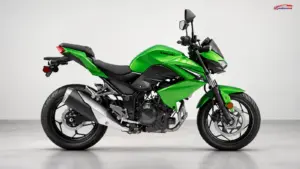
Kawasaki has launched the 2027 Ninja 300 at ₹3.34 lakh (ex-showroom, Delhi), which is roughly ₹17,000 more than the outgoing 2026 model. As has become something of a tradition with this motorcycle, the price increase arrives without any change to the engine, chassis, brakes, or electronics. Deliveries of the MY27 bike began in the final week of July 2026, and for this update, Kawasaki has trimmed the colour palette down to a single Lime Green option, a notable reduction from the two-colour lineup offered on the 2026 model.
| Item | 2027 Update |
| Ex-showroom price (Delhi) | ₹3.34 lakh |
| Price change vs 2026 model | +₹17,000 |
| Colour options | Lime Green (single option) |
| Engine | Unchanged, 296cc parallel-twin |
| Features | Unchanged |
| Deliveries | Began last week of July 2026 |
In short, this is a paper update. If you were hoping for a TFT screen, a quickshifter, or even a fresh set of graphics to justify the higher price tag, the 2027 model doesn’t deliver any of that.
Kawasaki Ninja 300: A Motorcycle That Refuses to Age
The Ninja 300 has now been on sale in India for well over a decade, which is an eternity in a segment where rivals are refreshed every couple of years. Part of the reason it has survived this long comes down to the character of its parallel-twin engine, something none of its Japanese or Austrian rivals below 400cc currently replicate. A twin-cylinder motor delivers a level of smoothness and a distinct exhaust note that single-cylinder machines like the KTM RC 390 simply can’t match, and that has kept a loyal following of buyers coming back to this bike year after year.
Beyond the engine layout, the Ninja badge itself carries weight. For a certain kind of first-time big-bike buyer, walking into a showroom and riding out on something with “Ninja” written on the fairing still means something, regardless of how dated the underlying motorcycle might be. Add to this Kawasaki’s reputation for building reliable, low-maintenance machines, and you have a bike that has aged more on the spec sheet than it has in the way it actually rides.
Engine and Performance: Still One of the Smoothest Twin-Cylinder Bikes?
At the heart of the Ninja 300 sits a 296cc, liquid-cooled parallel-twin engine that makes 39hp at 11,000rpm and 26.1Nm of torque at 10,000rpm, sent through a six-speed gearbox with an assist-and-slipper clutch. On paper, these numbers look modest next to the KTM RC 390’s single-cylinder unit or the Aprilia RS 457’s larger twin. In the real world, though, the way this engine delivers its performance is what continues to win people over.
The Ninja 300’s motor is happiest revving hard; it comes alive past 6,000rpm and pulls cleanly all the way to its redline, with none of the vibration or harshness you’d expect from a smaller-capacity engine worked this hard. This makes it a genuinely engaging bike to ride on a twisty backroad, where you’re constantly working the gearbox to stay in the powerband. On the highway, it settles into triple-digit speeds without feeling stressed, helped by reasonably tall gearing and a fairing that offers decent wind protection for a bike this size.
In the city, the flip side of that peaky nature shows up. Below 4,000rpm, the engine feels noticeably softer, so you’ll find yourself downshifting more than you would on a torquier single like the RC 390. The assist-and-slipper clutch does help here, keeping the clutch lever light for stop-start traffic and preventing rear-wheel hop on aggressive downshifts. Overall, this remains one of the more refined-feeling engines in its price bracket, even if outright acceleration isn’t its strongest suit.
Ride Quality and Handling
The Ninja 300’s ergonomics strike a sensible middle ground, sporty enough to look the part, but not so committed that they punish you on a daily commute. The clip-on handlebars sit at a manageable height, and the footpeg position leans towards sporty without tipping into the wrist-crushing territory of some fully-faired rivals.
At 179kg, it’s not the lightest bike in its class, but that extra heft actually works in its favour on the highway, lending the bike a planted, stable feel at speed that lighter, twitchier machines sometimes lack. In corners, the chassis is predictable and confidence-inspiring rather than outright sharp; this is a bike that rewards smooth inputs and doesn’t punish a rider who’s still building their skills. That combination of stability and forgiving handling is part of why the Ninja 300 has long been recommended as a sensible step-up bike for newer riders moving on from a 150cc or 250cc machine.
Suspension duties are handled by a conventional telescopic fork up front and a preload-adjustable monoshock at the rear, and while neither is particularly sophisticated by 2027 standards, the tuning favours comfort over outright sharpness, a reasonable trade-off for a bike that’s meant to be ridden every day, not just at a track day.
Features: Where the Ninja 300 Starts Showing Its Age
This is the section where the Ninja 300’s age is impossible to ignore. The bike sticks with an analogue-digital instrument cluster, complete with a proper analogue tachometer that redlines at 15,000rpm, a detail purists appreciate, but one that also means no smartphone connectivity, no gear-position indicator in some markets, and no way to check trip data at a glance the way a modern TFT display allows.
There’s no traction control, no selectable riding modes, and no quickshifter, features that have become increasingly common even one segment below this price point. Dual-channel ABS is standard, which is a welcome baseline safety feature, but that’s about as far as the electronics package goes.
Compared to the Aprilia RS 457, which offers a full-colour TFT display, switchable traction control, multiple ride modes, and an optional bi-directional quickshifter, the Ninja 300 looks distinctly last-generation. Even the TVS Apache RR 310, priced well below the Ninja, offers a TFT cluster and Bluetooth connectivity. If cutting-edge electronics and rider aids are high on your checklist, this is precisely where the Ninja 300 falls short.
Mileage and Ownership Experience
Kawasaki claims a mileage figure in the high-20s to low-30s kmpl range for the Ninja 300, and real-world ownership reports tend to hover closer to 27-30 kmpl depending on how the bike is ridden, reasonable for a performance-focused twin-cylinder motorcycle, though a single-cylinder rival like the RC 390 or Apache RR 310 will typically return better fuel economy.
Where the Ninja 300 asks more of its owners is on running costs. Being an imported, semi-knocked-down (SKD) product with fewer localised parts than some of its rivals, service costs and spare parts can work out more expensive over time, and Kawasaki’s dealer and service network, while functional in major cities, is noticeably thinner than what Yamaha, TVS, or KTM offer across smaller towns. That said, the bike has built a reputation over the years for mechanical reliability; major engine issues are rare, and most ownership complaints tend to centre around service costs and network availability rather than the motorcycle breaking down.
For touring, the combination of a comfortable seat, capable highway manners, and a 17-litre fuel tank makes the Ninja 300 a genuinely usable long-distance companion, provided you’re comfortable planning routes around Kawasaki’s service centre locations.
What Owners Love About the Kawasaki Ninja 300
Long-term owner feedback tends to circle back to the same handful of strengths. The engine’s buttery-smooth character comes up again and again; it’s the kind of motor owners say they never get tired of revving out on a clear stretch of road. The gearbox draws similar praise, with the assist-and-slipper clutch making shifts feel light and precise even after years of use.
Many owners also note that despite its sporty looks, the bike turned out to be far easier to live with as a first big bike than they expected, thanks to its forgiving power delivery and stable manners. Long-term reliability is another recurring theme, with owners reporting few major mechanical issues over extended ownership periods, and resale value that holds up better than most rivals when it’s time to sell.
Common Owner Complaints
The flip side of ownership is fairly consistent too. Servicing costs are the most frequently cited frustration, along with the price of genuine spare parts when something does need replacing. The outdated instrument console, with no TFT display, is a common gripe among owners who’ve ridden or test-ridden newer rivals, and several point out that the bike simply costs more than competitors offering similar or better performance. None of these complaints tend to be dealbreakers on their own, but taken together they explain why so many owners describe the Ninja 300 as a bike they love riding but find expensive to keep.
Five-Year Ownership Cost: What to Expect
Numbers will vary by city and riding style, but directionally, here’s how the Ninja 300 compares to its rivals over a typical five-year ownership period:
- Fuel: Broadly comparable to other twin-cylinder rivals like the Yamaha R3, though single-cylinder bikes like the RC 390 and Apache RR 310 will edge it out on efficiency.
- Servicing: Tends to run higher than Indian and Japanese rivals due to imported parts and labour rates at Kawasaki’s smaller network of service centres.
- Spare parts: Consumables and replacement parts (bodywork, electricals) generally cost more than on the Apache RR 310 or R3.
- Tyres: Comparable to segment rivals, though buyers upgrading from the stock rubber will add to this cost.
- Insurance: Slightly higher than average given the bike’s price point and repair costs, which insurers factor into premiums.
- Chain and brake pads: Standard wear-and-tear costs, roughly in line with the rest of the segment.
The overall picture: fuel and consumables are competitive, but servicing and parts costs are where the Ninja 300 asks for a bigger ongoing commitment than most of its rivals.
Kawasaki Ninja 300 vs Its Rivals
| Motorcycle | Ex-showroom Price (Delhi) | Engine | Power | Key Tech |
| Kawasaki Ninja 300 (2027) | ₹3.34 lakh | 296cc parallel-twin | 39hp / 26.1Nm | Dual-channel ABS only |
| TVS Apache RR 310 | ₹2.62–2.78 lakh | 312cc single | ~34hp | TFT, Bluetooth, ride modes |
| KTM RC 390 | ₹3.32 lakh | 399cc single | ~46hp | TFT, ride modes, quickshifter (optional) |
| Yamaha R3 | ~₹3.70 lakh | 321cc parallel-twin | ~42hp | LCD cluster, no TFT |
| Aprilia RS 457 | ₹4.22–4.41 lakh | 457cc parallel-twin | ~47hp | TFT, traction control, ride modes, quickshifter |
Why Do Riders Still Buy the Ninja 300 in 2027?
With rivals offering more tech and, in some cases, more performance for similar money, it’s worth asking why the Ninja 300 still finds buyers at all. Part of the answer is legacy: this was the bike that introduced a generation of Indian riders to what a “proper” sportbike felt like, and that first impression carries weight even now. Part of it is the engine itself: refinement of this kind, in a twin-cylinder format, simply isn’t available anywhere else near this price point outside the Yamaha R3.
Reliability plays a role too. Buyers who’ve watched friends or family members put tens of thousands of kilometres on a Ninja 300 without major issues walk into the showroom with a level of trust that’s hard for newer, unproven rivals to match. And then there’s the badge itself, the emotional pull of owning a “Ninja,” with everything that name has represented in motorcycling culture for decades, still counts for something that a spec sheet can’t fully capture. For a certain type of buyer, that combination of legacy, refinement, reliability, and badge value is worth paying a premium for, even in 2027.
Who Should Buy the Kawasaki Ninja 300?
The Ninja 300 still makes sense for a specific kind of buyer. If you’re a beginner looking for a forgiving, stable first “big bike” that won’t overwhelm you the way a more powerful single-cylinder machine might, this is a genuinely good option. It also suits riders who plan to rack up highway kilometres and want a comfortable, wind-protected riding position for long trips.
And if you’re the sort of rider who cares more about how an engine feels and sounds than what’s displayed on an instrument cluster, the twin-cylinder motor here remains one of the most satisfying in this price range. Twin-cylinder enthusiasts and those who simply want the Kawasaki badge on their garage wall will also find plenty to like.
Who Should Consider Other Options?
If a modern electronics package matters to you, TFT displays, traction control, multiple ride modes, or a quickshifter, you’ll be better served by the Aprilia RS 457 or even the significantly cheaper TVS Apache RR 310. Buyers chasing outright performance and a harder edge should look at the KTM RC 390, which offers noticeably more power for similar money. And if value for money is the deciding factor, the Apache RR 310 undercuts the Ninja 300 by well over ₹50,000 while offering more equipment.
Is the Latest Price Hike Justified?
This is where opinions genuinely diverge. On one hand, Kawasaki’s brand value, the inherent refinement of a twin-cylinder engine, and the use of imported components all come with real costs that a manufacturer eventually has to pass on. Twin-cylinder engines are more expensive to produce than singles, and Kawasaki has never positioned the Ninja 300 as a budget option; it has always traded on refinement and badge value rather than outright equipment or price.
On the other hand, a ₹17,000 increase with zero corresponding upgrade, not even a new colour scheme, since 2027 buyers actually get fewer colour choices than before, is a tough sell against rivals that offer significantly more equipment for similar or even lower money. The KTM RC 390 is now priced within ₹20,000 of the Ninja 300 while offering considerably more power and a modern electronics suite. That gap is shrinking every year, and it’s shrinking in the Ninja 300’s disfavour.
Resale value remains a genuine strength for the Ninja 300; the Kawasaki badge and the bike’s reputation for reliability tend to hold value reasonably well in the used market, which offsets some of the higher upfront and running costs over a typical ownership period. Taken together, the price hike isn’t indefensible, but it does ask buyers to pay an increasing premium purely for the badge and the engine character, with the equipment gap to rivals only growing wider.
Final Verdict: Is the Kawasaki Ninja 300 Still Worth Buying in 2027?
Would you spend your own money on it today? The honest answer is: only if you know exactly why you want this specific bike. If you’re drawn to the Ninja 300 for its engine refinement, its stability, its highway manners, and the Kawasaki name, it still delivers on all of those fronts, and no amount of missing TFT screens changes that fundamental character.
But if you’re comparing it purely on a spec sheet or a value-for-money basis, it’s becoming harder to recommend with each passing price hike. Rivals like the TVS Apache RR 310 and KTM RC 390 now offer more performance and more technology for similar or lower money, and the gap is only going to widen if Kawasaki keeps raising prices without adding anything back. The Ninja 300 isn’t a bad motorcycle in 2027; it’s simply an old one wearing a newer, more expensive price tag, and it’s up to each buyer to decide how much that character and badge are worth to them.


FAQs
Is the Kawasaki Ninja 300 worth buying in 2027?
It's worth buying if you specifically value its twin-cylinder engine refinement, highway comfort, and the Kawasaki badge. If you're prioritising features and value for money, rivals like the TVS Apache RR 310 and KTM RC 390 make a stronger case.
What changed in the 2027 Ninja 300?
Nothing mechanical or feature-related changed. The only update is a ₹17,000 price increase and a reduction to a single Lime Green colour option.
Why is the Ninja 300 expensive?
Its price reflects Kawasaki's brand positioning, the cost of producing a twin-cylinder engine, and the use of imported components, rather than any equipment advantage over rivals.
Is the Ninja 300 discontinued?
No. The Ninja 300 continues in production and remains on sale in India for the 2027 model year.
What is the mileage of the Kawasaki Ninja 300?
Real-world mileage typically falls between 27 and 30 kmpl, depending on riding style and conditions.