
















Hero MotoCorp is finally bringing its VIDA brand into motorcycles, and the Hero VIDA electric motorcycle will face a very different challenge from the company’s electric scooters. The expectations change when you move from an electric scooter to a motorcycle. Buyers aren’t just looking at running costs and convenience anymore; they also want performance, good handling, a comfortable riding position and a bike they actually enjoy riding. For Hero, the upcoming electric motorcycle is the first real test of whether VIDA can successfully transition from electric scooters to motorcycles.
This matters right now because two projects, codenamed UBEX and VXZ, have already been shown in concept form, patented, and discussed by Hero’s own executives. Yet almost nothing about the final production motorcycle, its price, or its exact specifications has been locked down. That combination of visibility and uncertainty is exactly what makes this a confusing motorcycle to research if you’re trying to decide whether to wait for it.
So here’s the real question this article tries to answer: is Hero’s upcoming electric motorcycle worth waiting for, or will an established electric motorcycle already on sale make more sense for you today?
Hero VIDA’s First Electric Motorcycle: What We Know So Far
VIDA has been Hero MotoCorp’s electric mobility brand since the V1 scooter’s launch, and it has since expanded its lineup to include the VX2 and V2. Motorcycles are the next stage of that strategy, and Hero has been fairly open about the timeline. At an investor interaction, Kausalya Nandakumar, Chief Business Officer of Hero’s Emerging Mobility Business Unit, confirmed that the electric motorcycle programme will not produce a launch in 2026, and that Hero is instead targeting 2027 for its first electric motorcycles. Hero MotoCorp CEO Harshavardhan Chitale has also said publicly that the electric motorcycle programme is progressing steadily, with more details expected over the coming months.
What’s confirmed is that Hero is building two dedicated motorcycle platforms rather than adapting its existing scooter architecture. Nandakumar has said that while some learnings from the VIDA scooter platform will carry over, the motorcycle platforms are being engineered specifically around what motorcycle riders expect, things like handling, gradeability (how well a bike climbs inclines), and outright performance, rather than city-scooter priorities like a low seat or a flat floorboard.
What is not confirmed yet is which of the two platforms will actually reach production first, what it will be called when it launches, or what it will cost. Patent filings for both UBEX and VXZ have already been made in India, which tells us Hero is serious about bringing real production motorcycles to market rather than showing concepts purely for attention. But a patent filing is not a launch date, and it is not a locked specification sheet.
Which VIDA Electric Motorcycle Is Coming First?
Hero has shown more than one electric motorcycle under the VIDA brand, which can make the lineup a little difficult to follow. The two main projects, UBEX and VXZ, are also aimed at different types of riders.
Project UBEX
It is being positioned as an urban-focused, naked motorcycle. Hero’s own description frames it around delivering the “thrill and acceleration” of an electric motorcycle while staying practical enough for daily city use.
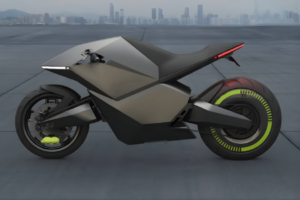
Interestingly, Hero actually teased two different bikes under the Ubex name at EICMA 2025, one that looked closer to a production-ready roadster with a mid-mounted motor, belt drive, and USD front forks, and a second, more radical supermoto-styled concept with a composite chassis that looks unlikely to reach showrooms in that form. When people refer to “the Ubex,” they usually mean the more production-realistic version.
Project VXZ
It is the more premium of the two, and it comes with an interesting backstory: it’s being developed in partnership with the American electric motorcycle specialist Zero Motorcycles. The name itself is widely reported to stand for VIDA x Zero.
What’s worth clarifying here is that despite the Zero partnership, patent filings show VXZ uses an entirely new, ground-up platform rather than being a rebadged version of an existing Zero motorcycle, which suggests Hero wants a platform built around Indian pricing and usage conditions rather than an imported architecture. Hero has described VXZ as aimed at riders wanting a higher-performance, adventure-oriented electric motorcycle, sitting above UBEX in the lineup.
As for which one arrives first: as of now, Hero has not officially confirmed this. Some industry coverage suggests UBEX, as the more urban and arguably simpler product, could be the more likely candidate for an earlier or higher-volume launch, while VXZ plays the flagship role. But this is informed reading of the two products’ positioning rather than something Hero has stated outright, so treat it as an expectation, not a fact.
Design: What Could Make It Different?
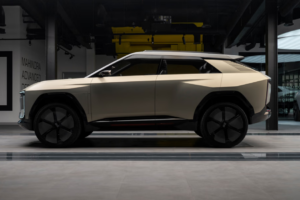
Going purely by the concepts and patent images shown so far, both motorcycles lean toward a sporty, streetfighter-style stance rather than a relaxed commuter posture. The Ubex concept that looks closest to production has a roadster-like riding position, a mid-mounted motor (rather than a hub motor in the rear wheel, which is common on cheaper electric two-wheelers), a belt-drive transmission, and upside-down front forks, hardware more commonly seen on performance-oriented motorcycles than entry-level electric two-wheelers.
VXZ appears visually larger and more muscular, with a sharp LED headlamp carrying VIDA’s now-familiar daytime-running-light signature, a stepped or split seat, narrow tail section, and multi-spoke alloy wheels. Patent images also show an aggressive front fascia with petal-style disc brakes at both ends.
What this means for a buyer is fairly straightforward: neither motorcycle looks like it’s chasing the low-cost commuter EV segment where many current Indian electric two-wheelers compete. The riding position and componentry suggest Hero is aiming these at riders who already want something closer to a “real” motorcycle experience, not just cheap daily transport. Whether that translates into genuinely sporty handling and a comfortable ride, though, is something no one can honestly claim to know yet, since neither bike has been ridden by independent reviewers.
The final production design for either motorcycle has not been confirmed, and concept bikes shown at motorcycle shows routinely get toned down, or occasionally get bolder, by the time they reach a showroom.
Battery, Range and Performance: What Do We Actually Know?
This is the section where it’s most tempting to fill gaps with plausible-sounding numbers, and it’s also where Hero has said the least publicly.
Confirmed: Hero has stated that the motorcycle platforms are being engineered with range and gradeability specifically in mind, since these are priorities that matter far more to motorcycle riders than to scooter users. Beyond that broad intent, Hero has not released official figures for battery capacity, motor output, top speed, claimed range, or charging time for either UBEX or VXZ.
Expected/Reported, not confirmed: Some coverage describes the UBEX as carrying a relatively large, likely fixed (non-removable) battery pack that could offer higher range than typical electric scooters. VXZ, given its flagship positioning and the Zero Motorcycles collaboration, is expected by some outlets to deliver performance in the ballpark of a mid-capacity petrol motorcycle, though no numbers back this up publicly.
Here’s why this matters practically: a claimed range figure on a spec sheet is only useful once you know how it holds up in real Indian traffic, in real heat, with a rider and possibly a pillion on board.
Electric two-wheelers routinely fall short of their claimed range in daily use, and Hero’s own scooters are no exception to that general pattern in the segment. Until Hero publishes official figures, and, ideally, until independent reviewers get real-world seat time, any range or performance number floating around for these motorcycles should be treated as a rough indication at best, not something to plan a purchase around.
Price and Variants: What We Know So Far
Hero has not confirmed pricing or the final variant structure for either motorcycle yet. That’s expected at this stage; pricing is usually one of the very last things a manufacturer locks in before launch, especially for a product still 12–18 months away.
At this stage, the more useful thing to look at is positioning rather than trying to predict an exact price. UBEX appears to be aimed at the more accessible end of Hero’s electric motorcycle range, positioned to compete with the electric motorcycles already available in India today. VXZ, as the flagship product built with Zero Motorcycles, is positioned as the more premium and performance-focused option of the two. Neither of these is a price prediction; it’s simply how Hero has framed the two projects so far, and actual pricing could land anywhere within or beyond that positioning once it’s confirmed.
How many trims each motorcycle will get, what separates them, or whether features like fast charging or a bigger battery will be optional extras also remains unconfirmed. Buyers interested in these motorcycles should watch for Hero’s own announcements closer to 2027 rather than relying on price predictions doing the rounds online, because a mismatch between expected and actual pricing is one of the most common reasons early EV interest doesn’t convert into actual sales.
Features and Technology
Beyond the hardware, VIDA’s existing scooters give a reasonable clue about what kind of technology suite Hero tends to build into its EVs, and it’s reasonable to expect at least some of that thinking to carry over to the motorcycles, even though nothing motorcycle-specific has been confirmed yet.
Based on Hero’s existing VIDA technology and current industry reporting, features such as a TFT instrument cluster, turn-by-turn navigation, multiple riding modes, and over-the-air software updates have been suggested, but Hero has not yet confirmed the final motorcycle feature list. The genuinely useful question for a buyer isn’t whether these features exist, but whether they change anything in daily use.
Turn-by-turn navigation on a dash, for instance, actually matters because it means less fumbling with a phone mount in traffic. Riding modes matter because they let a commuter squeeze out more range on a low-power setting during the week and unlock full performance on a weekend ride. Battery and range monitoring that’s genuinely accurate, not just present, matters more than almost anything else, because range anxiety is still the single biggest reason people hesitate on electric motorcycles.
On the other hand, things like flashy app integrations or gimmicky ambient lighting look good in a press release but rarely change how someone actually uses a motorcycle day to day. Until Hero confirms an actual features list for these motorcycles, it’s worth reading “connected technology” claims with that distinction in mind.
Everyday Practicality
It’s genuinely difficult to say much with confidence here, because no test rider has spent real time on either motorcycle yet. What can be reasonably inferred from the design direction: the mid-mounted motor and roadster-style riding position on Ubex suggest a more upright, commuter-friendly stance than VXZ’s sportier, sharper geometry, which, going by its styling, looks like it’s aimed more at weekend or performance-minded riders than pure daily commuting comfort.
Storage, pillion comfort, seat height, kerb weight, and ground clearance haven’t been confirmed for either bike, which means anyone hoping to use one for two-up city commuting or occasional highway runs will simply have to wait for official specifications closer to launch. Based on the current design language, though, this could end up favouring UBEX for buyers who want a practical daily motorcycle, with VXZ leaning toward riders who prioritise outright performance and are willing to trade off some everyday convenience for it.
Hero VIDA Electric Motorcycle vs Existing Electric Bikes
The more useful comparison isn’t just about specifications. It’s about what each motorcycle offers to the person buying it.
Revolt RV400 has been around long enough to have a genuine ownership track record in India, along with a reasonably wide service and swap-station network in the cities it operates in. It suits a buyer who wants something proven today, without waiting.
Oben Rorr, including the newer performance-focused Rorr Evo, sits at the more accessible end of the segment and appeals to buyers who want strong acceleration figures without stepping up to premium pricing.
Matter Aera takes a different approach entirely, with a 4-speed manual gearbox designed to replicate the feel of a traditional petrol motorcycle, a genuinely unique proposition for riders who miss that mechanical engagement, positioned above the RV400 and Rorr.
Ultraviolette F77 plays in a completely different league, aimed at performance-focused buyers who want a genuinely quick, premium electric motorcycle and are prepared to pay a significant premium for it.
Who might prefer Hero VIDA’s motorcycle? Buyers who trust Hero’s dealer and service network more than a newer EV-only brand, and who are comfortable waiting for a mainstream manufacturer’s take on the segment rather than backing a startup.
Who might prefer an established option? Anyone who wants a motorcycle now, or who values real-world ownership data and an already-proven charging or service network over a brand-name promise.
Hero’s potential advantage is straightforward: an enormous existing dealership and service footprint across India, something none of today’s electric motorcycle makers can match. That alone could matter a great deal for buyers outside major metros.
Where Hero will have to prove itself is performance credibility, since none of its current products, all scooters, have demonstrated genuine motorcycle-grade acceleration, handling, or range, and the VXZ’s association with Zero Motorcycles will only mean something once it’s backed by real specifications and reviews.
The Big Question: Should You Wait for Hero’s Electric Motorcycle?
The answer depends mainly on how soon you need an electric motorcycle and how comfortable you are with waiting for a first-generation product.
Wait for VIDA if:
- Hero’s dealership and service reach matter more to you than being an early adopter.
- You don’t need an electric motorcycle in the next year.
- You’d rather buy from an established two-wheeler manufacturer than a newer EV-focused brand.
- You’re willing to let the final specifications and pricing, once confirmed, decide whether it fits your budget.
Don’t wait if:
- You need an electric motorcycle now and can’t realistically hold off until 2027 or later.
- You’d rather buy something with a real ownership track record than a first-generation product from any brand.
- An established electric motorcycle already fits your budget and use case comfortably.
What Will Matter Most to Buyers?
A few factors will matter far more than any single headline spec:
- Price, because even a technically excellent motorcycle fails if it’s priced out of the segment it’s aimed at.
- Real-world range, since claimed figures rarely survive contact with Indian traffic and heat.
- Charging convenience, particularly whether home charging is practical or whether owners will depend on public infrastructure.
- Service network readiness specifically for electric motorcycles, which is a different skill set from servicing electric scooters or petrol bikes.
- Battery warranty and long-term reliability, since battery degradation anxiety is a real concern for EV buyers.
- Spare parts availability and resale value, both of which remain unproven for almost every electric motorcycle brand in India, Hero included once it launches.
- How it actually performs against the competition it will meet on the day it launches, not the competition that exists today, since two years is a long time in this segment.
None of these come down to how big a number appears on a spec sheet. They come down to whether Hero can execute consistently after the launch event ends, which is a much harder thing to promise than a single impressive figure.
Final Verdict
Does Hero have a realistic shot at making its first VIDA electric motorcycle a mainstream success? On paper, probably yes; no other electric two-wheeler brand in India can match Hero’s manufacturing scale, dealership reach, or brand trust built over decades. That’s a genuine structural advantage that newer, EV-only rivals simply don’t have.
But a strong distribution network doesn’t automatically translate into a good motorcycle, and right now, there’s still no confirmed range figure, no confirmed price, and no confirmed launch date beyond a broad 2027 target. Two different platforms are in development, aimed at two different kinds of riders, and it isn’t even settled which one reaches showrooms first.
The honest answer is that judgement should wait, not out of excessive caution, but because there simply isn’t enough confirmed information yet to responsibly tell someone to hold off on a motorcycle they need today. If you’re shopping for an electric motorcycle right now, an established option that fits your budget and use case remains the safer bet.
If you can comfortably wait, keeping an eye on Hero’s official announcements over the next year is reasonable; just don’t let concept-stage renders and patent leaks do the deciding for you. That should be left to Hero’s confirmed production motorcycle, its actual pricing, and most importantly,y how it performs once real riders get to test it.

FAQs
When will Hero launch its first VIDA electric motorcycle?
Hero has not confirmed an exact date. Company executives have said the electric motorcycle programme will not produce a launch in 2026, and that Hero is targeting 2027 for its first electric motorcycles.
What is the difference between Hero VIDA Ubex and VXZ?
Ubex is positioned as the more urban, accessible naked motorcycle aimed at everyday riders, while VXZ, developed with Zero Motorcycles, is the more premium, performance-focused flagship. Hero hasn't confirmed which one will reach production first.
How much will the Hero VIDA electric motorcycle cost?
Hero has not announced pricing for either motorcycle. Based on how the two projects are positioned, Ubex appears aimed at the more accessible end of the segment and VXZ at the premium end, but these are not official price predictions.
What is the range of Hero's upcoming electric motorcycle?
No official range, battery capacity, or motor output figures have been released. Hero has said the platforms are being engineered with range and gradeability as priorities, but specific numbers remain unconfirmed.
Should I wait for Hero's electric motorcycle or buy one available today?
It depends on urgency and risk tolerance. Buyers who need a motorcycle now, or who value a proven ownership track record, are better served by an established option like the Revolt RV400, Oben Rorr, or Matter Aera. Buyers comfortable waiting and who value Hero's dealer network can reasonably hold off until pricing and specs are confirmed.