


























Mahindra launched the BE 6 SporteQ in India on 15 August 2026, alongside a new Formula E Freedom Edition. The SporteQ is a new version of the existing BE 6 electric SUV, bringing a redesigned cabin, a new triple-screen cockpit, and a set of AI-driven features called TEQ Suites, powered by Mahindra’s in-house MAIA software architecture. The biggest talking point is TEQ_Talk, an in-car voice assistant built on Google Gemini, along with additions such as in-car gaming, karaoke, and an expanded Digital Car Key system.
This article covers everything a buyer needs to know about the BE 6 SporteQ: its price, variants, battery and range options, performance, design, interior, key features, and how the new Battery-as-a-Service (BaaS) option works. Since the SporteQ carries forward the same underlying BE 6, the comparison with the outgoing model is covered briefly in a dedicated section rather than running through the whole article.
Mahindra BE 6 SporteQ Price in India
The BE 6 SporteQ range starts at ₹19.45 lakh (ex-showroom) for the base ONE variant with the 59kWh battery, and goes up to ₹26.95 lakh for the top-spec FOUR and Launch Edition variants with the 79kWh battery. These are the prices if you buy the car with the battery included.
Mahindra has also introduced a Battery-as-a-Service (BaaS) option on the BE 6. Under this scheme, the ONE variant starts at ₹11.45 lakh, and the TWO variant at ₹12.95 lakh, both roughly ₹8 lakh cheaper than their battery-inclusive prices. In exchange, owners pay a separate battery usage charge of ₹3.75 per km.
In simple terms: with BaaS, you’re buying the car body and hardware upfront at a lower price, but renting the battery pack separately and paying for it based on how much you actually drive. Without BaaS, you pay a single upfront price and own the battery outright. All prices mentioned are ex-showroom and exclude the cost of a home wall charger and its installation, which Mahindra bills separately.
BaaS is currently available only on the 59kWh battery, and only on the ONE and TWO variants; it isn’t offered on the 70kWh or 79kWh versions.
BE 6 SporteQ Variants
The SporteQ series is spread across eight variants, with pricing depending on which battery pack is chosen:
| Variant | Battery Options | Price (Ex-showroom) | Key Highlights |
| ONE | 59 kWh (₹19.45L) / 59 kWh BaaS (₹11.45L) | ₹11.45L – ₹19.45L | Entry variant, BaaS available |
| TWO | 59 kWh (₹20.95L) / 59 kWh BaaS (₹12.95L) | ₹12.95L – ₹20.95L | Triple-screen cockpit onwards |
| THREE | 59 kWh / 70 kWh | ₹21.95L – ₹22.95L | Best mix of features and battery choice |
| THREE+ | 70 kWh / 79 kWh | ₹23.95L – ₹24.95L | Higher equipment, larger battery options |
| FOUR | 79 kWh | ₹26.95L | Range-topping standard variant |
| FE (Formula E Freedom Edition) | 79 kWh | ₹24.45L | Race-inspired two-screen cockpit, Acceleration Boost |
| FE FOUR | 79 kWh | ₹26.95L | Fully loaded Formula E Freedom Edition |
| Launch Edition | 79 kWh | ₹26.95L | Graphite Storm exterior, Racing Tan leatherette interior |
For most buyers, the THREE variant is worth a close look; it offers a choice between the 59kWh and 70kWh batteries, comes with the triple-screen cockpit, a panoramic glass roof, ventilated front seats, and a powered driver’s seat, without stepping into the pricier THREE+ or FOUR trims.
Those who specifically want the racing-inspired look and the sharper Acceleration Boost feature should look at the FE (Formula E Freedom Edition), while buyers chasing the most complete feature set with a distinct cosmetic identity would go for the Launch Edition.
Battery, Range and Charging
The BE 6 SporteQ is offered with three battery options, a change from the standard BE 6, which only came with 59kWh and 79kWh packs. Mahindra has now added a 70kWh option in between, borrowed from the XEV 9S.
| Battery | Power | Claimed Range (MIDC) | DC Fast Charging |
| 59 kWh | 231 hp | 548 km | Up to 140kW |
| 70 kWh | 245 hp | 651 km | Up to 160kW |
| 79 kWh | 286 hp | 683 km | Up to 180kW |
All three batteries support 20-80% DC fast charging in under 20 minutes at their respective maximum charging speeds, and both 7.2kW and 11.2kW AC home charging. The battery comes with a lifetime warranty for the first registered owner, or 10 years/2 lakh km if the car changes hands.
These range figures are MIDC-certified claims, and real-world range will typically be lower depending on driving style, AC usage, and road conditions. Mahindra has not published real-world range figures specific to the SporteQ, so the MIDC figures should not be treated as an everyday driving guarantee.
Performance
All SporteQ variants use a single rear-mounted electric motor with rear-wheel drive; there’s no dual-motor or AWD option. Torque stays constant at 380 Nm regardless of battery size, while power output rises with battery capacity, from 231 hp on the 59kWh version to 286 hp on the 79kWh version.
The SporteQ also introduces TEQ_Drive, a set of driving-mode features:
- Custom Drive Mode: lets owners fine-tune throttle response and other driving parameters instead of picking from fixed presets.
- Drift Mode: a mode aimed at controlled rear-wheel slides, more relevant on a track than daily driving.
- Tribe Drive: a group-driving feature for coordinating with other BE 6 owners.
- Revive & Revive SOS: assistance features for low-battery or breakdown situations.
- Acceleration Boost: exclusive to the Formula E Freedom Edition, this cuts the 0-100 km/h time to a claimed 6.44 seconds.
For a regular buyer, the practical takeaway is that the SporteQ still drives the rear wheels only, delivers strong in-gear acceleration typical of EVs, and the performance-focused features such as Drift Mode and Acceleration Boost matter mainly to those who want a sportier, more engaging driving experience rather than daily practicality.
Exterior Design
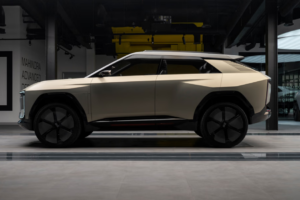
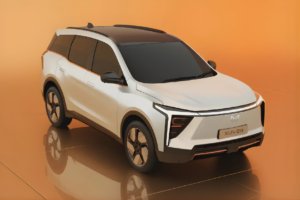
The SporteQ doesn’t change the fundamental shape of the BE 6. It keeps the same coupe-SUV silhouette, C-shaped connected LED daytime running lights, slim LED headlamps, and the sharp character lines that have defined the car since its 2024 launch. The rear retains its two-part roof spoiler, illuminated Mahindra logo, and C-shaped LED tail lamp design.
What’s new is mostly in the colour palette and the badging. Mahindra has added four new colour options, Rosso Impulso, Ruby Velvet, Graphite Storm, and Firestorm Orange Satin, taking the total to 12 colours across the range. The Launch Edition gets an exclusive Graphite Storm exterior, while the Formula E Freedom Edition is offered in Satin finishes, including the new Rosso Impulso, with subtle tricolour accents referencing Mahindra’s Formula E racing programme. Both special editions carry SporteQ-specific badging to set them apart from the standard car.
Interior and Three-Screen Cockpit
The interior is where the SporteQ genuinely differs from the regular BE 6, and it’s one of the biggest changes on the new version.
From the TWO variant upward, the SporteQ gets a three-screen, coast-to-coast cockpit, a driver display, a central infotainment screen, and a dedicated front passenger display, all connected visually across the dashboard. This isn’t just about screen count: the third screen lets the front passenger control entertainment, navigation, or even play games independently of the driver, without needing to reach for a phone. It also comes with a parental lock, so a parent can restrict what a child sitting in the passenger seat can access on that screen.
Buyers who prefer a more track-focused, minimal setup can opt for the Formula E Freedom Edition instead, which uses a two-screen cockpit with a distinct halo design around the driver’s display, inspired by Mahindra’s Formula E race cars.
On materials and comfort, the Launch Edition gets a full Racing Tan leatherette interior, while the Formula E Freedom Edition has a Black and Firestorm Orange theme. Other cabin features carried over or enhanced in the SporteQ include a panoramic glass roof, ventilated front seats, a powered driver’s seat, and wireless phone charging, though exact availability varies by variant.
Features and Technology
The SporteQ’s biggest changes are software-based, built around what Mahindra calls the six TEQ Suites, powered by its MAIA AI architecture.
- TEQ_Talk: An in-car voice assistant built with Google Gemini. It supports natural conversation for controlling the car, getting navigation directions, playing music, or checking news, and works across more than 100 functions and 48 connected apps.
- TEQ_Me: Automatically recognises the driver and loads their personal profile, seat position, climate settings, and preferences, without needing to select a profile manually.
- TEQ_Secure: Covers safety and monitoring, including a live remote camera view with audio relay and intrusion alerts, plus an expanded Digital Car Key that works across iPhone, Apple Watch, Android, and Samsung devices, as well as physical NFC key cards.
- TEQ_Play: Adds in-car karaoke, a gaming suite (including bring-your-own-device mode), private audio zones, Dolby Vision and Dolby Atmos sound, and a group-audio “party mode” called GrooveMe Party.
- TEQ_xting: Lets owners display custom personalised messages on the LED tailgate.
Mahindra says all of these software features will also reach existing BE 6, XEV 9e, and XEV 9S owners through over-the-air updates rolled out in phases starting January 2027, though the exact feature set available will depend on the specific model and variant.
What Is New on the BE 6 SporteQ?
Since the SporteQ builds on the existing BE 6 rather than replacing it, here’s a quick look at what’s actually changed:
| Feature | Regular BE 6 | BE 6 SporteQ |
| Cockpit | Two-screen setup | Three-screen coast-to-coast cockpit (TWO variant onward) |
| Battery options | 59 kWh, 79 kWh | 59 kWh, 70 kWh (new), 79 kWh |
| AI voice assistant | Not available | TEQ_Talk with Google Gemini integration |
| In-car entertainment | Standard infotainment | Karaoke, gaming suite, Dolby Vision/Atmos, GrooveMe Party |
| Digital key | Limited | Expanded Digital Car Key across iPhone, Apple Watch, Android, Samsung, NFC cards |
| Tailgate personalisation | Not available | TEQ_xting personalised tailgate messaging |
| Purchase options | Battery-inclusive only | Battery-inclusive or BaaS (₹3.75/km) |
| Performance modes | Standard drive modes | Custom Drive Mode, Drift Mode, Tribe Drive, Acceleration Boost (FE) |
The core dimensions, motor layout, and exterior body structure remain unchanged, so this is best understood as a significant software and cabin upgrade rather than a mechanical overhaul.
BaaS: How Does It Work?
Battery-as-a-Service splits the cost of the car into two parts: you pay for the vehicle itself upfront, and separately pay for battery usage based on distance driven, at ₹3.75 per km. This is why the ONE variant looks nearly ₹8 lakh cheaper with BaaS (₹11.45 lakh) than without it (₹19.45 lakh); you simply haven’t paid for the battery yet.
Whether this works out cheaper for you depends entirely on how much you drive and how long you keep the car. As an illustrative example only: if you drove 60 km every day of the year, that works out to roughly ₹225 a day, or close to ₹82,000 a year, in battery charges alone, separate from electricity costs for actually charging the battery.
Actual usage will vary from person to person, so this figure shouldn’t be read as a typical annual cost. Someone who drives less, or plans to sell the car within a few years, may find BaaS brings the upfront cost down without a large ongoing burden. Someone who drives long distances regularly, or plans to keep the car for a decade or more, could end up paying significantly more over time compared to buying the battery outright.
BaaS is currently limited to the 59kWh battery on the ONE and TWO variants only; Mahindra has not extended it to the 70kWh or 79kWh packs. Buyers should work out their own likely annual mileage before deciding, rather than assuming the lower starting price is automatically the better deal.
BE 6 SporteQ: Who Should Consider It?
The SporteQ makes the most sense for:
- Buyers who want a feature-heavy, connected electric SUV and will actually use things like the AI voice assistant, personalisation, and the three-screen cockpit.
- Buyers who want flexibility in how they pay, through the BaaS option.
- Buyers interested in a sportier drive, particularly those looking at the Formula E Freedom Edition with Acceleration Boost.
- Existing BE 6 shoppers who were waiting for a more premium, tech-loaded version before deciding.
It may not be necessary for buyers who mainly want a straightforward electric SUV for commuting and don’t particularly care about karaoke, gaming, or voice-assistant features, especially since Mahindra plans to bring several of these software features to the existing BE 6 via OTA updates anyway.
Is the BE 6 SporteQ Worth Considering?
Reasons to consider it:
- A three-screen cockpit that gives the front passenger a dedicated display for entertainment and other functions.
- High claimed range, especially on the 70kWh and 79kWh options.
- The new BaaS option gives buyers a way to lower the upfront cost.
- Strong feature set including the Gemini-based voice assistant, expanded digital key options, and OTA update support.
- Multiple drive modes and the Acceleration Boost variant for buyers who enjoy spirited driving.
Things to consider:
- BaaS running costs can add up for high-mileage owners; do the math for your own usage before choosing it.
- The battery-inclusive versions carry a higher upfront price than before.
- Not every new TEQ feature will matter equally to every buyer; some are genuinely useful, others are more about novelty.
- Real-world range will be meaningfully lower than the claimed MIDC figures.
- Competition in this space, including the Hyundai Creta Electric, Tata Curvv EV/Sierra EV, and MG ZS EV, is intensifying, so it’s worth cross-shopping before deciding.
Final Verdict
The BE 6 SporteQ is a newly launched version of the BE 6 that puts its weight behind technology, personalisation, and performance, rather than changing the fundamental car. If you already liked the BE 6’s design and driving experience, the SporteQ gives you a meaningfully upgraded cabin and software experience, plus a new way to pay for it through BaaS.
The right choice for you comes down to three questions: how much do you actually value the new tech features, how many kilometres will you drive each year if you’re considering BaaS, and does the price gap between variants match the features you’ll genuinely use. If you’re considering one, compare the different variants carefully and work out whether the additional technology and BaaS option actually suit your usage.





FAQs
What is the Mahindra BE 6 SporteQ?
It's a new version of the Mahindra BE 6 electric SUV, launched on 15 August 2026, with a redesigned three-screen cockpit, new AI-based TEQ features, a new 70kWh battery option, and a Battery-as-a-Service purchase option.
What is the price of the Mahindra BE 6 SporteQ?
Prices range from ₹19.45 lakh to ₹26.95 lakh (ex-showroom) with the battery included. With BaaS, the ONE variant starts at ₹11.45 lakh, plus a battery charge of ₹3.75 per km.
What is the range of the BE 6 SporteQ?
The claimed MIDC range is 548 km on the 59kWh battery, 651 km on the 70kWh battery, and 683 km on the 79kWh battery. Real-world range will be lower depending on driving conditions.
What is BaaS in the BE 6 SporteQ?
Battery-as-a-Service lets buyers purchase the car at a lower upfront price by excluding the battery cost, and instead pay ₹3.75 per km for battery usage. It's currently available only on the 59kWh ONE and TWO variants.
What are the major new features of the BE 6 SporteQ?
Key additions include TEQ_Talk (a Google Gemini-powered voice assistant), a three-screen cockpit, in-car karaoke and gaming, an expanded Digital Car Key, personalised tailgate messaging, and new drive modes including Drift Mode and Acceleration Boost.