

























Hyundai has pulled the covers off the new-generation Tucson, and it looks substantially different from the SUV it replaces. Making its debut in South Korea, the fifth-generation Tucson brings a much boxier design, a completely new cabin built around Hyundai’s latest Pleos Connect technology, bigger dimensions, and a powertrain strategy that puts greater emphasis on electrified and hybrid options. This is the biggest visual and technological jump the Tucson has taken in years, and it’s easy to see why the model is generating so much buzz right now.
For Indian buyers, though, this story comes with an important twist. The outgoing Tucson was discontinued in India in late 2025 after underwhelming sales, and Hyundai has not confirmed whether or when the new-generation model will return to Indian showrooms. So while the specifications below are real and confirmed for the global unveiling, they should not be read as India-spec details.
2027 Hyundai Tucson: What’s New?
The new-generation Tucson brings several major changes, while some powertrain details are still being reported or remain unconfirmed:
- A completely new, boxier exterior design based on the “Art of Steel” language
- New H-shaped lighting front and rear
- A bigger body with a longer wheelbase and more cabin space
- A redesigned interior centred on the new Pleos Connect infotainment system
- A large dashboard touchscreen paired with a slim digital driver display
- An AI voice assistant (Gleo) built into the new software
- A stronger focus on electrified and hybrid powertrains
- A new, rugged XRT trim
Here’s what each of these actually means for someone thinking about this SUV.
1. The Tucson Gets a Much Boxier Design
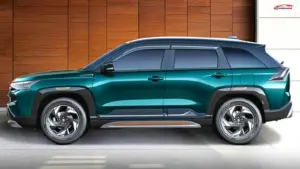
The outgoing Tucson was known for its sharp, faceted styling. The new generation drops that look entirely in favour of a squarer, more upright shape. The front gets a full-width LED light bar with vertical DRLs, along with a boxy bumper and slim upper and lower grilles. Viewed from the side, the SUV has squared-off front and rear quarter panels, sharp angles running across the doors, and beefier rocker panels. At the rear, there’s a light bar paired with narrow, vertical LED taillights.
Hyundai has confirmed the body has grown by 2.3 inches (60mm) to about 185 inches (4.7 metres) in length, with half of that growth going into the wheelbase. The SUV is also about 1.57 inches (40mm) wider than before, which should translate into more shoulder room inside. The result is a larger and more upright-looking SUV than the model it replaces.
2. New Front-End and Lighting Design
The lighting signature is one of the clearest ways to tell the new Tucson apart from the old one at a glance. The design follows Hyundai’s new “Art of Steel” design philosophy, which focuses on pronounced surface volumes and distinct character lines, with clear traces of the Boulder concept visible in the styling. Up front, vertical “H-edge” daytime running lights sit alongside a horizontal centre light bar, with an indirect lighting structure used to soften the glow across the front fascia.
Along the sides, sculpted fenders and sharp horizontal body lines create strong light-and-shadow contrast across the doors, while the rear uses a three-dimensional prism-lens structure for the taillights, paired with vertical lower lighting elements, a redesigned bumper, and a prominent skid plate. Hyundai has also previewed a rugged XRT version, which gets a rectangular front grille, a wider front skid plate, black wheel-arch cladding with a forged-carbon pattern, XRT-specific bumper, wheels and badging, along with patterned upholstery, dark metal accents and all-weather floor mats.
3. Interior Gets a Major Redesign
The cabin change is arguably a bigger deal than the exterior. The new interior brings together the instrument cluster, central touchscreen, vehicle controls, apps, navigation, and voice assistant into a single software-led setup, with a slim display directly ahead of the driver and a large central touchscreen dominating the dashboard.
Importantly, Hyundai hasn’t gone all-touchscreen. Physical temperature dials and piano-style switches remain below the central display, and the steering wheel also keeps physical buttons, which makes the cabin feel more usable day-to-day rather than relying purely on menus. The dashboard has a rounded, padded design similar to Hyundai’s new Elantra, but with its own vent layout, including a slim vent strip lower down and distinctive vertical elements at the corners of the dash.
4. New Infotainment and Technology
The star of the new cabin is Pleos Connect, Hyundai’s first fully in-house infotainment platform. It’s built for cars that can receive over-the-air updates and runs on an Android-based platform with a smartphone-like interface, split-screen options, customisable layouts and its own app store. For the Tucson specifically, reports point to a 17-inch main display paired with a 9.9-inch digital instrument cluster, positioned centrally on the dashboard to emphasise a large, immersive digital interface.
What does this actually mean for a driver? At the heart of the system is Gleo, Hyundai’s large language model-based AI assistant, which can process complex, combined commands, such as pairing a navigation request with music playback, and answer real-time questions about weather, traffic and vehicle functions in natural conversation. In practical terms, that means fewer trips into sub-menus for basic tasks, and a system that should feel closer to a smartphone than a traditional car infotainment unit. Hyundai has retained physical buttons beneath the screen for essentials like hazard lights and climate control, so core safety functions don’t disappear into the touchscreen.
5. Powertrains: What’s Changing?
This is where global buyers and Indian buyers need to read carefully, because Hyundai has not detailed full technical specifications at this design-reveal stage. Hyundai hasn’t confirmed powertrain details yet, saying only that electrified options will remain on the menu, with the current petrol engine possibly getting more power. Gasoline and hybrid options are expected to return, though a plug-in hybrid version has not been confirmed.
Diesel appears to be on its way out in most markets. A return of a diesel engine remains unlikely, and it will most likely disappear from the lineup for good. These are global powertrain directions only; Hyundai India has said nothing official about which engines the new Tucson would get if and when it arrives here.
Hyundai is also expected to put greater emphasis on hybrid power with the new Tucson, with reports suggesting the next-generation hybrid could use the newer TMED-II system. However, Hyundai has not yet released complete technical specifications, and a PHEV has not been officially confirmed.
6. Safety and Driver Assistance
Hyundai has not detailed the new Tucson’s global safety equipment list at the design-reveal stage. Some Indian automotive reports have referenced an upgraded driver-assistance suite for the new generation, but these remain unconfirmed expectations rather than official specifications. Until Hyundai releases a formal features and safety list, and separately confirms India-spec equipment, it’s best treated as an open question, both globally and for India.
What Has Changed From the Current Tucson?
Current information is based on confirmed and reported details; India specifications remain unconfirmed.
| Area | Current (Outgoing) Tucson | New-Generation Tucson |
| Design | Rounded, sharp-faceted styling | Boxier “Art of Steel” design |
| Front styling | Cascading grille, angular LED DRLs | H-shaped LED light bar, vertical DRLs |
| Dimensions | Smaller footprint | ~60mm longer, ~40mm wider, longer wheelbase |
| Interior | Twin-screen curved display, touch-based HVAC | New Pleos Connect layout with physical switchgear retained |
| Infotainment | Older Hyundai infotainment | Pleos Connect, up to 17-inch screen (reported) |
| Instrument display | Digital cluster (screen size varies by market) | 9.9-inch digital cluster (reported) |
| Technology | Standard voice commands | Gleo AI assistant, OTA updates |
| Powertrains | Petrol, diesel in India; hybrid/PHEV in select markets | Petrol and hybrid expected; PHEV not confirmed |
| Availability in India | Discontinued in late 2025 | Not confirmed |
This table reflects only what has been officially shown or reported so far; several cells will be filled in as Hyundai releases more information.
What Does This Mean for India?
For Indian buyers, the bigger question is whether Hyundai plans to bring the new-generation Tucson to India. The previous-generation Tucson was discontinued here in November 2025 after relatively weak sales. Hyundai has now unveiled the fifth-generation model globally, but there is still no official confirmation of its return to the Indian market.
Some Indian automotive reports have suggested a possible 2027 India launch, with speculation that Hyundai could move away from the outgoing 2.0-litre diesel and focus more on hybrid power. However, these remain reports rather than confirmed details from Hyundai India.
For now, Hyundai has not announced an India launch timeline, price, variants, or powertrain lineup for the new-generation Tucson. So while the global unveiling gives us a clear look at Hyundai’s next Tucson, the India-specific version and its launch plans are still awaited.
2027 Hyundai Tucson: Should Indian Buyers Be Interested?
It could be interesting for India if:
- Hyundai officially confirms a new-generation Tucson for the Indian market
- The hybrid powertrain is offered here, given rising demand for hybrids in India
- Pricing is positioned competitively against rivals in the segment
- The new Pleos Connect technology and larger cabin are carried over
- The bolder, boxier design and updated safety kit make it to India-spec cars
But buyers should wait for:
- Official confirmation of an India launch
- India-specific variants and trim levels
- Confirmed India engine and transmission options
- Official pricing
- Confirmed feature list and safety equipment for India
Right now, none of this has been locked down, so it’s too early to treat the new Tucson as a sure thing for Indian showrooms.
Final Verdict
The new-generation Tucson is a genuinely big change for Hyundai’s global lineup: a boxier design, a larger body, a completely reworked cabin built around the new Pleos Connect system, and a clearer shift toward hybrid power. It’s one of the more significant generational jumps the Tucson has made.
For Indian buyers, though, the honest answer right now is: wait and watch. Hyundai India has not confirmed whether the new Tucson is returning to Indian showrooms, and until that happens, there’s no official timeline, pricing, or spec sheet to go by. The global unveiling is real and worth knowing about, but the India launch is still not confirmed.




FAQs
Has the new-generation Hyundai Tucson been unveiled?
Yes. Hyundai has officially unveiled the fifth-generation Tucson, with its design debut taking place in South Korea.
Is the new Hyundai Tucson coming to India?
Hyundai has not confirmed an India launch. The outgoing Tucson was discontinued in India in late 2025, and some reports suggest a possible 2027 India launch, but this is not official.
Is the 2027 Hyundai Tucson the fifth-generation model?
Yes, this new-generation Tucson marks the fifth generation of the nameplate.
What has changed in the new-generation Hyundai Tucson?
The biggest changes are a much boxier exterior design, a larger body and wheelbase, a completely redesigned interior with the new Pleos Connect infotainment system, and a stronger push toward hybrid powertrains.
Does the new Tucson get a hybrid powertrain?
A hybrid version is expected, but Hyundai has not yet released the complete technical specifications. A plug-in hybrid has also been discussed in reports but has not been officially confirmed.