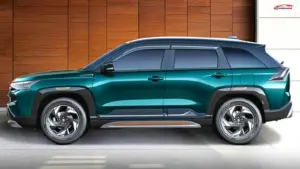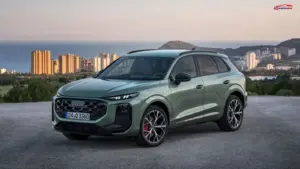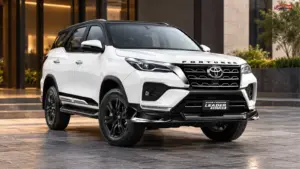











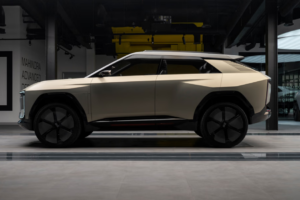
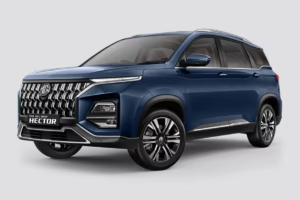














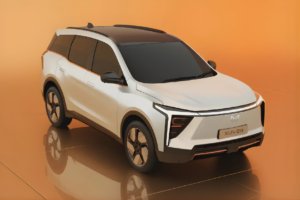


Toyota is putting fresh attention behind its hybrid technology in India, with a new television campaign and prominent newspaper advertising built around one simple message: you get the benefits of electrification without having to plug the car in. The campaign highlights Toyota’s “self-charging hybrid” technology and its long experience with hybrid powertrains.
The timing is what makes the renewed push interesting. Toyota has been selling strong hybrids in India for years, but the conversation around hybrid technology has recently widened with the arrival of plug-in hybrids such as the MG Hector Tomahawk PHEV. While a PHEV asks buyers to charge the battery externally to make the most of its electric range, Toyota is reinforcing a different proposition: electrification without changing how you refuel your car.
That raises a more useful question than whether Toyota’s campaign is simply effective advertising: what does “self-charging hybrid” actually mean, why is Toyota emphasising it now, and does that approach make sense for someone choosing between a hybrid, PHEV or EV? That’s the question this article sets out to answer.
What Toyota’s New Hybrid Campaign Is Really About
The Toyota Hybrid campaign itself is fairly straightforward. Toyota took out a prominent newspaper advertisement highlighting its hybrid track record in India, followed by a television commercial built around its “self-charging hybrid” technology. The core message running through both: owners never need to find a charger or plan their day around plugging in the car.
The vehicles doing the talking are Toyota’s existing strong-hybrid line-up in India: the Urban Cruiser Hyryder, the Innova Hycross, the Camry, and the Vellfire. There’s no new hybrid model tied to this campaign; it’s a reinforcement of the technology that already sits under these cars, aimed at buyers who may be hearing a lot about plug-in hybrids and EVs lately and wondering where a “regular” hybrid fits into that picture.
There isn’t much point in picking apart the ad frame by frame here. What matters more is understanding the technology behind the tagline, and why Toyota feels this is the moment to remind people about it.
Why Is Toyota Pushing Hybrids Now?
The timing is difficult to ignore, even though Toyota hasn’t publicly explained whether recent market developments influenced the campaign. Just a day after JSW MG Motor India launched the Hector Tomahawk PHEV, Toyota ran its newspaper advertisement highlighting its hybrid leadership, followed by the new self-charging hybrid TVC. Toyota has not said the campaign was a direct response to MG, so it would be wrong to present it that way. But the timing is notable: a major PHEV has entered the mainstream conversation just as Toyota is putting renewed emphasis on the advantage of a hybrid that doesn’t need external charging, from a company that has dominated the strong-hybrid segment so far.
There’s also a more straightforward business reason for Toyota to be talking about hybrids. In May 2026, Toyota Kirloskar Motor announced it had crossed cumulative sales of three lakh hybrid vehicles in India, a figure the company described as reflecting rising demand for self-charging hybrid electric vehicles in the country.
Toyota has also held a commanding position in this category; Toyota’s strong-hybrid vehicles held roughly an 81 percent share of the segment in the first quarter of FY26, according to industry data. With Toyota already leading India’s strong-hybrid market and plug-in hybrids now attracting more attention, reinforcing the convenience of its self-charging technology is a logical message for the company to put in front of buyers.
What Does “Self-Charging Hybrid” Actually Mean?
At its simplest, a Toyota strong hybrid combines a petrol engine, one or more electric motors, and a relatively small battery pack, along with the electronics and control systems that manage how they work together. Unlike a fully electric car, this battery is never meant to be charged from a wall socket or a public charging station. There’s usually no charging port at all.
So where does the electricity come from? Two places, mainly.
The first is regenerative braking. Every time you slow down or coast, the electric motor works in reverse, acting like a generator and feeding a small amount of energy back into the battery instead of losing it all as heat through the brakes.
The second is the petrol engine itself. In a strong hybrid, the engine doesn’t just drive the wheels; it can also spin a generator to top up the battery when needed, especially if charge levels drop and the car anticipates needing electric assistance soon, such as before a stop-start traffic patch.
The battery isn’t charging itself out of nowhere; it’s simply harvesting energy that would otherwise be wasted (through braking) and occasionally using a bit of the petrol engine’s output to top itself up. It’s clever energy management, not free energy.
So, to directly answer the question most buyers actually have: no, you never need to plug in a Toyota strong hybrid. You fuel it exactly like a normal petrol car, at any pump, and the hybrid system handles the electric side entirely on its own in the background.
Self-Charging Hybrid vs Plug-in Hybrid: What’s the Real Difference?
This is arguably the most useful thing to understand right now, because “hybrid” has quietly become a broad umbrella term covering some very different technologies.
| Strong Hybrid (Toyota) | Plug-in Hybrid (PHEV) | |
| External charging | Not required | Required to get full benefit |
| Battery size | Relatively small compared with a PHEV | Much larger (typically 15–20+ kWh) |
| Electric-only driving | Possible for short periods, depending on the system | Much greater electric-only capability |
| Petrol engine | Yes, does most of the work | Yes, but can be avoided for daily use |
| Charging at home | Not needed | Useful and generally important |
| Best suited to | Buyers who want better efficiency without changing how they refuel | Buyers who can charge regularly and want to drive mostly on electricity |
Toyota’s current India line-up, the Urban Cruiser Hyryder, Innova Hycross, Camry, and Vellfire, are all strong hybrids of this first kind. On the other side, the recently launched MG Hector Tomahawk PHEV is a good real-world example of the second category: it pairs a 1.5-litre petrol engine with a much larger 20.5kWh battery, and MG claims an electric-only range of more than 115 km when the battery is charged.
The point isn’t that one of these is universally better. They’re built to solve slightly different problems. A strong hybrid gives you better fuel efficiency with zero change to your routine. A PHEV can let you cover much of your daily driving on electricity, but only if you actually plug it in regularly. If you rarely charge a PHEV, you won’t make full use of its biggest advantage, its ability to cover a meaningful part of daily driving on electric power. You’re also carrying the weight and complexity of a much larger battery.
It’s also worth remembering that not every hybrid or PHEV on the market uses an identical setup. Battery sizes, electric motor outputs, and how aggressively the system leans on electric power all vary by manufacturer, so it helps to check the specifics of any car you’re considering rather than assuming all “hybrids” behave the same way.
Does a Toyota Hybrid Actually Save Fuel?
The honest answer is: usually yes, but the number on the brochure and the number you’ll see on your own dashboard are two different things.
Toyota’s ARAI-certified figures for its hybrids are genuinely strong on paper. The Urban Cruiser Hyryder hybrid is rated at up to 27.97 kmpl, compared with roughly 20–21 kmpl for the petrol-only version, a meaningful jump. The Innova Hycross hybrid and Camry hybrid carry similarly high ARAI ratings relative to their segments. These are official test-cycle numbers, measured under controlled conditions, and they’re a genuine indicator of the hybrid system’s efficiency advantage. But they’re not a promise of what you’ll get on your commute.
In real-world driving, city conditions with a lot of stop-start traffic tend to favour hybrids, because that’s exactly the kind of driving where the electric motor and regenerative braking do the most work; every red light and slow crawl is an opportunity for the system to lean on electric power instead of burning fuel.
However, actual mileage will vary with traffic, driving style, road conditions, and the amount of highway driving, so ARAI figures shouldn’t be treated as an everyday guarantee. On the highway, where the engine is running more continuously and there’s less braking to recover energy from, the hybrid’s advantage over the petrol version tends to narrow.
The takeaway: if most of your driving is city commuting with heavy traffic, a hybrid is likely to show its strongest real-world advantage. If you’re mostly doing long, steady highway runs, the efficiency gap between the hybrid and a well-driven petrol car will probably be smaller than the brochure numbers suggest.
Toyota’s Hybrid Line-up in India: Which One Is for Whom?
Toyota currently sells four hybrid models in India, and they’re aimed at fairly different buyers.
Urban Cruiser Hyryder Hybrid (roughly ₹17–20 lakh, ex-showroom) is the most accessible hybrid in Toyota’s current India line-up. It’s a compact SUV aimed at buyers who want a noticeably more fuel-efficient daily driver without stepping into a completely different ownership experience- think working professionals doing a daily office commute with occasional weekend trips. Toyota’s official India warranty page lists an 8-year/1,60,000 km warranty specifically on the hybrid battery, separate from the standard 3-year/1,00,000 km vehicle warranty. It’s worth confirming the exact terms with a dealer at the time of purchase, since coverage can vary for commercial or fleet use.
Innova Hycross Hybrid (roughly ₹26–33 lakh, ex-showroom for hybrid variants) targets large families and buyers upgrading from the diesel Innova Crysta who want similar space and reliability but lower running costs. It’s a heavier vehicle, so the hybrid system has more work to do, and reviewers have noted the hybrid variant carries a real price premium over the petrol version, something worth weighing against how much you’ll actually save in fuel over your ownership period.
Camry Hybrid (roughly ₹47–48 lakh) sits in executive sedan territory, aimed at buyers who want a quiet, refined long-distance cruiser rather than outright performance. It’s less about chasing the lowest running cost and more about a smooth, unhurried driving experience with hybrid efficiency layered on top.
Vellfire Hybrid (over ₹1.2 crore) is a luxury MPV for a completely different buyer, someone prioritising cabin comfort and chauffeur-driven use over anything else. The hybrid system here is more about refinement, with smooth, quiet low-speed running, than about maximising fuel economy.
The common thread: in every one of these, the hybrid variant costs more than the equivalent petrol version. Whether that premium makes sense depends entirely on how many kilometres you drive each year and how much of that is city traffic.
What Toyota’s Hybrid Technology Means for Owners
Fuel savings: The hybrid system genuinely helps most in city, stop-start conditions, where the electric motor takes over frequently. If your daily driving is mostly highway, the savings will be real but smaller than the brochure figures imply.
Charging: None required. This is the single biggest practical difference from a PHEV or EV, and it’s genuinely the main selling point Toyota is leaning on.
Battery ownership: Toyota provides an extended warranty for the hybrid battery on its models, 8 years/1,60,000 km on the Hyryder, per Toyota’s official India warranty page, subject to the applicable terms and conditions. It’s worth confirming the exact coverage, including any exclusions for commercial use, for whichever model and variant you’re considering.
Maintenance: The hybrid system adds components such as an electric motor, battery, and power-control electronics, while regenerative braking can reduce reliance on the conventional brakes. Actual maintenance costs will depend on the model and service requirements, so buyers shouldn’t assume a hybrid will automatically cost less or more to maintain than its petrol equivalent.
Driving experience: Toyota’s system is built to be unobtrusive; the switch between electric and petrol power is generally smooth, and the car can crawl in traffic on electric power alone at low speeds. Beyond that general characteristic, exact refinement and response will vary by model, so it’s worth test-driving the specific car you’re considering rather than assuming every Toyota hybrid feels identical.
Long-term ownership: Before buying, it’s worth asking the dealer directly about the specific battery warranty terms for your model and variant, what happens if the battery needs replacement outside warranty, and how the hybrid variant’s resale value has trended compared with the petrol version in the used market.
Hybrid vs EV: Which Actually Makes More Sense for You?
There’s no universal winner here; it genuinely comes down to how and where you drive.
A hybrid may make more sense if:
- You don’t have reliable, dedicated home charging (common in apartments without assigned parking)
- You regularly drive long distances between cities
- You want the convenience of refuelling at any petrol pump, anywhere, in a few minutes
- Most of your driving is urban, stop-start traffic
- You want some electrification benefit without changing your daily routine at all
An EV may make more sense if:
- You have dependable home or workplace charging
- Most of your driving fits within a predictable daily range
- You’re comfortable planning for longer trips around charging stops
- Lower running costs matter more to you than refuelling flexibility
Neither answer is “correct” in the abstract. A hybrid buyer in a metro apartment without a dedicated charging point is making a perfectly rational choice. So is an EV buyer with a bungalow and a home charger who rarely drives beyond city limits. The technology should fit the life you actually lead, not the other way around.
Why Toyota Is Emphasising the No-Charging Advantage
This is really the heart of what the campaign is trying to say. Toyota isn’t asking anyone to change how they refuel. There’s no new charger to install, no range anxiety to plan around, no waiting at a charging point on a road trip. The pitch, stripped down, is essentially: you get some benefit of electrification without altering a single habit.
That’s a genuinely attractive proposition for a large number of Indian car buyers, people living in apartments without dedicated parking or charging points, people who regularly drive between cities where charging infrastructure is still patchy, or simply people who don’t want to think about charging schedules at all.
But it comes with a real trade-off that the campaign, understandably, doesn’t dwell on: a strong hybrid still relies on its petrol engine for a significant share of its energy, particularly during higher-speed or longer-distance driving. It cannot match the electric-only running of a PHEV like the Hector Tomahawk, let alone a full EV. You’re trading a smaller efficiency gain and zero lifestyle change for the larger potential savings and larger lifestyle adjustment that come with plugging in.
Is Toyota’s Hybrid Approach Still Relevant as EVs Grow?
India’s EV market has been expanding, but adoption remains concentrated in metro cities where charging infrastructure is denser. India’s public charging network has grown significantly in recent years, but charging availability remains uneven across cities and regions, which is a genuine constraint for buyers outside the biggest urban centres.
Against that backdrop, hybrids have found real traction as a middle path. Toyota itself frames hybrid technology as a bridge towards a cleaner future, allowing customers to embrace electrification without compromising on convenience, at a time when the country’s EV transition continues to face charging infrastructure and affordability challenges. That’s Toyota’s own framing, and it’s worth reading as a company statement rather than an independent verdict, but the underlying infrastructure gap it points to is real and well documented.
The more useful way to think about this isn’t “hybrid vs EV, who wins”; it’s that both are likely to keep growing in India for different reasons and different buyers, at least for the next several years. EVs make the most sense where charging is dependable and daily distances are predictable, largely in and around major cities. Hybrids make sense as a lower-friction upgrade from a petrol car almost everywhere else, and PHEVs are now emerging as a genuine middle ground for buyers who want a taste of both. None of these technologies needs the others to fail for it to succeed.
To be clear about what Toyota’s campaign is not saying: it doesn’t mean hybrids are automatically better than EVs, and it doesn’t mean the hybrid battery charges itself from nothing; it’s smart energy recovery, not magic. What it does highlight, fairly, is the trade-off covered above: convenience combined with a modest electrification benefit, versus the larger electric-only capability a PHEV or EV offers to someone who can charge regularly. For a buyer who wants efficiency without changing their routine, that convenience can matter more than chasing the highest possible electric-only range.
Who Should Actually Consider a Toyota Hybrid?
A Toyota hybrid makes sense if:
- A large share of your driving is in city traffic
- You want noticeably better fuel efficiency without adding a charger to your life
- You don’t have reliable access to home or workplace charging
- You regularly drive long distances between cities
- You’d rather refuel at a petrol pump in five minutes than plan around charging stops
- You plan to keep the car for several years, letting the fuel savings add up
Think twice if:
- You already have easy home charging and your daily travel is fairly predictable, an EV might save you more in the long run
- You specifically want zero tailpipe emissions during all of your driving;g, only a full EV can provide that without relying on a petrol engine.
- You want substantial electric-only driving day to day; a PHEV like the Hector Tomahawk is built for exactly that.
- Your annual mileage is low enough that the hybrid’s price premium over the petrol variant may never fully pay itself back in fuel savings.s
Final Verdict
Toyota’s renewed hybrid campaign comes at an interesting time. The arrival of the Hector Tomahawk PHEV has given India’s hybrid conversation a new dimension, while Toyota already has an established strong-hybrid business to defend. Whether MG directly influenced the campaign is something Toyota hasn’t said, but the timing has certainly made the difference between strong hybrids and PHEVs more relevant to buyers.
The bigger takeaway is simpler: Toyota’s strong-hybrid approach is aimed at people who want better fuel efficiency and some electric driving without changing how they refuel. That’s a meaningful advantage if you don’t have dependable charging at home or regularly travel long distances. A PHEV or EV can offer much more electric driving, but both make more sense when you have convenient access to charging.
There isn’t one right answer for every buyer. The better choice is the one that fits your daily driving, charging access, and how long you plan to keep the car.



FAQs
What is Toyota's new hybrid campaign about?
It's a newspaper and television campaign highlighting Toyota's "self-charging hybrid" technology across its India line-up, emphasising that owners never need to plug the car in to charge it.
What does Toyota mean by "self-charging hybrid"?
It refers to a strong hybrid system where the battery is topped up entirely through regenerative braking and the petrol engine's own generator, rather than through an external charging point.
Does a Toyota hybrid need to be plugged in?
No. Toyota's strong hybrids, the Hyryder, Innova Hycross, Camry, and Vellfire, never require external charging. You refuel them like any petrol car.
How does a Toyota strong hybrid charge its battery?
Mainly through regenerative braking, which recovers energy that would otherwise be lost while slowing down, and occasionally through the petrol engine driving a generator when the battery needs a top-up.
What is the difference between a strong hybrid and a plug-in hybrid?
A strong hybrid has a small battery that never needs external charging and offers limited electric-only range. A plug-in hybrid (PHEV) has a much larger battery and can cover substantially more distance on electric power alone, depending on the model.