



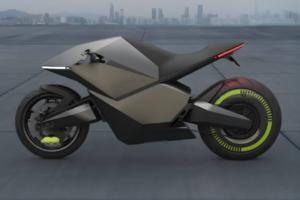

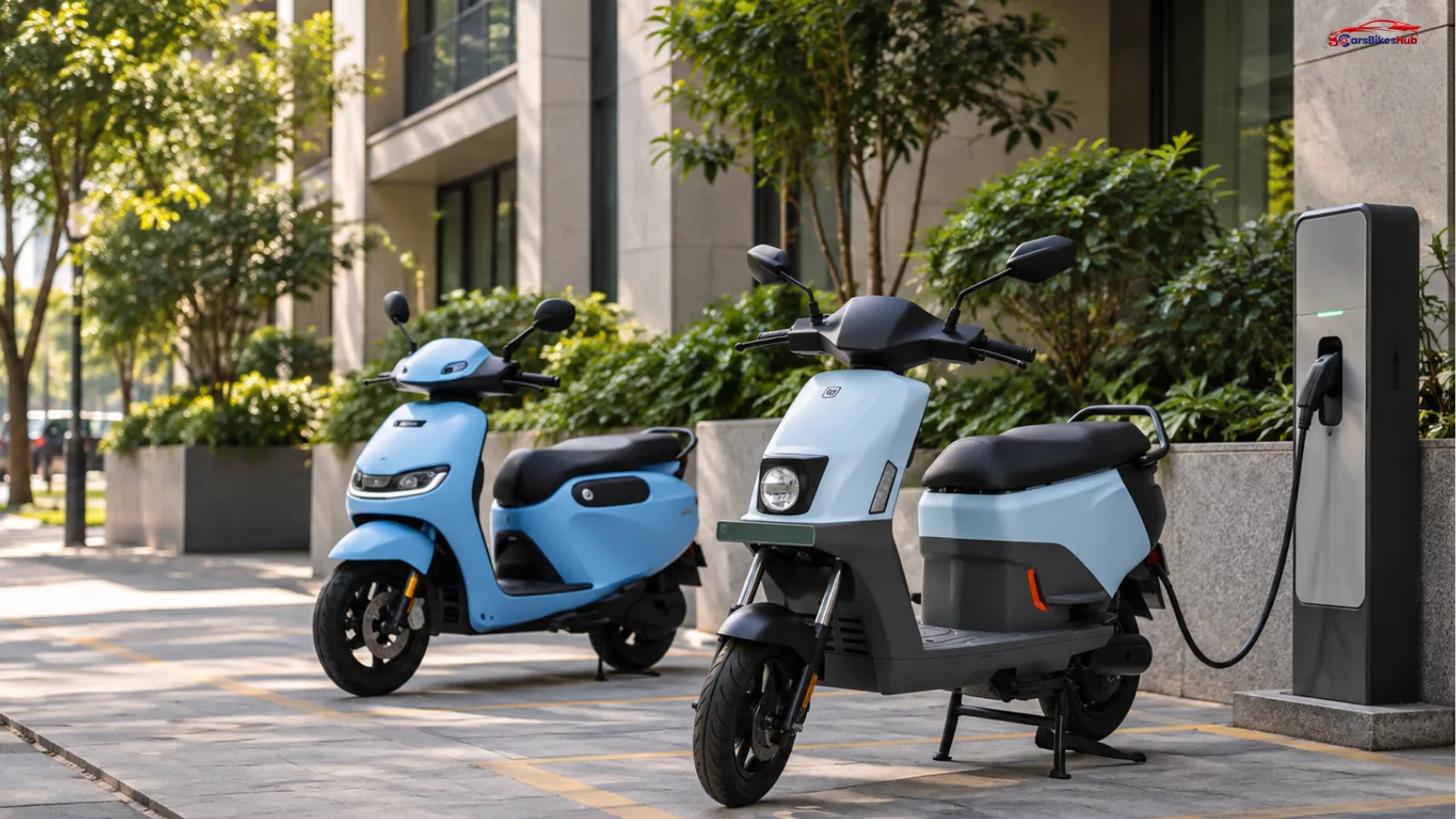
For the last couple of years, India’s electric scooter market has been dominated by a handful of names, particularly Ola Electric, Ather, TVS and Bajaj. That’s no longer the full picture. Names like BGauss, River, Simple Energy and Greaves Electric Mobility (which sells scooters under the Ampere brand) are now showing up in monthly registration data with growth rates that are hard to ignore, even if their absolute numbers are still small next to the market leaders.
This matters because a scooter buyer in 2026 has more brands to choose from than at any point since electric two-wheelers went mainstream. But more choice also means more homework. A newer brand can be a genuinely good buy, but its smaller service network can also make ownership more complicated.
This article looks at why smaller EV brands are gaining ground, which ones are actually backing that up with numbers, and what a buyer should check before picking one.
India’s Electric Two-Wheeler Market Is Getting More Competitive
Electric two-wheeler registrations in India crossed 1.44 million units in the first eight months of 2026, ahead of the 1.34 million recorded in all of 2025, according to Vahan data. Month to month, the segment has been volatile; July 2026 saw over 2 lakh registrations, while August slipped to around 1.8 lakh units. Electric two-wheelers made up roughly 10-11 percent of total two-wheeler registrations through most of 2026, crossing the 10 percent mark for sustained stretches for what analysts have called the first time at this scale.
The top of the market is still concentrated. TVS, Bajaj, Ather and Hero Vida together accounted for around 75 percent of electric two-wheeler registrations in August 2026, and that rises to nearly 83 percent once Ola Electric is added in. So this isn’t a story of smaller brands overturning the established order. It’s a story of the remaining 15-17 percent, which is now being contested by a wider group of manufacturers, including several smaller brands.
The clearest sign of that spread: several smaller manufacturers have already crossed their entire 2025 full-year sales tally within the first eight to nine months of 2026. That’s a meaningful shift, even in a market where the big four still set the pace.
Why Are Smaller EV Brands Gaining Ground?
A few things have changed at once, rather than one single trigger.
EV demand has moved past early adopters. The buyers walking into showrooms today aren’t the same tech-forward, urban, day-one crowd from 2021-22. They’re mainstream two-wheeler buyers comparing an electric scooter to a petrol one on running cost, and they’re more open to unfamiliar names than the earlier wave was.
Battery costs have come down. Local cell and pack manufacturing under the Production Linked Incentive (PLI) scheme has narrowed the price gap with imported components, according to Crisil Ratings. That has let smaller companies price competitively without the deep-pocketed subsidies larger, funded players could once afford to burn through.
Ola Electric’s stumble has opened space. Ola’s share of the electric two-wheeler market fell to around 8 percent by August 2026, down from roughly 18 percent a year earlier, per Nuvama Institutional Equities’ reading of Vahan data. Ola’s declining share has created more room for other manufacturers, including smaller brands, to compete for buyers.
Product variety has genuinely increased. Smaller brands are no longer just building cheaper clones of the Ola S1 or Ather 450. Simple Energy’s Ultra claims a 400 km IDC-certified range on a 6.5 kWh pack, the largest fitted to a scooter in India at the time of launch. Ultraviolette has taken a performance-motorcycle route rather than competing on commuter specs at all.
Funding has followed the growth. River Mobility, backed by Yamaha, raised $120 million in a Series C round. BGauss raised $11.6 million in a later-stage round. Simple Energy closed a ₹250 crore Series B and is preparing for a public listing, targeting the second half of FY28. Greaves Electric Mobility (Ampere) has already received SEBI approval for its own IPO. Capital raised isn’t the same as market share won, but it does show that investors are betting several of these companies still have room to scale distribution and manufacturing.
Which Smaller EV Brands Are Becoming Relevant?
BGauss Auto: a Mumbai-based manufacturer, sells largely in the mass-market commuter segment. Its registrations rose roughly 88 percent year-on-year in August 2026 to about 4,844 units for the month, per Vahan-based industry data, and full-year registrations have already overtaken 2025’s total. It positions itself on affordability and a growing dealer network in tier-2 markets.
River Mobility, backed by Yamaha, has focused on a single, purpose-built scooter aimed at urban delivery and daily-use riders rather than trying to cover every price band at once. Its registrations grew around 170 percent year-on-year in August 2026, and the company’s Series C funding is earmarked for a new manufacturing facility and additional models, signalling it’s still in an expansion phase rather than a mature one.
Simple Energy: the Bengaluru-based brand has leaned into range as its differentiator, with the company claiming the Ultra has the longest certified range among scooters sold in India. It crossed 10,000 units sold in the first eight months of 2026, up roughly 200 percent over the same period in 2025, and entered India’s top-10 selling electric two-wheeler brands for the first time in February 2026. It has since launched a more affordable model, the Wave, aimed at the family-scooter segment where TVS’s iQube and Bajaj’s Chetak currently dominate.
Greaves Electric Mobility (Ampere): arguably the most established of this group, having sold electric two-wheelers under the Ampere brand for years before the current EV boom. It sold 66,069 units in 2026 versus 57,699 in the whole of 2025, and has stated an ambition to double its market share to over 10 percent within two years, a company target, not an independently verified projection.
Ultraviolette Automotive: primarily an electric motorcycle maker rather than a scooter brand, though its upcoming Tesseract brings it directly into the electric scooter market. Its numbers so far reflect its motorcycle-first focus: a few thousand units a year rather than tens of thousands. Its growth rate has still been striking: sales in the first four and a half months of 2026 (1,534 units) already beat a large chunk of its previous full year, and July 2026 registrations were up over 400 percent year-on-year off a small base. Its bigger bet is the upcoming Tesseract scooter, which has drawn over 70,000 pre-bookings by the company’s own count but has also been delayed, with Autocar India reporting a shift from an early-2026 target to a Q1 2027 launch.
None of these companies is close to challenging TVS or Bajaj on volume. But each is showing something the market didn’t have as clearly two years ago: a specific reason to exist beyond being a cheaper Ola.
How Smaller Brands Differ From TVS, Bajaj, Ather and Ola
| Factor | Smaller/newer EV brands | Established EV players |
| Product approach | Often built around one clear differentiator: range, performance, price, or use case. | Broader range spanning multiple price points and rider types |
| Dealer/service network | Growing, but noticeably thinner outside major and tier-2 cities | Generally wider, backed by existing petrol-vehicle dealer networks |
| Brand familiarity | Lower; many buyers are hearing the name for the first time | Higher, especially for TVS and Bajaj |
| Financial backing | Mostly private funding rounds; a few preparing for IPOs | Publicly listed or backed by large diversified parent companies |
| Resale value | Not yet established in the used-vehicle market | More predictable, though still evolving across the EV segment |
This isn’t a case of one column being “better.” It’s a different trade-off: sharper focus and often quicker innovation against a thinner safety net if something goes wrong with your scooter.
What This Means for Electric Scooter Buyers
The upside is real. More brands means more genuine choice, not just more options that all look the same. Buyers can now pick a scooter built specifically around long range, around performance, or around the lowest possible price point, rather than settling for whichever of the big four comes closest to what they want. Competition on pricing has also picked up, and the pace of new features- from OTA updates and connected features to different battery-ownership models- is being pushed by both newer and established manufacturers.
The catch is that a smaller brand asks you to take on more risk in a few specific places: service reach, spare-parts availability, how long the company has actually been delivering vehicles, and what happens to your scooter’s software and warranty support if the company slows down, changes strategy, or, in a worst case, doesn’t survive the next funding cycle. None of the brands discussed here have shown signs of financial distress; several are raising fresh capital and expanding, which is a healthier signal than the alternative, but that’s a different question from whether their service network can support you three years and 20,000 km down the line.
The honest way to frame it: a smaller EV brand isn’t automatically a worse choice than an established one, but it does require you to evaluate the company nearly as carefully as you evaluate the scooter itself.
What Should You Check Before Buying From a Smaller EV Brand?
- Service network: Find out how far the nearest authorised service centre actually is from where you live, not just from the city the brand is present in.
- Battery warranty: Ask exactly what’s covered, for how long, and whether it’s a standard warranty or tied to a subscription/BaaS plan, which some smaller brands (Ultraviolette, for one) now offer.
- Spare parts: Check whether commonly replaced parts are stocked locally or need to be ordered in from elsewhere; this affects how long a repair actually takes.
- Software support: Many newer scooters lean heavily on an app for locking, diagnostics, or even performance modes. Ask what happens if the app or backend support is discontinued.
- Real-world range: Certified figures (IDC or otherwise) are a starting point, not a guarantee. Look for real-world range figures from owners or reviews rather than relying only on the claimed number.
- Company track record: How long has the manufacturer actually been delivering vehicles at scale, as opposed to just showing concept models or taking pre-bookings?
- Resale value: Ask whether there’s any established resale or exchange market for the specific model; this is still thin across most of the EV segment, not just smaller brands.
- Ownership support outside major cities: If you live outside a large metro, this is arguably the most important check of all. A brand can look well established in Bengaluru or Pune and still have almost no presence two hours away.
Is This Good for India’s EV Market?
More competition generally works in the buyer’s favour; it usually means faster feature rollouts and sharper pricing, and 2026’s numbers back that up. At the same time, a market this young, with several companies chasing similar customers on thin margins, tends to consolidate over time. Some of today’s smaller brands will likely scale into the next tier of established players; others may get acquired, pivot, or struggle to raise the next round of funding they need.
There isn’t enough evidence right now to say with confidence which of today’s names will still be around, at scale, five years from now, and it would be misleading to pretend otherwise.
Final Verdict
Smaller EV brands are growing because India’s electric two-wheeler market has genuinely widened beyond a handful of early movers; better battery economics, a stumble from the former market leader, and real product differentiation have all played a part. But growth in registrations and confidence for a buyer are two different things.
A brand selling a few thousand extra units a year is proving demand exists for what it’s building. It hasn’t yet proven it can support that scooter for the next five to eight years across India’s smaller towns, which is really where the buying decision should be made. Until a brand has shown both sustained sales growth and a service network to match, treat the spec sheet as only half the story.


FAQs
Why are smaller EV brands growing in India?
A combination of falling battery costs under India's PLI scheme, wider buyer acceptance of electric scooters, a decline in Ola Electric's market share, and sharper product differentiation from newer companies.
Which are the smaller electric scooter brands in India?
BGauss, River Mobility, Simple Energy, Greaves Electric Mobility (Ampere), and Ultraviolette Automotive (which focuses on electric motorcycles) are among the smaller brands showing consistent growth in 2026.
Are smaller EV brands safe to buy from?
There's no evidence that these specific brands are financially unstable; several are raising fresh funding and expanding. But buyers should still check service reach, spare-parts availability, and warranty terms before deciding, since these networks are generally smaller than established players' networks.
What should I check before buying an electric scooter from a new brand?
Service centre proximity, battery warranty terms, spare-parts availability, software/app support, real-world range, the company's track record, resale value, and support availability outside major cities.
Are smaller EV scooters cheaper than TVS or Bajaj models?
Not always. Some smaller brands, like Simple Energy's Wave, compete on price, while others, like Ultraviolette or Simple Energy's Ultra, are positioned at premium price points built around range or performance rather than affordability.