





























You just bought an electric car. The showroom excitement is real, the fuel savings feel great, and then the question hits you like a speed bump on a Delhi Road: how exactly do I charge this thing at home?
If you’ve been searching for a clear, honest answer on EV charging at home in India, you’re not alone. Most EV buyers get almost no guidance from their dealership beyond “just plug it in.” This guide covers everything: the types of chargers, what installation actually costs, and what every Indian home setup needs before you get started.
Why Home Charging Makes More Sense in India
Public charging infrastructure in India is growing fast; over 12,000 stations are now operational, but they’re still unreliable for daily use. Queues, compatibility issues, and out-of-order units make public chargers a backup, not a routine.
Home EV charging in India is cheaper, more convenient, and available every single night while you sleep. The average Indian driver covers 40-60 km daily, which is well within the overnight charging window for nearly every EV sold here today. Once you have a home setup running, you’ll rarely need a public charger for day-to-day driving.
Types of Home Chargers in India: AC vs DC
The first step to consider before installing EV charging infrastructure at home in India is to know the different kinds of chargers available and realise that you will only need one.
AC Charger (Level 2): This is what you install at home. The home-based charger uses the home alternating current electricity supply and takes around 6-10 hours to fully charge the vehicle’s battery. An AC charger can cost around ₹8,000-₹25,000, depending on the make and model of the unit being purchased. Some of the most preferred companies providing such chargers are Tata Power, Okaya, and Ampere.
DC Fast Charger: This refers to the expensive units used on highways and in charging centres. Such chargers are capable of charging the battery up to 80% in 30 to 45 minutes. However, they cost between ₹3 and ₹10 lakhs. They also need a commercial electrical connection.
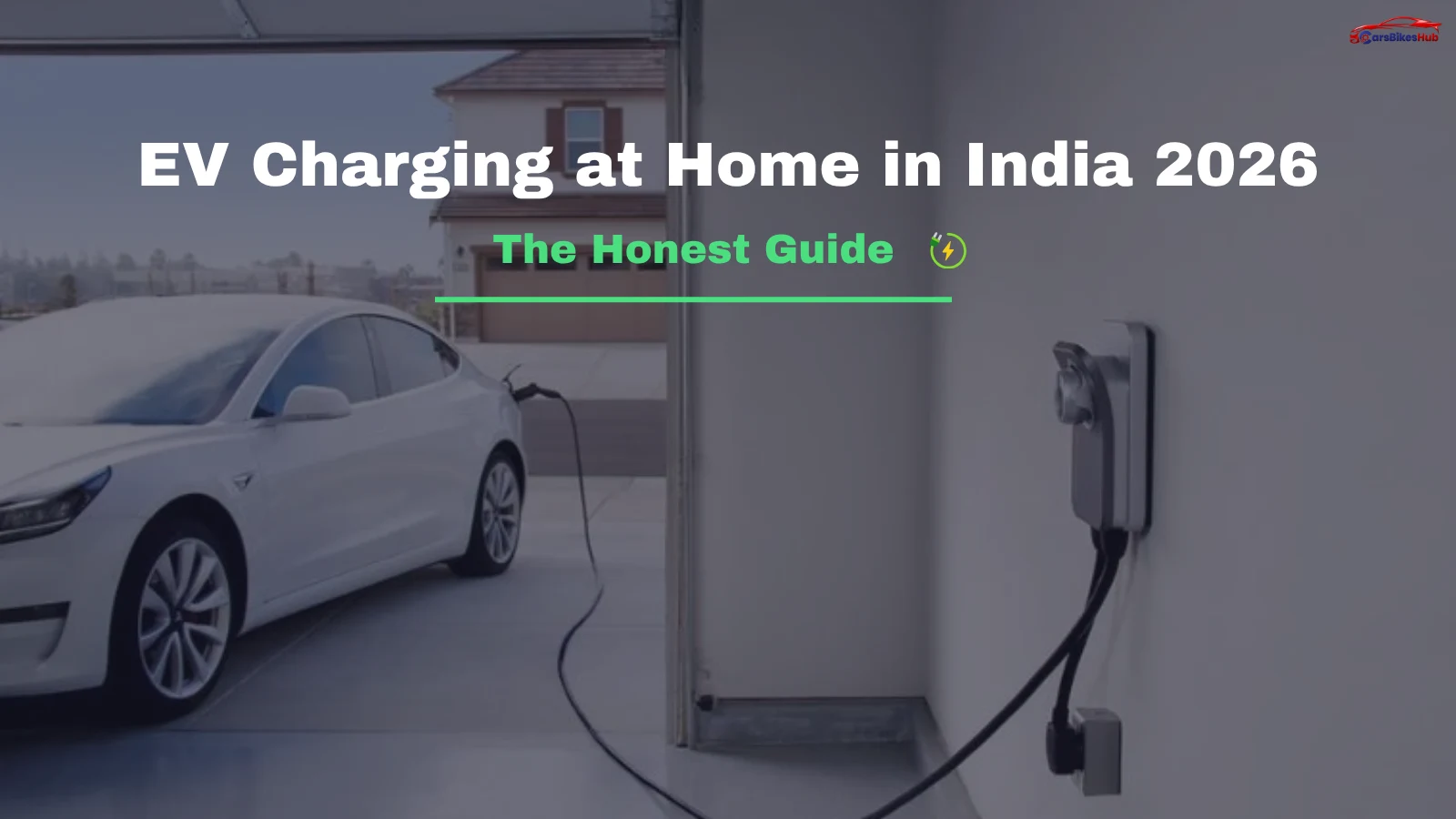
For a home EV charging setup in India, an AC charger, also called a wallbox, is all you need.
Can You Just Use a Regular 15A Socket?
Technically, yes. Every EV in India ships with a portable charging cable that plugs into a standard 15A socket, similar to what your geyser or AC uses. This is called Level 1 or slow charging.
The honest reality: charging a Tata Nexon EV from 20% to 100% via a regular socket takes 15–20 hours. For smaller EVs like the Tata Tiago EV or an electric scooter, a normal socket works fine. But if you drive a mid-size EV daily, a dedicated AC charger for home installation in India is worth every rupee.
What Does Home EV Charger Installation Actually Cost in India?
This is the question most guides skip around. Here is a straightforward breakdown:
- AC wallbox charger unit: ₹8,000-₹25,000
- Electrician and wiring charges: ₹2,000-₹8,000
- New dedicated circuit (if needed): ₹3,000-₹6,000
- Total typical cost: ₹13,000-₹40,000
Many EV manufacturers, Tata, MG, and Mahindra, offer subsidised or bundled home EV charging installation in India when you buy the vehicle. Always ask your dealer before paying separately.
Apartment vs Independent House: What Changes
For those living in apartments, EV charging at home in India requires a conversation with your housing society first. You’ll need permission to install a dedicated circuit from the common meter or your own flat’s meter to the parking spot. Several states now have guidelines that make it easier for residents to request this. Maharashtra and Delhi have both issued circulars supporting EV charging rights in residential buildings.
Independent homeowners have a simpler path. A licensed electrician can install a dedicated 32A circuit from your main board to your parking area in a day, and your wallbox charger can be wall-mounted or floor-standing.
Safety During Monsoon: What Every Indian EV Owner Must Know
Rain, waterlogging, and humidity are real concerns when you have a home EV charging setup in India. The good news is that all certified wallbox chargers come with IP ratings (typically IP54 or higher) that protect against water ingress.
Do not use an extension cord for EV charging at home; this is the single biggest safety risk. Always install a dedicated circuit with an RCD (residual current device) breaker, and ensure the charger socket is mounted at least 3 feet off the ground if your parking area is prone to waterlogging.
The Real Cost Per Charge: What You’ll Pay Monthly
Electricity in India costs ₹5-₹8 per unit (kWh) on average across states. A Tata Nexon EV has a 30.2 kWh battery. Charging it fully costs roughly ₹150-₹240, compared to ₹700-₹900 for the equivalent petrol distance. Over a month of daily charging, you’re looking at ₹4,500-₹7,000 in electricity vs ₹21,000-₹27,000 in petrol costs.
EV charging at home in India doesn’t just save you the hassle of petrol queues. Over two to three years, it pays back the charger installation cost many times over.
FAQs
Can I charge my EV with a normal home socket in India?
Yes, using the cable that comes with the car. But it's slow, 15 to 20 hours for a full charge on mid-size EVs. A dedicated AC wallbox is strongly recommended for daily use.
How much does home EV charger installation cost in India?
The total cost, including the charger, wiring, and charges of the electrician, usually ranges from ₹13,000 to ₹40,000. Several automobile manufacturers bundle this with the sale of their vehicles.
Is it safe to charge an EV at home during the monsoon in India?
Yes, if your EV charger comes with a decent IP rating like IP54 or higher, and you have a correctly installed RCD breaker. No charging using an extension cable.
Can I install an EV charger in my apartment in India?
Yes, with prior approval of the housing society. In Maharashtra and Delhi, there are certain residential EV charging guidelines which back you up for installation.
How long does it take to fully charge an EV at home in India?
An EV can get charged for around 6-10 hours with the help of a 7.2 kW wallbox AC charger. While using a 15A standard plug, the time would be 15-20 hours.