























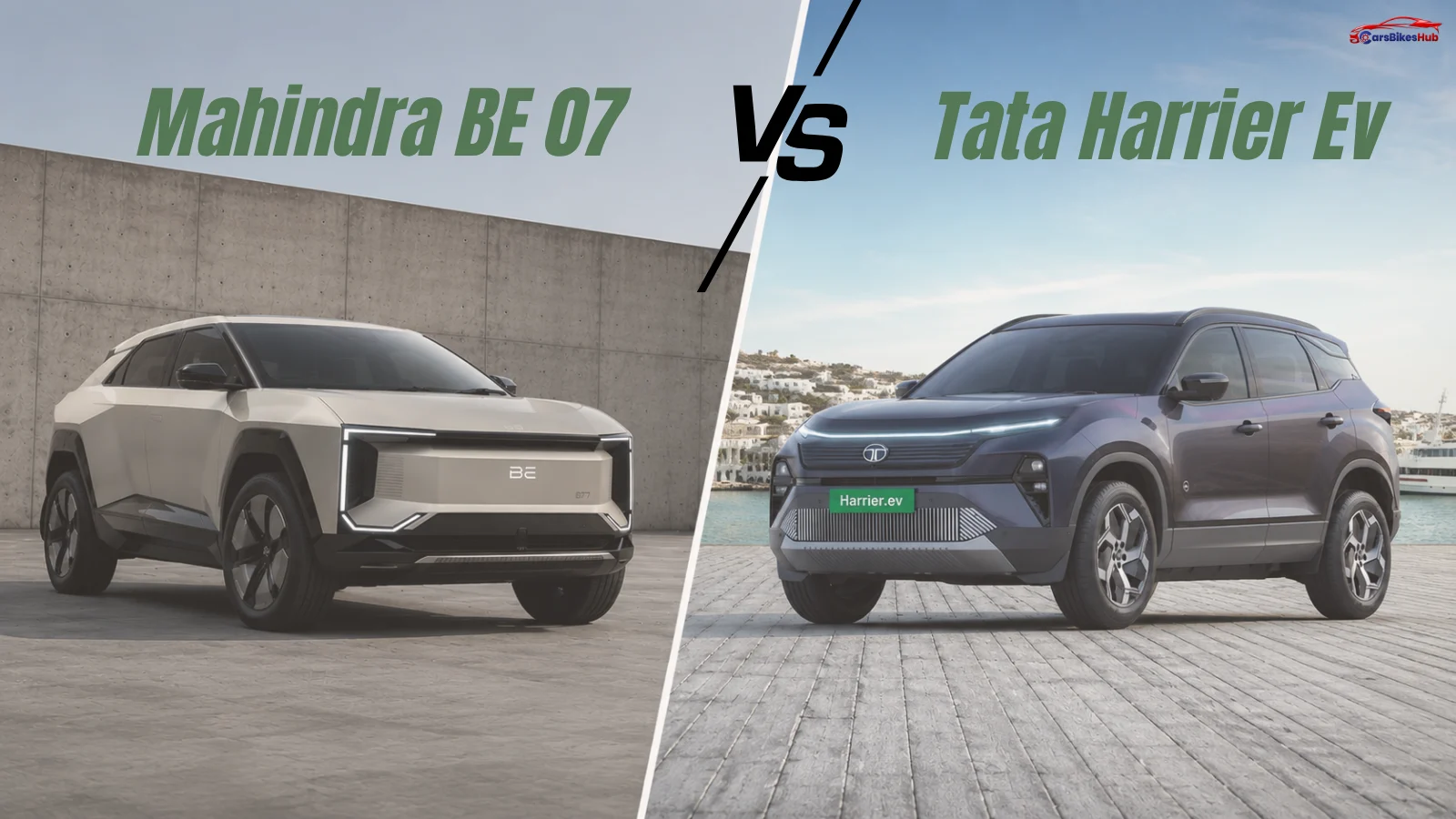
Buyers looking for a premium electric SUV in India now face an interesting choice. The Tata Harrier EV is already on sale with an impressive range, strong safety credentials, and a feature-packed cabin. The upcoming Mahindra BE 07, on the other hand, promises a futuristic design, powerful performance, and a dedicated EV platform built from scratch. So which one deserves your money, and should you buy now or wait?
This Mahindra BE 07 vs Tata Harrier EV comparison covers everything that matters: battery, range, charging, performance, features, safety, service network, and real-world ownership. By the end, you should have a clear picture of which electric SUV best suits your needs.
Important note: The Mahindra BE 07 has not yet been launched. All BE 07 specifications, pricing, and features mentioned here are based on currently available information and official platform announcements. These figures are anticipated and subject to change at launch.
Mahindra BE 07 vs Tata Harrier EV: Quick Overview
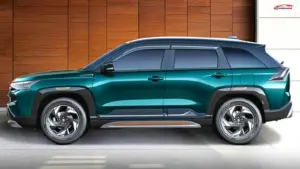
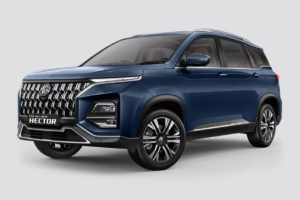
The Tata Harrier EV launched in June 2025 and is built on Tata’s Acti.ev+ platform, an enhanced version of the same architecture used in the Punch EV and Curvv EV. It comes with two LFP battery packs, both RWD and AWD options, and is available across Tata’s extensive dealer network right now.
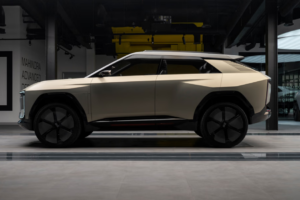
The Mahindra BE 07 is part of Mahindra’s Born Electric lineup, EVs designed ground-up, not converted from petrol platforms. It rides on the INGLO platform, which shares components with Volkswagen’s MEB architecture. An October 2026 launch is anticipated, placing it as a step up from the already-launched Mahindra BE 6.
Both cars are chasing a similar buyer: someone who wants a full-size, well-equipped electric SUV that handles city traffic and long highway runs without compromise.
Expected Price Comparison
| Mahindra BE 07 | Tata Harrier EV | |
| Starting Price | ₹25-27 lakh (anticipated) | ₹21.49 lakh (ex-showroom) |
| Top Variant | ~₹30 lakh (anticipated) | ₹30.23 lakh (ex-showroom) |
The Tata Harrier EV’s entry price of ₹21.49 lakh is notably more accessible, especially for buyers who want a capable EV without going to the very top of the range. The BE 07 vs Harrier EV price gap narrows significantly at the higher variants, where both are expected to sit around ₹28-30 lakh.
One thing to keep in mind: the BE 07’s pricing is entirely anticipated at this stage. Mahindra could price it more aggressively, as it did with the BE 6, or the 80 kWh AWD variant could push closer to ₹32 lakh. Confirm final numbers before making any decisions.
Battery Pack and Range Comparison
Tata Harrier EV
The Harrier EV comes with two LFP battery options: a 65 kWh pack with a single rear motor producing 238 hp, and a 75 kWh pack that adds a front motor for Quad Wheel Drive with a combined output of 313 hp and 504 Nm. The MIDC-certified range is up to 627 km for the 75 kWh RWD variant, while real-world C75 figures put it at a more practical 480-505 km.
Mahindra BE 07
The BE 07 is expected to offer 60 kWh and 80 kWh battery options on the INGLO platform, with the larger pack promising up to 450 km of range based on WLTP testing.
One important nuance here: MIDC and WLTP are different testing cycles, and MIDC figures tend to be higher. If both cars were measured on the same cycle, the real-world range gap between BE 07 vs Harrier EV would likely be smaller than the headline numbers suggest.
Charging Capabilities
The BE 07’s INGLO platform is expected to support up to 175 kW DC fast charging, getting the battery to 80% in around 30 minutes. The Harrier EV supports up to 120 kW DC fast charging, achieving 20-80% in 25 minutes and adding roughly 250 km in just 15 minutes.
On paper, the Mahindra BE 07 comparison tips in favour of Mahindra here. In practice, though, 175 kW chargers are still limited in India. For most owners, both cars will charge overnight at home on AC, where the charging speed difference is irrelevant. Both support 7.2 kW AC home charging as standard.
Performance and Powertrain
Mahindra BE 07
The INGLO platform supports up to 285 PS in RWD configuration and up to 394 PS in the AWD setup. Those are big numbers for the segment, and if the AWD BE 07 actually delivers near that output, it would be among the quickest electric SUVs available in India under ₹35 lakh.
Tata Harrier EV
The Harrier EV’s dual-motor QWD setup produces 313 hp and 504 Nm, with a 0-100 km/h time of 6.3 seconds. It also offers six terrain modes, which is a practical addition for buyers who occasionally venture off-road or tackle tricky monsoon roads.
For everyday urban driving, both cars will feel fast enough. The BE 07 has more headroom in the performance figures, but the Harrier EV comparison is no pushover; 6.3 seconds to 100 km/h is genuinely quick for a family SUV.
Dimensions and Road Presence
| Mahindra BE 07 | Tata Harrier EV | |
| Length | 4,565 mm | 4,607 mm |
| Width | 1,900 mm | 1,922 mm |
| Height | 1,660 mm | 1,740 mm |
| Wheelbase | 2,775 mm | 2,741 mm |
The Harrier EV is slightly longer and wider with a more traditional tall-SUV stance. The BE 07 has a longer wheelbase, which generally means better rear seat legroom, but its lower, coupe-SUV roofline means less headroom in the second row. Buyers who prioritise rear headspace and boot practicality may find the Harrier EV more accommodating as a family car.
Interior and Cabin Experience
Mahindra BE 07
The BE 07’s cabin is built around a full-width digital dashboard housing three screens, one each for the driver, infotainment, and front passenger. The INGLO platform’s flat floor design should open up interior space considerably. Expected features include ambient lighting, a panoramic sunroof, wireless charging, multi-zone AC, and ventilated seats.
Tata Harrier EV
The Harrier EV’s top variants come fully loaded: a 36.9 cm cinematic QLED infotainment screen, 10-speaker JBL sound system with Dolby Atmos, panoramic sunroof with voice control, 8-way powered driver seat with memory, ventilated front seats, dual-zone climate control, and a Boss Mode rear seat recline switch. It also has a 540-degree surround-view system that shows what’s under the car, genuinely useful for parking and mild off-roading.
The Harrier EV’s cabin is a known, reviewed quantity. The BE 07’s interior looks exciting in concept, but buyers won’t be able to experience it until the car actually launches.
Features and Technology
Tata Harrier EV
Tata’s TiDAL electrical architecture enables OTA updates, voice commands, a 540-degree surround view with underbody view, Summon mode, Digital Key, Auto Park, connected services via Tata’s iRA platform, and a DrivePay UPI payment system built into the car. These are segment-first features that set the Harrier EV apart from most competitors.
Mahindra BE 07
The BE 07 is expected to offer connected car features, OTA update support, and Level 2 ADAS similar to what the BE 6 currently offers. A triple-screen dashboard, 360-degree camera, and Mahindra’s connected car platform are anticipated. Exact feature details will only be confirmed at launch.
Safety Features
The Tata Harrier EV has a 5-star Bharat NCAP rating, a significant and independently verified safety credential. It comes with six airbags as standard, seven in higher trims, ESC, blind spot monitoring, a built-in dashcam, and a 360-degree camera. The body structure is BNCAP 5-star ready.
The Mahindra BE 07 is targeting a 5-star Global NCAP rating. Based on the INGLO platform’s performance with the BE 6 and Mahindra’s stated commitment to safety on Born Electric models, seven airbags and comprehensive passive safety are expected. Final safety ratings will only be available post-launch.
ADAS and Driver Assistance Systems
The Harrier EV packs 22 ADAS features tuned specifically for Indian road conditions, including low-speed autonomous emergency braking (a segment first), lane keep assist, adaptive cruise control, traffic sign recognition, and a live surround-view feed useful even when parked.
The BE 07 is expected to offer Level 2 ADAS with standard features like AEB, lane departure warning, blind spot monitoring, and adaptive cruise control in line with what Mahindra currently offers on the BE 6. Whether it matches or exceeds the Harrier EV’s 22-feature suite will be clear only after launch.
Boot Space and Practicality
| Mahindra BE 07 | Tata Harrier EV | |
| Boot Space | TBA | 502 litres |
| Frunk | Expected | 35-67 litres |
| Seats Folded | TBA | 999 litres |
| Ground Clearance | TBA | 205 mm |
The Harrier EV offers 502 litres of boot space with seats up, expandable to 999 litres with seats folded, plus a 67-litre frunk for storing the portable charger or smaller items. That is a strong practical package for a family SUV.
The BE 07’s boot figures are not yet confirmed. Its coupe-style roofline may result in slightly less luggage space than the Harrier EV, though the INGLO platform’s flat-floor layout could compensate somewhat in overall cabin storage.
Service Network Comparison
This is one area where the Tata Harrier EV comparison has a clear advantage right now. Tata Motors maintains a service network that is one of the broadest in India, with thousands of touchpoints ranging from metro cities to tier 2 cities, all the way down to the smaller towns. Harrier EV owners in most parts of India can find authorised service support within a reasonable distance.
Mahindra’s network is solid too, but it is not as deep as Tata’s in smaller towns. For the BE 07, Mahindra is building out its dedicated EV service infrastructure, but it is still maturing. If you live in a smaller city or town, this is a real factor to weigh in the BE 07 vs Harrier EV decision.
How Does This Compare to Other EVs in the Segment?
Buyers considering the Mahindra BE 07 vs the Tata Harrier EV, one could also take into account a couple of other models that could be potential options:
- Mahindra BE 6: The BE 07’s smaller sibling, already on sale from ₹18.90 lakh. Based on the same INGLO platform but with slightly smaller dimensions. It could be a great benchmark when considering buying the BE 07.
- Tata Curvv EV: More affordable than the Harrier EV, built on the same Acti. EV platform. Worth considering if budget is a priority.
- Hyundai Creta Electric: A strong mainstream rival with reliable ownership experience and good service support.
- Maruti Suzuki e Vitara / Toyota Urban Cruiser EV: Newer entrants in the segment worth watching, though positioned slightly below the BE 07 and Harrier EV in terms of size and features.
The BE 07 and Harrier EV are among the most premium options in the ₹25–30 lakh electric SUV space, which is why this comparison matters for buyers at that budget.
Comparison Table
| Specification | Mahindra BE 07 | Tata Harrier EV |
| Expected Price | ₹25–30 lakh (anticipated) | ₹21.49–30.23 lakh |
| Battery Pack | 60 kWh / 80 kWh (expected) | 65 kWh / 75 kWh |
| Claimed Range | ~450 km WLTP (anticipated) | 627 km MIDC / ~480–505 km real-world |
| DC Fast Charging | Up to 175 kW (expected) | Up to 120 kW |
| Power Output | Up to 285 PS RWD / 394 PS AWD (expected) | 235 bhp RWD / 313 bhp AWD |
| Drivetrain | RWD / AWD (expected) | RWD / AWD (QWD) |
| ADAS | Level 2 (expected) | Level 2 — 22 features (tuned for India) |
| Boot Space | TBA | 502 L + 67 L frunk |
| Safety Rating | 5-star GNCAP (targeted) | 5-star Bharat NCAP (confirmed) |
| Launch Timeline | October 2026 (anticipated) | On sale since June 2025 |
Which EV Offers Better Value?
The Mahindra BE 07 comparison shows a car that is strong on paper, better charging speed, more peak power, a purpose-built EV platform, and an exciting interior layout. But “strong on paper” is doing a lot of work here, because the BE 07 is not yet available to buy, test-drive, or independently verify.
The Tata Harrier EV, by contrast, is a proven product. It has been reviewed by major automotive outlets, has real owner feedback, carries a confirmed 5-star BNCAP rating, and is backed by Tata’s wide service network. The 480–505 km of real-world range is genuinely impressive, and the feature list, 22 ADAS functions, summon mode, 540-degree camera, JBL Dolby Atmos, and DrivePay, is hard to match at this price.
Final Verdict
Buy the Tata Harrier EV if: You want a premium electric SUV today, value a proven safety record and wide service support, need strong real-world range, and prefer not to wait.
Wait for the Mahindra BE 07 if: You have the patience to wait for its late 2026 release, you would like a vehicle capable of fast DC charging, you are interested in INGLO’s performance attributes, and you are prepared to buy a vehicle on speculated performance specifications.
The BE 07 vs Harrier EV decision ultimately comes down to timing. The Harrier EV is a genuinely complete package right now. The BE 07 could match or beat it in several areas, but that story is still to be written.
FAQs
What is the expected price of the Mahindra BE 07?
The Mahindra BE 07 is anticipated to be priced between ₹25 lakh and ₹30 lakh (ex-showroom). These are expected figures based on currently available information. Mahindra will confirm official pricing closer to the October 2026 launch. Final pricing may vary depending on variant and battery configuration.
What is the real-world range of the Tata Harrier EV?
The Tata Harrier EV claims up to 627 km on the MIDC cycle with the 75 kWh battery. Real-world C75 range figures work out to approximately 480–505 km, strong for the segment and sufficient for most city and highway use without range anxiety.
Is the Mahindra BE 07 better than the Tata Harrier EV?
Based on expected specs, the BE 07 leads in fast charging speed (175 kW vs 120 kW) and peak AWD power. The Harrier EV leads in availability, confirmed safety ratings, real-world range data, and service network reach. A definitive comparison will only be possible after the BE 07 launches and is independently tested.
What is the INGLO platform used in the Mahindra BE 07?
INGLO is Mahindra's ground-up electric vehicle platform, developed with technology components from Volkswagen's MEB architecture. It supports multiple battery sizes (60–80 kWh), both RWD and AWD drivetrains, and up to 175 kW DC fast charging. The same platform underpins the already-launched Mahindra BE 6.
Does the Tata Harrier EV have AWD?
Yes. The Tata Harrier EV's 75 kWh variant is available with a dual-motor Quad Wheel Drive (QWD) setup producing 313 hp and 504 Nm combined. It comes with six terrain modes and low-speed off-road assist, making it Tata's first mass-market AWD EV and a capable option for buyers who occasionally go beyond paved roads.