















Buying a new TVS motorcycle or scooter has just become slightly more expensive, but not every price increase has the same impact. Some models have received only marginal revisions, while others, especially in the electric scooter range, have become noticeably costlier. The real question isn’t simply which models are more expensive; it’s whether the TVS Price hike actually changes which TVS model offers the best value for your money.
TVS Motor Company revised prices across most of its two-wheeler portfolio effective August 1, 2026, with increases ranging from a token ₹550 to a steep ₹13,580 depending on the model. Curiously, one popular scooter actually got cheaper. In this guide, we break down exactly which models are affected, why TVS raised prices, whether the hike genuinely matters to your budget, which TVS two-wheelers still make sense, and whether you should book now or wait it out.
Quick Highlights
- Latest revision: Effective August 1, 2026, across TVS’s petrol and electric two-wheeler range
- Models affected: Jupiter 110, Jupiter 125, Raider 125, iQube, Orbiter (nearly the entire lineup)
- Highest increase: TVS Orbiter V2 electric scooter, up ₹13,580 to ₹1,18,480
- Lowest increase: TVS Raider 125 Drum/single-seat variants, up from ₹550
- Price reduction: TVS Ntorq 125 gets cheaper by up to ₹1,650 across variants
- Stated reason: Higher production costs and supply chain pressures, per TVS
- Biggest takeaway: The hike is steep on connected and electric models, but marginal on the core commuter motorcycle, so the impact on your wallet depends heavily on which TVS you’re eyeing
Which TVS Bikes and Scooters Have Become More Expensive?
| Model | Variant | Previous Price (approx.) | New Price (Ex-showroom) | Difference |
| TVS Jupiter 110 | Drum | ₹73,400 | ₹73,975 | +₹575 |
| TVS Jupiter 110 | Drum Alloy | — | — | +₹1,475 |
| TVS Jupiter 110 | SmartXonnect | — | ₹83,775 | +₹1,625 |
| TVS Jupiter 110 | SmartXonnect Disc | — | ₹86,375 | +₹1,625 |
| TVS Jupiter 110 | Special Edition | — | ₹88,850 | +₹1,950 |
| TVS Jupiter 125 | Drum Alloy | ₹78,700 | ₹81,110 | +₹2,410 |
| TVS Jupiter 125 | Disc | ₹83,900 | ₹86,110 | +₹2,210 |
| TVS Jupiter 125 | DT SXC | — | — | +₹2,200 |
| TVS Jupiter 125 | SmartXonnect | — | — | +₹875 |
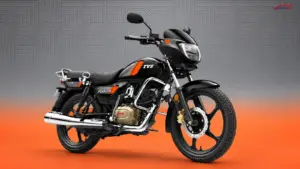
| TVS Raider 125 | Drum/single-seat | ₹81,450 | ₹82,000 | +₹550 |
| TVS Raider 125 | Other variants | — | — | +₹900 to ₹1,250 |
| TVS iQube | 2.2 kWh (base) | ₹1,15,322 | ₹1,15,822 | +₹500 |
| TVS iQube | 3.5 kWh | ₹1,35,043 | ₹1,38,943 | +₹3,900 |
| TVS iQube | ST 5.3 kWh (top) | ₹1,61,984 | ₹1,72,384 | +₹10,400 |
| TVS Orbiter | V1 | ₹88,250 | ₹95,250 | +₹7,000 |
| TVS Orbiter | V2 | ₹1,04,900 | ₹1,18,480 | +₹13,580 |
| TVS Ntorq 125 | All variants | — | — | −₹1,650 (price cut) |
Prices are ex-showroom, Delhi, and can vary slightly by city and dealership. The one clear exception across the entire revision is the Ntorq 125, which bucks the trend entirely with a price cut of up to ₹1,650.
While almost the entire TVS portfolio has seen some level of revision, the increases vary significantly depending on whether you’re buying a commuter motorcycle, a connected scooter, or an electric two-wheeler.
Not every number on that table deserves the same reaction. Here’s a quick way to read the size of an increase against how much it should actually influence your decision:
| Increase | Should Buyers Worry? |
| ₹550 – ₹1,950 (Jupiter, Raider) | No, negligible impact against the vehicle’s overall price |
| ₹2,200 – ₹3,900 (Jupiter 125 connected trims, iQube 3.5 kWh) | Mildly worth noting, unlikely to change your decision |
| ₹7,000 – ₹13,580 (Orbiter, top-spec iQube) | Yes, worth comparing against rival EV scooters first |
What Does This Mean If You’re Booking a TVS Right Now?
If you already have a booking in, don’t panic. Many dealerships honour the price applicable at the time of booking, especially if the booking amount was paid before the revision, though policies can vary, so it’s worth confirming this directly with your dealer. If you booked after the revision, the new price simply applies; there’s no retroactive surprise to worry about.
If you’re still deciding, here’s what actually changes for you in practical terms:
- Existing dealer stock bought before the revision may still be billed at the old price at some dealerships; it costs nothing to ask.
- Finance costs move in step with the ex-showroom price, but as the next section shows, the actual EMI impact of most of these hikes is smaller than it sounds.
- Exchange offers on your old two-wheeler are typically negotiated separately from the price hike and can still offset a meaningful chunk of the increase.
- Festive and seasonal discounts, which TVS and its dealers run periodically, often more than cover a modest price hike; it’s worth timing your purchase around one if you’re not in a hurry.
None of this means you should indefinitely postpone a purchase. It just means the price hike is one input among several, not the only number that determines what you’ll actually pay on-road.
Which Models Have Seen the Biggest Price Changes?
TVS Electric scooters absorbed the sharpest hikes. The Orbiter and iQube saw the steepest increases in percentage terms, with the Orbiter V2 alone rising by over ₹13,500. Electric two-wheelers carry a higher proportion of imported and specialty components: battery cells, power electronics, motor magnets, which makes them more exposed to input-cost swings than a conventional petrol engine.
Connected, feature-rich variants took a bigger hit than base trims. Within the Jupiter and iQube ranges, models with SmartXonnect Bluetooth connectivity or larger battery packs saw noticeably larger increases than their basic, no-frills counterparts. TVS itself has pointed to rising component costs for connected features as a driver.
Core commuter motorcycles were largely spared. The Raider 125, TVS’s high-volume 125cc commuter, saw hikes as low as ₹550, barely a rounding error against a bike priced upward of ₹80,000. This tells you TVS is being deliberately conservative on its volume-driving commuter line while passing on more cost in premium and EV segments.
Scooters, not motorcycles, dominate this revision. Of everything hiked, scooters (Jupiter, iQube, Orbiter) make up the bulk of the list, both in the number of models affected and in the size of the increases.
Why Has TVS Increased Prices?
TVS has attributed the revision to higher production costs and supply chain challenges. A few concrete factors typically sit behind language like this in the two-wheeler industry:
- Rising input and component costs: Metals, electronics, and battery-related materials have all seen cost pressure industry-wide, and manufacturers periodically pass a portion of this through to buyers rather than absorbing it entirely.
- Connected-tech components: Bluetooth modules, TFT displays, and app-connectivity hardware are more expensive to source than they were a couple of years ago, which explains why SmartXonnect variants saw sharper increases than base variants.
- Battery and EV supply chains: Electric scooters remain sensitive to battery cell pricing and specialty component availability, which is consistent with the Orbiter and iQube absorbing the largest hikes in this cycle.
- Periodic model-year and portfolio revisions: Two-wheeler makers in India routinely revise prices a few times a year rather than making one large annual jump, spreading cost pass-through in smaller, less noticeable increments.
TVS hasn’t published a granular cost breakdown alongside this revision, so treat the above as the general industry logic behind such increases rather than a TVS-specific confirmation for each line item.
Are Price Hikes Like This Becoming More Common?
TVS isn’t an outlier here; this kind of revision has become a fairly routine part of how two-wheeler manufacturers in India operate. Hero, Honda, Bajaj, Yamaha, and Suzuki all revise their prices multiple times a year, usually in smaller, staggered increments rather than one large annual jump. The drivers are largely the same across the industry: input and commodity cost inflation, more expensive electronics and connected-tech components, battery and EV supply chain pressures, and periodic compliance or regulatory updates.
For buyers, the key takeaway is that a price hike from TVS isn’t a warning sign unique to the brand. Periodic price revisions have become a routine part of the Indian two-wheeler industry, with manufacturers regularly adjusting prices to reflect changing input costs and market conditions. Rather than reacting to a single headline, buyers are better off comparing the latest on-road prices, available offers, and overall value before making a purchase decision.
Does the TVS Price Hike Actually Matter for Your Budget?
This is the question most buyers actually care about, and the honest answer is: it depends entirely on which model you’re looking at.
On the Raider 125 or base Jupiter, an increase of ₹550 to ₹1,950 is close to irrelevant. Spread over a typical loan tenure, this translates to a change of a few rupees a month in EMI, not something that should influence your buying decision either way. If you were planning to buy a Raider or Jupiter, this hike changes almost nothing about the underlying value proposition.
On the Orbiter or top-spec iQube, it’s a different story. A ₹10,000–₹13,500 jump is large enough to nudge a buyer from one variant into a cheaper one, or even prompt cross-shopping against a rival EV scooter. On a vehicle in the ₹1.1–1.2 lakh bracket, that’s roughly an 8–12% increase, genuinely significant, and enough to meaningfully shift monthly EMI outgo if you’re financing the purchase.
A useful way to think about it: a price hike “matters” when it’s large enough relative to the vehicle’s price to change your variant choice, your financing math, or your cross-brand comparison. Sub-₹2,000 increases on ₹75,000–90,000 commuter bikes rarely clear that bar. Five-figure increases on premium EV scooters usually do.
Why headline numbers feel scarier than they are. A ₹800 or ₹1,000 increase reads as a big jump when it’s the first thing you see in a news headline, but spread over a typical two- or three-year vehicle loan, it usually works out to somewhere around ₹20–30 extra a month. That’s the price of a cup of tea, not a reason to rethink your purchase. Even the Orbiter’s much larger ₹13,580 jump translates to roughly ₹400–450 a month over a three-year loan, noticeable, but rarely the deciding factor once you’ve already shortlisted a model you like. The lesson: judge a price hike by its EMI impact, not its headline rupee figure.
Should Existing Owners Care?
If you already own a TVS two-wheeler, this price revision doesn’t affect you directly; your on-road price, loan, and ownership costs stay exactly as they were. There’s no retroactive charge, and none of your existing warranty, service, or accessory terms change because of a new price list.
If anything, existing owners come out slightly ahead. When ex-showroom prices for a model go up, the gap between a used unit and a new one widens in the used buyer’s favour, which can modestly support resale value for owners looking to sell in the near term. It’s not a dramatic effect, and it won’t turn a poorly maintained bike into a premium resale, but it’s a real, if small, silver lining that current owners often don’t think to check.
Which TVS Models Still Offer the Best Value?
TVS Raider 125 remains one of the strongest value picks in the sporty-commuter segment even after the revision. The hike here is negligible, and the bike continues to offer LED lighting, a digital console, and TVS’s iGO Assist riding modes at a price that’s barely moved. If you were considering it before, nothing here should change your mind.
TVS Ntorq 125 is now the standout bargain of this entire revision. It’s the only model to get cheaper, and it does so while retaining its sporty positioning, connected features, and strong reputation in the 125cc scooter class. For anyone comparing scooters purely on value, this is currently TVS’s sharpest offering.
TVS Jupiter 110 (base Drum variant) still holds up as a sensible, low-frills commuter scooter. Skipping the SmartXonnect trims, where most of the hike landed, keeps your out-the-door price close to what it was before August.
TVS iQube (base 2.2 kWh) remains reasonably competitive in the electric scooter space despite the hike, since its increase was the smallest within the iQube range. The steeper increases are concentrated in the higher-capacity variants, so budget-conscious EV buyers aren’t hit as hard as the headline numbers suggest.
TVS Orbiter is the model where you need to think hardest. Both trims saw large increases, and the V2 in particular now sits meaningfully closer to rival EV scooters that may offer comparable range and features. It’s not necessarily bad value, but it deserves a fresh look against competitors before you commit.
TVS vs Rivals After the Latest Price Revision
The revised TVS prices are worth weighing against comparable offerings from Hero, Honda, Bajaj, Yamaha, and Suzuki before you finalise a purchase.
- In the 110–125cc commuter scooter space, TVS’s Jupiter continues to compete directly with the Honda Activa and Suzuki Access. Since the Jupiter’s hike is modest, it hasn’t meaningfully changed its position relative to these rivals; the segment remains closely contested on features and after-sales network rather than price alone.
- In the 125cc sporty commuter motorcycle segment, the Raider 125 goes up against bikes like the Bajaj Pulsar NS125 and Honda SP 125. With the Raider’s hike being the smallest in this entire revision, it arguably strengthens its relative value position here rather than weakening it.
- In electric scooters, the Orbiter and iQube compete with offerings from Ola Electric, Bajaj Chetak, Ather, and Hero Vida. This is the segment where TVS’s price increases are most likely to affect competitiveness, since rivals haven’t necessarily moved their prices in lockstep. Buyers cross-shopping EV scooters should specifically re-check current on-road prices across brands before deciding.
- The Ntorq 125’s price cut is a notable competitive move in the performance-scooter space, where it competes with models like the Aprilia SR series and Honda Dio 125. A price cut here, rather than a hike, suggests TVS is actively trying to sharpen its position in this specific sub-segment.
Should Buyers Buy Now or Wait?
If you’re eyeing the Raider 125 or Jupiter, there’s little reason to delay a purchase over pricing alone; the increases are too small to meaningfully affect your decision, and further near-term revisions on these models are unlikely to be large even if they happen.
If you’re eyeing the Ntorq 125, the current window looks favourable, since prices have just dropped rather than risen.
If you’re eyeing the Orbiter or a high-spec iQube, it’s worth pausing to compare against EV rivals given the size of the increase, rather than assuming TVS remains the default choice by inertia.
Check for old-stock pricing at dealerships. Immediately after a price revision, some dealers may still be clearing pre-hike stock, particularly on slower-moving colours or variants. It doesn’t hurt to ask, though don’t expect this to last more than a few weeks.
Factor in the possibility of another revision. Two-wheeler manufacturers in India typically revise prices more than once a year in response to input costs, so buyers shouldn’t assume today’s price is locked in for the next twelve months, nor should they indefinitely delay a purchase waiting for a hypothetical price cut that may not come.
Final Verdict
TVS’s August 2026 price revision is a mixed bag rather than a uniform hike. Commuter buyers, the Raider 125 and base Jupiter crowd are barely affected and have no real reason to change their plans. Ntorq 125 buyers actually come out ahead. The buyers who should pay closest attention are those shopping in the electric scooter range, where the Orbiter and top-spec iQube have picked up increases large enough to be worth re-checking against rival EV scooters before booking.
If you’re set on a TVS commuter motorcycle or entry-level scooter, this is a non-event; buy with confidence. If you’re set on a premium TVS EV, it’s worth a short delay to compare on-road pricing across brands rather than assuming the value equation hasn’t shifted.
While headlines make the latest TVS price hike sound dramatic, the reality is far more nuanced. Buyers considering commuter motorcycles like the Raider or Jupiter are unlikely to feel much difference, whereas premium EV buyers should take a closer look at revised pricing before making a decision. If you’re planning to buy a TVS two-wheeler, compare the latest on-road prices, look for dealer offers, and make your decision based on overall value rather than the headline increase alone.
Ultimately, a price hike should be one factor in your buying decision, not the only one. Choosing the right TVS model for your needs, budget, and long-term ownership expectations will almost always matter more than a one-time revision in its ex-showroom price.


FAQs
Why has TVS increased prices?
TVS has cited higher production costs and supply chain challenges as the reason behind the August 2026 revision.
Which TVS bikes have become more expensive?
Most of the range, including the Jupiter 110, Jupiter 125, Raider 125, iQube, and Orbiter, has seen increases ranging from ₹550 to ₹13,580.
Has the TVS Raider received a price hike?
Yes, but it's the smallest in this revision; increases range from roughly ₹550 to ₹1,250 depending on variant.
Has the TVS Jupiter become more expensive?
Yes. The Jupiter 110 has gone up by ₹575 to ₹1,950 across variants, while the Jupiter 125 has risen by ₹875 to ₹2,410.
Has the TVS iQube received a price hike?
Yes, ranging from ₹500 on the base 2.2 kWh variant to ₹10,400 on the top-spec ST 5.3 kWh variant.