
























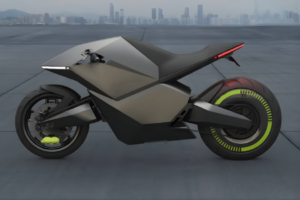


For years, the electric scooter conversation in India revolved around three things: range, performance and price. How far a scooter could travel on a single charge, how quickly it accelerated and how much it cost often determined whether it made it onto a buyer’s shortlist. The E3 Trion electric scooter is trying to change that conversation by putting software and artificial intelligence at the centre of its proposition rather than relying only on bigger batteries or higher range figures.
That shift has been building for a while. As battery technology matures and range numbers start to look similar across brands, manufacturers are hunting for a new way to stand out, and increasingly, that new battleground is software. Predictive alerts, self-monitoring batteries, connected apps that talk to your phone, and dashboards that behave more like a smartphone than a speedometer are becoming the new selling points.
Among the latest entrants taking this approach is the E3 Trion from Bengaluru-based startup E3 Electric.AI. E3 Electric.AI positions the Trion as India’s first AI-powered intelligent electric scooter, and has built its entire launch narrative around predictive intelligence rather than just range or price.
That’s a bold claim in a market already crowded with capable electric scooters from Ola, Ather, TVS and Bajaj. So the real question a buyer should be asking isn’t “does it have AI?” It’s this: is this genuinely a smarter electric scooter, or simply another EV wrapped in attractive marketing language? That’s what this guide sets out to answer.
What Is the E3 Trion Electric Scooter?
E3 Electric.AI is a relatively young Bengaluru-based mobility startup, and the Trion is its first commercial product. That alone makes it worth paying attention to; this isn’t an established two-wheeler brand adding an electric model to its lineup; it’s a startup betting its entire opening move on software-first positioning.
The company has raised meaningful capital to get here, including a recent Series A round of roughly ₹100 crore, structured as a mix of equity and debt, aimed at funding product engineering and the commercial rollout of the Trion. It has also picked up recognition on the startup circuit, including a spot among NASSCOM’s Emerge 50 winners, and says it holds over a dozen granted patents with dozens more IP filings in progress.
What makes this launch different from a typical new-scooter debut is the framing. E3 isn’t positioning the Trion as a value scooter or a performance scooter first. It’s positioning it as an “intelligent family scooter,” something built around reliability and predictability for buyers who might otherwise have stuck with petrol, rather than something aimed purely at early EV adopters chasing the newest gadget. Whether that framing translates into a genuinely different ownership experience is what the rest of this article digs into.
Why Is Everyone Calling It an AI-Powered Scooter?
At the center of the system is what E3 calls the CommandCenter. In simple terms, this is a cloud-connected brain that continuously collects data from the scooter-, things like battery behavior, motor performance, and riding patterns and uses that data to flag potential problems before they turn into breakdowns. The company says its connected platform includes over 100 features in total, built around this predictive layer.
One specific piece of this is something E3 calls HealthScan diagnostics, paired with predictive maintenance reporting. In practice, this is meant to work a bit like the “check engine” light on a car, except smarter: instead of just telling you something is wrong after the fact, the system is designed to notice early warning signs and nudge you toward a service visit before a component actually fails. Whether this works as promised in everyday Indian traffic and heat, rather than in a controlled demo environment, is something that will only become clear once a meaningful number of these scooters have racked up real mileage.
The battery gets its own AI layer too, which E3 refers to as a “Digital Twin,” essentially a virtual model of the physical battery that’s meant to track its health and behavior in real time and estimate things like remaining life and performance more accurately than a simple percentage gauge. That’s a genuinely useful idea on paper, because battery degradation is one of the biggest long-term worries for EV owners. But like most predictive software claims, its real value will only show up after years of ownership data, not at a launch event.
Then there’s the rider-facing layer, which E3 calls TripSense. This uses your smartphone as a secondary display alongside the scooter’s own 5-inch screen, and bundles in navigation, a trip planner that shows nearby charging points, remote battery monitoring, geofencing (so you can get an alert if the scooter moves outside a set area), SOS assistance, and even a dashcam function. These are the kind of connected features that sound impressive in a spec sheet, and some of them, like SOS assistance and geofencing, genuinely add peace of mind, especially for family use or when lending the scooter to a younger rider.
Looking beyond the brochure, “AI” in a scooter doesn’t mean the vehicle is thinking for itself. In practice, it means the company has built a data pipeline between the scooter, an app, and a cloud server, and is using that data to generate alerts and predictions. That’s a far more realistic definition of AI than the marketing headlines suggest, and it’s a legitimate and useful application of technology, but it’s also something that depends entirely on how well the backend software is engineered and maintained, which is much harder to judge from a launch announcement than a spec sheet is.
Price and Variants
Before getting into the AI story or the spec sheet, it’s worth answering the two questions most buyers actually start with: how much does it cost, and which variant should I pick?
The E3 Trion is priced from ₹99,999 for the base C1 variant, going up to ₹1,09,999 for the C1x and ₹1,19,999 for the range-topping C2 (all ex-showroom, introductory pricing, Bengaluru). That’s an aggressive starting price for the segment, undercutting several established rivals while still packing in a fairly long feature list.
Rather than simply looking at the price, it’s worth understanding what each variant is actually designed for, because the biggest differences between them aren’t just battery size; they’re also charging convenience, performance, and the kind of buyer each one suits.
C1, ₹99,999: Best for city commuters, apartment dwellers without home charging, and the lowest entry price. Removable 2.3kWh battery, claimed 108km IDC range.
C1x, ₹1,09,999: Best for buyers who want maximum range and fewer charging cycles. Fixed 3kWh battery, claimed 165km IDC range.
C2, ₹1,19,999: Best for buyers who want stronger performance and open-road riding. Same 3kWh battery, claimed 82kmph top speed, 128km range.
For most buyers, the C1x is likely to be the sweet spot. However, buyers without dedicated home charging may still find the removable battery in the C1 more practical.
Design
Does the Trion look different enough to stand out from an Ola S1, an Ather or a TVS iQube? On this front, E3 has clearly made an effort rather than playing it safe.
According to E3, the design draws inspiration from the Mars Rover, a deliberate attempt to give the scooter a rugged, purposeful stance rather than the soft, rounded look most electric scooters go for. It sits on 14-inch wheels at both ends, which are larger than what most rivals use, and that should translate into a more planted, stable feel, particularly over broken roads and potholes something that matters a great deal more in everyday Indian riding than it does in a showroom.
Lighting duties are handled by dual-projector LED headlights along with LED tail-lights, and the whole vehicle carries an IP67 weather-resistance rating, meaning it’s built to handle monsoon riding and dust without much fuss. On paper, this puts it on par with, or slightly ahead of, what most rivals offer in this price bracket.
The scooter is offered in six colour options: Solar Red, Misty Green, Graphite Grey, Nova Blue, Teal Blue and Luna White, giving buyers reasonably wide personalization options for a first-generation product.
Battery, Range and Performance
The bigger consideration is what these numbers mean once translated into real-world expectations for a typical rider, rather than the figures themselves.
The Trion is sold in three variants: C1, C1x and C2, and each uses a different combination of battery and motor.
The entry-level C1 uses a 2.3kWh removable battery pack, with a claimed IDC range of 108km, and takes about two-and-a-half hours to charge from 0 to 80 percent. Being removable is a genuinely practical feature for anyone who doesn’t have dedicated home charging, since the battery can, in theory, be carried indoors and topped up on a regular socket.
The C1x steps up to a larger 3kWh fixed battery and claims the highest range in the lineup at 165km on the IDC cycle, though charging takes longer at around three-and-a-half hours for a 0-80 percent top-up. The C2 shares that same 3kWh battery but pairs it with a more powerful motor, pushing the claimed top speed up to 82kmph and cutting the claimed range to 128km.
From a buyer’s perspective, it helps to remember that IDC-certified range figures are measured under controlled test conditions, not real Bengaluru or Delhi traffic. In practice, most electric scooters return somewhere between 60 and 75 percent of their claimed range in everyday city riding, once you factor in stop-start traffic, air conditioning-adjacent load from lights and displays, aggressive throttle use, and carrying a passenger. So a buyer eyeing the C1x’s 165km claim should realistically plan around a usable range closer to 100-120km per charge for daily commuting, which is still comfortably enough for most city riders doing 30-40km a day, with charging every few days rather than nightly.
On performance, the C1 and C1x use what’s reported as a roughly 2.5kW motor, good for a claimed top speed of 67kmph, while the C2 moves up to a stronger motor rated around 3.5kW, with a claimed 0-40kmph time of six seconds in its Sport riding mode. For most urban commuting, where speeds rarely exceed 50-60kmph in traffic anyway, even the entry-level C1 should feel adequately quick. The C2’s extra performance will appeal more to buyers who do longer stretches on open roads or simply want a scooter with more headroom for overtaking.
E3 has not disclosed detailed motor output figures independently verified by a third party at the time of writing, so these numbers should be treated as manufacturer claims until independent road tests confirm them.
Features and Technology
For most riders, it helps to separate what genuinely improves day-to-day ownership from what’s mainly there to sound impressive in a brochure.
Features that are likely to matter in real use include the removable battery option on the C1 (useful for apartment dwellers without home charging points), the SOS assistance and geofencing functions (genuinely useful for safety and for family use), the predictive maintenance alerts (potentially valuable if the software proves reliable, since unexpected breakdowns are one of the biggest frustrations EV owners report), and the trip planner with charging-station locations (useful given India’s charging infrastructure is still patchy in many cities).
Features that sound impressive but matter less in daily life include some of the more granular “over 100 connected features” claims, many of which are likely variations on the same core functions rather than 100 genuinely distinct capabilities, and the dashcam function, which is a nice-to-have but not something most commuters will use regularly. None of this makes these features bad; it just means buyers shouldn’t let a large feature count alone drive the decision.
The battery system also comes with a notably long warranty commitment, up to eight years or 100,000 km, which, if honoured consistently, is a genuinely strong reassurance for a new brand, since battery replacement cost is usually the single biggest long-term expense for an EV owner.
Practicality and Everyday Ownership
Storage is a strong point on paper. E3 claims up to 52 litres of combined storage across the underseat compartment, floorboard and glovebox, though the company hasn’t separately disclosed how much of that is underseat space alone, the figure that matters most for fitting a full-face helmet. Buyers who specifically need to store a helmet under the seat should confirm this in person before assuming it will fit.
Braking uses a disc up front and a drum at the rear, which is standard for this price segment, though it’s worth noting that ABS is not offered on the Trion, which some rival scooters in a similar price bracket do offer as an option.
In the real world, ride quality, comfort and how the connected features actually behave in daily use, through heat, rain, patchy network coverage and months of real mileage, can’t yet be verified independently, since the scooter has only just launched. Any claims about how comfortable the ride is, or how reliably the app and diagnostics perform outside a launch demo, should be treated as unverified until independent reviewers and early owners have logged meaningful time on the scooter.
How Does It Compare With Rivals?
Rather than lining up spec sheets, it’s more useful to think about which buyer each scooter actually suits.
The Ola S1 Pro remains a strong pick for buyers who want an established charging and service network already built out across many cities, along with strong straight-line performance. The TVS iQube appeals to buyers who prioritise a large, trusted dealer network and TVS’s decades of two-wheeler reliability. The Ather Rizta is built specifically around family-friendly practicality and is often praised for its build quality and software polish, making it a strong alternative for buyers who want the “smart scooter” experience but from a brand with a longer track record.
The Bajaj Chetak leans on classic scooter styling, sturdy build quality and Bajaj’s extensive service network, appealing to buyers who want an EV that still feels familiar. Honda’s Activa e:, where available, will appeal strongly to loyal Activa owners who want to switch to electric without stepping outside a brand they already trust.
The Trion’s pitch against all of these is a genuinely aggressive starting price alongside a heavier emphasis on predictive software and a modular platform designed to support future variants. For a buyer specifically drawn to the idea of a self-monitoring, connected scooter and who is comfortable being an early adopter of a new brand, the Trion has a distinct proposition. For a buyer who simply wants the safest, most proven choice with the widest service backup today, the more established names still hold an edge purely on track record.
Should Buyers Trust a New EV Startup?
This is arguably the most important section for anyone seriously considering the Trion, because a scooter is a multi-year commitment, not a one-time purchase.
E3 Electric.AI is, by its own account, a company barely a couple of years old, launching its very first commercial product. That brings real advantages: a startup with nothing to protect can afford to take bigger bets on software and design than an established player juggling existing product lines. But it also brings the practical uncertainties that come with any new brand: a still-developing service network, a support system that hasn’t yet been stress-tested by thousands of customers, and software that will inevitably need updates and bug fixes as real-world usage reveals issues that a controlled launch environment simply can’t surface.
That’s where the practical questions begin for buyers outside Bengaluru: E3 has only opened bookings there for now, with an experience centre planned in the city, and says other cities will follow over time. That matters enormously for practicality: buyers outside Bengaluru considering the Trion should have a clear answer on service and support availability in their own city before booking, not after.
The company’s warranty commitments, the extended battery warranty particularly, ty are a good sign of confidence on paper. But warranties are only as good as the company’s ability to honour them years down the line, and that’s simply unknowable in advance for any new automotive startup, regardless of how well-funded or well-reviewed it currently is. This isn’t meant to create fear about the brand, and many successful two-wheeler companies started exactly this way. It’s simply the honest trade-off buyers take on when choosing a first-generation product from a new manufacturer over an established one.
Who Should Consider the E3 Trion?
The Trion makes the most sense for a buyer based in or near Bengaluru (at least for now, given the current service footprint), who is genuinely excited by the idea of a connected, self-monitoring scooter and doesn’t mind being an early adopter. It also suits budget-conscious buyers, since the entry-level C1 undercuts several established rivals on price while still offering a reasonably long feature list. Families who value the safety-oriented features, SOS assistance, geofencing, and a long battery warranty will also find a lot to like here, particularly if a family member other than the primary owner will sometimes ride the scooter.
Who Should Wait?
Buyers outside E3’s current service areas should hold off until the company confirms availability and support in their city, since a scooter with software glitches and no nearby service centre is a much bigger headache than one with a smaller feature list but wide support.
Buyers who prioritise long-term reliability data over new features should also wait for independent long-term reviews and real owner feedback, since predictive software claims are genuinely hard to evaluate until they’ve been tested across thousands of scooters and millions of kilometres. Finally, buyers who specifically want ABS as a safety feature, or who need a scooter with a longer track record for resale value, may be better served by an established brand for now.
Final Verdict
So, does the E3 Trion genuinely offer something different, or is the AI story running ahead of the product itself?
The honest answer sits somewhere in between. On paper, the Trion is a legitimately well-specced scooter for its price, with a large-wheel, IP67-rated build, a genuinely useful set of connected safety features, a strong battery warranty, and pricing that undercuts several established rivals. The predictive diagnostics idea is also a genuinely sound direction for the industry to move in, not just marketing fluff; catching problems before they become breakdowns is exactly the kind of thing software should be good at.
What can’t be verified yet is execution. Predictive AI systems are only as good as the data and engineering behind them, and that’s something no amount of launch-day claims can prove; it has to be earned through months and years of real-world reliability, software updates that actually work, and a service network that shows up when needed. E3 is a new, ambitious startup asking buyers to bet on both a new brand and a new kind of scooter at the same time.
For an early adopter in Bengaluru who’s excited by the idea and comfortable with some uncertainty, the Trion is worth keeping on your shortlist, but not rushing into without seeing how it performs in the hands of early owners. For a buyer who simply wants the safest, most proven purchase with reliable long-term support, it’s worth waiting for the first wave of real ownership reviews before committing. Either way, the Trion deserves credit for trying to make electric scooters smarter rather than just bigger-batteried; whether that bet pays off is something only time, and real owners, will be able to answer.





FAQs
What is the price of the E3 Trion electric scooter?
The E3 Trion is priced from ₹99,999 for the base C1 variant, going up to ₹1,09,999 for the C1x and ₹1,19,999 for the top-spec C2 (all ex-showroom, Bengaluru, introductory pricing).
What is the real-world range of the E3 Trion?
The claimed IDC range is 108km for the C1, 165km for the C1x, and 128km for the C2. In real-world city riding, buyers should realistically expect somewhere around 60-75 percent of these figures, depending on traffic, riding style, and payload.
What does "AI-powered" actually mean on the E3 Trion?
It refers to the E3 CommandCenter and related systems, which use vehicle and cloud data to monitor the scooter, flag potential issues early (HealthScan diagnostics and predictive maintenance), and track battery health through what E3 calls a Digital Twin. It's software-driven monitoring and prediction, not autonomous riding.
Does the E3 Trion have a removable battery?
Only the entry-level C1 variant gets a removable 2.3kWh battery. The C1x and C2 use larger, fixed 3kWh battery packs.
Does the E3 Trion have ABS?
No, the E3 Trion does not come with ABS. It uses a disc brake at the front and a drum brake at the rear across variants.