

















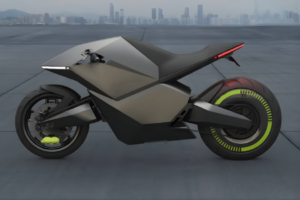


Ather has built its reputation on electric scooters that put performance, technology, and software ahead of chasing the lowest price. The Konarc changes that approach. Starting at ₹99,999 ex-showroom (Bengaluru), it is Ather’s most affordable scooter yet and the first production model based on the company’s new EL platform.
That makes the Konarc more than just a cheaper Ather. The company has designed a new platform around lower manufacturing costs, simpler servicing, and multiple battery options, while still bringing features and technology from its more expensive scooters.
For buyers, the interesting part isn’t just the ₹99,999 starting price or the headline range figures. It’s understanding what you actually get with each Konarc version, how Ather’s TrueRange compares with the certified IDC figure, and whether this new entry-level scooter makes more sense than spending more on a Rizta or 450. This article covers that.
Where Does the Ather Konarc Fit in the Lineup?
The Konarc is Ather’s new entry-level electric scooter, positioned below both the performance-focused 450 series and the family-oriented Rizta. It’s the first production model built on Ather’s new EL platform, a ground-up architecture rather than a reworked version of the platform underpinning the 450 and Rizta.
In practical terms, that puts the Konarc in a different buying conversation altogether. The 450 range is aimed at riders who want quick acceleration and a sporty character, and the Rizta is built around family use with a flat floorboard and generous storage. The Konarc isn’t trying to out-perform the 450 or out-practical the Rizta; it’s aimed at someone who wants an Ather for everyday commuting without paying the premium associated with the 450 range. Ather has said it expects particularly strong demand from North and Central India, markets where it has historically had a lighter presence compared to the south.
Within Ather’s own lineup, the Konarc is sold across two families, S and Z. The S line is the more affordable, range-focused option, with the S 125 and S 161 currently available in select cities. The S 100 is scheduled for later, while the Z line adds extra technology and a higher top speed but is still some time away.
Ather Konarc Price and Variants
Ather has announced six Konarc variants across the S and Z ranges, although they won’t all be available at the same time. Here’s where things stand:
| Variant | Battery | Claimed IDC range | Price (ex-showroom, Bengaluru) | Status |
| Konarc S 100 | 2.1 kWh | 100 km | ₹99,999 | Bookings open; deliveries expected Q4 FY27 |
| Konarc S 125 | 2.7 kWh | 125 km | ₹1,21,999 | Available for sale in select cities |
| Konarc S 161 | 3.5 kWh | 161 km | ₹1,44,999 | Available for sale in select cities |
| Konarc S 200 | Not announced | 200 km | Not announced | Expected around Q3 FY28 |
| Konarc Z 125 | 2.7 kWh | 125 km | Not announced | Expected around Q1 FY28 |
| Konarc Z 161 | 3.5 kWh | 161 km | Not announced | Expected around Q1 FY28 |
A couple of things worth flagging here. First, the delivery timelines aren’t uniform: the S 125 and S 161 are already available for sale in select cities, while the cheaper S 100 isn’t expected until Q4 FY27. If you’re specifically after the ₹99,999 entry price, be prepared for a longer wait than someone booking the mid or top variant.
Second, the Z line, which brings extra tech like Google Maps and WhatsApp on the dashboard, is still roughly a year away from confirmed pricing, so it isn’t something to factor into a near-term buying decision yet. As with any newly launched product, treat these timelines as current rather than fixed; check Ather’s official channels for the latest before booking.
IDC Range vs Ather TrueRange: Which Figure Should You Look At?
This is probably the most important thing to understand before picking a variant, and it’s where buyers need to be careful about taking the headline range at face value.
The IDC (Indian Driving Cycle) figure, 100 km, 125 km, 161 km, and so on, is a certification number, generated under standardised test conditions. It’s useful for comparing scooters on paper, but it isn’t a promise of what you’ll get riding to work every day. Real-world range depends on your speed, how much you brake and accelerate, your body weight, whether you’re riding in city traffic or on an open stretch, tyre pressure, weather, and which riding mode you use.
Ather also publishes a second figure called TrueRange, which is meant to provide a more conservative reference point:
| Version | Battery | Claimed IDC range | Ather TrueRange |
| Konarc S 100 | 2.1 kWh | 100 km | 80 km |
| Konarc S 125 | 2.7 kWh | 125 km | 100 km |
| Konarc S 161 | 3.5 kWh | 161 km | 130 km |
| Konarc S 200 | Not announced | 200 km | Not announced |
Notice the gap: the TrueRange figure runs roughly 20% lower than the IDC number across the board. That gap isn’t a flaw specific to the Konarc; it’s simply the difference between a lab test and everyday riding. Ather’s TrueRange gives buyers a more conservative reference point, but your actual range will still depend on how and where you ride. If you commute mostly in stop-start city traffic with frequent acceleration and braking, expect numbers closer to or even below TrueRange rather than the IDC figure.
Which Konarc version actually makes sense for you?
Rather than assuming the most expensive variant is automatically the best, it helps to think about them in terms of who each one suits.
Konarc S 100 works if your daily riding is genuinely short and confined to the city; think a commute of 15–20 km each way with the ability to charge every night. At ₹99,999, it’s the most accessible way into the Ather ecosystem, but the trade-off is a smaller buffer: with an 80 km TrueRange, you’ll need to charge more regularly and can’t afford to skip a day if you have a longer errand-heavy weekend planned. It also comes with drum brakes at both ends rather than the front disc the other two get.
Konarc S 125 is the middle-ground option, and for a lot of urban commuters, it’s likely to be the one that makes the most practical sense. The extra ₹22,000 over the base variant buys a genuinely useful buffer, roughly 20 km more TrueRange, along with a front disc brake. If your commute varies day to day, or you occasionally need to run errands beyond your usual route, this cushion matters more than it looks on paper.
Konarc S 161 is for riders with longer daily distances, or anyone who wants to charge less frequently and worry less about range anxiety. At ₹1,44,999, it’s priced close to Ather’s own Rizta, so it only makes sense if you specifically want the Konarc’s lower running costs and character over the Rizta’s flatter floorboard and larger boot. If your commute is genuinely long, or you don’t have reliable daily charging access, the bigger buffer here is worth the extra cost; if you’re mostly riding short distances, you’re likely paying for range you won’t use.
The new EL platform, does it actually matter to a buyer?
Ather says the EL platform is designed to lower manufacturing costs, simplify servicing and make charging easier. It was developed using what the company says is 26 lakh kilometres of field data from its existing scooters. Ather also claims the reduced component count can make assembly around 15% faster and cut periodic servicing time roughly in half.
For buyers, the potential benefit is simpler and quicker servicing. Whether that actually translates into a better ownership experience, however, will only become clear once more Konarc scooters are on the road.
Design and build
The Konarc moves away from Ather’s usual construction; it uses a steel unibody chassis with metal body panels, a first for the brand, whose existing scooters use different construction. The steel unibody chassis and metal body panels mark a departure from Ather’s existing scooters and give the Konarc a different construction approach.
The proportions lean toward a settled, family-scooter stance rather than the compact, sporty look of the 450. It gets a 1,352mm wheelbase, the longest of any Ather scooter, along with a 14-inch front wheel and 12-inch rear wheel. A longer wheelbase generally means a more planted, stable ride, particularly useful on uneven city roads, though how it actually feels will need a proper road test to confirm. Underseat storage comes in at 31 litres across the range, with an 18W USB-C port and a light inside the boot, small conveniences that matter more day-to-day than they sound on a spec sheet.
Features
Ather has packed the Konarc with a long list of features, but a few are genuinely relevant to how you’ll use the scooter every day rather than just being marketing checkboxes:
- MagicKey and SmartWake: This is Ather’s keyless system. The scooter can unlock and power on while the key stays in your pocket, and it locks automatically once you walk away with it. For daily users, that can make unlocking and starting the scooter more convenient, particularly when carrying bags or dealing with rain.
- AutoHold: Keeps the scooter stationary at a stop without you having to keep the brake lever pressed. It can be useful in stop-start traffic, where holding the brake lever continuously at a signal can become tiring.
- AeBS (Advanced Electronic Braking System): Available on the Konarc Z, this electronically manages braking force to reduce stopping distance and limit rear-wheel lock-up, with Ather claiming up to 20% higher peak braking force versus a standard setup. It isn’t full ABS, so it’s worth understanding the distinction rather than assuming equivalent protection.
- AutoPop and Park Assist: AutoPop lets you open the seat remotely via the key fob, while Park Assist uses the motor to help reverse the scooter, handy in tight parking spots, especially with the Konarc’s slightly longer wheelbase.
- FallSafe: A fall-detection feature that can alert designated contacts if the scooter detects a crash, which matters more for peace of mind than daily convenience but is worth knowing exists.
Higher variants (S 125 and S 161) get a larger 7-inch DeepView display, while the entry S 100 makes do with a smaller 4.2-inch unit, a real functional difference if you rely on the display for navigation or ride data, not just a cosmetic one.
Performance and riding
On paper, the S 100 makes 4kW peak power, while the S 125 and S 161 produce 4.7kW, with all three variants sharing 16Nm of torque and a 70km/h top speed. Ather quotes a 0–40km/h time of 5 seconds for the S 100 and 4.7 seconds for the other two. The claimed figures are clearly aimed at city riding rather than outright performance. The Z line is expected to offer a higher 80km/h top speed, trading some of that range for a bit more highway usability, according to Ather.
We will need a proper road test to know how the Konarc performs in real-world traffic, how it handles at low speeds in heavy congestion, how planted it feels on Indian road surfaces, and how consistent the braking feels day to day. Until independent reviewers have ridden it extensively, treat these as manufacturer-claimed figures rather than confirmed real-world performance.
Charging and everyday ownership
Charging at home
Every variant comes with a 450W onboard charger built in, meaning you can plug the scooter directly into a regular home socket using an attached cable, without needing to carry a separate charging brick. On its own, this charger takes roughly 4 hours for the S 100, 4 hours 30 minutes for the S 125, and 5 hours 40 minutes for the S 161 to reach 80%.
Ather also offers an additional 900W off-board charger that, combined with the onboard unit, brings total charging capacity to 1.35kW, cutting those 0–80% times down to roughly 2 hours, 2 hours 25 minutes, and 3 hours 10 minutes respectively.
Ather Grid
The S 125 and S 161 also get access to Ather’s public fast-charging network, Ather Grid, as standard, rated at around 15 km of range added per 10 minutes; it’s an optional add-on on the S 100.
Who benefits most from this setup? Anyone with access to a regular power socket at home or work; the built-in charger removes the hassle of a separate box to carry and connect. Buyers without dedicated charging access, particularly those living in apartments without an assigned parking spot near a socket, will still need to plan around either public charging points or the combined charger setup to keep top-up times reasonable.
Warranty and service
The standard battery warranty on the Konarc is 3 years or 30,000 km. Buyers who opt for AtherStack Pro, the brand’s paid software tier, get this extended to 5 years or 60,000 km, and Ather also offers optional paid extensions taking coverage up to 8 years/80,000 km or even 10 years/1 lakh km. The longer coverage may be particularly relevant for buyers planning to keep the scooter for several years, although the additional cost of the extended plans should also be considered.
Practicality for daily commuting
The 31-litre underseat storage is a genuinely useful number for a scooter in this price bracket, enough for a half-face helmet along with some daily-use items, though not as generous as the Rizta’s boot, which is built specifically around family and cargo use. The pillion seat gets a padded grab handle and an adjustable backrest, which should help with two-up comfort on longer rides.
The 14-inch front wheel and the longer wheelbase are the two elements most likely to affect ride quality on typical Indian roads; larger front wheels generally handle potholes and broken surfaces with more composure than smaller ones, though how much difference this makes in practice is something only extended testing can confirm.
Ather Konarc vs Ather 450 and Rizta
This comparison matters because someone browsing Ather’s own showroom could genuinely be torn between all three.
The 450 range remains the scooter to pick if outright performance and quicker acceleration are the priority, but it starts at around ₹1.36 lakh ex-showroom and can go considerably higher depending on the variant, and is built around sportier riding rather than affordability. The Rizta, priced from roughly ₹1.21 lakh, sits closest to the Konarc S 161 in price but is built specifically around family use, with a flatter floorboard and larger storage designed for that purpose.
The Konarc’s real advantage over both is accessibility; it brings Ather ownership within reach of buyers who simply couldn’t justify the 450 or Rizta’s pricing. The Konarc instead uses a new platform and brings a different mix of affordability, range, and features to the lineup. If you specifically want maximum storage and a family-first layout, the Rizta remains the better fit even at a similar price to the Konarc S 161. If outright acceleration matters more to you than price, the 450 range still makes the stronger case.
Konarc vs Its Rivals: What Sets Them Apart?
At its current pricing, the Konarc lines up against a cluster of scooters that have been fighting over India’s sub-₹1.5-lakh electric scooter segment for a while now.
| Scooter | Starting Price (approx., ex-showroom) | What It Does Best |
| Ather Konarc S 100 | ₹99,999 | Entry into Ather, short city commutes |
| Ola S1 X | ₹84,999 | Lower upfront price |
| Bajaj Chetak | ₹1.19 lakh* | Established brand and service network |
| TVS iQube | Varies by variant | Broad lineup and established network |
| Honda Activa e | ₹1.18 lakh* | Honda brand and established dealer network |
| Ather Rizta | ₹1.21 lakh* | Family-focused practicality |
Approximate base pricing; check current listings for your city, as prices vary by variant.
A few honest observations here: the Konarc’s ₹99,999 starting price is competitive but not the outright cheapest in the segment; Ola’s entry S1 X, priced from around ₹84,999, undercuts it. The Konarc isn’t the cheapest electric scooter on the market, so buyers focused purely on upfront price have alternatives. Ather is instead betting that its software, charging ecosystem, build and ownership experience justify the difference, and for anyone drawn to that, the Konarc still undercuts what they’d have paid for a Rizta or 450 by a wide margin.
What Ather has got right
- A genuinely lower entry point, ₹99,999, puts an Ather scooter within reach of a much wider set of buyers than before.
- Real choice in battery and range, rather than a one-size-fits-all approach, letting buyers match spending to their actual commute.
- The onboard charger is a smart, practical touch for anyone without dedicated EV charging infrastructure at home.
- A new platform built with an explicit focus on faster servicing and simpler repairs, backed by a genuinely large R&D investment.
Where the Konarc may not be for everyone
- The gap between the IDC range and TrueRange is worth internalising before you commit to a variant based on the headline number alone.
- Several versions, the S 200 and both Z variants, don’t have confirmed pricing yet, with expected timelines stretching well into FY28.
- The S 100’s drum brakes at both ends are a clear step down from the disc brake on the S 125 and S 161.
- Independent, real-world range and reliability data doesn’t exist yet; everything here is based on Ather’s own claims until reviewers and early owners weigh in.
Who should consider the Ather Konarc?
Consider it if:
- You mainly ride within the city and want an everyday electric commuter
- You want to enter the Ather lineup at a lower price than most 450 variants
- You value having multiple battery and range options to match your actual usage
- You’re drawn to Ather’s software, connected features, and TrueRange transparency
- You have reasonably convenient access to charging, whether at home or work
Think twice if:
- You regularly ride longer distances and need the Z line’s higher top speed or extra tech; those aren’t available yet
- Storage capacity is a priority over price, the Rizta offers more boot space for similar money
- You need the absolute lowest upfront cost, a couple of rivals undercut the Konarc’s starting price
- You can’t wait: the S 100 and the Z line have delivery timelines stretching into FY27 and FY28
Final Verdict
The Konarc could be one of Ather’s most important products because it takes the brand into a part of the market it hasn’t seriously targeted before: more affordable everyday electric commuting. The new EL platform, the onboard charging setup, and features like AutoHold and MagicKey suggest Ather hasn’t simply cut corners to hit a lower price; it’s built a different kind of scooter around a different kind of buyer.
That said, the headline numbers need context before you make a decision. The IDC range figures won’t necessarily reflect what you’ll see on your daily commute, and Ather’s own TrueRange numbers are a more conservative starting point for judging what variant you actually need. The S 100 suits short, predictable city rides; the S 125 is the more balanced everyday pick for most commuters; and the S 161 is worth the extra cost only if your daily distances genuinely call for it.
Ultimately, the Konarc looks like a convincing step for Ather into the mainstream, but with several variants still months away from delivery and no independent long-term testing yet, it’s a scooter to research carefully rather than book on day one purely on the strength of its launch pricing.



FAQs
What is the price of the Ather Konarc?
The Ather Konarc starts at ₹99,999 ex-showroom (Bengaluru) for the S 100 variant, going up to ₹1,44,999 for the S 161. Pricing for the S 200 and both Z variants hasn't been announced yet.
How many Ather Konarc variants are there?
Six in total: S 100, S 125, S 161, and S 200 in the S line, and Z 125 and Z 161 in the Z line. Only the S 100, S 12,5 and S 161 have confirmed pricing so far.
What is the range of the Ather Konarc?
The claimed IDC range runs from 100 km to 200 km depending on the variant. Ather's published TrueRange figures are lower: 80 km, 100 km, and 130 km for the S 100, S 125, and S 16,1, respectively.
What is Ather TrueRange?
It's Ather's own real-world range estimate, meant to be a more conservative and realistic figure than the certified IDC number. Actual range still depends on your riding style, load, speed, ed and road conditions.
What is the difference between IDC range and TrueRange?
IDC range comes from standardised lab testing, while TrueRange is Ather's estimate of what riders can expect in everyday use. TrueRange figures run roughly 20% lower than the corresponding IDC numbers on the Konarc.