






















India’s electric motorcycle market is becoming increasingly competitive, with brands like Revolt, Oben, Ola Electric, Komaki, and Ultraviolette already offering multiple options. Avore Electric, a young Ahmedabad-based company, has now entered the segment with its first motorcycle, the Avore EX, launched on July 28, 2026, with prices starting at ₹1.25 lakh across the EX1, EX2, and EX2S variants.
This article sets aside the launch-day noise and works through the Avore EX the way a buyer should: what it is, who makes it, how the variants differ, what ownership will realistically look like, and how it stacks up against the competition. Because the EX has only just been launched, some real-world details (independent range tests, service centre count, resale data) simply don’t exist yet. We’ve flagged those clearly rather than guessing, so this guide stays useful even after the launch dust settles.
At a Glance
| Starting Price | ₹1.25 lakh (ex-showroom, confirmed at launch) |
| Variants | EX1, EX2, EX2S |
| Battery | 5 kWh, IP67-rated |
| Motor | 10.5 kW |
| Claimed Range | Up to 180 km |
| Best For | Daily commuters wanting a feature-rich, tech-forward EV motorcycle |
| Should You Buy? | Worth shortlisting, but verify local service support before booking |
What Is the Avore EX?
The Avore EX is Avore Electric’s debut motorcycle and the first product the company has brought to market. It’s positioned as an electric alternative to the petrol motorcycles that dominate India’s 125cc–200cc segment, the commuter-plus and sporty-commuter space rather than the pure entry-level 100cc bracket.
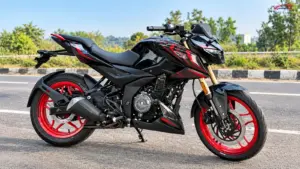
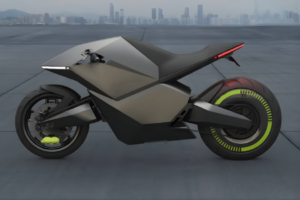
The EX arrives in three variants, EX1, EX2, and EX2S, which appear to be differentiated primarily by battery/motor tune and equipment level, following the same playbook rivals like Revolt and Oben use with their own step-up variant strategies. Design-wise, the EX goes for a naked streetfighter look: a sculpted tank with extensions, an LED projector headlamp with LED DRLs, a split seat, a T-shaped LED tail lamp, and a large digital instrument cluster with AI-linked ride analytics.
It’s worth being upfront about something: because the EX has only just launched, some of what’s described here, particularly exact variant-wise range and pricing splits, is based on the most recent information available at launch and may be refined as Avore’s official configurator and press materials are fully updated. We’ll note wherever a figure is a confirmed price versus an expected one.
Avore EX: Quick Specifications
| Specification | Avore EX |
| Motor | 10.5 kW |
| Battery | 5 kWh (IP67-rated) |
| Claimed Range | Up to 180 km |
| Top Speed | 100–110 km/h (claimed) |
| Charging | Home AC charging (fast-charging support unconfirmed) |
| Front Suspension | Telescopic fork |
| Rear Suspension | Monoshock |
| Brakes | Disc, front and rear |
| ABS | Single-channel |
| Variants | EX1, EX2, EX2S |
| Starting Price | ₹1.25 lakh (ex-showroom) |
Who Is Avore Electric?
Avore Electric is the electric motorcycle brand of Samarth E-Mobility, an Ahmedabad-based company entering India’s growing EV two-wheeler market. The company’s first product is the Avore EX, available in three variants: EX1, EX2, and EX2S.
Unlike many EV startups that rely heavily on third-party components, Avore says it has focused on developing key technologies such as battery management, motor control, and software in-house. The company has also highlighted its AI-powered Battery Management System (BMS), a rare-earth-free motor design, and a growing patent portfolio as part of its technology-first approach. These claims are based on the company’s own statements and will need to be validated through long-term ownership and independent testing.
Avore’s goal is to build connected, intelligent motorcycles rather than simply electrifying conventional petrol bikes. The company believes motorcycles have been slower than cars and scooters in adopting advanced software and connected features, and it aims to bridge that gap with AI-driven diagnostics and predictive battery management.
As a new entrant, Avore does not yet have the established service network, long-term reliability record, or resale value of brands like Revolt, TVS, Bajaj, or Ola Electric. While the technology appears promising on paper, buyers should also consider dealership availability, after-sales support, and warranty coverage before making a purchase.
Avore EX Price in India
The Avore EX has launched with prices starting at ₹1.25 lakh (ex-showroom) for the EX1, positioning it right alongside the Oben Rorr Evo and comfortably below the Revolt RV400. Pricing for the EX2 and range-topping EX2S has not been comprehensively itemised in early coverage; based on pre-launch estimates, the EX2S was expected to sit around ₹1.50 lakh ex-showroom, but this should be treated as provisional until confirmed against Avore’s official price list.
On-road prices in your city will be higher once you factor in registration, insurance, and any applicable road tax. Electric two-wheelers do benefit from central and state government subsidies in most states, which can meaningfully bring down the effective purchase price, so it’s worth checking current subsidy eligibility for your state before finalising a budget.
For booking amounts, waiting periods, and any launch-day introductory offers, go directly to Avore’s official channels; these details are the most likely to change in the days immediately around a launch, and a third-party guide risks going stale on this specific point faster than anywhere else.
Avore EX Variants Explained
Avore has structured the EX range around three trims: EX1, EX2, and EX2S, a strategy that lets the brand offer an accessible entry point while reserving extra range, performance, or features for buyers willing to spend more.
Based on the most recent pre-launch specifications, the EX range is built around a common core: a 10.5 kW motor and a 5 kWh battery pack rated IP67 for dust and water resistance, paired with a telescopic front fork, a rear monoshock, disc brakes at both ends, and single-channel ABS. The EX2S, the range-topping variant, adds Avore’s AI-BMS (Battery Management System) and the full AI-integrated digital display experience as key differentiators.
| Variant | Confirmed/Expected Price | Battery | Motor | Best For |
| EX1 | ₹1,24,999 (ex-showroom, as listed at launch) | 5 kWh, IP67 | 10.5 kW | Buyers who want the lowest entry price into the Avore ecosystem |
| EX2 | Expected to sit between EX1 and EX2S pricing | 5 kWh, IP67 | 10.5 kW | Riders who want a step up in features without paying top dollar |
| EX2S | Estimated around ₹1,50,000 (ex-showroom) | 5 kWh, IP67 | 10.5 kW | Buyers who want the full AI-BMS and top-spec equipment |
A caveat worth repeating: Avore has not published a fully itemised, variant-by-variant spec sheet with independently verified range figures for each trim as of this article’s publication. If you’re deciding between EX1 and EX2S, don’t take our word for the fine print; check Avore’s own configurator or a dealership before booking.
The EX1 makes the most sense if your priority is simply getting into an electric motorcycle at the lowest possible price and you don’t need every software feature. The EX2S is the one to consider if you specifically want the AI-BMS and full feature set and are willing to pay roughly ₹25,000 more for it.
Battery, Range & Charging
All three EX variants share the same core battery: a 5 kWh pack rated IP67, meaning it’s built to resist dust ingress and temporary water immersion, a genuinely useful spec for a country where riders regularly deal with monsoon flooding and dusty roads.
Officially, Avore has pointed to a certified range in the region of 150–180 km on a single charge, depending on the source and testing cycle referenced. As with virtually every electric two-wheeler sold in India, treat this as a lab-tested, ideal-conditions figure. Real-world range is typically 10–30% lower than the certified number once you account for city traffic, aggressive throttle use, rider weight, ambient temperature, and how often you ride in Sport versus Eco mode. A more realistic expectation for daily use is somewhere in the 110–150 km band, though this cannot be confirmed with certainty until independent road tests are published.
Charging time and the availability of DC fast charging haven’t been comprehensively detailed by Avore at the time of writing. Most electric motorcycles in this price bracket rely on standard home AC charging, typically taking 4–6 hours for a full charge from a regular socket. If fast charging is offered, it would likely be positioned as an optional or higher-variant feature rather than standard across the range, but this is inference based on how rivals like Revolt structure their charging options, not a confirmed Avore spec, so verify directly before assuming your commute needs are covered.
Official Claims vs Real-World Expectations
| Official Claim | What Buyers Should Realistically Expect |
| Up to 180 km range | Likely 110–150 km in mixed city riding; less in Sport mode or heavy traffic |
| AI-BMS and ride analytics | Promising on paper, reserve judgment until independent long-term testing |
| 100–110 km/h top speed | Achievable in short bursts; sustained high-speed riding will reduce range further |
| 4–6 hour home charging | A reasonable planning assumption, but not yet officially confirmed by Avore. |
| “New, growing service network” | Availability varies significantly by city; check locally before booking |
Performance & Riding Experience
As this is a newly launched motorcycle, no independent publication has yet had extended real-world time on the bike, and this section is necessarily based on official specifications and early impressions rather than a full road test.
On paper, the 10.5 kW motor puts the EX in a reasonably competitive spot within its price bracket, more powerful than entry-level electric scooters, and in the same ballpark as motorcycles like the Revolt RV400. Claimed top speed has been reported in the 100–110 km/h range in pre-launch coverage, which would make the EX usable on city arterial roads and short highway stretches, though sustained highway cruising at that speed will eat into range faster than in-town riding.
The chassis setup, telescopic forks up front and a monoshock at the rear, with disc brakes and single-channel ABS at both ends, is a conventional, sensible layout for this segment rather than anything exotic. It should deliver adequate, predictable handling for daily commuting and moderately spirited riding, without the sophistication of dual-channel ABS or premium suspension components found on pricier electric motorcycles like the Ultraviolette F77.
Design & Build Quality
The EX leans into a muscular, naked-streetfighter design language rather than a conservative commuter look. The sculpted tank with extensions, split seat, and T-shaped LED tail lamp give it more visual presence than typical entry-level electric scooters, and the LED projector headlamp with LED DRLs brings it in line with what buyers now expect even at this price point.
The large digital instrument cluster, with its AI-linked ride summary and maintenance analysis features, is a genuine differentiator on paper; most rivals in this bracket offer a digital display, but not necessarily one built around proactive maintenance insights. How intuitive and glitch-free that software experience actually is in daily use is something only extended ownership will reveal; software-heavy features are exactly the kind of thing that can look great in a product demo and feel clunky on a real commute.
Fit and finish, panel gaps, switchgear quality, and long-term paint durability are all details that are difficult to assess fairly from images and specifications alone. As with performance, we’d recommend an in-person dealership visit before forming a final opinion on build quality. This is also a category where new manufacturers sometimes have early-production teething issues that get ironed out over the first few months.
Features & Technology
Officially confirmed features on the Avore EX include:
- A large digital instrument cluster with AI-integrated ride summaries and maintenance analysis
- LED lighting throughout (headlamp, DRLs, tail lamp)
- Regenerative braking, standard on essentially all electric motorcycles in this class
- Single-channel ABS
- IP67-rated battery pack for water and dust resistance
- Avore’s proprietary AI-BMS on the EX2S variant
Features like smartphone connectivity, turn-by-turn navigation, OTA software updates, keyless functionality, and a dedicated mobile app have all been associated with Avore’s broader brand messaging around being a “smart” motorcycle company, but not every one of these has been confirmed as standard across all three variants at the time of writing. If a specific connected feature matters to your buying decision, confirm it directly with Avore or at a dealership rather than assuming it’s included; this is a case where a start-up’s marketing language and the actual shipping spec sheet can diverge, sometimes only being finalised close to or at launch.
Ownership Experience
This is the section where buying from a brand-new company matters most, and where we’d encourage the most caution.
Avore Electric doesn’t yet have the multi-year track record that lets a publication credibly comment on long-term reliability, spare parts availability, or how well the company handles warranty claims, since independent ownership data is not yet available; that history simply doesn’t exist yet. Warranty terms (including specific battery warranty coverage, typically the most valuable warranty component on any EV) should be confirmed directly from Avore’s official documentation at the time of purchase, since our sources don’t yet reflect a finalised, published warranty policy.
Service network reach is another open question. Established rivals like Revolt and Ola Electric have spent years building out dealership and service centre coverage across Indian cities; a first-time buyer of the Avore EX should specifically ask a prospective dealership how many service centres exist in their state, what the process looks like for battery-related issues, and what the expected turnaround time is for common repairs.
On the positive side, electric motorcycles generally require less routine maintenance than petrol equivalents: no engine oil, clutch, or gearbox servicing,g which somewhat reduces (though doesn’t eliminate) the ownership risk that comes with buying from a newer brand.
Ownership Cost: What Will It Actually Cost to Run?
Running costs are one of the strongest arguments for any electric motorcycle, and the EX’s 5 kWh battery makes for a straightforward estimate. At typical Indian residential electricity rates (roughly ₹6–8 per unit in most states), a full charge should cost somewhere in the ₹30–40 range, enough for a claimed 150–180 km, or a more realistic 110–150 km in daily use. That works out to well under ₹1 per km on electricity alone, a fraction of what an equivalent 150cc petrol motorcycle would cost to run at current fuel prices.
For a rider covering 1,000–1,200 km a month, that puts monthly charging costs in the ballpark of ₹250–350; again, treat this as an estimate based on standard tariffs rather than an Avore-published figure, since actual costs will vary by state, time-of-day tariffs, and whether you’re charging at home or at a paid public station.
On maintenance, expect lower running costs than a petrol motorcycle meaningfully, simply because there’s no engine oil, clutch plate, or gearbox to service. That said, don’t assume “zero maintenance”; tyres, brake pads, suspension components, and general wear items still need periodic attention, and any EV-specific servicing (software updates, BMS checks) will depend on Avore’s own service schedule, which hasn’t been published in detail yet.
The biggest long-term cost question for any EV, and one no manufacturer likes to lead with, is battery replacement. Battery packs typically degrade gradually over years of use, and hundreds of charge cycles, and out-of-warranty replacement costs can be a significant fraction of the vehicle’s original price. Ask specifically about battery degradation warranty terms (not just a blanket “battery warranty period”) and what a replacement pack would cost after the warranty expires, before you finalise a purchase.
Avore EX vs Rivals
| Motorcycle | Price (ex-showroom) | Claimed Range | Top Speed | Best For |
| Avore EX1 | ₹1.25 lakh | ~150–180 km (claimed) | ~100–110 km/h | Buyers wanting the lowest entry price with a fresh design |
| Revolt RV400 | ₹1,39,950 onwards | ~150 km (claimed) | ~85 km/h | Buyers who value an established service network and brand history |
| Oben Rorr Evo | ₹1,24,999 onwards | ~180 km (claimed) | ~110 km/h | Buyers who want strong range and torque at a similar price |
| Ola Roadster | ₹1,04,999 onwards | ~151 km (claimed) | ~116 km/h | Budget-conscious buyers who still want performance-oriented styling |
| Komaki Ranger | ₹1,31,499 onwards | ~160–200 km (claimed) | ~80 km/h | Buyers prioritising range over outright speed |
(Prices and claimed figures above reflect the most recent publicly listed data at the time of writing and are subject to change; always confirm current on-road pricing with the manufacturer or dealership.)
Against this set, the Avore EX doesn’t undercut the market dramatically; its EX1 pricing sits right in line with the Oben Rorr Evo, but it does bring a newer design and Avore’s AI-focused feature set to a segment where most competitors have been iterating for two to four years already. What Avore doesn’t have, and can’t manufacture overnight, is the track record its rivals have built through real-world ownership over that time.
Who Should Buy the Avore EX?
The Avore EX is worth shortlisting if you’re a daily commuter or office-goer in a city with growing EV charging infrastructure, you like the idea of supporting a newer, India-based EV brand with a technology-first pitch, and you’re comfortable being an early adopter, someone who doesn’t mind being among the first owners of a first-generation product from a company still building its service network.
It’s also a reasonable option for college students or young professionals prioritising low running costs and distinctive styling over an established badge, provided the local dealership and service network genuinely exist near where you’ll actually use the bike day to day.
Who Should Look Elsewhere?
If you need maximum certainty around service support, resale value, and long-term reliability, particularly if this will be your only vehicle for daily commuting, the Revolt RV400 or Ola Roadster X have longer market presence and larger service networks, which counts for a lot in practice, even if the on-paper specs look similar. Buyers who want a proven track record over the newest feature set should lean toward these established players.
If your budget stretches further and outright performance matters more than initial price, the Ultraviolette F77 sits in a different, more premium performance bracket and is worth cross-shopping, though at a meaningfully higher price point.
Should You Buy Now or Wait?
For a first-generation product from a new manufacturer, timing your purchase matters almost as much as choosing the right variant.
Consider waiting if:
- You don’t have a service centre or authorised dealership within a reasonable distance of where you live.
- You strongly prefer proven, multi-year reliability data over the newest feature set.
- This will be your only vehicle, and you can’t afford downtime if something goes wrong with an early-production unit.
- You’d rather let the first wave of owners surface any software or build-quality issues before you commit.
Consider buying now if:
- You’re genuinely comfortable being an early adopter and find that trade-off acceptable.
- You’ve confirmed local service and charging support is actually available near you — not just promised on Avore’s website.
- The EX1 or EX2S’s specific feature set (AI-BMS, ride analytics) meets a real need in your daily commute, rather than being a nice-to-have.
- You’re buying as a second vehicle, which reduces the practical risk of any early teething issues.
There’s no wrong answer here; it’s a genuine trade-off between getting the newest technology first and letting someone else absorb the early-adopter risk. If you’re on the fence, a few weeks’ delay to read the first independent road tests and early owner feedback costs you very little and removes a lot of the uncertainty in this guide.
Final Verdict
The Avore EX enters India’s electric motorcycle market with a competent-looking core spec, a 10.5 kW motor, a 5 kWh IP67 battery, a distinctive design, and a genuinely interesting AI-BMS and instrument cluster proposition on the top EX2S variant. Its EX1 pricing at ₹1.25 lakh puts it right in the thick of the competitive set, going head-to-head with the Oben Rorr Evo and undercutting the Revolt RV400.
What it doesn’t have, and can’t have, on day one, is a track record. Every electric motorcycle brand that’s trusted today started exactly where Avore is right now: with promising specifications and zero real-world ownership data. Whether the EX turns out to be a smart early buy or a bike best watched from the sidelines for six months depends almost entirely on things this article can’t yet answer: how the AI-BMS performs in daily use, how responsive Avore’s service network actually is when something goes wrong, and whether real-world range holds up to the claims.
If you value being among the first owners of a new, India-engineered electric motorcycle and you’ve done your homework on local dealership and service availability, the Avore EX is a reasonable, well-specified option to shortlist. If you’d rather let someone else be the early adopter and want the reassurance of a longer track record, the Revolt RV400 or Oben Rorr Evo remain the safer bets for now, and it’s worth revisiting this article or checking for our follow-up road test once the EX has been in owners’ hands for a few months.

FAQs
What is the Avore EX?
The Avore EX is the debut electric motorcycle from Avore Electric, an Ahmedabad-based brand under Samarth E-Mobility, launched in India on July 28, 2026, in EX1, EX2, and EX2S variants.
Who owns Avore Electric?
Avore Electric is the two-wheeler brand of Samarth E-Mobility, with Priyank Rakholia serving as a co-founder.
Is Avore Electric an Indian company?
Yes. Avore Electric is based in Ahmedabad, India, and positions itself as a Make-in-India electric motorcycle manufacturer.
What is the price of the Avore EX?
The Avore EX has launched with prices starting at ₹1.25 lakh (ex-showroom) for the EX1. Pricing for the EX2 and EX2S has not been comprehensively confirmed in early coverage; check Avore's official price list or a dealership for the exact figures on higher variants.
What are the differences between EX1, EX2, and EX2S?
All three variants share the same 10.5 kW motor and 5 kWh IP67 battery. The EX2S adds Avore's AI-BMS and the full AI-integrated instrument cluster experience as its key differentiators; a full itemised comparison across all three trims has not yet been comprehensively published.